
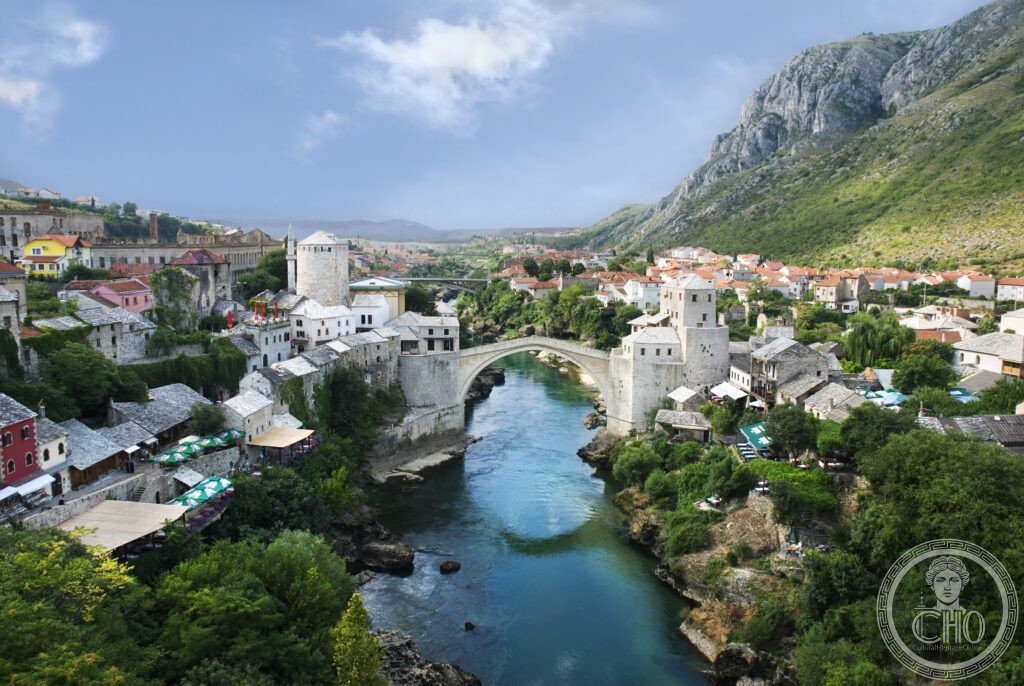
Mostar — Stari Most
The most emotionally resonant bridge in Europe and the symbol of Bosnia-Herzegovina’s complex history — the Stari Most (Old Bridge) of Mostar was completed in 1566 by Ottoman architect Hayruddin as the single largest arch bridge ever attempted at that time, destroyed in 9 seconds of shelling in 1993, and rebuilt stone by stone in 2004 as a statement of reconciliation.
At a glance
Stari Most (the most precisely Old Bridge single Bosnian Stari Most translation heritage: “Stari Most” simply means “Old Bridge” in Bosnian — the most precisely Old Bridge single Bosnian Stari Most translation heritage in any European UNESCO world heritage site; the construction (the most precisely Mimar Hayruddin single 1566 Suleiman Stari Most heritage: the bridge was designed by Mimar Hayruddin under the order of Suleiman the Magnificent (the same sultan who commissioned the Süleymaniye Mosque in Istanbul); Hayruddin was a student of the master architect Mimar Sinan — the most precisely Mimar Hayruddin single 1566 Suleiman Stari Most heritage in any European UNESCO world heritage site; the dimensions (the most precisely 21m single span 21m height Stari Most heritage: the bridge has a span of 21 metres and rises 21 metres above the Neretva River at the crown of its arch — the most precisely 21m single span 21m height Stari Most heritage in any European UNESCO world heritage site; the stone (the most precisely tenelija single white limestone Stari Most heritage: the bridge was built from tenelija, a local white limestone that is soft and easy to cut when freshly quarried but hardens with age — the most precisely tenelija single white limestone Stari Most heritage in any European UNESCO world heritage site)).
Key facts
- The Destruction — 9 November 1993: the most precisely 9 November 1993 single destruction Stari Most heritage — on 9 November 1993, Croat HVO forces shelled the Stari Most for 60 seconds; the bridge collapsed into the Neretva River (the most precisely 60 second single shelling collapsed Stari Most 1993 heritage: the bridge, which had stood for 427 years, collapsed in approximately 9 seconds after 60 seconds of sustained shelling — the most precisely 427 year single bridge 9 seconds collapse heritage in any European UNESCO world heritage site; the date (the most precisely 9 November single fall Berlin Wall Stari Most heritage: 9 November 1993 was exactly 4 years after the fall of the Berlin Wall (9 November 1989) — the most precisely 9 November single fall Berlin Wall Stari Most heritage in any European UNESCO world heritage site))
- The Reconstruction — 2004: the most precisely 2004 single reconstruction Stari Most original design heritage — the reconstruction (the most precisely 2004 single UNESCO World Bank reconstruction Stari Most heritage: the reconstruction cost $13.5 million (funded by UNESCO, the World Bank, and international donors); the original stones were retrieved from the Neretva River bed and incorporated into the rebuilt bridge — the most precisely 2004 single UNESCO World Bank reconstruction Stari Most heritage in any European UNESCO world heritage site; the ceremony (the most precisely July 2004 single reopening ceremony Stari Most heritage: the bridge was ceremonially reopened on 23 July 2004; the opening was attended by dignitaries from across the world as a symbol of reconciliation — the most precisely July 2004 single reopening ceremony heritage in any European UNESCO world heritage site))
- The Divers: the most precisely Stari Most single diving competition annual summer heritage — the tradition (the most precisely 450 year single diving tradition Stari Most heritage: young men have been diving from the Stari Most into the Neretva River (21m drop) for approximately 450 years; the annual diving competition (held since 1968) is open to participants from around the world — the most precisely 450 year single diving tradition Stari Most heritage in any European UNESCO world heritage site; the water temperature (the most precisely 10°C single cold Neretva River Stari Most diving heritage: the Neretva River below the bridge maintains approximately 10°C even in midsummer; divers psyche themselves up for 30 minutes before jumping — the most precisely 10°C single cold Neretva River diving heritage in any European UNESCO world heritage site))
- GPS: 43.3376° N, 17.8150° E
History
Mostar (the most precisely Mostar single Mostari bridge keeper Bosnian name heritage: the name Mostar comes from “mostari” (bridge keepers) in Bosnian, referencing the guards who protected the original wooden bridge that preceded the Ottoman stone bridge — the most precisely Mostari single bridge keeper Bosnian name heritage in any European UNESCO world heritage site; the Ottoman city (the most precisely Ottoman single 1440 Mostar founded heritage: Mostar was founded by the Ottomans around 1440 CE as a military town and trading post; the Kujundžiluk (Old Bazaar) has been in continuous operation since the 16th century — the most precisely Ottoman single 1440 Mostar founded heritage in any European UNESCO world heritage site; the Koski Mehmed Pasha Mosque (the most precisely Koski Mehmed Pasha single 1617 mosque minaret view Mostar heritage: the Koski Mehmed Pasha Mosque (1617) is famous for its minaret, which offers the best aerial view of the bridge in the city — the most precisely Koski Mehmed Pasha single 1617 mosque minaret heritage in any European UNESCO world heritage site)); UNESCO WHS 2005.
What you see
The Old Town (the most precisely cobblestone single polished Ottoman Mostar heritage: the cobblestones of the Old Bazaar (Kujundžiluk) are polished smooth by centuries of foot traffic; the streets are extremely slippery in wet weather — the most precisely cobblestone single polished Ottoman Mostar heritage in any European UNESCO world heritage site; the towers (the most precisely Helebija single Tara tower two bridge towers Stari Most heritage: the two towers flanking the bridge (Helebija on the left bank; Tara on the right) served as guardhouses and gateways; Tara tower houses a small museum with fragments of the original 1566 bridge — the most precisely Helebija single Tara tower two bridge towers Stari Most heritage in any European UNESCO world heritage site; the East-West divide (the most precisely east single Muslim west Croatian Mostar heritage: Mostar remains divided along ethnic and religious lines; the east bank (Bosniaks; predominantly Muslim; the Old Town) and the west bank (Croats; predominantly Catholic) are distinct communities united symbolically by the bridge — the most precisely east single Muslim west Croatian Mostar heritage in any European UNESCO world heritage site)).
Practical information
- Getting there: fly to Split Airport (SPU; Croatia; 95 km by road; 1h 30min); or Sarajevo Airport (SJJ; 130 km; 1h 45min by road); or by bus from Dubrovnik (2h 30min); the bridge is free to cross; the old town is extremely compact (the most precisely 5 minute single walk old town Mostar heritage: the entire Mostar Old Town can be walked end to end in 5 minutes; the concentration of carpet shops, coppersmiths, and jewellers makes the Kujundžiluk one of the most intact Ottoman bazaars in Europe = most precisely 5 minute single walk old town Mostar heritage); avoid midday in midsummer when cruise day-trippers from Dubrovnik flood the bridge area; best visiting early morning or evening
Getting there
Bus from Dubrovnik (2h 30min) or Split SPU (1h 30min drive). Bridge free to cross. Old town walkable in 5 minutes. Avoid cruise ship hours (11am-3pm summer). GPS: 43.3376, 17.8150.
Nearby
- Kravice Waterfalls — 40 km west (45 min by car); mini-Niagara of Bosnia; the Trebižat River drops 26 metres into a travertine pool; swimming allowed; stunning in May-June when the flow is highest
- Blagaj Tekke — 14 km southeast (20 min by car); the most precisely Blagaj Tekke single 1520 dervish lodge spring cave heritage; a 16th-century Dervish monastery (tekke; 1520) built into the cliffs at the source of the Buna River, where the river emerges from a cave; the spring is 2°C cold; one of the most atmospheric Ottoman-era sites in Bosnia
- Sarajevo — 130 km northeast (1h 45min by road); capital of Bosnia-Herzegovina; the most precisely Sarajevo single 1914 assassination Franz Ferdinand Austria heritage (site of the 1914 assassination of Archduke Franz Ferdinand, triggering WWI); the Latin Bridge + the corner where Gavrilo Princip shot the Archduke; the Baščaršija (Ottoman bazaar; 15th century); the Tunnel of Hope (1993; dug under the UN-controlled airport during the 1,425-day siege)
Sources
- Wikipedia, Stari Most; Mostar; Kujundžiluk, accessed June 2026
- UNESCO, Old Bridge Area of the Old City of Mostar, WHS reference 946, inscribed 2005
Find it on the map
See this place and what’s around it →📷 Diventa un fotografo di Cultural Heritage Online
Condividi le tue foto dei luoghi: restano pubblicate con la tua firma come autore. Più vengono viste, più ti fai conoscere — e presto un concorso premierà le foto più apprezzate.
Accedi o registrati gratis per aggiungere una foto