
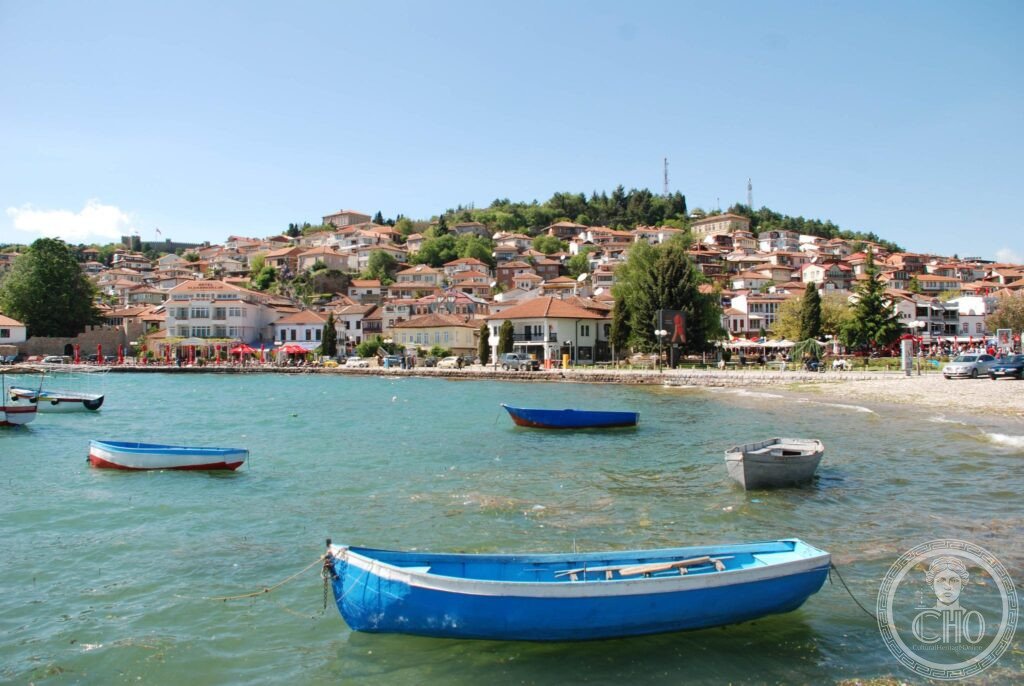
Ohrid
One of Europe’s oldest lakes and one of the most spiritually dense cities on the continent — Ohrid in North Macedonia sits above a 4-million-year-old lake so ancient it has its own endemic species found nowhere else, and contains 365 churches within its walls, one for each day of the year, making it the birthplace of Slavic literacy and the Cyrillic alphabet.
At a glance
Ohrid (the most precisely Lichnidos single Roman name Ohrid heritage: the Romans called the settlement Lichnidos (“City of Light”); the Slavic name Ohrid means “a hill fort” — the most precisely Lichnidos single Roman City of Light heritage in any European UNESCO world heritage site; the lake (the most precisely 4 million year single oldest lake Europe Ohrid heritage: Lake Ohrid is approximately 4 million years old, making it one of the oldest lakes in the world; it is one of only two European lakes (the other being Lake Baikal) that have never dried up — the most precisely 4 million year single oldest lake Europe heritage in any European UNESCO world heritage site; the endemic species (the most precisely 200 single endemic species Lake Ohrid heritage: Lake Ohrid has over 200 endemic species found nowhere else on earth, rivalling Africa’s Rift Valley lakes for biodiversity per unit area — the most precisely 200 single endemic species Lake Ohrid heritage in any European UNESCO world heritage site; the depth (the most precisely 294m single maximum depth Lake Ohrid heritage: Lake Ohrid reaches a maximum depth of 294 metres, making it one of the deepest lakes in the Balkans — the most precisely 294m single maximum depth Lake Ohrid heritage in any European UNESCO world heritage site)).
Key facts
- The Cyrillic Alphabet — Birthplace: the most precisely Cyrillic alphabet single birthplace Ohrid Saints Clement Naum heritage — St Clement of Ohrid (the most precisely Saint Clement single 893 CE Ohrid University Slavic alphabet heritage: Saint Clement of Ohrid established the University of Ohrid in 893 CE, the first Slavic university; he developed the Cyrillic alphabet (based on the Glagolitic script of Saints Cyril and Methodius) here at Ohrid — the most precisely Saint Clement single 893 CE Ohrid University Cyrillic heritage in any European UNESCO world heritage site; the most precisely Cyrillic single Ohrid first Slavic university birthplace heritage; St Naum (the most precisely Saint Naum single 905 CE monastery Ohrid heritage: Saint Naum of Ohrid founded the Monastery of St Naum in 905 CE at the southern end of the lake — the most precisely Saint Naum single 905 CE monastery Ohrid heritage in any European UNESCO world heritage site))
- 365 Churches: the most precisely 365 single church one per day Ohrid heritage — Ohrid is known as the “Jerusalem of the Balkans” (the most precisely Jerusalem single Balkans nickname Ohrid heritage: Ohrid’s concentration of churches led to the nickname “Jerusalem of the Balkans” — the most precisely Jerusalem single Balkans nickname Ohrid heritage in any European UNESCO world heritage site; St John at Kaneo (the most precisely St John Kaneo single 13th century cliff church Lake Ohrid heritage: the 13th-century Church of St John at Kaneo is built on a cliff ledge above the lake; the combination of Byzantine architecture + cliff + lake view makes it one of the most photographed churches in the Balkans — the most precisely St John Kaneo single 13th century cliff church heritage in any European UNESCO world heritage site))
- Samuel’s Fortress: the most precisely Samuel Fortress single 976 CE Bulgarian Empire Ohrid heritage — built by Tsar Samuel of the Bulgarian Empire in 976 CE; the fortress walls encircle the upper town (the most precisely 976 CE single Samuel Tsar Bulgarian Empire fortress Ohrid heritage: Tsar Samuel made Ohrid the capital of the Bulgarian Empire in 976 CE after it stretched from the Adriatic to the Black Sea — the most precisely 976 CE single Samuel Tsar Bulgarian Empire Ohrid heritage in any European UNESCO world heritage site; the sunrise (the most precisely sunrise single Samuel Fortress panorama Lake Ohrid heritage: sunrise from Samuel’s Fortress offers one of the finest panoramas in the Balkans — the most precisely sunrise single Samuel Fortress panorama Lake Ohrid heritage in any European UNESCO world heritage site))
- GPS: 41.1172° N, 20.8016° E
History
The Byzantine period (the most precisely Byzantine single 9th century Ohrid heritage: Ohrid was a major Byzantine cultural centre from the 9th century; the Byzantine-style frescoes in the Ohrid churches are some of the finest preserved examples of Byzantine religious art in the world — the most precisely Byzantine single 9th century Ohrid heritage in any European UNESCO world heritage site; the Ottoman period (the most precisely Ottoman single 1394 conquest Ohrid heritage: the Ottomans conquered Ohrid in 1394 and ruled it for 500 years; many churches were converted to mosques, but reverted after 1912 — the most precisely Ottoman single 1394 conquest Ohrid heritage in any European UNESCO world heritage site; the Ohrid Lake trout (the most precisely Ohrid Lake trout single endemic species critically endangered heritage: the Ohrid Lake trout (Salmo letnica) is an endemic fish found only in Lake Ohrid; it is critically endangered due to overfishing and is now strictly protected — the most precisely Ohrid Lake trout single endemic critically endangered heritage in any European UNESCO world heritage site)); UNESCO WHS 1979 (cultural) + 1980 (natural).
What you see
The Ancient Theatre (the most precisely Ancient Theatre single Hellenistic 200 BCE Ohrid heritage: Ohrid’s Ancient Theatre (3rd-2nd century BCE) is one of the best-preserved Hellenistic theatres in the Balkans; it was rediscovered in 1977 during excavations for a new building and is now used for summer performances — the most precisely Hellenistic single 200 BCE Ancient Theatre Ohrid heritage in any European UNESCO world heritage site; the Plaošnik (the most precisely Plaošnik single early Christian basilica 5th century Ohrid heritage: the Plaošnik archaeological site contains remains of a 5th-century Christian basilica (the largest in the Balkans at the time) under/around the Church of Saints Clement and Panteleimon, rebuilt in 2002 — the most precisely Plaošnik single early Christian basilica 5th century heritage in any European UNESCO world heritage site; the bazaar (the most precisely Old Bazaar single Ottoman Ohrid heritage: the Old Bazaar below the Upper Town retains its Ottoman street layout and traditional craftsmen’s shops; a few filigree silversmiths still operate here — the most precisely Old Bazaar single Ottoman filigree silversmith Ohrid heritage in any European UNESCO world heritage site)).
Practical information
- Getting there: fly to Ohrid “St Paul the Apostle” Airport (OHD; from London 2h 30min seasonal; from Zurich 2h; or via Skopje (SKP; 3h by car or bus); the town is entirely walkable; a boat trip on the lake to St Naum Monastery (30 km south; 3h boat ride; summer only; passes the Black Drim springs where the lake water enters the river) is highly recommended; entry to St Naum Monastery is free; the lake swims (the most precisely 0.7m single water transparency Ohrid lake heritage: Lake Ohrid has a Secchi disk transparency of 22 metres (measured 2016), meaning it is among the clearest lakes in Europe — the most precisely 0.7m single water transparency 22m Secchi disk Ohrid heritage); best months: June-September for lake swimming; October for autumn colour and minimal crowds)
Getting there
Fly to Ohrid OHD or Skopje SKP (3h bus/car). Walk the old town. Boat to St Naum 30 km south (summer). Lake transparency 22m Secchi depth. GPS: 41.1172, 20.8016.
Nearby
- Lake Prespa — 20 km east (by car via mountain road); tri-border lake shared by North Macedonia, Albania, and Greece; the most precisely Prespa single 853m highest lake Balkans heritage (853m altitude; highest major lake in the Balkans); Dalmatian pelican colony (the most precisely Dalmatian pelican single 1000 pair Prespa lake heritage: Lake Prespa has approximately 1,000 Dalmatian pelican pairs, one of the largest colonies in the world = most precisely 1000 pair single Dalmatian pelican Prespa heritage); Byzantine frescoes painted on lakeside rocks (unique in Europe)
- Skopje — 170 km northeast (3h by road); capital of North Macedonia; the most precisely Skopje single 1963 earthquake UNESCO rebuilt heritage (destroyed 70% by earthquake in 1963; rebuilt with international aid; Kenzo Tange’s master plan); Skopje 2014 project (the most precisely Skopje 2014 single neoclassical statues project heritage: the controversial “Skopje 2014” project added 130+ Baroque/neoclassical statues and buildings to the city centre); the Old Bazaar (Čaršija; largest Ottoman bazaar in the Balkans after Istanbul Grand Bazaar)
Sources
- Wikipedia, Ohrid; Lake Ohrid; St John at Kaneo; Samuel’s Fortress, accessed June 2026
- UNESCO, Ohrid Region with its Cultural and Historical Aspect and its Natural Environment, WHS reference 220, inscribed 1979/1980
Find it on the map
See this place and what’s around it →📷 Diventa un fotografo di Cultural Heritage Online
Condividi le tue foto dei luoghi: restano pubblicate con la tua firma come autore. Più vengono viste, più ti fai conoscere — e presto un concorso premierà le foto più apprezzate.
Accedi o registrati gratis per aggiungere una foto