
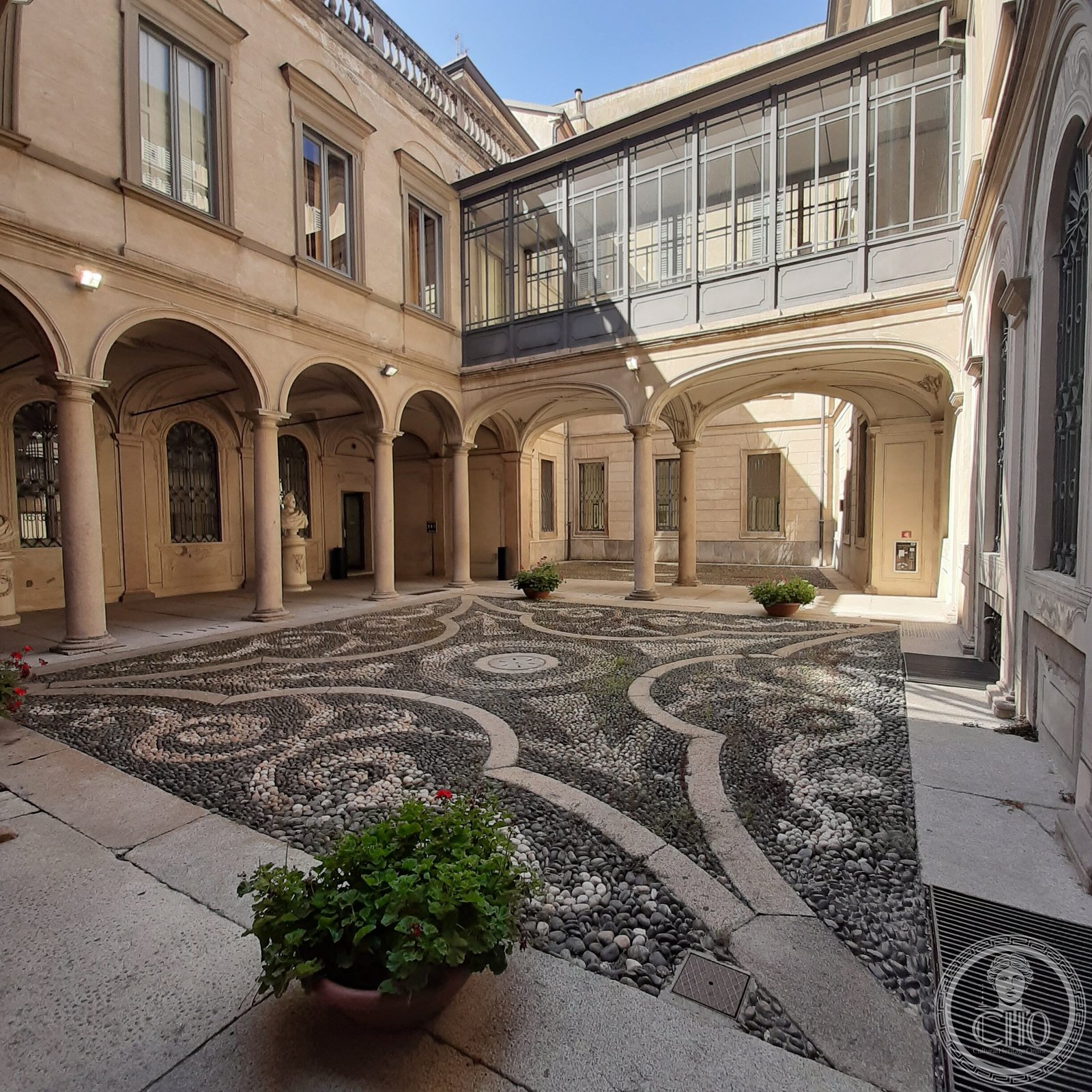
Morando Palace
A baroque palazzo in central Milan that houses the city’s Costume Fashion Museum and an important collection of civic history, art, and decorative objects spanning centuries of ownership by prominent Milanese families.
At a glance
Morando Palace is a multistory residence transformed into a public museum. Its rooms preserve seventeenth-century painted ceilings and later baroque renovations alongside rotating exhibitions of fashion, costume, and historical artifacts. The palace reflects the tastes and ambitions of the families who shaped it over four centuries.
History
The Casati family acquired the building at the end of the sixteenth century, commissioning decorative work visible today in two rear halls on the main floor, dated 1651. Giovanni Villa purchased it in 1733 and initiated a program of embellishment that transformed its appearance. In 1770, Giovanni applied for ennoblement into the Milanese nobility, a social ascent reflected in the palace’s architectural upgrading to prevailing Lombard baroque taste.
The Villa family held the property until 1845, when the last direct heir, Carlo Villa (then serving as mayor of Milan), died without children. It passed through the De Cristoforis and Weill Schott families before Gian Giacomo and Lydia Morando Attandolo Bolognini purchased it in 1909. Upon Lydia’s death, she bequeathed the palace to the Municipality of Milan in 1945.
Following World War II bombing that destroyed the adjoining Palazzo Sormani—the former seat of the city museum—the collections were transferred here, preserving the city’s historical heritage from wartime destruction.
What you see
The palazzo combines sixteenth-century foundations with baroque enrichment. Two halls in the rear wing retain original painted coffered ceilings and frieze work with cupids. Giovanni Villa’s late-eighteenth-century renovations established the building’s current external and interior appearance, following contemporary Lombard baroque conventions and proportions.
The museum organizes its exhibitions across period rooms and dedicated galleries devoted to costume, fashion, and decorative arts.
Cultural significance
Morando Palace documents four centuries of Milanese taste and social aspiration through its architectural layers. The Casati and Villa families’ investments reflect the city’s cultural and economic life from the Renaissance through the enlightenment. The palace now preserves the civic history collection salvaged from wartime destruction, including works from the Beretta legacy and the art collection of Duchess Eugenia Litta Visconti Arese, whose donation includes Vincenzo Vela’s romantic sculpture Morning Prayer (commissioned 1846).
Key facts
- Address: Via Sant’Andrea, 6, Milan
- Coordinates: 45.46845672731868, 9.196221828460693
- Phone: +39 02 8846 5735
- Official website: http://www.civicheraccoltestoriche.mi.it/
Practical information
The palace operates as a civic museum presenting permanent and temporary exhibitions. Admission fees and opening hours should be confirmed via the official website or by phone.
Getting there
Morando Palace is located on Via Sant’Andrea in Milan’s central districts. Public transport connections and parking information are available through local travel resources and the museum’s website.
Sources & resources
Find it on the map
See this place and what’s around it →Historical events at this place (2)
📷 Diventa un fotografo di Cultural Heritage Online
Condividi le tue foto dei luoghi: restano pubblicate con la tua firma come autore. Più vengono viste, più ti fai conoscere — e presto un concorso premierà le foto più apprezzate.
Accedi o registrati gratis per aggiungere una foto