
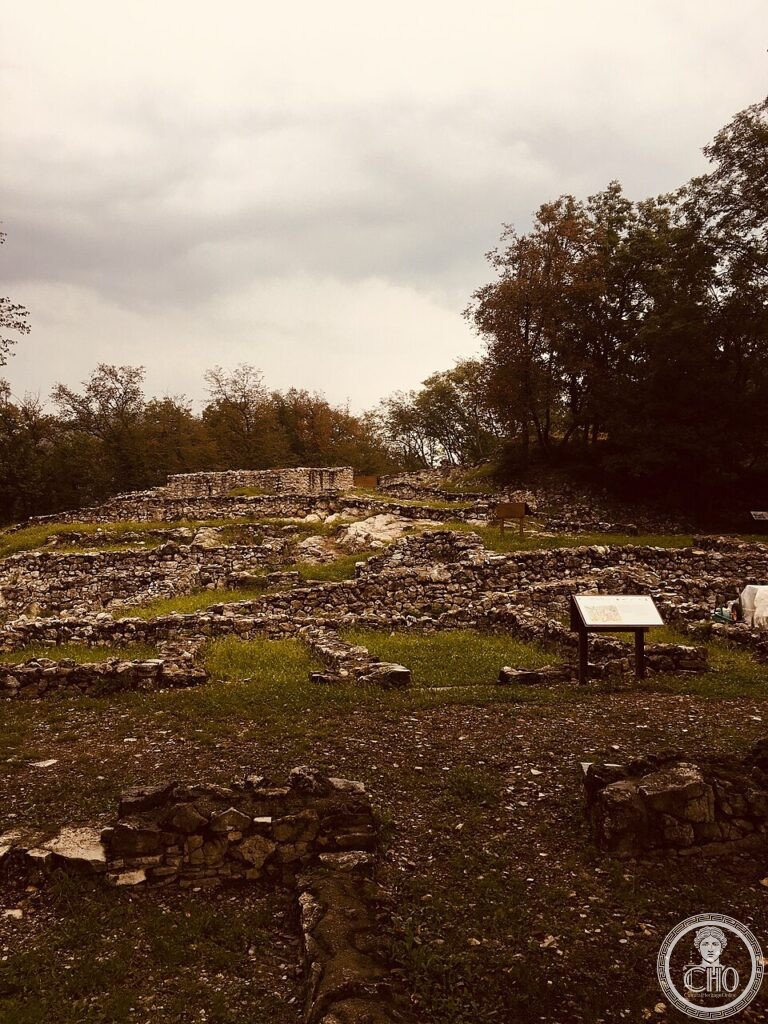
Monte San Giorgio, on the southern shore of Lake Lugano, holds the most complete fossil record of Triassic marine life known anywhere. An ancient seabed starved of oxygen preserved more than thirty thousand vertebrate specimens, ichthyosaurs, placodonts and early archosaurs, in exceptional anatomical detail. Its slopes, shared between Italy and Switzerland, form a single UNESCO World Heritage property inscribed in 2003 and extended to the Italian side in 2010.
At a glance
Monte San Giorgio rises to 1,097 metres above Lake Lugano, its southwestern flank in the Varese province of Lombardia and its northeastern flank in Swiss Canton Ticino. The mountain exposes five distinct Triassic rock formations, among them the Grenzbitumenzone, a thick layer of bituminous black shale formed on an anoxic seafloor around 241 million years ago, and the younger Meride Limestone, rich in fossil fish. Together they preserve a continuous window onto life in a tropical lagoon that once sat near the Triassic equator.
The site is inscribed on the UNESCO World Heritage List, with the Swiss portion listed in 2003 and the Italian portion added as an extension in 2010, under reference 1090.
Key facts
- Height: 1,097 metres above sea level.
- Fossil age: Triassic period, roughly 245 to 230 million years ago.
- Specimens recovered: more than 30,000 vertebrate fossils extracted since excavations began in 1863.
- Status: UNESCO World Heritage property since 2003 (Swiss side), extended to the Italian side in 2010, reference 1090.
- Key species: Mixosaurus cornalianus, Ceresiosaurus calcagnii, Askeptosaurus italicus and Ticinosuchus ferox.
- Main collections: Museo Civico di Storia Naturale di Milano (Italian side) and Museo cantonale di storia naturale, Lugano (Swiss side).
History
Systematic study of the mountain began in 1863, when the Swiss geologist Karl Mayer-Eymar carried out the first scientific excavation on the Swiss slope. The Italian side entered the record in 1878, when the Milanese geologist Giuseppe Sordelli described fossils from the Besano formation in the Atti della Società Italiana di Scienze Naturali, whose Milan-based society went on to fund the first Italian dig at the Besano shale quarry.
Between 1954 and 1985 the Museo Civico di Storia Naturale di Milano ran a thirty-year excavation programme on the Besano formation under Silvio Lehmann, extracting thousands of specimens across three decades of seasons. On the Swiss side, the Paläontologisches Institut und Museum of the University of Zurich has maintained a continuous excavation programme since 1924, one of the longest-running palaeontological digs anywhere.
The Swiss portion of Monte San Giorgio was inscribed on the UNESCO World Heritage List in 2003; the listing was extended in 2010 to cover the Italian side of the mountain as well, under reference 1090.
What you see
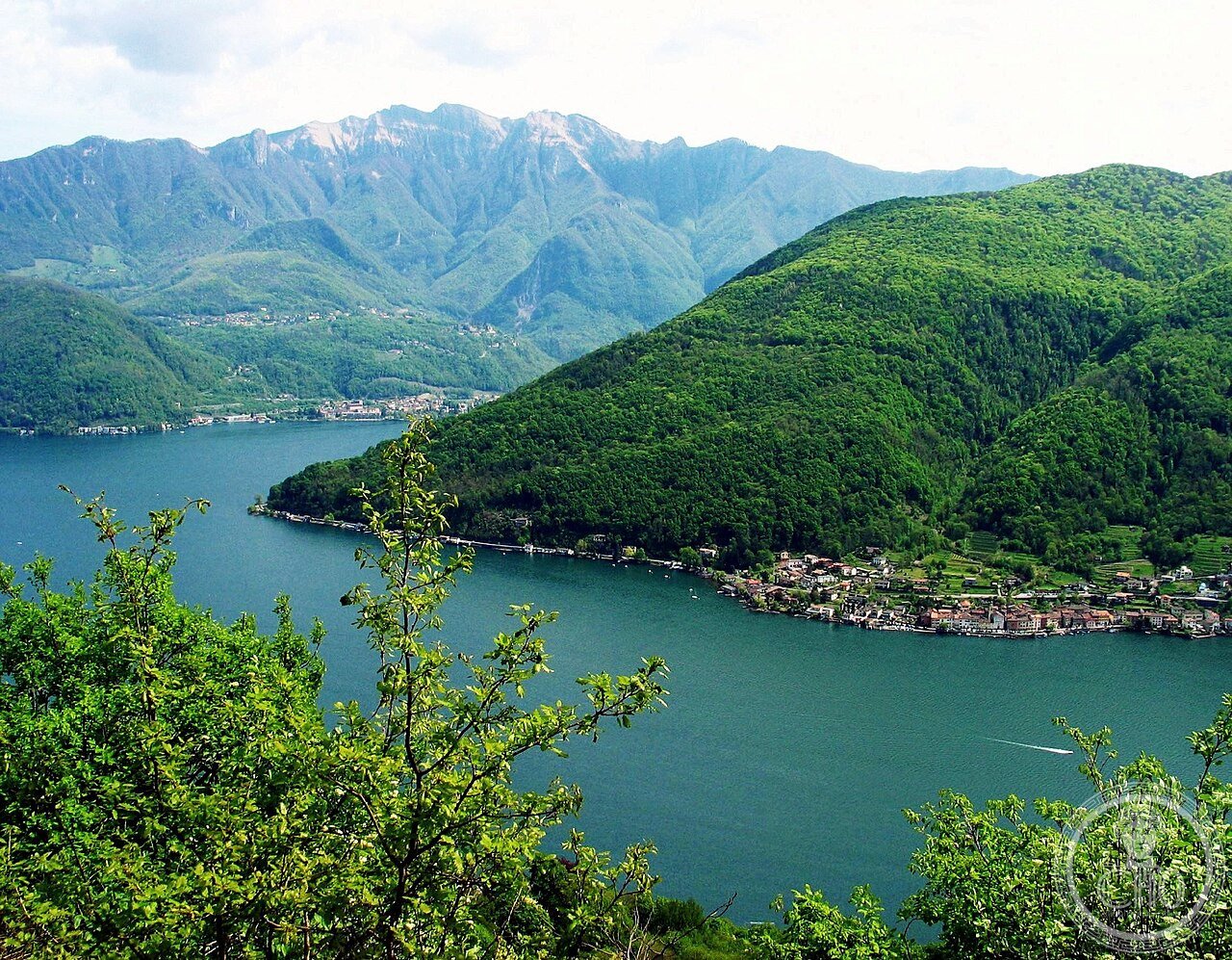
A waymarked geological trail, the Sentiero Geoturistico del Monte San Giorgio, links the Italian and Swiss sides of the mountain, starting either from Porto Ceresio or from Meride. Walking up from Porto Ceresio, the path follows the Lake Lugano shoreline before climbing through outcrops of the Grenzbitumenzone, the dark bituminous shale that yielded the bulk of the site’s fossils. The summit marks the Italian-Swiss border and gives views over the lake and the surrounding Alps.
On the Swiss side, the Museo cantonale di storia naturale in Lugano displays the mounted skeleton of Ceresiosaurus calcagnii, over six metres long, alongside a wall of articulated Askeptosaurus specimens ranging from juvenile to adult. The Museo Civico di Storia Naturale di Milano holds the Italian collections in a permanent gallery devoted to Triassic sea and continental environments. Scheduled open days, held in June and September, allow visitors to watch active excavation at the Cassina site above 900 metres.
Practical information
- Trail: the Italian ascent from Porto Ceresio covers around four kilometres with roughly 750 metres of climbing; sturdy footwear is advisable on the limestone terrain.
- Museums: the Milan and Lugano natural history museums both hold permanent Monte San Giorgio galleries; check each museum’s own website for current opening days and admission arrangements.
- Excavation open days: the Lugano museum organises supervised visits to the active dig in June and September, with limited places; booking is through the museum’s own channels.
- Border crossing: the summit sits on the Italian-Swiss border, so a valid identity document is needed for the walk between the two sides.
Getting there
Porto Ceresio, on the Italian side, is reached by regional train from Milano Centrale via Varese on the Milan–Porto Ceresio line; current timetables and fares are best checked directly with Trenord. From the station, the marked trail to the summit begins along the lakeshore. The Swiss side is approached from Meride, reachable via Lugano.
Nearby
- Museo Civico di Storia Naturale di Milano — the Italian-side collection, with a permanent gallery on Triassic marine and continental life.
- Museo cantonale di storia naturale, Lugano — the Swiss-side collection, including the mounted Ceresiosaurus skeleton.
- Meride — starting point for the Swiss ascent of Monte San Giorgio.
- Lake Lugano — borders the mountain’s lower slopes and forms part of the Italian approach walk.
Sources
- Museo Civico di Storia Naturale di Milano
- Museo cantonale di storia naturale, Lugano
- Università di Zurigo, Paläontologisches Institut und Museum
- Atti della Società Italiana di Scienze Naturali
- UNESCO, reference 1090
Gallery
Find it on the map
See this place and what’s around it →📷 Become a Cultural Heritage Online photographer
Share your photos of places: they stay published under your name as the author. The more they're seen, the more you get noticed — and soon a contest will reward the most appreciated photos.
Log in or sign up free to add a photo