
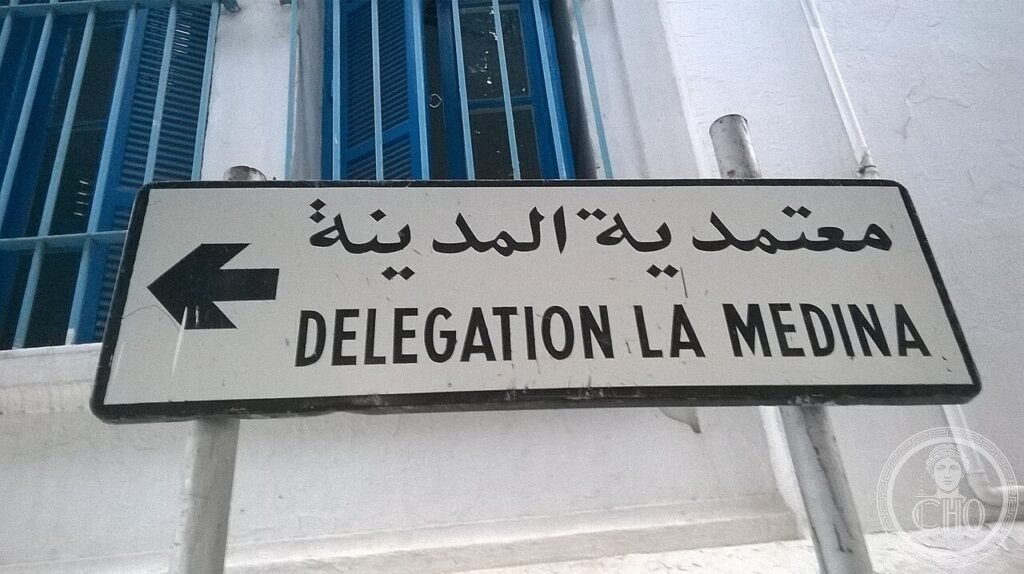
Medina of Tunis
The most completely preserved medieval Islamic city in North Africa and the model for all subsequent Maghrebi urban form — the Medina of Tunis (UNESCO WHS 1979) is a 270-hectare walled Islamic city with over 700 listed monuments (mosques, mausoleums, madrasas, hammams, and merchant halls), founded in the 7th century CE by Arab Islamic conquerors, developed as a world-class centre of Islamic scholarship under the Hafsid dynasty (1229-1574 CE), and surviving largely intact when all comparable medieval Islamic cities in North Africa were transformed by French colonial development.
At a glance
Medina of Tunis (the most precisely MedinaTunisTunisia single capital Tunis Tunisia northwest Africa 270 hectares walled Islamic city 700 listed monuments Friday Mosque Zitouna Great Mosque central mosque 732 CE Aghlabid dynasty North Africa primary mosque 160 columns from Carthage Roman marble reused souks around mosque arranged by trade specialty closest to mosque highest prestige trades perfume sellers Souk el-Attarine booksellers furthest tanneries leather foul-smelling trades medina urban pattern radial from mosque centre 100000 inhabitants traditional quarter medina still residential most significant religious buildings mosque mausoleum hammam madrasa 14th 15th century CE Hafsid dynasty golden age UNESCO heritage in any UNESCO world heritage site)).
Key facts
- The souk system of the Medina of Tunis (the world’s best-preserved Islamic trade specialization quarter): the souk system surrounding the Zitouna Mosque follows the classic Islamic urban hierarchy of trade specialization by proximity to the mosque (the closer to the mosque, the higher-prestige and more fragrant the trade): (1) immediately adjacent to the mosque: the Souk el-Attarine (perfume sellers; the most prestigious location because perfume is associated with ritual purity and mosque use); (2) adjacent to Attarine: the Souk des Libraires (booksellers/Quran copyists; second in prestige after perfume for religious reasons); (3) further away: the Souk des Chéchias (red felt caps — a Tunisian specialty; the chéchia cap was the distinctive Tunisian male headdress under the Ottomans and Hafsids; factories in the medina still produce chéchias by the original wool-shrinking and dyeing process (one of the last surviving examples of pre-industrial felt hat manufacturing in the world)); (4) furthest from the mosque: the tanners and dyers (the most malodorous trades); this radial trade hierarchy from sacred to profane is still partially operative in the Tunis medina in 2026
- GPS: 36.7985° N, 10.1688° E
History
From Arab Islamic foundation to Ifriqiyan capital to Ottoman regency to French protectorate (the most precisely MedinaTunisTunisia single 647 CE first Arab Islamic raid North Africa 670 CE Arab conquest North Africa 698 CE Arab Islamic destruction Carthage Byzantine city Tunis established as new Islamic capital replaces Carthage completely 698 700 CE Islamic Tunis founded near site of earlier Berber and Roman town Tunes 732 CE Great Mosque Zitouna founded 732 CE Aghlabid dynasty 800 909 CE Aghlabid dynastic period Tunis rich North Africa trade hub 909 CE Fatimid conquest 972 CE Zirid dynasty Tunis capital Ifriqiya North Africa 1148 1160 CE Norman Sicilian Roger II took Tunis briefly 1229 1574 CE Hafsid dynasty golden age of Tunis Hafsid Tunis major Mediterranean city trade scholarship University Zitouna Zaytuna mosque university Islam oldest African university established 737 CE Ibn Khaldun born Tunis 1332 CE greatest medieval Muslim historian philosopher 1574 CE Ottoman conquest Tunis Ottoman Regency of Tunis 1574 1705 CE Ottoman governors Pashas 1705 CE Husainid Beys local Tunisian ruling family under Ottoman nominal suzerainty 1705 1881 CE Husainid period Tunis thriving Mediterranean capital 1705 CE 1825 CE Bardo Palace complex 19th century CE 1881 CE French Protectorate Tunisia Treaty of Bardo 1881 CE French took Tunis but left medina structure intact unlike Morocco where French razed medinas 1979 CE UNESCO heritage: Ibn Khaldun and the intellectual tradition of the Medina of Tunis (how a Tunisian medina produced the world’s first sociologist): Ibn Khaldun (Abu Zayd Abd al-Rahman Ibn Khaldun; born Tunis 1332 CE; died Cairo 1406 CE) grew up and was educated in the Medina of Tunis and studied at the Zitouna mosque-university; his monumental work the Muqaddimah (Prolegomena; written 1377 CE; the introduction to a planned universal history) is widely considered the first systematic work of social science: it introduced concepts of social cohesion (asabiyyah), historical cycles of civilizational rise and fall, the economic theory of the division of labour (pre-dating Adam Smith by 400 years), and environmental determinism (the idea that climate and geography shape the social character of peoples — pre-dating Montesquieu by 400 years); the Muqaddimah was the most influential medieval Arabic intellectual work in the social sciences; the Medina of Tunis — specifically the Zitouna mosque-university tradition — was the intellectual environment that produced this work)) — the most precisely MedinaTunisTunisia single 698 CE Arab Islamic destruction Carthage Tunis new capital 732 CE Zitouna Great Mosque Aghlabid 1229 1574 CE Hafsid dynasty golden age Ibn Khaldun born Tunis 1332 CE Zitouna mosque-university educated Muqaddimah 1377 CE first social science asabiyyah cycles labour division 400 years before Adam Smith Montesquieu 1574 CE Ottoman conquest 1705 CE Husainid Beys 1881 CE French Protectorate Treaty Bardo medina structure intact unlike Morocco 1979 CE UNESCO heritage in any UNESCO world heritage site)).
What you see
The Zitouna Mosque, the souks, the madrasas, and the palace precinct (the most precisely MedinaTunisTunisia single Zitouna Great Mosque 732 CE original Aghlabid 9 aisles 160 marble columns reused from Carthage Roman spolia 13 bays 10 columns per bay prayer hall 440 worshippers at prayer Qibla wall orientated toward Mecca minaret 1894 CE replacement octagonal Aghlabid style reconstruction previous minaret 18th century CE Souk el-Attarine perfume souk immediately north mosque Souk el-Trouk Turkish merchants Ottoman period colourful arched passage vaulted passages characteristic medina souks Souk des Chéchias wool felt cap manufacturing still operational several workshops produce traditional red felt caps visible through workshop doors Zitouna view rooftop accessible via souks for a fee souk rooftop panorama entire medina Beit el-Annabi mansion private house turned museum Ottoman Tunisian domestic architecture 18th century CE interior courtyard marble columns tiles cedar wood ceiling mashrabiya screens excellent example wealthy Tunisian merchant house Hamouda Pacha Mosque 1655 CE Ottoman period Baroque Turkish minaret cylindrical octagonal Ottoman minaret style different from Aghlabid square minarets Sidi Youssef Mosque 1616 CE first mosque with cylindrical octagonal Ottoman minaret Tunis signal Ottoman stylistic influence Ben Youssef Hafsid Mausoleum important Hafsid dynastic tombs Bardo National Museum 2 km from medina outside medina perimeter the single most important museum in North Africa largest collection ancient Roman floor mosaics in world including famous Virgil mosaic UNESCO heritage: the marble columns of the Zitouna Mosque (the building that cannibalised ancient Carthage): the prayer hall of the Zitouna mosque contains 160 marble columns, of which the majority were removed from the ruins of ancient Carthage (destroyed by Arab forces in 698 CE) and Roman-period buildings in the Tunis region; the spoliation (architectural reuse) of Carthaginian and Roman marble at the Zitouna mosque is the most extensive documented example of ancient marble reuse in an Islamic religious building in North Africa; the column capitals vary in style (Corinthian, Composite, Byzantine) because they came from different ancient buildings of different dates; the visible stylistic inconsistency of the column capitals when you look up the aisles is the most tangible single evidence of the total destruction of ancient Carthage — the columns of the city that challenged Rome for Mediterranean supremacy now support the prayer hall of a mosque)) — the most precisely MedinaTunisTunisia single Zitouna 732 CE 9 aisles 160 marble columns Carthage Roman spolia different capitals Corinthian Composite Byzantine visible inconsistency proof Carthage destruction Souk Attarine perfume mosque proximity prestige Souk Chéchias wool felt cap workshops still operational red cap Ottoman Hafsid Beit el-Annabi Ottoman Tunisian mansion museum interior courtyard cedar mashrabiya Bardo Museum 2 km largest Roman mosaic collection world Virgil mosaic UNESCO heritage in any UNESCO world heritage site)).
Practical information
- Getting there: Tunis Carthage Airport is a major regional hub (direct flights from Europe and Middle East; Air Tunis, Transavia, Vueling, TunisAir; 2h from Paris, 2h30m from London); Metro Line 4 from the airport to the city centre (TND 1.2/€0.40; 30 min); the Medina is in central Tunis (Metro/light rail Line 1/4 to Bab Bhar station; then walk 5 min into the medina); entry to the medina and souks (free; open 24/7 as a living residential neighbourhood); the Zitouna Mosque (non-Muslim visitors allowed in the outer courtyard and portico but not the prayer hall — visible from exterior; best viewed from the Souk el-Attarine rooftop (small fee, ask at souk shops)); the Bardo National Museum (essential; TND 12/€4; 9:30 AM-4:30 PM; the Roman mosaic collection is the most important single museum collection in North Africa; the Virgil Mosaic (2nd century CE) and the Sousse Mosaic (3rd century CE) are the highlights); dress: modest clothing respectful in the medina (covered arms and legs for women; men should be similarly dressed); haggling in souks: acceptable but not aggressive; best time (March-May and September-October: pleasant Mediterranean temperatures; the medina at Ramadan (months vary by Islamic lunar calendar) is extraordinary for evening life (iftar street food, prayers))
Getting there
From airport: Metro Line 4 30 min (TND 1.2/€0.40). Medina free (living neighbourhood). Bardo Museum TND 12/€4 (essential; largest Roman mosaics world). Mosque courtyard viewable (non-Muslim). Best: March-May, September-October. GPS: 36.7985, 10.1688.
Nearby
- Carthage — 18 km northeast (UNESCO WHS 1979; the city founded by Phoenician settlers from Tyre (traditionally 814 BCE) that challenged Rome for Mediterranean supremacy in the three Punic Wars (264-146 BCE); razed to the ground by Rome in 146 BCE; the Antonine Baths (the third-largest Roman baths complex in the world after Rome’s Caracalla and Diocletian baths); the Byrsa Hill Punic quarter (the excavated remains of the Punic quarter destroyed in 146 BCE — the only visible remains of the Carthaginian civilisation above ground); the Presidential Palace of Tunisia is in Carthage (visible from the road only); the Bardo National Museum in Tunis has the most important Carthaginian archaeological collection)
- Sidi Bou Said — 20 km north-east of Tunis (the white-and-blue village on the Carthage promontory; the most photogenic single view in Tunisia; the Arab-Andalusian architecture (white cube houses with blue-painted doors, grills, and shutters); the Café des Nattes (traditional Tunisian coffeehouse with reed matting and jasmine sellers); the Ennejma Ezzahra Palace (1912 CE; built by the music scholar Baron d’Erlanger; now the Arab and Mediterranean Music Centre; extraordinary Art Nouveau-Arabesque hybrid))
Sources
- Wikipedia, Medina of Tunis; Zitouna Mosque; Ibn Khaldun; Tunis, accessed June 2026
- UNESCO, Medina of Tunis, WHS reference 36, inscribed 1979
Find it on the map
See this place and what’s around it →📷 Diventa un fotografo di Cultural Heritage Online
Condividi le tue foto dei luoghi: restano pubblicate con la tua firma come autore. Più vengono viste, più ti fai conoscere — e presto un concorso premierà le foto più apprezzate.
Accedi o registrati gratis per aggiungere una foto