
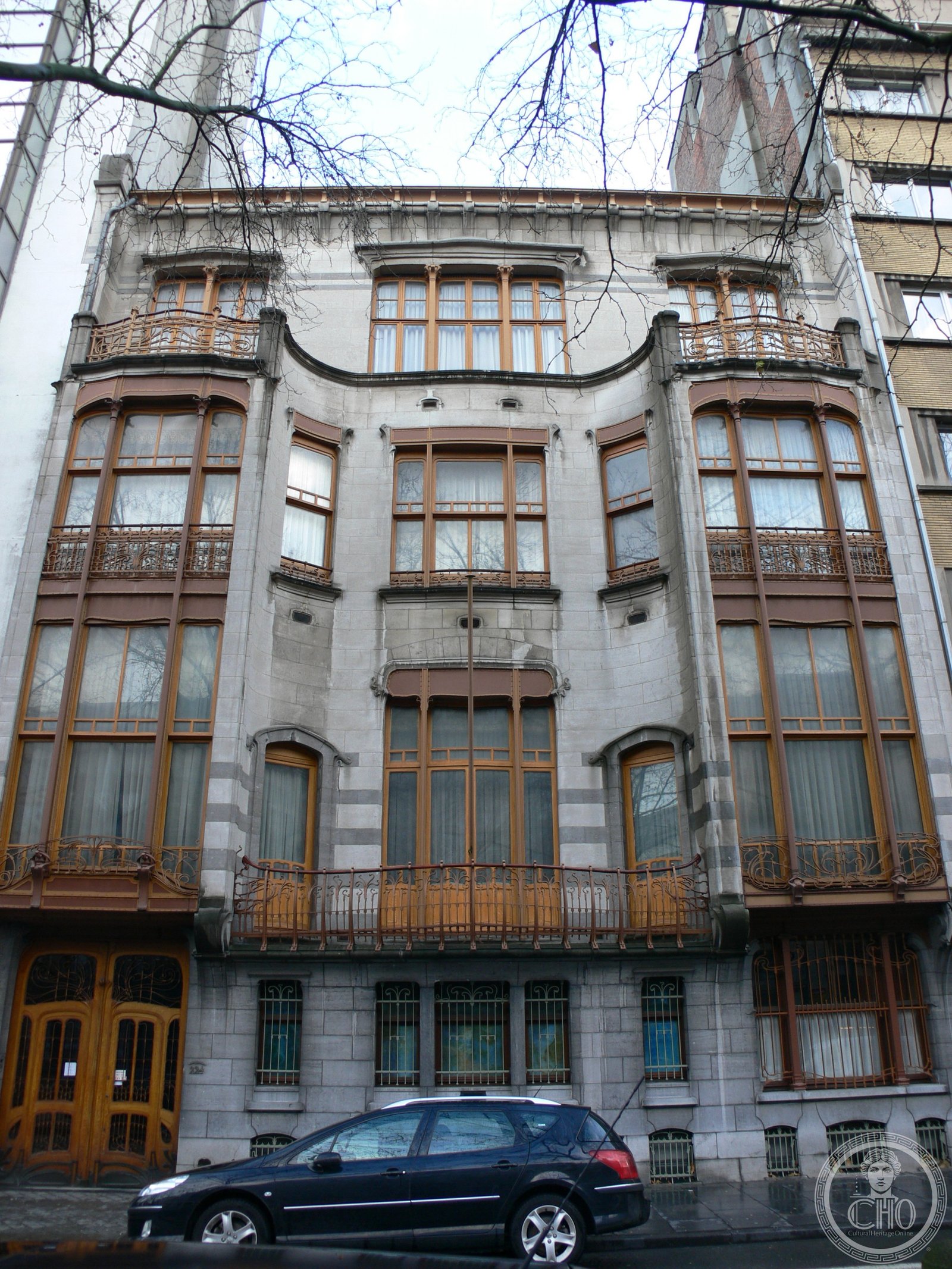
Hôtel Solvay
Victor Horta designed every last doorbell and carpet for this private mansion on Avenue Louise — a total work of art, and one of the four Brussels houses that earned UNESCO recognition in 2000.
At a glance
Built between 1895 and 1900 for Armand Solvay, heir to one of Europe’s largest industrial fortunes, the Hôtel Solvay represents the fullest expression of Horta’s Art Nouveau philosophy. Nothing here was left to chance or a supplier’s catalogue. Horta controlled the marble, the bronze, the tropical woods, the light fittings, and the tableware — creating an interior where architecture dissolves into furniture and furniture into ornament. The Wittamer family acquired the house in the 1950s and maintained it with exceptional care. Since January 2021 it operates as a museum, opening to small groups on five days each month.
Key facts
- Built: 1895–1900 by Victor Horta (1861–1947)
- Style: Art Nouveau
- Status: Museum (open by timed appointment, five days per month)
- Address: 224 Avenue Louise/Louizalaan, 1000 Brussels, Belgium
- GPS: 50.8263, 4.3653 — Open in Google Maps
- UNESCO/Listed: UNESCO World Heritage Site since 2000 — “Major Town Houses of the Architect Victor Horta (Brussels)”, Reference no. 1005, Criteria i, ii, iv
History
Armand Solvay, son of chemist and industrialist Ernest Solvay whose chemical process had made the family one of the wealthiest in Europe, commissioned the house in the mid-1890s. Horta accepted the commission as an opportunity for total creative control: he produced drawings for every element, from the structural ironwork of the façade to the porcelain of the dinner service.
The building passed through the 20th century in relative privacy. The Wittamer family, Belgian chocolatiers and patissiers, purchased the property in the 1950s and undertook careful stewardship. Unlike many comparable mansions that were subdivided or stripped, the Solvay house survived intact, its original furnishings and decorative programme largely in place. A major façade restoration ran from March 2022 to October 2024 under architect Barbara Van der Wee, addressing the metalwork, stonework, and stained-glass panels.
In January 2021, the building opened formally as a museum under the direction of Louis Wittamer, making its extraordinary interior accessible to the public for the first time on a structured basis. Visits remain deliberately small-scale to protect the interiors.
What you see
The Avenue Louise façade rises across five bays in cream-coloured stone, its ironwork balconies tracing the sinuous plant-stem curves that became Horta’s signature. The stone is carved with shallow relief ornament that catches the light without competing with the structural lines — a restraint unusual for the period. The front door itself is a composition in bronze and bevelled glass.
Inside, the staircase hall is the centrepiece. Marble columns support iron balustrades whose flowing lines were influenced by Japanese woodblock prints. Théo van Rysselberghe, the Belgian pointillist painter, contributed decorative panels to the staircase. Original light fittings, intact carpets, and Horta-designed furniture survive in the reception rooms, making this one of the most complete Art Nouveau interiors in existence.
Practical information
- Open to the public by advance appointment only; five selected days per month with limited timeslots
- Book via the official website: hotelsolvay.be
- Best visited in spring or autumn when light through the stained glass is most dramatic
- Guided tours included in the visit format
- Estimated visit time: 1–1.5 hours
Getting there
The Hôtel Solvay stands on Avenue Louise in central Brussels, reachable by tram lines 81 and 93 (Louise stop) or by metro to Louise station on lines 2 and 6. Brussels-Midi (Gare du Midi), the city’s main international rail hub and Eurostar terminus, is approximately 2 km away. Brussels Airport (Zaventem) connects to the city centre in around 30 minutes by train.
Nearby
- Musée Horta (Rue Américaine, Saint-Gilles) — Horta’s own former home and studio, now the principal museum dedicated to his work, a short tram ride south
- Hôtel Tassel (Rue Paul-Émile Janson) — Horta’s first fully Art Nouveau commission (1893), also UNESCO-listed, ten minutes on foot
- Hôtel Max Hallet (Avenue Louise) — Another Horta residence on the same avenue, visible within a few hundred metres
- Musées Royaux des Beaux-Arts (Rue de la Régence) — Belgium’s national fine arts museum, 15 minutes by tram, with a strong collection of Symbolist and Art Nouveau-era painting
Sources
Find it on the map
See this place and what’s around it →Historical events at this place (2)
📷 Diventa un fotografo di Cultural Heritage Online
Condividi le tue foto dei luoghi: restano pubblicate con la tua firma come autore. Più vengono viste, più ti fai conoscere — e presto un concorso premierà le foto più apprezzate.
Accedi o registrati gratis per aggiungere una foto