
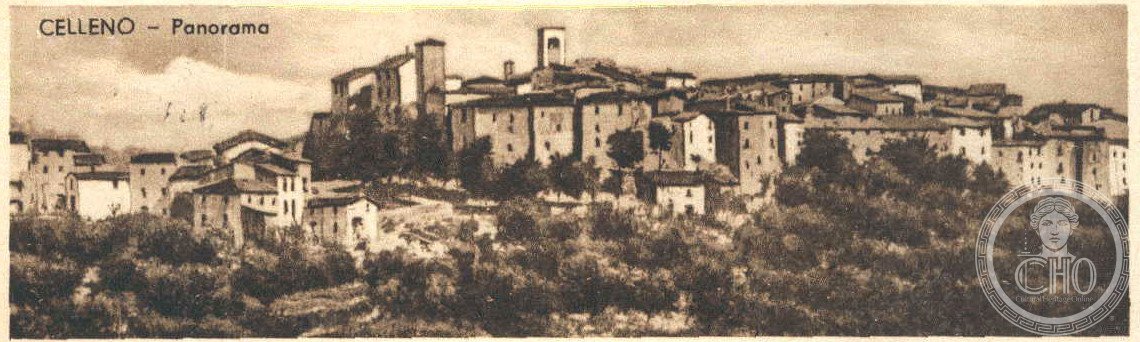
Ghost Village of Celleno
The old village of Celleno is one of Lazio’s most evocative ghost towns — a medieval hilltop settlement abandoned in the mid-20th century after structural instability rendered it uninhabitable, leaving behind a haunting ensemble of roofless stone houses, a still-standing church, and panoramic views over the volcanic tufa landscape of the Tuscia region. The new town of Celleno, built nearby on more stable ground, now houses the living community, while the vecchio borgo has become a site of heritage tourism and occasional cultural events.
At a glance
- Type
- Abandoned medieval village (borgo fantasma)
- Period
- Medieval origins; abandoned progressively from the 1930s–1950s
- Style
- Vernacular tufa-stone medieval and early modern architecture
- Location
- Celleno, Province of Viterbo, Lazio, Italy
- Coordinates
- 42.5628° N, 12.1439° E
Overview
Old Celleno occupies a narrow tufa spur in the heart of the Tuscia hills, the same geological territory that shaped Civita di Bagnoregio and dozens of other cliff-edge settlements in northern Lazio. The village’s gradual abandonment was driven by a combination of seismic risk, land subsidence in the soft volcanic rock, and post-war rural depopulation. Unlike many ghost towns that were abruptly vacated, Celleno’s evacuation was a slow process stretching over several decades, and some structures retained partial use into the 1960s before the site was finally left to nature and weather.
History
Celleno was a fortified medieval settlement controlling local farming land and the surrounding road network; its documented history stretches back to the early medieval period, and the village passed through the feudal authority of various Roman noble families before entering the Papal States. The 17th and 18th centuries saw some architectural elaboration — the church of San Donato was enlarged and the central piazza given a more formal character — before demographic stagnation set in. Structural surveys in the 20th century confirmed the irreversible instability of the tufa plateau, prompting the decision to relocate the community to new Celleno in the plain below.
What you see
Entering the old village along a single lane from the access gate, visitors walk through a landscape of open facades, empty window frames, and partial walls reclaimed by vegetation — an atmosphere that has attracted artists, filmmakers, and photographers seeking authentic ruin aesthetics. The church of San Donato remains structurally sound and occasionally hosts cultural events; its interior retains fragments of frescoes and a simple stone altar. The castle tower at the tip of the spur gives the clearest views over the tufa canyon and the wooded hills stretching towards Viterbo and Orvieto.
Cultural significance
Old Celleno belongs to the constellation of Lazio ghost towns that document the 20th-century collapse of the Apennine and sub-Apennine agricultural world — a mass departure whose human and material consequences are only now being reassessed as heritage resources. Several of these abandoned villages, including Celleno, have been proposed for cultural re-activation programs, recognising the ruins as authentic records of a way of life that contemporary Italy has largely lost.
Practical information
- Address
- Celleno Vecchio, 01020 Celleno VT, Province of Viterbo, Lazio, Italy
- Access
- The old village is generally accessible during daylight hours. Entry may be restricted or managed seasonally; check with the Celleno municipality before visiting.
- Note
- Uneven ground, partially unstable structures. Suitable footwear recommended.
Getting there
Celleno is approximately 85 km north of Rome by road. By car, take Via Cassia (SS2) north towards Viterbo, then follow provincial roads towards Celleno (signposted from Vitorchiano and Bomarzo). The nearest train station is Viterbo on the Rome–Viterbo commuter line; from Viterbo, Cotral buses serve the Celleno area, with a change at Bomarzo or Vitorchiano. The vecchio borgo is a short walk from the new village centre.
Sources & resources
Find it on the map
See this place and what’s around it →Events here — now on & upcoming
- Biennale di Viterbo18 Jul 2026 — 31 Oct 2026See the event →
Historical events at this place (1)
📷 Diventa un fotografo di Cultural Heritage Online
Condividi le tue foto dei luoghi: restano pubblicate con la tua firma come autore. Più vengono viste, più ti fai conoscere — e presto un concorso premierà le foto più apprezzate.
Accedi o registrati gratis per aggiungere una foto