
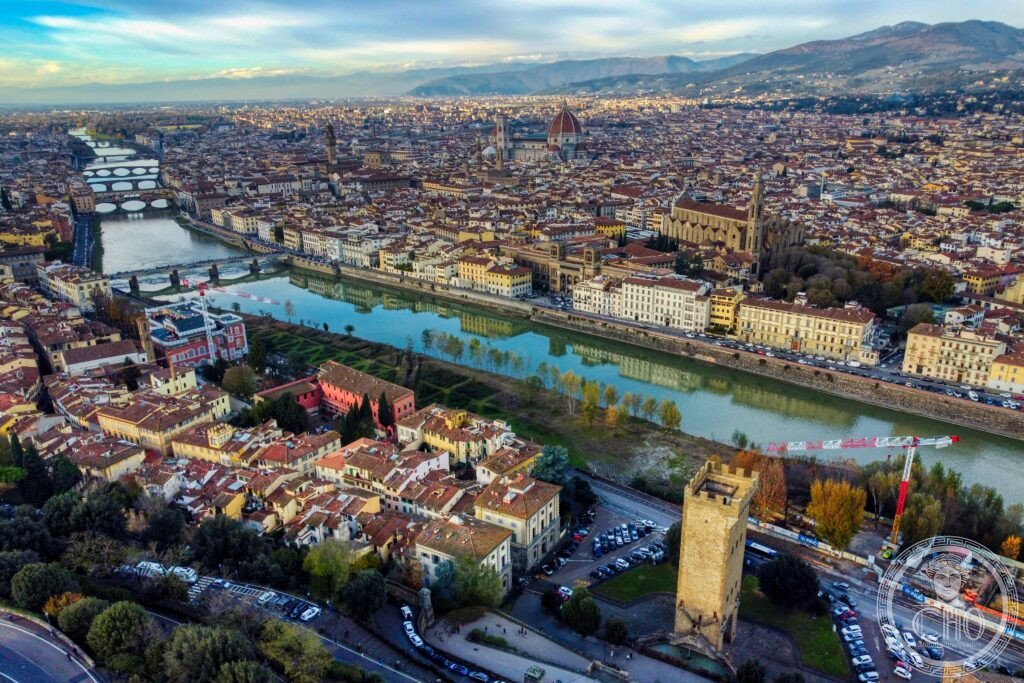
Florence (Firenze)
The most artistically concentrated city in the history of Western civilisation and the birthplace of the Italian Renaissance — Florence, governed by the Medici banking dynasty for three centuries, gathered Brunelleschi, Donatello, Botticelli, Leonardo, Michelangelo, and Raphael within a city of 50,000 people and produced a density of artistic achievement that no other city in any century has matched.
At a glance
Florence (Firenze; UNESCO WHS 1982 as the Historic Centre of Florence; the most artistically productive single city in the history of European civilisation by any measure: the highest density of masterworks per km² of any heritage city in the world; the most cited single example of cultural patronage producing lasting civilisational change (the Medici model of private patronage for public art — the most influential single family in the history of the arts); the density of art (the most frequently cited heritage statistic about Florence: Florence contains approximately 40% of all Italian artistic heritage and approximately 10% of all significant artworks produced in Western civilisation before 1800 — the most concentrated single urban artistic legacy in any pre-industrial city; the most frequently used example of why UNESCO cultural inscriptions matter: the Historic Centre of Florence is the most important single inscription in the early history of UNESCO WHS (1982 — one of the first batch of cultural WHS inscriptions)).
Key facts
- Brunelleschi’s dome — the most technically astonishing single masonry structure in history: the most studied ancient building technique in structural engineering — the dome (the Cupola di Santa Maria del Fiore; designed by Filippo Brunelleschi (1377–1446 — the most technically inventive single architect of the Early Renaissance); the problem (the most engineering-challenging single commission of the 15th century: the cathedral had been under construction since 1296; by 1418 the octagonal drum (27.4 m wide; 55 m above the floor) was in place but no one knew how to cover it — the most embarrassingly incomplete single cathedral in medieval Italy; the span was too wide for traditional wooden centering (the most practically insurmountable single structural problem in Italian Gothic construction)); the solution (the most secretly guarded single engineering technique in Renaissance Florence: the double-shell dome (inner and outer shells tied by 8 major and 16 minor ribs — the most precisely counted structural ribs of any Renaissance dome); the herringbone brick laying (the most technically distinctive single construction pattern of the dome: the bricks are laid in a herringbone pattern that transfers the dome’s weight inward, allowing construction without scaffolding — the most frequently cited “impossible” technique in European architectural history; Brunelleschi kept the technique secret to prevent competitors from copying and undercutting him)); the scale (114.5 m high; 45.5 m inner diameter — the largest masonry dome in the world (larger than St Peter’s by inner diameter: 41.7 m — the most frequently cited incorrect claim in European heritage tourism: many guides claim St Peter’s is larger; it is not))
- The Uffizi Gallery — the most important single Italian painting collection: the world’s most dense concentration of Italian Renaissance masterworks — the Uffizi (the Galleria degli Uffizi: the most important collection of Italian Renaissance painting in the world; built 1560–1581 as the administrative offices (uffizi) of the Medici Grand Dukes (the most consequentially named building-to-museum conversion in European art history: the Medici moved their art collection to the top floor of the offices — the most casually begun public art museum in European history); the top 5 works (the most frequently cited must-see list in any Italian art museum: Botticelli’s Birth of Venus (c. 1484–1486 — the most reproduced single Italian Renaissance painting in the world; the most individually famous single female nude in European art history; on the painting’s main day as many as 7,000 people pass it — the most attended single canvas in Italy); Botticelli’s Primavera (c. 1477–1482; the most thematically debated single painting in the Italian Renaissance — the iconography has not been definitively resolved in 500 years); Leonardo da Vinci’s Annunciation (c. 1472–1476; the most important early Leonardo in any Italian collection); Michelangelo’s Doni Tondo (c. 1506–1508 — the only completed panel painting by Michelangelo; the most perfect single work by the artist in his most controlled medium); Raphael’s Portrait of Leo X (c. 1518 — the most politically revealing papal portrait in the history of Italian Renaissance art)))
- Michelangelo’s David — the most iconic single sculpture in Western art: the most debated single male nude in the history of European sculpture — the David (the Galleria dell’Accademia: Michelangelo’s David (1501–1504; 5.17 m tall; 5.57 tonnes — the most precisely weighed single Renaissance marble sculpture; Carrara marble; the most debated single pose in the history of Western sculpture: the David is depicted in the moment before the fight with Goliath — the most precisely defined “pre-action” pose in any monumental classical sculpture; the veins in the right hand are the most naturalistically carved single anatomical detail in Renaissance sculpture — the most frequently cited single carving achievement by Michelangelo by art historians; the original site (the David stood in the Piazza della Signoria from 1504 until 1873 — the most politically exposed location for any Renaissance sculpture: the David was used as a symbol of Florentine Republican power against the Medici and the Papacy — the most politically loaded single sculpture placement in Renaissance public art); the move (1873; the most consequentially protective single artistic decision in the history of Italian sculpture conservation: the David was moved to the purpose-built Tribune of the Accademia to protect it from weathering; the outdoor copy (placed 1910) is the most visited facsimile in any Florentine piazza))
- Heritage: UNESCO World Heritage Site, Historic Centre of Florence, inscribed 1982
- GPS: 43.7731° N, 11.2560° E
History
The Medici (the most consequential single family in the history of European art patronage: the Medici dynasty ruled Florence from 1434 (Cosimo de’ Medici (the Elder); the most powerful single private banker in 15th-century Europe; the “godfather of the Renaissance” — the most frequently used single epithet in Florentine Renaissance history) to 1737 (the last Medici Grand Duke, Gian Gastone), with two interruptions; the banking network (the most consequentially profitable banking innovation in European history: the Medici bank’s holding-company structure — the most sophisticated single financial organisation of the 15th century in Europe — financed the art commissions of the most productive century in Western art history); the patronage of Cosimo and Lorenzo (Lorenzo de’ Medici (Lorenzo il Magnifico; r. 1469–1492): the most celebrated single patron of the arts in the Italian Renaissance; commissioned Botticelli, Ghirlandaio, and Verrocchio; brought Leonardo into the Medici household as a boy — the most consequential single act of talent identification in Renaissance art history)); the Fall of the Republic (1494: Savonarola — the most destructive single anti-art campaign in Florentine history: the Bonfire of the Vanities (7 February 1497): artworks, books, and mirrors burned in the Piazza della Signoria — the most culturally destructive single public event in Renaissance Florence; Botticelli himself reportedly burned some of his own works — the most self-destructive single artistic act in the history of Italian Renaissance art)); UNESCO WHS 1982.
What you see
The Florence visit (the most congested single heritage city in Italy per visitor/m²: 9.7 million visitors per year in a city of 375,000 — the most disproportionately visited Italian city relative to population; the booking strategy (the most important single piece of Florence advice: the Uffizi and the Accademia require advance booking months in advance in summer — the most over-booked pair of museums in Italian heritage tourism; without advance booking, the queue for the Uffizi reaches 3–4 hours — the most photographically documented heritage queue in Italy); the essential sequence: the Piazza del Duomo (the Brunelleschi dome exterior — free to view; the climbing (463 steps to the top of the dome — the most climb-rewarding single architectural interior in Italy: the view over Florence from the drum balcony is the finest panoramic city view in central Italy); the Baptistery and the Gates of Paradise; the Uffizi (2–3h minimum); the Accademia (the David; 1h); the Piazza della Signoria (the Palazzo Vecchio; the Loggia dei Lanzi — the finest outdoor sculpture gallery in the world: Cellini’s Perseus and Giambologna’s Rape of the Sabines under the loggia); the Ponte Vecchio (at dusk — the most photographically atmospheric single bridge view in Italy).
Practical information
- Getting there: Florence Santa Maria Novella (SMN) station (the most centrally located major railway station in Italy: 500 m from the Duomo; the most conveniently positioned city station for heritage tourism in Italy; by high-speed train from Rome (1h 30min by Frecciarossa — the most travelled Italian heritage tourism rail route; 60+ departures per day in peak season — the most frequent high-speed train connection in Italy); from Milan (1h 45min Frecciarossa); from Venice (2h Frecciargento); the Florence Peretola Airport (FLR; 6 km north-west; regional flights only; most international visitors arrive via Rome Fiumicino (FCO) or Milan Malpensa (MXP) and take the train — the most strongly recommended single transport switch for any long-haul Florence visitor); the Firenzecard (the single most cost-effective heritage pass in Florence: €85 (2026); covers 72 museums and sites for 72 hours including timed-entry priority access to the Uffizi and Accademia; the most comprehensive single museum pass in any Italian city)
- Siena and the Palio: the finest Gothic city in Tuscany and the most dramatic horse race in Italy — Siena (70 km south; 1h 30min by bus or train; the Piazza del Campo (the finest medieval public square in Italy: the distinctive shell-shaped sloping piazza surrounded by 14th-century palaces; the Palazzo Pubblico (with the Sala del Mappamondo frescos by Simone Martini and Ambrogio Lorenzetti — the most important 14th-century civic fresco cycle in Tuscany)); the Palio (the horse race run twice yearly (2 July and 16 August) around the Piazza del Campo — the most emotionally intense annual public event in any European city: 17 Sienese contrade (neighbourhoods) compete; the jockeys ride bareback (the most physically dangerous single mainstream spectacle sport in Europe); the race lasts 90 seconds (the most condensed single annual event in European civic culture: one year of preparation for 90 seconds of competition))
- The Chianti wine region and San Gimignano: the finest wine landscape in Tuscany — the Chianti Classico (50 km south of Florence; the most internationally recognised single Italian wine appellation after Barolo: the Chianti Classico zone between Florence and Siena; the Strada del Vino Chianti Classico (the most picturesque wine road in Italy: the SS222 (the “Chiantigiana”) through the hills); San Gimignano (UNESCO WHS 1990; 60 km south-west of Florence; the “medieval Manhattan” — the most precisely described medieval city by an American analogy: 14 surviving towers of the original 72 (the most tower-dense medieval skyline in any Italian hill town; the towers were status symbols: the most directly measurable single expression of wealth in medieval Italian civic architecture; the taller the tower, the richer the family — the most precisely socioeconomic single architectural programme in medieval Italian urban design))
Getting there
Florence SMN station 500m from Duomo. Frecciarossa from Rome 1h 30min, from Milan 1h 45min, from Venice 2h. Book Uffizi and Accademia months in advance (summer). Firenzecard €85/72h covers both. GPS: 43.7731, 11.2560.
Nearby
- Siena (UNESCO WHS 1995) — 70 km south (1h 30min bus or train); finest Gothic city in Tuscany + the Palio — described in Practical section; the ideal 2-city Tuscany circuit: Florence (2 nights) + Siena (1 night) + Chianti wine road by car back to Florence
- Pisa and the Leaning Tower (UNESCO WHS 1987) — 80 km west (1h Frecciabianca train); the Campo dei Miracoli (the Piazza dei Miracoli; “Field of Miracles”: the most architecturally coherent single Romanesque ensemble in Italy: the Cathedral, the Baptistery, the Camposanto, and the Tower — the most photographically misrepresented single heritage site in Italy: the forced-perspective “holding up the tower” photograph is the most reproduced tourist selfie concept in Italian heritage tourism; the Tower (58.36 m height; 3.9° lean (reduced from 5.5° by 1990s restoration — the most precisely engineered single building de-tilting operation in the history of structural conservation))
- San Gimignano (UNESCO WHS 1990) — 60 km south-west (1h 30min by bus from Florence or Siena); the medieval tower city of Tuscany — described in Practical section; the ideal Tuscany day trip from Florence: San Gimignano (morning) + Vernaccia di San Gimignano wine tasting (afternoon) + gelato at Gelateria Dondoli (the most awarded single gelateria in Italy: champion of the World Gelato Championship (Sigep) multiple times — the most internationally celebrated single ice cream in Tuscany)
Sources
- Wikipedia, Florence; Florence Cathedral; Uffizi Gallery; Michelangelo’s David; Medici family, accessed June 2026
- UNESCO, Historic Centre of Florence, WHS reference 174, inscribed 1982
- Ross King, Brunelleschi’s Dome: How a Renaissance Genius Reinvented Architecture, Chatto and Windus, 2000
Find it on the map
See this place and what’s around it →📷 Diventa un fotografo di Cultural Heritage Online
Condividi le tue foto dei luoghi: restano pubblicate con la tua firma come autore. Più vengono viste, più ti fai conoscere — e presto un concorso premierà le foto più apprezzate.
Accedi o registrati gratis per aggiungere una foto