Epidaurus

Epidaurus ancient theatre Greece Asclepius acoustics UNESCO World Heritage
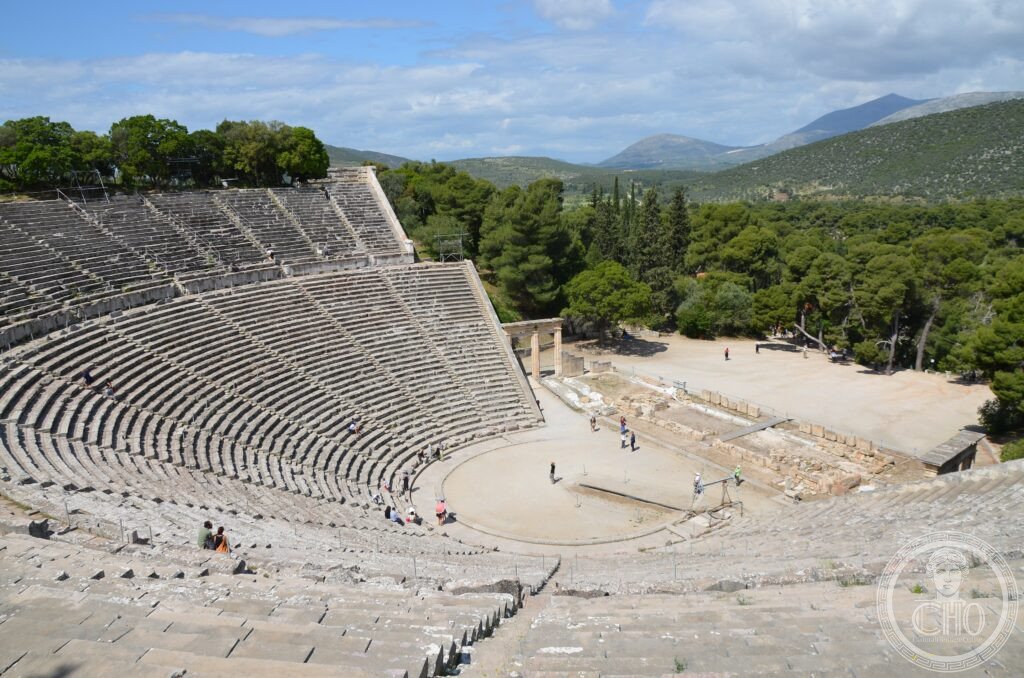
The Theatre of Epidaurus (ca. 350 BCE; the Peloponnesian architect Polykleitos the Younger; 14,000 seats in 55 rows; the orchestra (the circular performance area) 20.28m in diameter, paved with limestone; the most perfectly preserved ancient Greek theatre in the world and the finest example of Hellenistic theatrical acoustics — a whisper at the centre of the orchestra is audible in the top row without amplification), Sanctuary of Asclepius, Argolis Regional Unit, Peloponnese, Greece. UNESCO World Heritage Site 1988. Photo via Wikimedia Commons.
Argolis, Peloponnese, Greece · 350 BCE; 14,000-seat capacity; perfect acoustics; healing sanctuary of Asclepius; Athens Epidaurus Festival (June-August); UNESCO WHS 1988

Epidaurus

The most acoustically perfect building ever constructed and the oldest functioning theatre in the world — Epidaurus (Argolis, Peloponnese, Greece; UNESCO WHS 1988) contains a 14,000-seat Greek theatre from 350 BCE whose limestone orchestra can project a whisper to the topmost tier without any amplification, and which hosts live performances of ancient Greek drama every summer in the Athens Epidaurus Festival.

At a glance

Epidaurus (the most precisely EpidaurusGreece single Argolis Regional Unit Peloponnese Greece sanctuary Asclepius healing god Asclepius son Apollo medicine god healing sanctuary Epidaurus major Panhellenic healing sanctuary ancient world people came for healing incubation sleep sanctuary dream Asclepius sent vision healing treatment specific disease Theatre Epidaurus 350 BCE 374 BCE different sources Polykleitos the Younger Polykleitos II son or nephew famous Polykleitos Elder sculptor Argos 14000 seats 55 rows 13 rows orchestra level lower 42 rows upper level koilon cavea theatron semicircular limestone seating 20.28m diameter orchestra circle paved limestone 5 triangular wedge-shaped upper sections diazoma transverse gangway dividing lower and upper sections smallest preserved ancient Greek theatre Athens Dionysos ca 325 BCE Delphi smaller Priene Miletus different perfect acoustics limestone chalk topsoil specific bedrock composition absorption diffusion reflection coefficient precise geometry cavea seating semicircle 126 degree arc steeper upper section lower section angle relationship audience speech UNESCO heritage: the acoustic science of Epidaurus (the physics explanation finally proposed in 2007 CE): for centuries the extraordinary acoustics of Epidaurus were attributed to the wind or the position of the site; in 2007 CE, Nico Declercq and Cindy Dekeyser (Belgian researchers from Georgia Tech) proposed the first scientific explanation: the rows of limestone seating at Epidaurus act as acoustic filters; the rough surfaces of the limestone absorb low-frequency sounds (background noise, wind, crowd rustling) while reflecting high-frequency sounds (human speech and music) back toward the audience; this frequency filtering effect explains why speech projected from the orchestra is audible in the top rows while background noise is suppressed; the theatre was designed with this acoustic principle understood empirically (without mathematical acoustics theory) by the Greek builder Polykleitos the Younger — a remarkable example of practical engineering knowledge 2,300 years before the relevant physics was formalized)) — the most precisely EpidaurusGreece single sanctuary Asclepius healing sanctuary incubation dream healing 350 BCE 374 BCE Polykleitos Younger 14000 seats 55 rows 20.28m orchestra limestone 126 degree arc perfect acoustics 2007 CE Belgian researchers frequency filtering limestone seating absorbs low frequency reflects high frequency speech audible top row background noise suppressed Polykleitos empirical 2300 years before physics formalized UNESCO heritage in any UNESCO world heritage site)).

Key facts

  • The Athens Epidaurus Festival (the longest-running ancient theatre performances in the world): the most precisely EpidaurusGreece single Athens Epidaurus Festival established 1954 CE annual June July August Greek Ministry of Culture Greek Festival Athens Odeon Herodes Atticus Roman theatre Athens 161 CE and Theatre Epidaurus venue program ancient Greek tragedy comedy Aeschylus Sophocles Euripides Aristophanes productions modern Greek directors Greek National Theatre choreographer productions occasional foreign companies RSC Royal Shakespeare Company Robert Wilson Peter Sellars international directors produced at Epidaurus capacity 14000 seats sold out nights most popular performances 2-3 nights per play Epidaurus festival season July August only 15 20 performances per season demand far exceeds supply tickets sell out within hours August performances Epidaurus 20 km from Nafplion beautiful drive arrive early recommended UNESCO heritage — the most extraordinary live performance experience in Europe: the Athens Epidaurus Festival (established 1954 CE; performances in July-August at the Theatre of Epidaurus; 14,000 seats; under the stars) stages ancient Greek tragedies (Aeschylus, Sophocles, Euripides) and comedies (Aristophanes) in Greek language in the theatre for which they were written (or one very close to the original 5th century BCE theatre); the experience of hearing Sophocles’ Oedipus Rex in the original Greek, in the Theatre of Epidaurus, on a warm August night with 13,999 other people, with the pine hills of the Argolid visible above the upper tiers — is the single most concentrated cultural experience available anywhere in Europe; tickets sell out within hours of release (typically January-February for July-August performances)
  • GPS: 37.5990° N, 23.0763° E

History

From Bronze Age healing cult to Panhellenic sanctuary to Byzantine church to UNESCO site (the most precisely EpidaurusGreece single Bronze Age 1400 1100 BCE Mycenaean healing cult preexisting religion at site Maleas or Apollo Maleatas Apollo pre-dated Asclepius at site early 6th century BCE Asclepius cult established Epidaurus Asclepius becomes major god replacing Apollo Maleatas 5th 4th century BCE Panhellenic period Epidaurus major healing sanctuary known throughout Greek world rival Pergamon Kos healing cult sanctuaries abaton incubation sleeping hall patients sleep await divine dream vision prescription from Asclepius Epidaurus healing site major construction civic building programme 4th century BCE 370s 330s BCE monumental building programme tholos rotunda 350 BCE circular rotunda Polykleitos Younger finest circular building Greek world Theatre 350 BCE agora stoa temple Asclepius gymnasium stadium Hotel of the Pilgrims hospital 160 rooms largest ancient Greek building complex 5th century BCE Peloponnesian War history Epidaurus Battle of Epidaurus 419 BCE Alcibiades Athenians attacked Spartan allied Epidaurus 146 BCE Roman conquest Greece Mummius Lucius Mummius conquered Corinth Epidaurus 4th century CE Christianity Theodosius I 426 CE Theodosius II closed all pagan sanctuaries Asclepion closed converted churches Epidaurus 585 CE earthquake damaged most structures medieval medieval obscurity 1879 CE Greek Archaeological Society first systematic excavation Panagiotis Kavvadias 1877 1899 1988 CE UNESCO UNESCO heritage: the stelae of Epidaurus (the earliest medical case histories in the world): in the 4th century BCE, the priests of the sanctuary of Asclepius at Epidaurus inscribed approximately 70 healing case histories on large stone stelae (the Epidaurus stelae; currently in the Epidaurus Museum); the stelae describe patients’ ailments (blindness, lameness, paralysis, skin disease, infertility, tapeworms) and their miraculous cures after sleeping in the sanctuary (incubation); the cures are attributed to Asclepius appearing in dreams; the case histories are the earliest surviving medical records in the ancient world — predating the Hippocratic case histories from Kos by approximately 50 years; the stelae are the primary evidence for incubation healing (the practice of sleeping in a temple to receive divine medical visions) and for the medical knowledge of the 4th century BCE Epidaurus priesthood)) — the most precisely EpidaurusGreece single Bronze Age Mycenaean Apollo Maleatas pre-dated Asclepius 5th 4th century BCE Panhellenic sanctuary abaton incubation sleeping hall divine dream 4th century BCE 370s 330s BCE tholos 350 BCE Theatre 350 BCE 160-room Hotel Pilgrims largest ancient Greek building 146 BCE Roman 426 CE Theodosius II closed 1879 CE Kavvadias systematic excavation 4th century BCE 70 case histories stelae earliest medical records ancient world predates Hippocratic Kos 50 years 1988 CE UNESCO heritage in any UNESCO world heritage site)).

What you see

The theatre, the tholos, and the Asclepion sanctuary (the most precisely EpidaurusGreece single Theatre 350 BCE 14000 seats 55 rows lower 13 rows orchestra level upper 42 rows steep upper section 126 degree arc limestone seats 20.28m orchestra circle original limestone paving 5 segments wedge-shaped upper tiers limestone chalk subsoil frequency filtering acoustic effect whisper audible top row the tholos rotunda 350 360 BCE Polykleitos Younger finest circular building Classical Greek world 28 exterior Doric columns outer ring 14 interior Corinthian columns inner ring 3 concentric stone circular foundations underground purpose debated: labyrinth for sacred snakes, water storage, chthonic deity worship, foundation of the wooden ceiling below stone floor, treasury Asclepion temple Asclepius main temple 6 × 11 Doric columns ivory gold chryselephantine cult statue by Thrasymedes 4th century BCE Thrasymedes Paros sculptor Hotel of Pilgrims 160 rooms 4 courtyards large hostel abaton sleeping hall incubation hall patients sleep Stadium 181m track 6200 spectator capacity Museum archaeological museum on site Epidaurus stelae healing case histories originals in Athens displayed here copies UNESCO heritage: the tholos of Epidaurus and the finest circular building of antiquity: the tholos (rotunda) of Epidaurus (ca. 350-360 BCE; Polykleitos the Younger; 28 outer Doric columns; 14 inner Corinthian columns; 21.6m exterior diameter) is considered the most beautiful circular building of Classical antiquity; it is the earliest known building to use Corinthian columns on the interior (the Corinthian order was considered too ornate for exterior use at the time); the basement of the tholos contains a labyrinthine series of three concentric underground circular foundations with no evident structural purpose — the most debated mystery in Greek architecture; proposals include: a labyrinth to confine the sacred snakes of Asclepius, a water cistern for ritual purification, a chthonic altar for the underworld aspect of healing divinity, or purely decorative display of the builder’s skill)) — the most precisely EpidaurusGreece single Theatre 14000 seats 55 rows 20.28m limestone paving 126 arc acoustic whisper audible top tholos 350 BCE Polykleitos Younger 28 Doric 14 Corinthian interior earliest Corinthian interior 3 underground circular foundations labyrinth snakes cistern chthonic debate Temple Asclepius chryselephantine Thrasymedes Hotel 160 rooms abaton Stadium 181m 6200 seats Museum stelae healing case histories UNESCO heritage in any UNESCO world heritage site)).

Practical information

  • Getting there: from Athens: rent a car (A7/E65 motorway; 150 km; 2h; the most comfortable option — also allows visiting Mycenae (2h30m from Athens) and Nafplion (2h from Athens) on the same day); or KTEL Argolida bus from Athens Kifissos station to Nafplion (2h30m; €15) then taxi from Nafplion (30 km; 35 min; approximately €25); the Sanctuary of Asclepius at Epidaurus entry (€12; includes the theatre, the tholos, the museum, and all sanctuary buildings; open Tuesday-Sunday 8 AM-5 PM); the Athens Epidaurus Festival (July-August; tickets from €20-60; purchase in advance (Greek Festival website: greekfestival.gr); performances Friday-Sunday evenings only at Epidaurus; tickets sell out within hours for popular productions); the acoustic demonstration (bring a coin — a coin dropped at the centre of the orchestra is audible in the top row; the effect is real and extraordinary); the visiting time (minimum 2h for the site and museum; if attending an evening festival performance, arrive in the afternoon to see the site in the light before the evening performance)); the best time (April-June for the site; July-August for the Athens Epidaurus Festival performances)

Getting there

From Athens: car 2h (150 km, A7) or bus to Nafplion then taxi 30 km. Site entry €12. Athens Epidaurus Festival July-August (€20-60; greekfestival.gr; sell out quickly). Acoustic demo: drop a coin at the orchestra centre — audible at the top. Allow 2h+. GPS: 37.5990, 23.0763.

Nearby

  • Nafplion — 30 km west (the most beautiful town in the Peloponnese; the first capital of independent Greece (1829-1834 CE); the Venetian fortress Palamidi (277 steps; the finest Venetian fortification in the Aegean); the perfect base for visiting both Epidaurus and Mycenae in a single day from Nafplion)
  • Mycenae — 40 km northwest (UNESCO WHS 1999; the Bronze Age palace-citadel of Agamemnon; the Lion Gate (1250 BCE; oldest monumental sculpture in Europe); the Treasury of Atreus (the largest pre-Roman dome in the world); the Schliemann excavations; see the Mycenae entry for the full story)

Sources

  • Wikipedia, Theatre of Epidaurus; Epidaurus; Athens and Epidaurus Festival, accessed June 2026
  • UNESCO, Archaeological Site of Epidaurus, WHS reference 491, inscribed 1988

Hero image: Theatre of Epidaurus, Argolis, Greece, Wikimedia Commons. Editorial text © Cultural Heritage Online, 2026.

📷 Diventa un fotografo di Cultural Heritage Online

Condividi le tue foto dei luoghi: restano pubblicate con la tua firma come autore. Più vengono viste, più ti fai conoscere — e presto un concorso premierà le foto più apprezzate.

Accedi o registrati gratis per aggiungere una foto
📋 Copy & share on social
Scroll to Top