
Founding and Colonial History
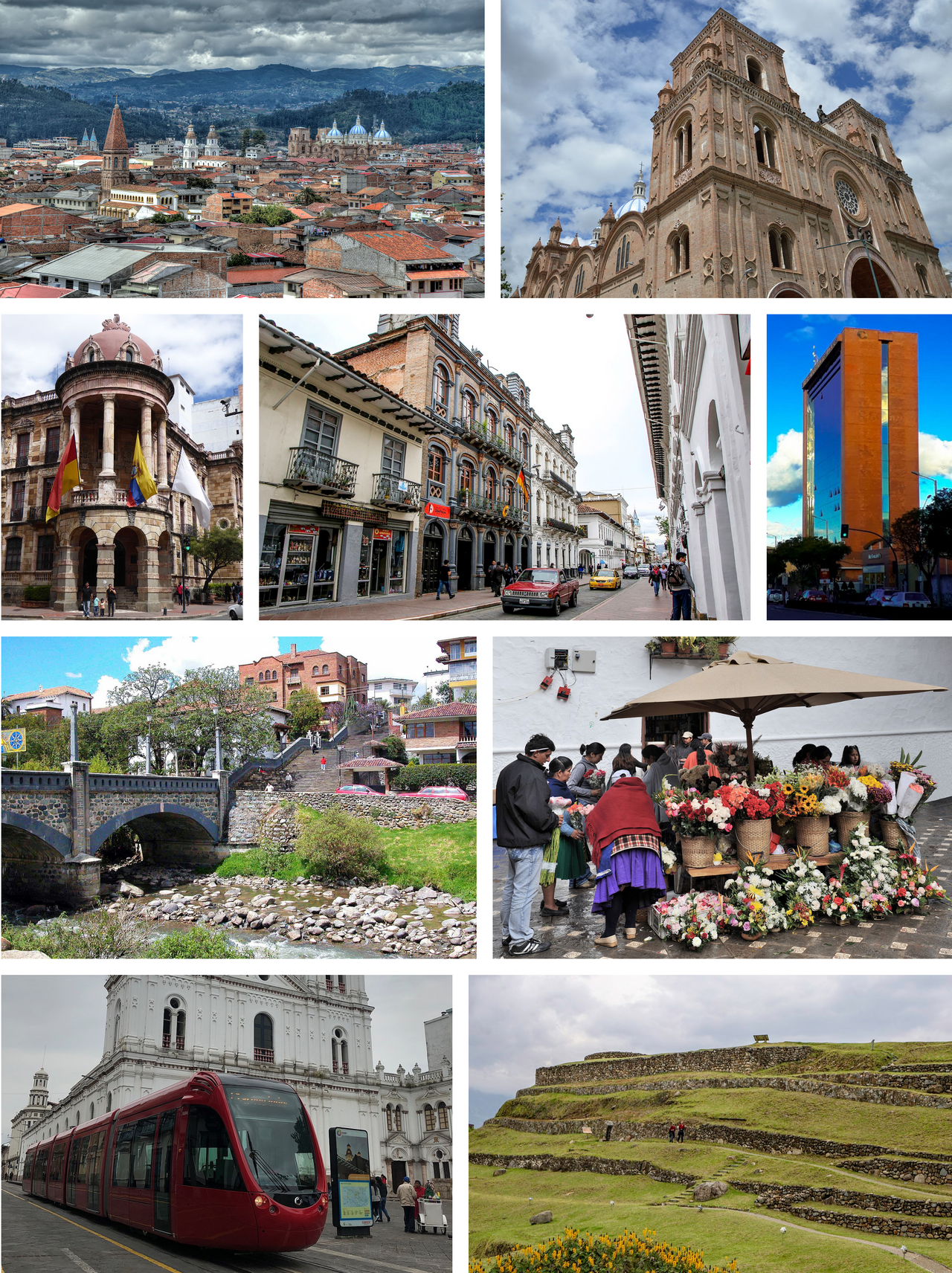
The city of Santa Ana de los Rios de Cuenca was founded on 12 April 1557 by the Spanish explorer Gil Ramirez Davales on a site previously occupied by the Inca administrative centre of Tomebamba, which was itself built upon the earlier Cañari settlement of Guapondelig. The Spanish founders followed the Laws of the Indies — the urban planning code issued by the Spanish Crown — to lay out a grid of streets radiating from a central plaza, a pattern that remains clearly legible in the city today. This layering of three distinct civilisations — Cañari, Inca, and Spanish colonial — over the same territory gives Cuenca its exceptional cultural depth and makes it a case study in the complex hybridisation of Andean and European heritage. UNESCO inscribed the historic centre as a World Heritage Site in 1999 in recognition of this outstanding universal value.
The Urban Grid: A Perfect Application of the Laws of the Indies
The historic centre of Cuenca is considered one of the best-preserved and most complete examples of Spanish colonial urban planning in the Americas. The grid of streets, oriented to the cardinal points, centres on the Parque Calderon — the main civic square — flanked by the cathedral, the bishop residence, and the city hall. Secondary plazas punctuate the grid at regular intervals, each traditionally associated with a religious order or a neighbourhood guild. The blocks are uniform in dimension, and the streets are paved with stone or smooth cobblestones that have been maintained in continuous use for over four centuries. The uniformity of scale, the consistency of two-storey colonial facades with wooden balconies and tiled roofs, and the relative absence of modern intrusion within the historic core make Cuenca one of the most architecturally coherent colonial cities in South America.
The New Cathedral: Cuenca’s Blue-Domed Landmark
The Cathedral of the Immaculate Conception, universally known as the New Cathedral (Catedral Nueva), is the defining visual landmark of Cuenca and one of the largest churches in Ecuador. Construction began in 1885 on the eastern side of the Parque Calderon and continued — with interruptions — through much of the twentieth century. The cathedral is built in a Romanesque Revival style with significant Moorish and Renaissance influences, featuring three enormous sky-blue domes covered in glazed Azuejo tiles manufactured locally in Cuenca. The interior is vast, accommodating up to 10,000 worshippers, with marble floors imported from Italy, carved wooden choir stalls, and stained glass windows casting coloured light across the nave. The New Cathedral was never officially completed according to the original plans — the intended bell towers were abandoned mid-construction due to fears that the weight would compromise the foundations — but it remains the ecclesiastical and symbolic heart of the city.
The Old Cathedral: History Before the New
Directly adjacent to the New Cathedral on the Parque Calderon stands the El Sagrario, commonly called the Old Cathedral (Catedral Vieja). Built between 1557 and 1567 on the site of the original Spanish church, it is the oldest surviving colonial building in Cuenca and one of the oldest in Ecuador. The Old Cathedral served as the main place of worship in Cuenca for over three centuries before the New Cathedral was built next door and the congregation transferred in 1967. Since then, the El Sagrario has been repurposed as the Museo de Arte Religioso, housing a significant collection of colonial religious painting, polychrome sculpture, vestments, and liturgical silver from the seventeenth to the nineteenth centuries. The building itself — with its thick adobe and stone walls, low ceilings, and intimate chapels — preserves the architectural atmosphere of early colonial South America more authentically than any later construction.
Pumapungo: Inca and Cañari Heritage
On the southern edge of the historic centre, the Pumapungo Archaeological Park preserves the remains of the Inca royal palace and administrative complex of Tomebamba, built by the Inca emperor Huayna Capac in the late fifteenth century. Tomebamba was one of the most important cities in the Inca Empire — some chronicles suggest Huayna Capac was born here — and its construction deliberately superimposed Inca spatial order upon the pre-existing Cañari settlement of Guapondelig. The archaeological site features the remains of ceremonial platforms, storage structures, and water management infrastructure characteristic of Inca imperial architecture. The adjacent Museo Pumapungo (Banco Central del Ecuador) houses the most comprehensive collection of Cañari and Inca material culture in the region, including gold and silver objects, ceramic vessels, textiles, and human mummies recovered from regional burial sites.
Artisan Traditions: Panama Hats and Ikat Textiles
Cuenca and the surrounding Azuay province are the origin and still the primary centre of production for what the world knows as the Panama hat — a finely woven straw hat made from the fibre of the toquilla palm (Carludovica palmata). The name is a historical misnomer: the hats were popularised internationally after being worn during the construction of the Panama Canal, but they have been woven in Ecuador for centuries. The finest examples, the superfino category, can take months to complete and retail for several thousand dollars. UNESCO inscribed the Toquilla straw weaving tradition on its Intangible Cultural Heritage list in 2012. Alongside the Panama hat industry, the Azuay region is also known for ikat (tie-dye) textile weaving, gold and silver filigree jewellery, and ceramics, all of which are available in workshops and markets in and around the historic centre.
Local Gastronomy: Cuenca at the Table
Cuenca has a distinct and well-regarded culinary tradition rooted in the highland Andean larder and shaped by centuries of Spanish, indigenous, and mestizo influence. The signature dish of the city is cuy al horno — roasted guinea pig, served whole and accompanied by potatoes and various salsas. Guinea pig has been a high-prestige food in the Andes since pre-Columbian times and remains central to festive meals and family celebrations in Cuenca. Other local specialities include mote pillo (hominy corn scrambled with egg and milk), llapingachos (pan-fried potato cakes), and a distinctive local variety of hornado (roasted pork). The city also has a flourishing cafe and chocolate culture: the Ecuadorian Andes are a major cacao-producing region, and artisan chocolate workshops in the historic centre produce some of the finest single-origin chocolate bars in South America.
Modern Cuenca and Tourism
Cuenca is today the third-largest city in Ecuador with a population of approximately 700,000, and it functions as the cultural, commercial, and educational capital of the southern Andes. The city has attracted a substantial community of North American and European retirees drawn by its mild climate (sitting at 2,550 metres elevation, Cuenca enjoys what residents call “eternal spring”), low cost of living, and high quality of urban amenities. This international presence has expanded the restaurant and accommodation offer without significantly altering the character of the historic centre. Tourism is well-developed, with a range of guided walking tours, museum visits, day trips to nearby Inca sites at Ingapirca, and excursions to highland indigenous markets at Otavalo and elsewhere. Cuenca is consistently ranked among the most liveable and most beautiful cities in Latin America.
Find it on the map
See this place and what’s around it →📷 Become a Cultural Heritage Online photographer
Share your photos of places: they stay published under your name as the author. The more they're seen, the more you get noticed — and soon a contest will reward the most appreciated photos.
Log in or sign up free to add a photo