

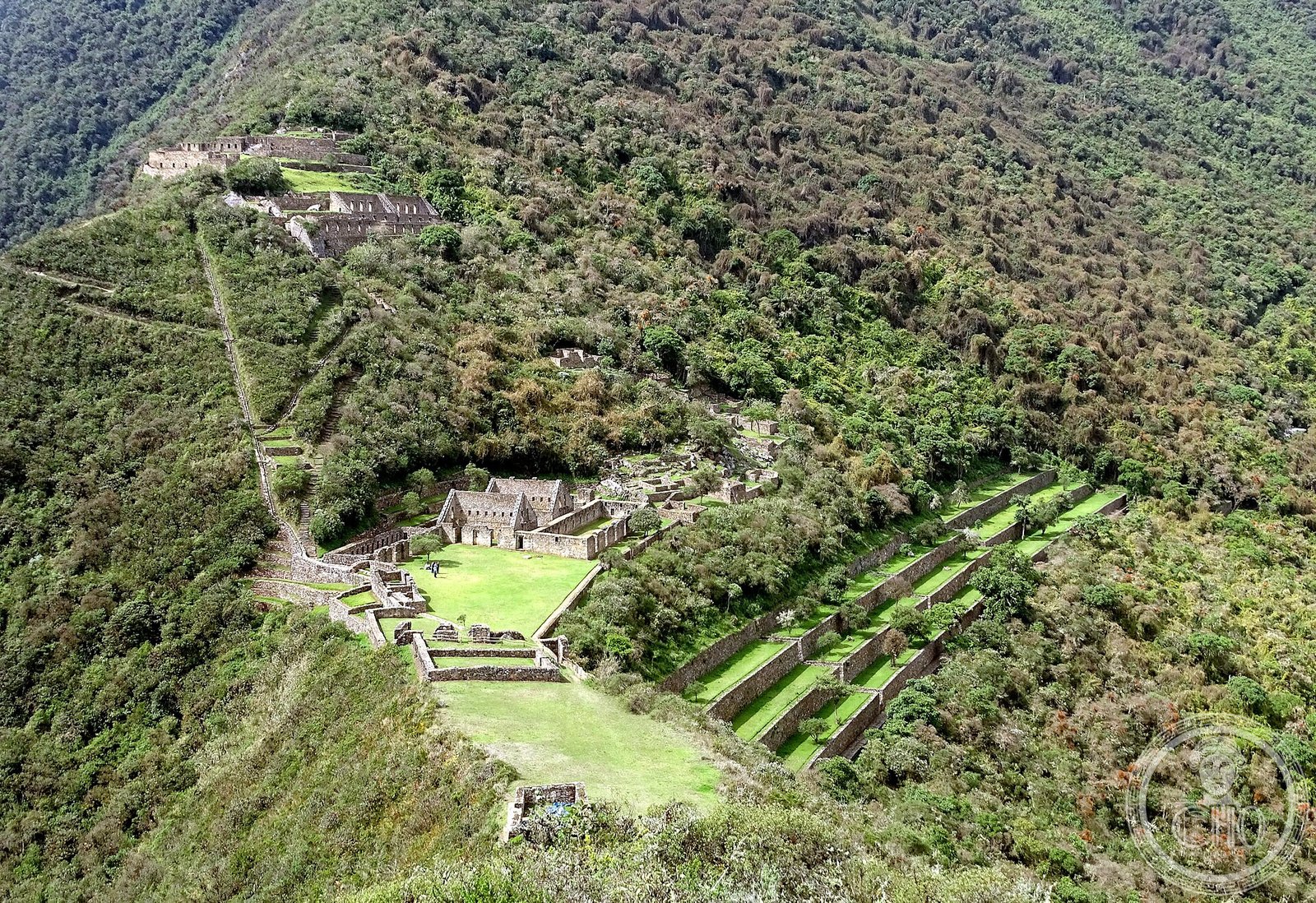
High in the cloud forest of the Vilcabamba range, 3,085 metres above sea level, the Inca complex of Choquequirao receives approximately 10,000 visitors a year — because the only way to reach it is a minimum four-day trek with a 1,500-metre descent to the Apurimac canyon and back.
At a glance
Choquequirao (“Cradle of Gold” in Quechua) covers approximately 1,800 hectares across multiple ridge-top and hillside precincts, making it larger in area than Machu Picchu. While Machu Picchu receives roughly 1.5 million visitors per year, Choquequirao receives around 10,000. Only 30-40% of the site has been excavated; the majority remains buried under cloud-forest vegetation. The site was a royal estate of Tupac Inca Yupanqui and later served as a refuge for the rebel Inca state of Vilcabamba after the Spanish conquest, abandoned in 1572.
Key facts
- Period: c. 1438-1572 AD (Inca Empire and Vilcabamba period)
- Altitude: 3,085 metres (10,121 ft) above sea level
- Area: approximately 1,800 hectares of archaeological precincts
- Excavated: approximately 30-40% of total site
- Annual visitors: approximately 10,000 (vs 1.5 million at Machu Picchu)
- Access: 2-day trek minimum each direction; no road, no cable car
- UNESCO status: not yet inscribed; under consideration
History
Choquequirao was built during the late Inca imperial period, most likely as a royal estate of the emperor Tupac Inca Yupanqui (r. c. 1471-1493). Its position on a spur between the Apurimac and Victor river canyons made it both strategically significant and extraordinarily difficult to reach.
After Spanish forces captured the last Inca emperor in 1533, the surviving Inca nobility retreated into the Vilcabamba region. Choquequirao became part of the neo-Inca state of Vilcabamba until the Spanish crushed the last Inca resistance in 1572. The cloud forest then closed over the site.
French explorer Eugene de Riviere identified the ruins in 1834. Hiram Bingham visited in 1909 before his famous encounter with Machu Picchu in 1911, but found it less accessible and redirected his attention. Systematic archaeological work began in the 1970s and continues today.
What you see
The site divides into several precincts spread across ridges and slopes. The main sector (Usno) contains the largest plaza with a central ushnu — a raised ritual platform for ceremonies. Elite residential compounds (kallanka) and storehouses (qollqa) surround the plaza, with a sophisticated hydraulic system of channels, fountains, and ritual baths threading through multiple precincts.
The most extraordinary feature of Choquequirao is unique in all of Inca architecture: agricultural terraces on the hillside below the main complex decorated with stone-outlined figures of approximately 50 llamas and one human figure inlaid in white limestone against the darker stone — the only known example of large-scale figurative stone inlay work in Inca architecture anywhere. These ‘llama terraces’ were agricultural and symbolic simultaneously: the llama was the sacred animal of Andean civilization, central to economy, sacrifice, and cosmology. A separate ridge-top precinct called Pinchaunuyoc contains circular and rectangular platforms with commanding views of the Apurimac canyon.
Practical information
There is no road or mechanical access to Choquequirao. The classic route from Cachora (near Abancay) involves a descent of approximately 1,500 metres to the Apurimac River, followed by an ascent of 1,500 metres to the site — typically two days each way. Camping is the only overnight option. Entry requires a permit from the Ministry of Culture in Cusco or Abancay. Best season: dry season May-October.
Getting there
From Cusco (approximately 160 km by road), take a bus or shared taxi to Cachora village (4-5 hours) — the main trailhead. The trek from Cachora takes 2 days with camping en route. Total round-trip minimum: 4 days; guided packages run 5-7 days. Bring all food, water purification, and cold-weather gear.
Nearby
- Machu Picchu (approx. 60 km as the crow flies) — reached via Aguas Calientes from Cusco or the Inca Trail
- Vilcabamba ruins — the last capital of the neo-Inca state, reachable via multi-day trek from Huancacalle
- Abancay — nearest city with full services, approximately 30 km from Cachora trailhead
Sources
- Lerche, Peter. “Choquequirao: An Inca Administrative Center in the Vilcabamba Region.” Nawpa Pacha 27 (2003).
- Peruvian Ministry of Culture — Choquequirao Archaeological Project official documentation.
- Bingham, Hiram. Across South America. Houghton Mifflin, 1911.
- Wikipedia: “Choquequirao” — sources and references.
Find it on the map
See this place and what’s around it →📷 Become a Cultural Heritage Online photographer
Share your photos of places: they stay published under your name as the author. The more they're seen, the more you get noticed — and soon a contest will reward the most appreciated photos.
Log in or sign up free to add a photo