
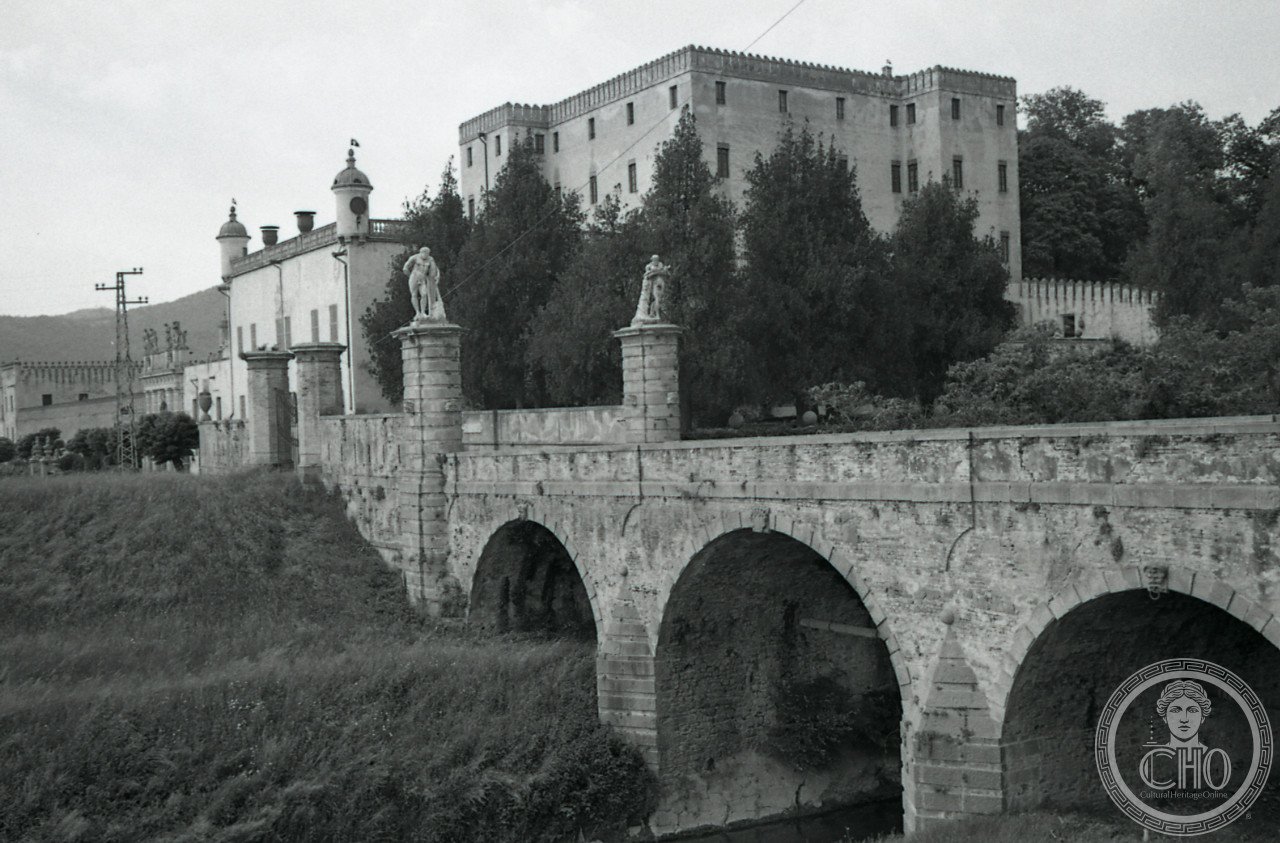
Catajo Castle
A monumental Venetian villa transformed across centuries from princely residence to military stronghold to imperial palace, housing one of Europe’s finest Renaissance collections.
At a glance
Catajo Castle stands as a remarkable architectural chronicle of power and taste in the Veneto. Built beginning in the sixteenth century by Pio Enea I degli Obizzi, this sprawling complex embodies the ambitions of multiple dynasties—from its founding family through the Este-Habsburg dukes of Modena to the Austrian imperial court. The building’s evolution mirrors the shifting fortunes of northern Italian nobility across four centuries.
History
Pio Enea I degli Obizzi commissioned Catajo in the sixteenth century as a statement of family power and prestige. The Obizzi clan enlarged the structure throughout the 1600s and 1700s, each generation adding rooms and gardens to reflect their wealth. The Este-Habsburg family of Modena later acquired the property and elevated it to ducal status, renovating its interiors in the neoclassical manner. Finally, the Austrian Habsburgs designated it an imperial residence, cementing its status as one of Europe’s most significant aristocratic dwellings.
What you see
The castle reveals layers of architectural ambition across its façades and rooms. Renaissance structures underpin the complex, while later Baroque and neoclassical interventions added loggias, grand staircases, and ornate decoration. The ensemble reads as a living textbook of northern Italian palatial design, with courtyards, defensive elements, and ornamental gardens reflecting its dual identity as both residence and occasional garrison.
Cultural significance
By the sixteenth century, Catajo had already become the seat of one of Europe’s most important private collections of art and antiquities. Its libraries, galleries, and cabinets of curiosities attracted scholars and connoisseurs from across the continent. The castle served simultaneously as a center of intellectual life, a symbol of dynastic power, and a repository of treasures that shaped Renaissance and later European taste.
Key facts
- Address: Via Catajo, 1, 35041 Battaglia Terme, Veneto
- Coordinates: 45.2962337, 11.789677
- Website: http://pilotta.beniculturali.it/
- Phone: 349 934 7190
Practical information
The castle operates as a museum open to visitors. Contact the site directly or consult the official website for current opening hours, admission fees, and tour availability.
Getting there
Catajo Castle is located in Battaglia Terme, a town in the Euganean Hills region south of Padua. The nearest major city is Padua, served by road and rail connections throughout the Veneto. Check local transport options and the castle’s website for parking and accessibility details.
Sources & resources
Find it on the map
See this place and what’s around it →📷 Diventa un fotografo di Cultural Heritage Online
Condividi le tue foto dei luoghi: restano pubblicate con la tua firma come autore. Più vengono viste, più ti fai conoscere — e presto un concorso premierà le foto più apprezzate.
Accedi o registrati gratis per aggiungere una foto