
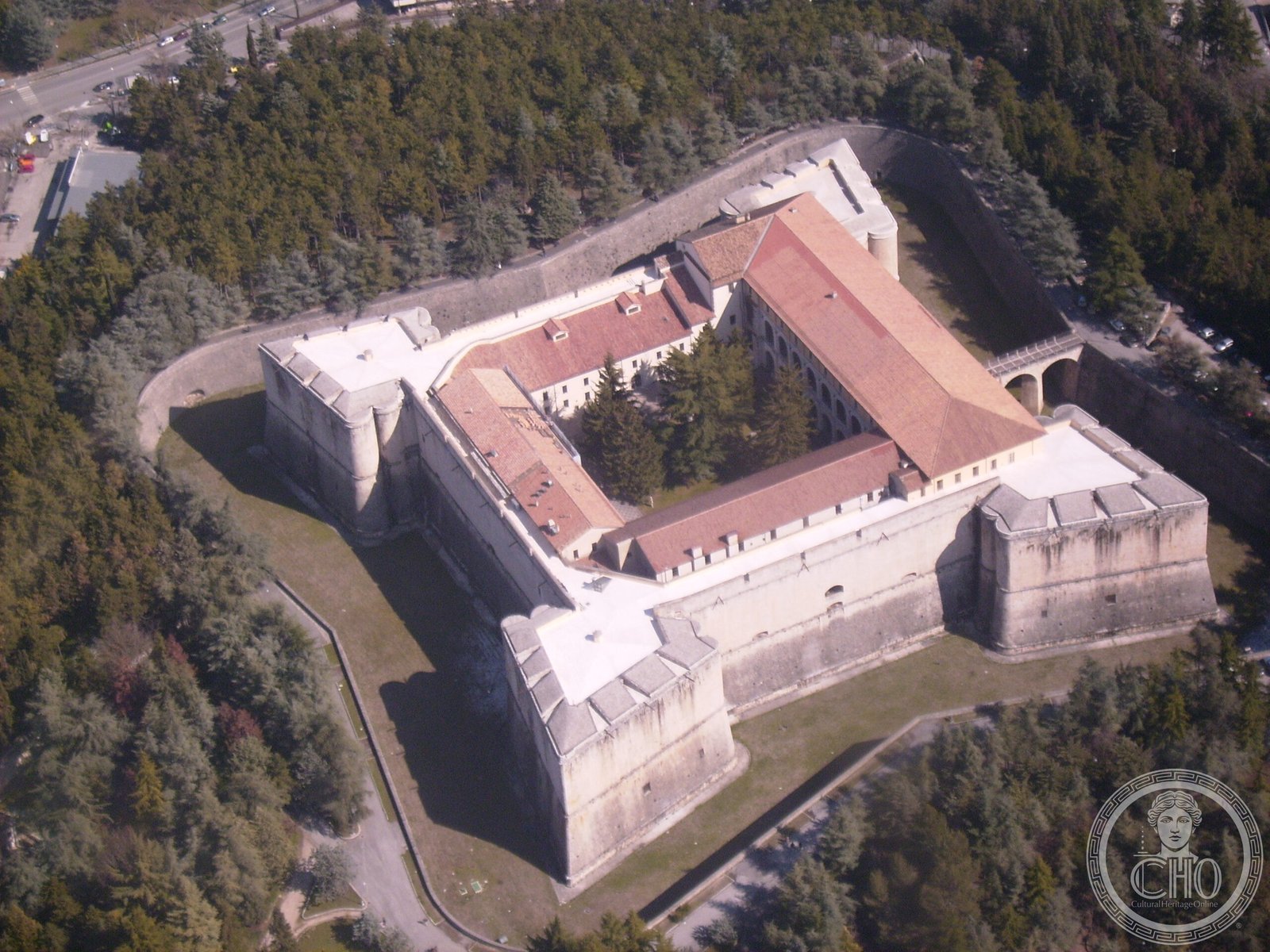
Spanish Fort
A Renaissance fortress built to consolidate Spanish control of southern Italy, now home to the National Museum of Abruzzo—though currently undergoing restoration following 2009 earthquake damage.
At a glance
The Spanish Fort, known locally as the Cinquecentesco Castle, stands as a monument to sixteenth-century military ambition. Though designed for defense, it never saw combat. Today it serves as a cultural institution of regional importance, hosting exhibitions and scholarly events.
History
Constructed during the first half of the sixteenth century under Spanish rule, the fortress was part of a broader strategy to strengthen territorial control across southern Italy. Its fortifications proved unnecessary for their intended purpose; the structure never engaged in warfare. Instead, it transitioned into administrative and residential use, serving as the residence of Spanish governors in the seventeenth century. French soldiers later occupied it during the nineteenth century, followed by German forces in World War II. The Italian state recognized its heritage value in 1902 by designating it a national monument.
A major restoration campaign by the Superintendency of Monuments and Galleries of Abruzzo and Molise took place in 1951, fundamentally transforming its role from fortress to museum.
What you see
The fortress embodies Renaissance military architecture, with the defensive structures characteristic of sixteenth-century fortification design. Its layout reflects both its original defensive purpose and subsequent adaptation for administrative functions. The structure remains under reconstruction following severe damage sustained in the 2009 earthquake.
Cultural significance
The Spanish Fort represents a crucial period in Abruzzo’s history, when the region fell under Spanish Habsburg control. As home to the National Museum of Abruzzo, it serves as the region’s premier cultural institution, preserving and presenting local artistic and historical heritage. The museum facilitates scholarly discourse through conferences and exhibitions, sustaining contemporary engagement with Abruzzo’s past.
Key facts
- Address: Via Castello, 67100 L’Aquila
- Coordinates: 42.3538571, 13.4042222
- Phone: 0862 6451
- Website: http://www.comune.laquila.it/
- National monument status: declared 1902
- Current status: Closed for reconstruction; ongoing since 2011
Practical information
The Spanish Fort is currently not accessible to visitors due to ongoing reconstruction works following earthquake damage. Check the official municipal website or contact the city of L’Aquila for updates on reopening.
Getting there
The fortress is located in central L’Aquila at Via Castello. For current access information and visiting details, contact the city’s administrative offices or check the official website.
Sources & resources
Find it on the map
See this place and what’s around it →📷 Diventa un fotografo di Cultural Heritage Online
Condividi le tue foto dei luoghi: restano pubblicate con la tua firma come autore. Più vengono viste, più ti fai conoscere — e presto un concorso premierà le foto più apprezzate.
Accedi o registrati gratis per aggiungere una foto