
Casa Batlló
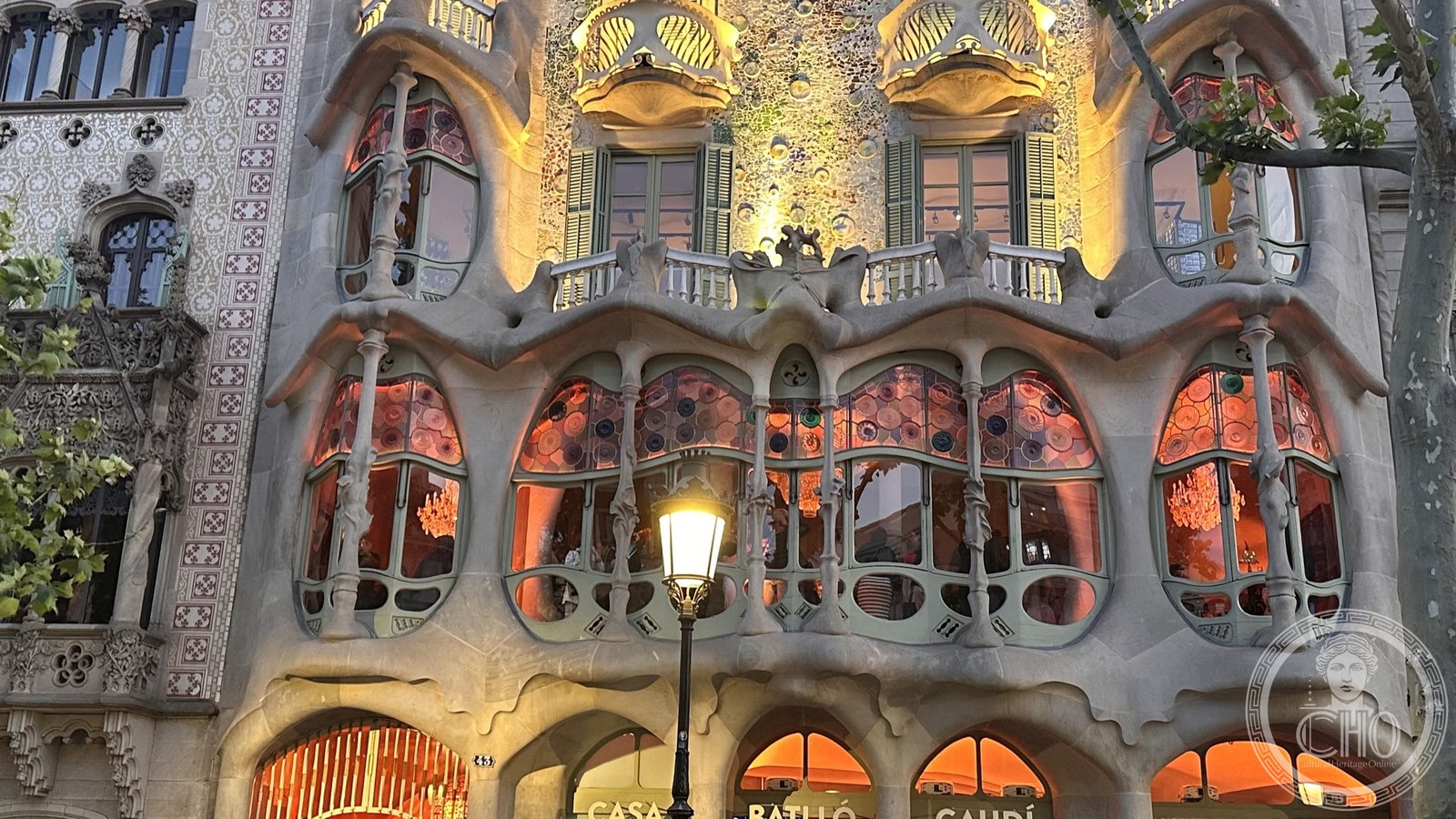
Gaudí took a sober apartment block and turned its face into bone, water and scale. Barcelona calls it the house of bones.
At a glance
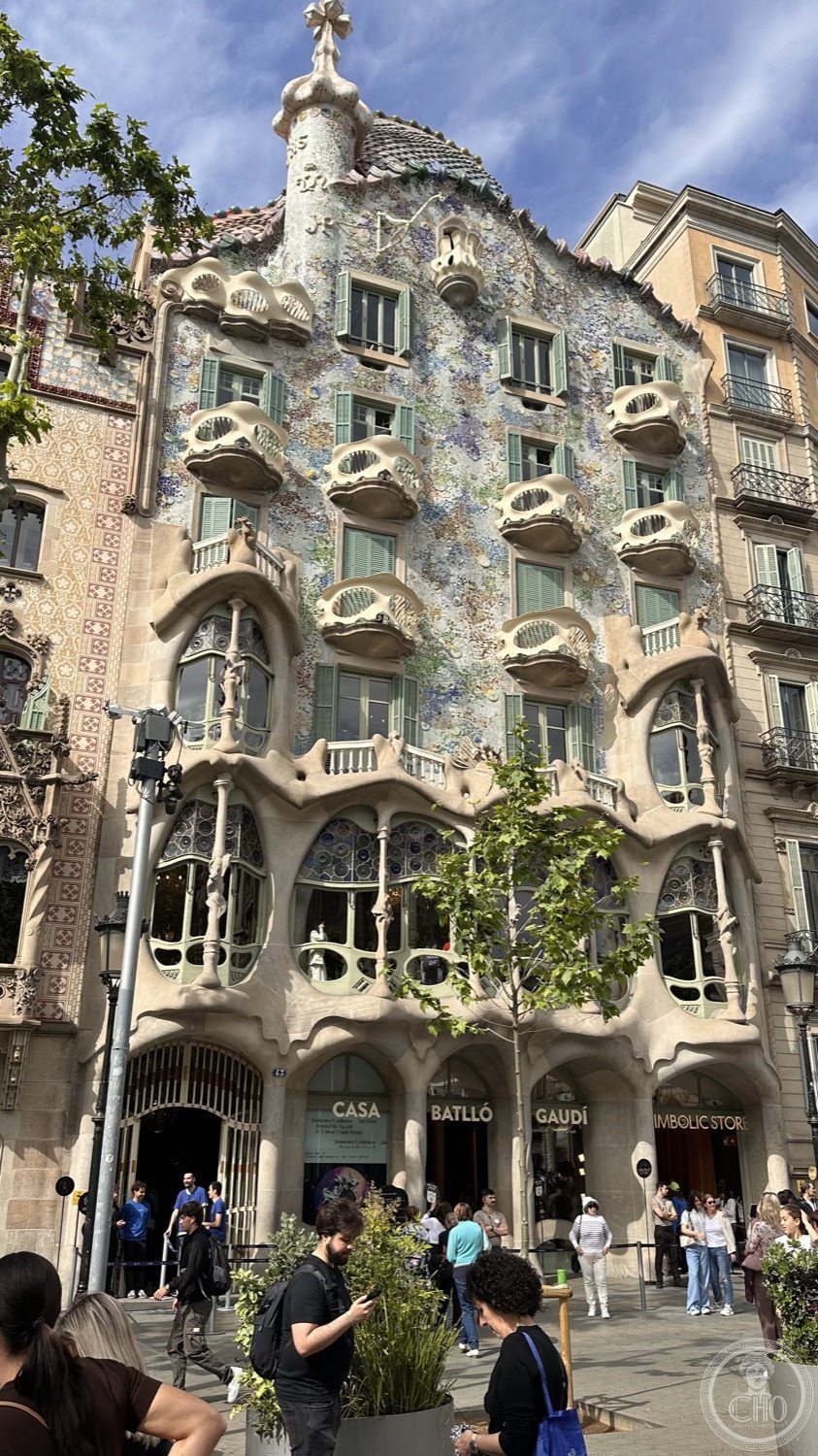
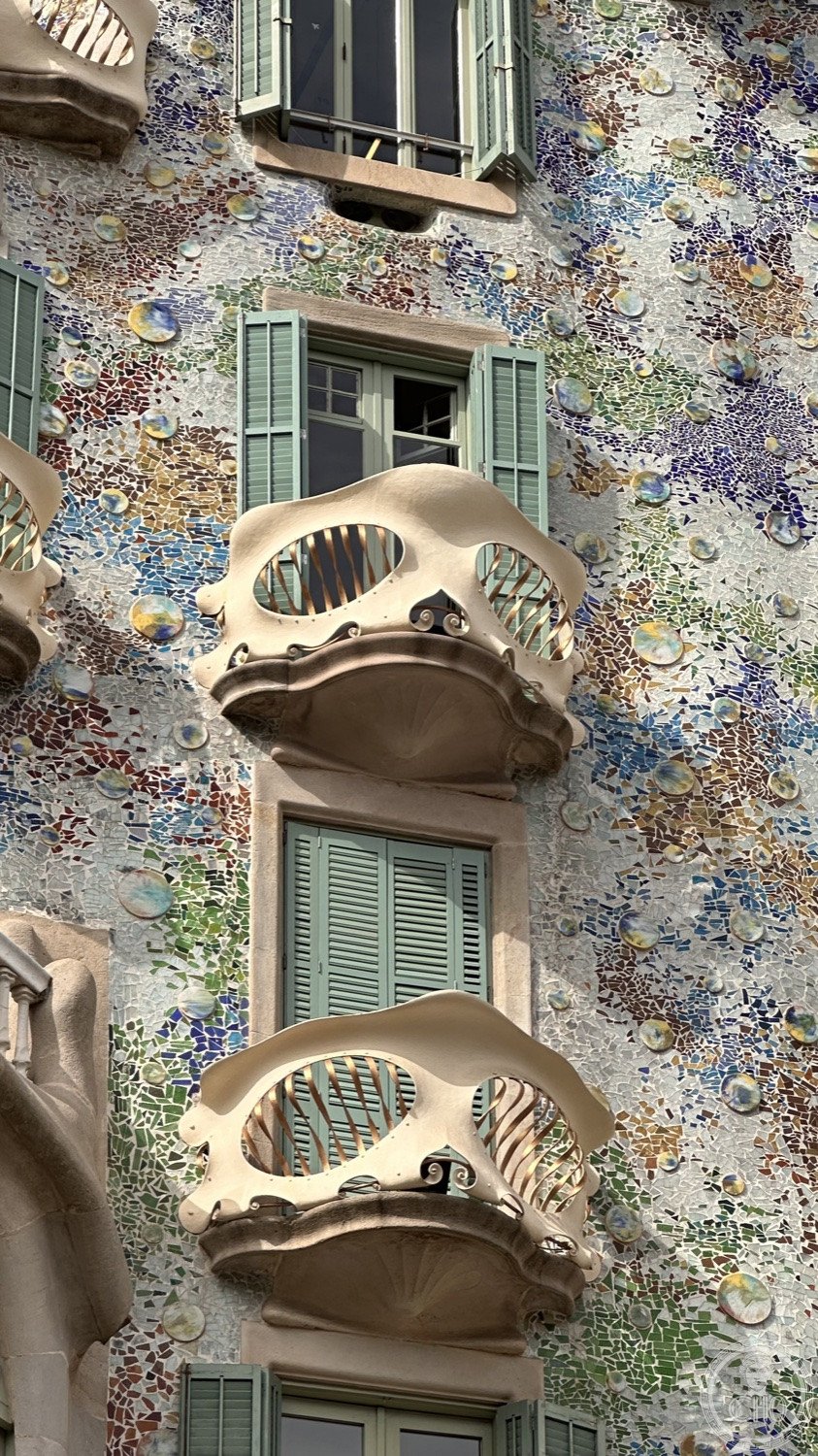
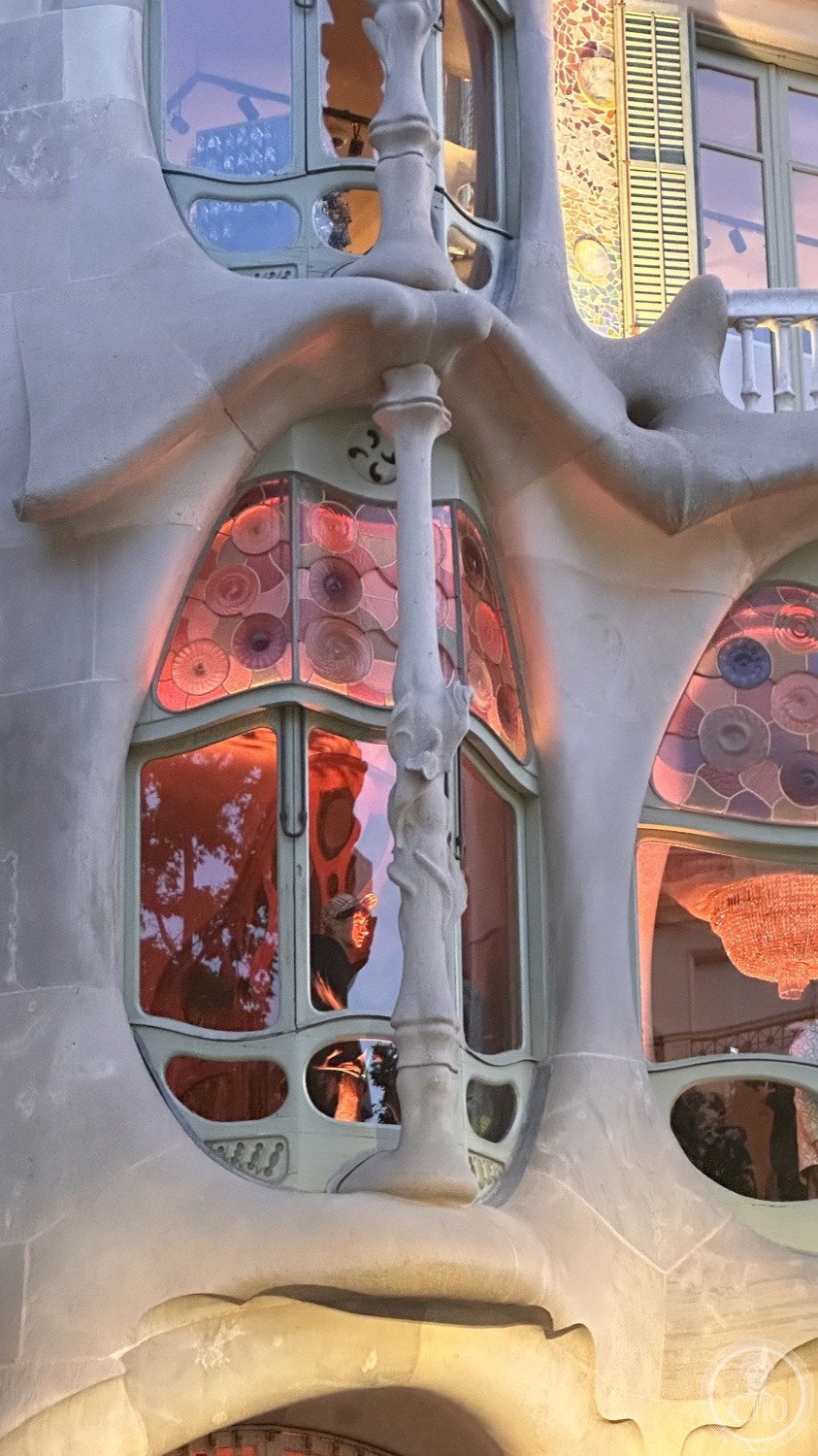
On the Passeig de Gràcia, Casa Batlló is the most theatrical of Gaudí’s city houses. Between 1904 and 1906 he remodelled an existing 1877 building for the textile industrialist Josep Batlló, and left almost no straight line behind. The facade ripples in blue-green trencadís mosaic; the balconies read as masks or skulls; the roof arches like the spine of a dragon. It belongs to the UNESCO listing of Gaudí’s works and is today a museum.
Key facts
- Remodelled: 1904–1906, by Antoni Gaudí
- Original building: 1877, redesigned for Josep Batlló
- Location: Passeig de Gràcia 43, in the Illa de la Discòrdia
- Nicknames: Casa dels ossos — the house of bones
- Status: UNESCO World Heritage; open as a museum
- Style: Catalan Modernisme at its most organic
History
The building was already standing, an ordinary block of 1877, when Josep Batlló bought it and gave Gaudí an unusual brief: he was free to demolish it. Gaudí kept the structure and transformed it instead, working between 1904 and 1906 with collaborators including Josep Maria Jujol, who is credited with much of the colour.
The house entered the modern imagination slowly and then all at once. In 2005 it was added to the UNESCO World Heritage inscription of Gaudí’s works, and it now draws visitors year-round as one of the most recognisable buildings in Europe.
What you see
Everything curves. The lower facade rests on bone-like columns; the windows above lose their frames in soft stone; iron balconies hover like carnival masks. Across the whole front, broken ceramic and glass scatter a blue-to-gold shimmer that changes with the hour. It is ornament, but it is also structure — Gaudí rarely separated the two.
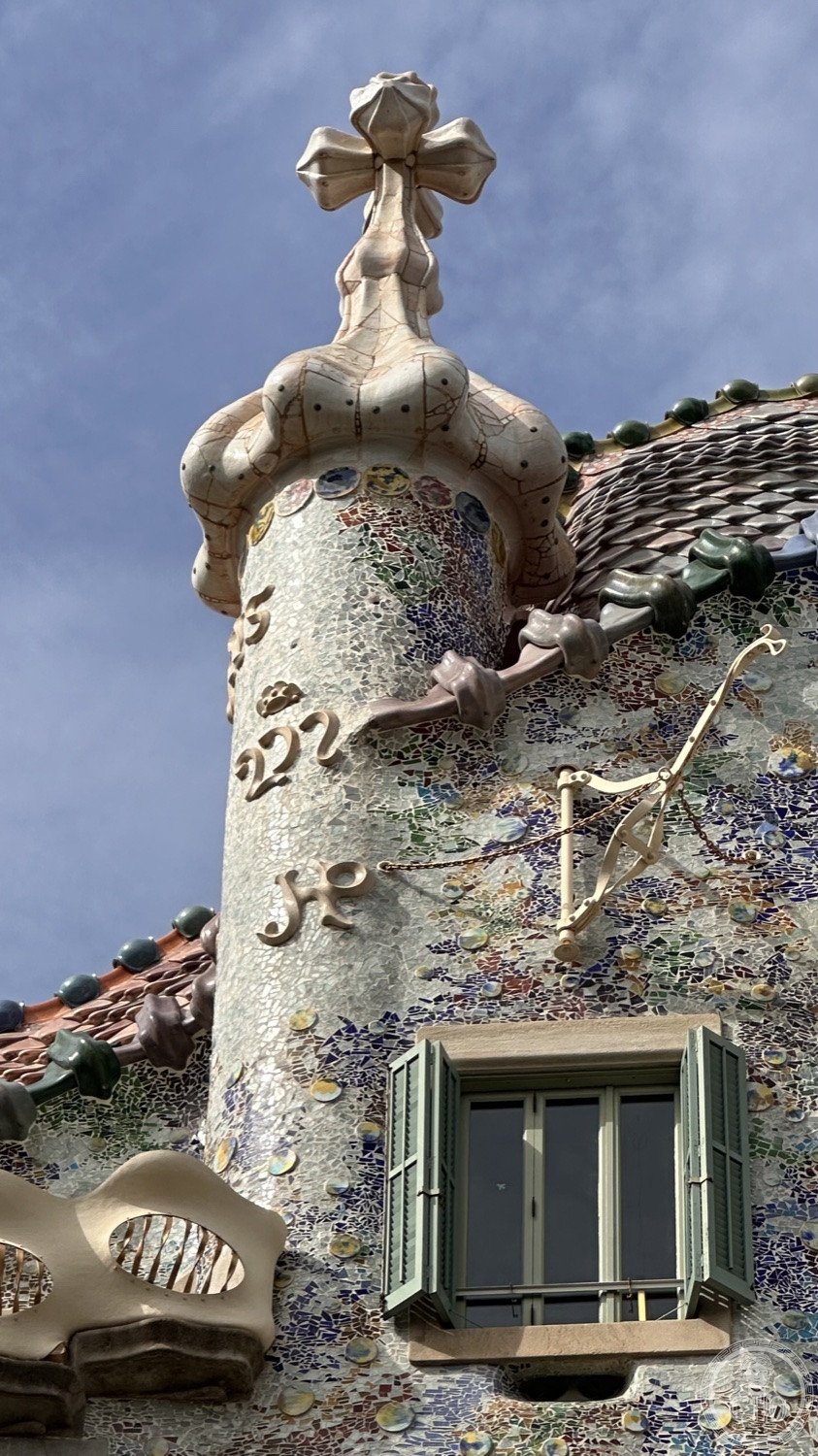
The roof is the punchline. Its scaled, arched ridge is usually read as the back of a dragon, with a turret and cross for the lance of Saint George — Sant Jordi, Catalonia’s patron. Inside, the light-well shifts from deep blue at the top to pale at the base, so the colour reads as even from every floor.
Practical information
- Access: open daily as a museum; timed tickets, busy in high season — book ahead.
- Best light: late morning, when the sun is full on the Passeig de Gràcia facade.
- Time needed: 60–90 minutes for the full visit.
Nearby
- Part of Barcelona — Capital of Catalan Modernisme.
- The Illa de la Discòrdia — Casa Amatller (Puig i Cadafalch) and Casa Lleó Morera (Domènech i Montaner) on the same block.
- Casa Milà (La Pedrera), a short walk up the Passeig de Gràcia.
Sources
- UNESCO World Heritage List: Works of Antoni Gaudí.
- Wikipedia (English): Casa Batlló, Antoni Gaudí.
- Coordinates: 41.3916, 2.1649 (Passeig de Gràcia 43).
Gallery
More views — angles and details, photographed by Luigi De Marchi.
Find it on the map
See this place and what’s around it →📷 Diventa un fotografo di Cultural Heritage Online
Condividi le tue foto dei luoghi: restano pubblicate con la tua firma come autore. Più vengono viste, più ti fai conoscere — e presto un concorso premierà le foto più apprezzate.
Accedi o registrati gratis per aggiungere una foto