
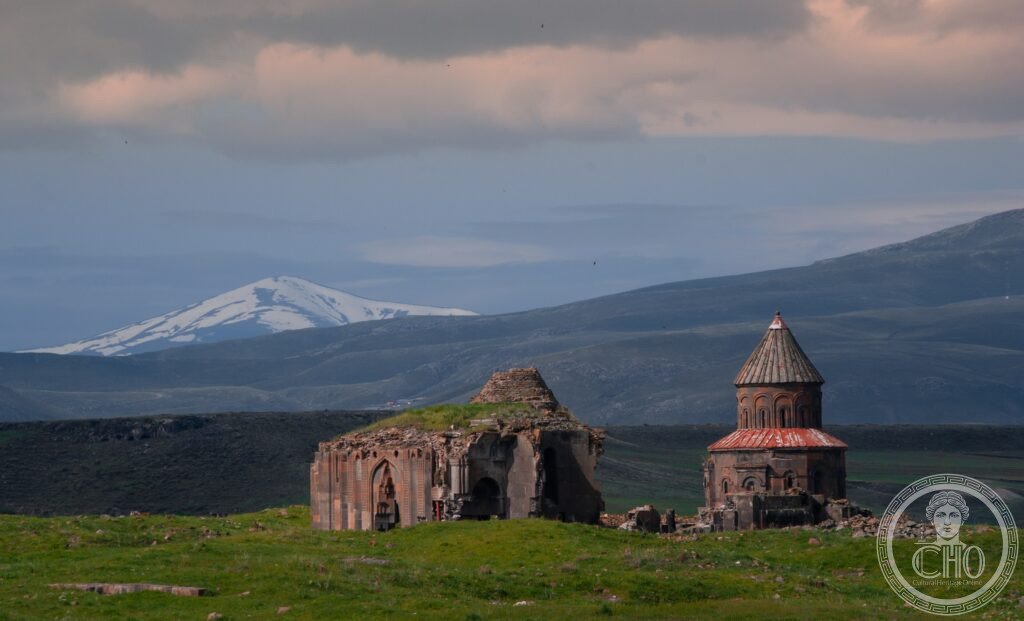
Ani — The Thousand and One Churches
The most remarkable ruined medieval city in the Middle East and a site of immense significance to the Armenian people — Ani (Kars Province, northeastern Turkey; the Turkish-Armenian border; the abandoned medieval capital of the Bagratid Armenian kingdom; population at its height approximately 100,000 people, comparable to London in 1100 CE) is known as the “City of a Thousand and One Churches” for the extraordinary density of Armenian religious architecture preserved in its ruins.
At a glance
Ani (the most precisely Ani single Bagratid Armenian capital 10th-11th CE 100000 population Silk Road trade strategic highland plateau border Turkey Armenia Akhuryan gorge UNESCO heritage: the city of Ani was the capital of the Bagratid Kingdom of Armenia from 961 CE (when King Ashot III moved the capital from Kars to Ani) to 1064 CE (when the Seljuk Turks captured the city after a 25-day siege and massacred a significant part of the population); at its peak (approximately 1000-1064 CE), Ani was one of the most important cities in the medieval world: it controlled the principal routes between Byzantium and Persia across the Armenian Highland; the city was on the Great Silk Road; it had a population of approximately 100,000 (making it larger than any city in Western Europe at the time, comparable to Constantinople and Baghdad); the kings of the Bagratid dynasty built extraordinary religious and civic architecture — the Cathedral of Ani, the Church of St Gregory (the Illuminator), the Church of the Redeemer, the Menüchir Mosque, the palace; the city was abandoned in the 14th century CE after the Mongol invasions and the Black Death collapsed the trade routes that sustained it; the ruins stand on a triangular plateau above the deep gorge of the Akhuryan River (which forms the Turkish-Armenian border today) — the most precisely Ani single Bagratid Armenian capital 10th-11th CE 100000 population Silk Road trade strategic highland plateau border Turkey Armenia Akhuryan gorge UNESCO heritage in any UNESCO world heritage site)).
Key facts
- The Cathedral of Ani and the Gothic Arch: the most precisely Ani single Cathedral Ani 1001 CE architect Trdat Hagia Sophia Bagratid Armenian pointed arch Gothic arch origin UNESCO heritage — the Cathedral of Ani (the Church of the Holy Mother of God; completed 1001 CE; commissioned by King Gagik I of the Bagratid dynasty; the architect was Trdat — the same architect who repaired the dome of the Hagia Sophia after it was damaged by the earthquake of 989 CE; Trdat was the most celebrated architect in the medieval Christian world): the Cathedral of Ani is significant in architectural history because it uses pointed arches — the structural device that defines Gothic architecture in Western Europe (the pointed arch allows the thrust of the vault to be directed more steeply downward, enabling thinner walls and larger windows); the pointed arches at Ani predate the earliest Gothic use in France by approximately 80-100 years; the question of whether the pointed arch was independently invented in Gothic France or transmitted via Armenian or Islamic architecture (which also used the pointed arch) is one of the most debated questions in architectural history
- The Church of the Redeemer: the most precisely Ani single Church Redeemer 1036 CE Constantine Pahlavuni Holy Cross Aghtamar arm relic split lightning 1955 half standing heritage — the Church of the Redeemer (Surb Prkich; built 1036 CE by the Armenian noble Ablgharib Pahlavuni to house a fragment of the True Cross (the same relic — the Holy Cross of Aghtamar — is one of the most venerated objects in Armenian Christianity)); on 15 October 1955 CE, lightning struck the Church of the Redeemer and split it cleanly in two: one half of the circular church collapsed (the east half, with the apse and the altar); the west half remained standing, with the interior wall exposed — the cut is so clean it looks deliberate; the standing half is one of the most dramatic ruins in Turkey
- GPS: 40.5067° N, 43.5725° E
History
The Seljuk conquest and aftermath (the most precisely Ani single 1064 Seljuk Alp Arslan siege 25 days massacre Byzantine Shaddadid Kurdish Mongol 1239 Timur 1394 abandonment dust heritage: the fall of Ani in 1064 CE was one of the defining events of medieval Middle Eastern history: the Seljuk Sultan Alp Arslan besieged the city for 25 days; the Bagratid king of Ani, Gagik-Ashot, negotiated for a Byzantine relief force that never came; Alp Arslan breached the walls on 16 August 1064 CE; the Byzantine historian Michael Psellus describes the fall of Ani as a catastrophe that shocked the Christian world; after the Seljuk conquest, Ani passed through the hands of the Shaddadids (Kurdish dynasty), the Georgians (1199-1236 CE; a period of rebuilding and the last great flourishing of the city), the Mongols (1239 CE; another devastating siege), and Tamerlane’s forces (1394 CE); the city was permanently abandoned approximately in the 14th-15th century CE as the trade routes that sustained it were disrupted and the population dispersed — the most precisely Ani single 1064 Seljuk Alp Arslan siege 25 days massacre Byzantine Shaddadid Kurdish Mongol 1239 Timur 1394 abandonment dust heritage in any UNESCO world heritage site)).
What you see
Site visit (the most precisely Ani single Kars province 45km southeast highland wind city walls cathedral church redeemer mosque palace borderland Armenia gorge Akhuryan heritage: Ani is located 45 km southeast of Kars city (Kars Province, northeastern Turkey; altitude 1,500m; the high steppe plateau of eastern Anatolia; very cold winters (−25°C); very hot summers (35°C); the best visit months are May-October); the site visit: the main entry point is the Aslan Kapı (Lion Gate; the main gate in the western city wall; the triple circuit of fortification walls is visible on approach; the site is open daily; entry fee approximately 50 TRY; the plateau is large (about 5 km²) and walking between monuments takes 20-30 minutes each); the main sights (the Cathedral of Ani; the Church of St Gregory of the Tigranakerts (the best-preserved frescoes; the Armenian inscriptions on the interior walls); the Church of the Redeemer (the split church; the most dramatic visual at Ani); the Menüchir Mosque (built by the Seljuks immediately after the conquest; the minaret is the most prominent vertical element visible from the road); the city walls and towers; the view into the Akhuryan Gorge and across to the Republic of Armenia on the opposite bank) — the most precisely Ani single Kars province 45km southeast highland wind city walls cathedral church redeemer mosque palace borderland Armenia gorge Akhuryan heritage in any UNESCO world heritage site)).
Practical information
- Getting there: the gateway city is Kars (Kars Airport (KSY); Turkish Airlines flies Kars-Istanbul (direct; approximately 2h; 2-3 flights daily)); by train: the Dogu Express (Eastern Express; Ankara-Kars; 24-26h; the most celebrated train journey in Turkey; the overnight train through central Anatolia to the eastern plateau; the scenery of the Cappadocian plateau and the mountain passes of eastern Anatolia); by bus: from Erzurum (4h; regular service) or from Doğubeyazıt (3h); from Kars, hire a taxi to Ani (45 km; approximately 250-300 TRY for the return journey with waiting time) or take the Kars municipality minibus (seasonal; check locally); the site entrance is on the western approach road; note that Ani is a few km from the Armenian border (the Akhuryan River is the border) — photography toward the Armenian side is technically restricted (the restrictions are not strictly enforced for tourist photography of the ruins, but avoid pointing telephoto lenses at the border installations)
Getting there
Kars Airport (KSY) 45 km from Ani. Taxi 250-300 TRY return. Dogu Express train from Ankara 26h scenic route. Site open daily, ~50 TRY entry. Best May-October. GPS: 40.5067, 43.5725.
Nearby
- Kars — 45 km northwest; the most distinctive Russian-planned city in Turkey (the city was rebuilt by the Russian Empire after the conquest of 1877-1878 CE; the grid plan; the Russian-style stone buildings (the former Russian Governor’s Mansion; the Russian Orthodox church now used as a mosque); the Kars Museum (the archaeology of Kars Province including artifacts from Ani); the Kars Kale (the Ottoman fortress on the hill above the city; panoramic views of the surrounding steppe); the famous Kars honey (the karst meadows of the plateau produce exceptional multi-flower honey; the main market of Kars sells it in large cans))
- Doğubeyazıt — 200 km southeast; the gateway to Mount Ararat (the İshak Pasha Palace (Sarayı; completed approximately 1784 CE; the magnificent Ottoman-Persian-Georgian hybrid palace carved from the pink sandstone of the Doğubeyazıt valley; one of the most dramatic building sites in Turkey — the palace is built against the cliff face with Mount Ararat (5,137m; the volcanic mountain of the biblical Ark of Noah) visible from the terraces); the view of Ararat at dawn from the palace terrace is one of the great landscape spectacles of Turkey))
Sources
- Wikipedia, Ani; Bagratid Armenia; Trdat (architect), accessed June 2026
- UNESCO, Archaeological Site of Ani, WHS reference 1518, inscribed 2016
Find it on the map
See this place and what’s around it →📷 Diventa un fotografo di Cultural Heritage Online
Condividi le tue foto dei luoghi: restano pubblicate con la tua firma come autore. Più vengono viste, più ti fai conoscere — e presto un concorso premierà le foto più apprezzate.
Accedi o registrati gratis per aggiungere una foto