
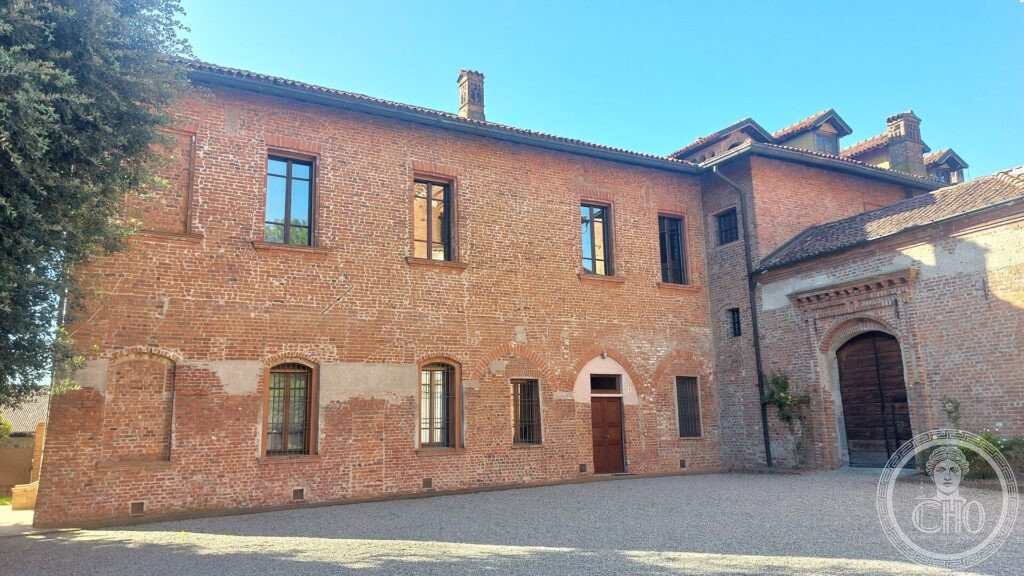
Viboldone is the jewel abbey of the Milanese hinterland: founded in the thirteenth century by the Humiliati friars — the Lombard reform movement that Bernard of Clairvaux failed to suppress — it holds fourteenth-century late Gothic fresco cycles that cover every interior surface of the church with a narrative density rarely reached in Italian monasticism.
At a glance
Viboldone Abbey stands 12 km south-east of Milan in the municipality of San Giuliano Milanese. It was founded in the early 13th century by the Humiliati — a lay and semi-monastic movement born in Lombardy around 1140 that combined manual labour (especially wool-working) with communal religious life, and was initially condemned then recognised by Innocent III in 1201. After the suppression of the Humiliati in 1571, the abbey passed to the Olivetan Benedictines (male) and then, in 1941, to a community of Benedictine nuns who still inhabit it. The church of the abbey retains an exceptional series of 14th-century frescoes attributed to a follower of Giusto de’ Menabuoi and an anonymous master known as the “Maestro di Viboldone” — covering the entire nave, apse, and transept with scenes from the Life of Christ, the Last Judgment (on the west wall), and panels of Saints in a remarkably complete late-Gothic programme.
Key facts
- Founded: early 13th century by the Humiliati (Umiliati), the Lombard lay-religious movement recognised by Innocent III in 1201
- Orders: Humiliati (suppressed 1571) → Olivetan Benedictines (male, 1571–1941) → Benedictine nuns (1941–present)
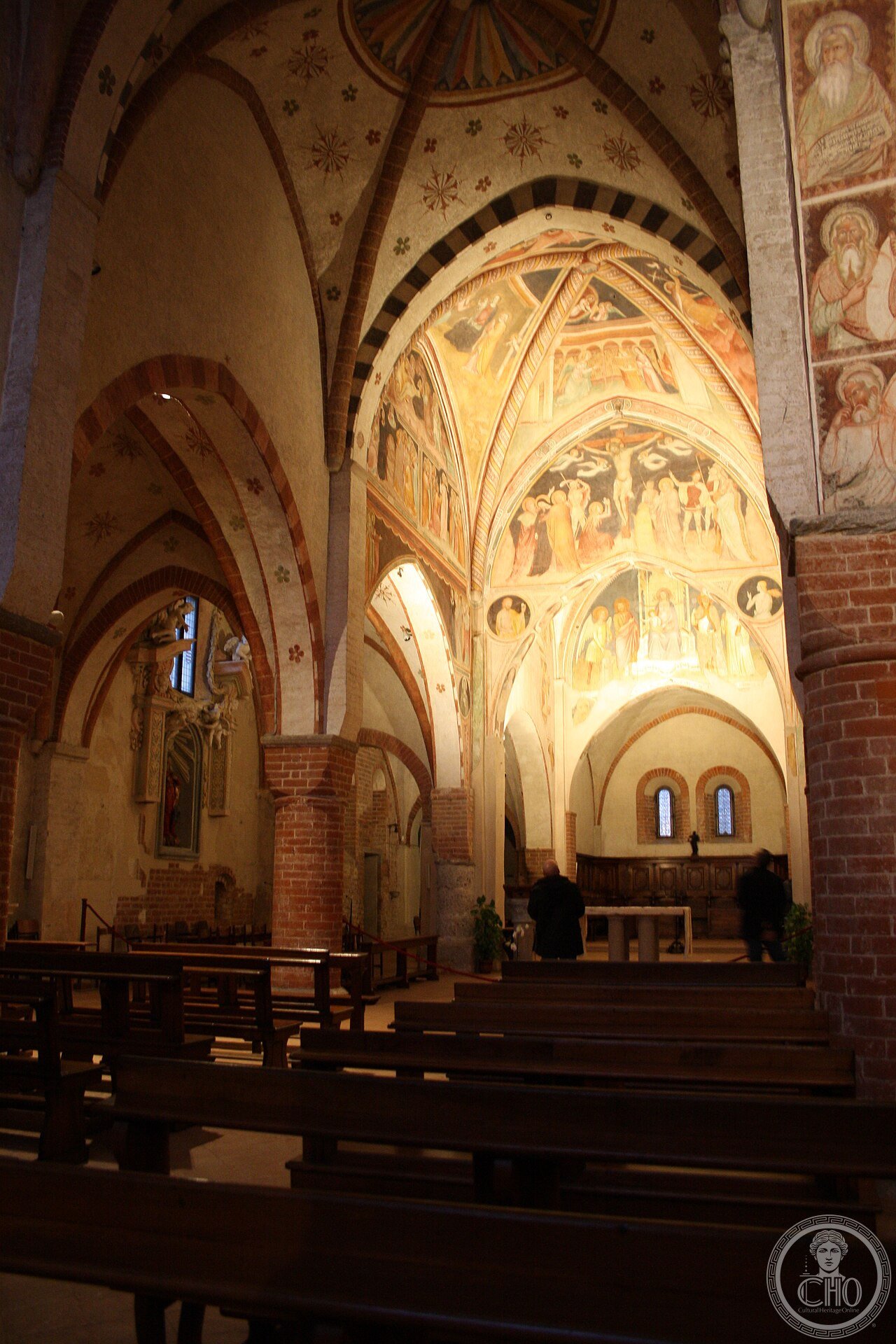
- Frescoes: 14th-century cycle attributed to the “Maestro di Viboldone” and followers of Giusto de’ Menabuoi; subject: Life of Christ (nave), Last Judgment (west wall), Madonna Enthroned (apse), Saints (transept); covers nearly every surface
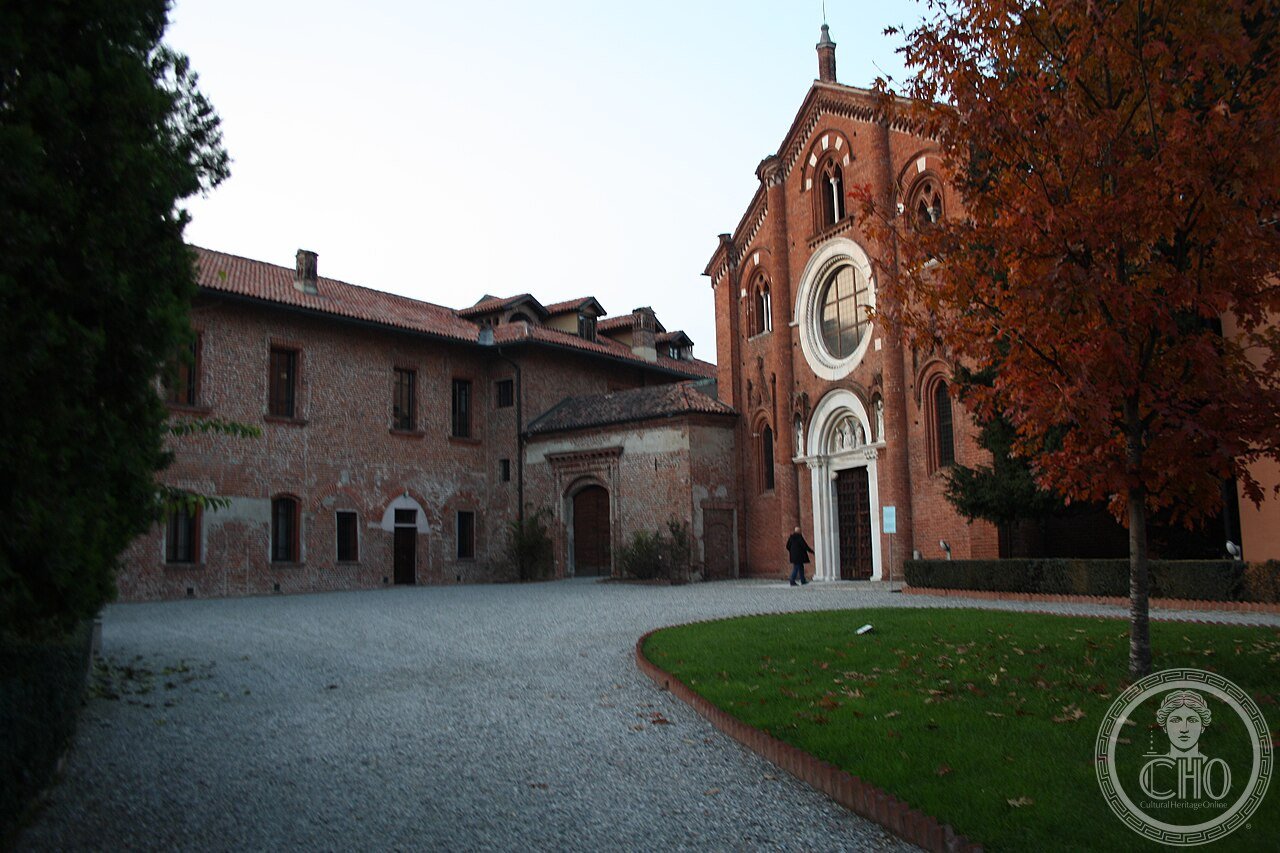
- Facade: Gothic Lombard brick facade with terracotta decoration; central rose window; blind arcading; characteristic striped brick pattern
- Architecture: single-nave church with a crossing dome; pointed arches on clustered piers; Lombard Gothic brick construction throughout
- Today: active community of Benedictine nuns; church open daily; guided visits for the frescoes on request
History
The Humiliati who founded Viboldone were part of the most significant religious movement in 12th-century Lombardy. Working-class men and women in the textile trade of Milan and the Po valley had begun to live in voluntary poverty, sharing goods, reading the Gospels in the vernacular, and occasionally preaching — activities that put them into conflict with episcopal authority. Pope Lucius III condemned them in 1184; Innocent III rehabilitated and regulated them in 1201, creating three separate “orders” (canons regular, lay communities, and tertiaries) to accommodate their various forms of life. Viboldone was founded by the First Order Humiliati — canons living under a quasi-monastic rule — who built the church in the early 13th century and commissioned the fresco cycle in the 14th century. The Humiliati were finally suppressed in 1571 after one of their members attempted to assassinate Archbishop Carlo Borromeo.
The 14th-century fresco cycle is the central artistic legacy of the abbey. The workshop responsible — now identified as the “Maestro di Viboldone” — appears to have been connected to the Paduan tradition of Giusto de’ Menabuoi while working in a distinctly Lombard idiom. The Last Judgment on the west wall, with its hierarchical arrangement of the saved and damned and its unusually detailed Paradise, is the most discussed work; the Madonna Enthroned in the apse shows the Madonna di Viboldone, a type closely related to Byzantine Hodegetria models.
What you see
The exterior presents the characteristic Lombard Gothic brick facade: horizontal bands of darker and lighter brick, terracotta mouldings around the portal and the windows, a central oculus above the main door. The interior is a revelatory experience: every surface above eye level is painted. The barrel-vaulted nave has scenes from the Life of Christ in horizontal registers; the crossing dome has a Pantocrator; the apse has the enthroned Madonna with angels and saints; the west wall — the full width of the nave — is occupied by a large Last Judgment. The quality of preservation is remarkable, even after several centuries of damp and a 19th-century restoration; the pinks and ochres of the draperies and the deep blue of the backgrounds still read clearly in the low light of the interior.
Practical information
- Opening hours: daily 09:00–12:00 and 15:00–17:30; closed Sunday afternoon
- Admission: free; donation appreciated
- Guided visits: for groups, arrange in advance with the nuns’ community
- Time needed: 45 minutes to 1 hour for frescoes
Getting there
By car from Milan (12 km south-east): SS9 Via Emilia toward Lodi, exit San Giuliano Milanese. By metro+bus: Milan M3 Rogoredo then local bus. GPS: 45.3718° N, 9.2931° E.
Nearby
- Milan — the city 12 km north-west; Duomo, Pinacoteca di Brera, Santa Maria delle Grazie
- Chiaravalle Milanese — the Cistercian abbey 5 km north-west, the other great medieval monastery of the southern Milanese
- Lodi — medieval city with the Incoronata (1488) and Romanesque cathedral, 12 km south
Sources
- Wikipedia — “Viboldone Abbey” (en.wikipedia.org/wiki/Viboldone_Abbey)
- Maria Teresa Fiorio, Gli affreschi dell’abbazia di Viboldone, Electa, 1993
- Benedettine di Viboldone — abbaziadiviboldone.it
Find it on the map
See this place and what’s around it →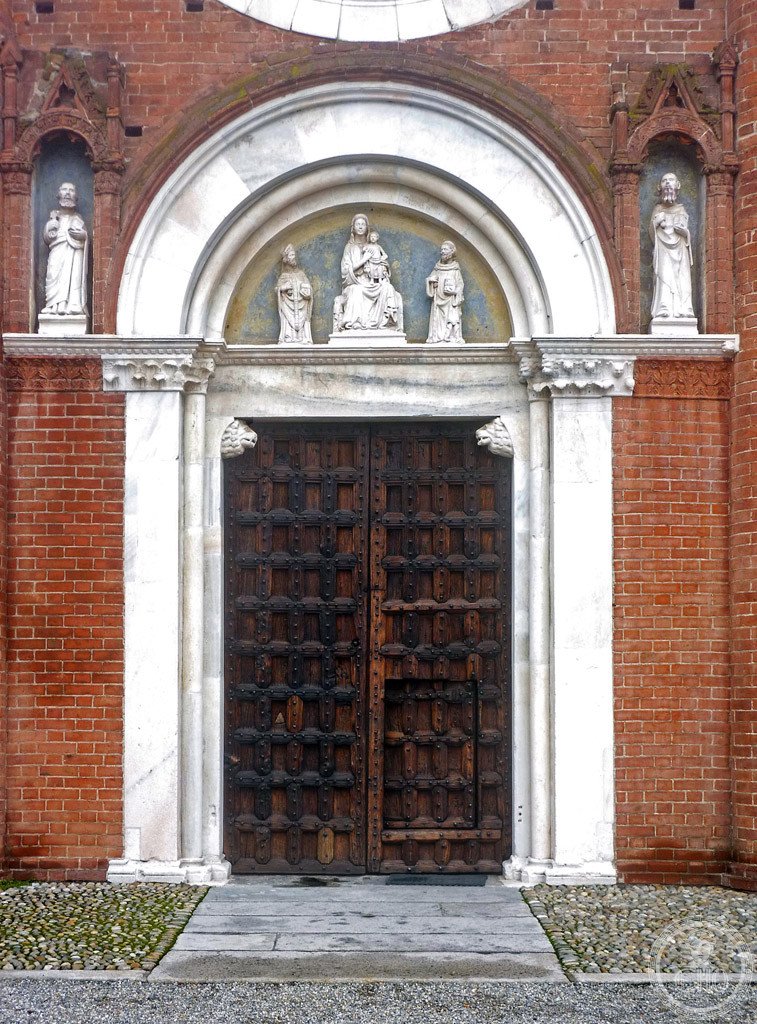
📷 Become a Cultural Heritage Online photographer
Share your photos of places: they stay published under your name as the author. The more they're seen, the more you get noticed — and soon a contest will reward the most appreciated photos.
Log in or sign up free to add a photoIs this page about you?
This page is read by travellers and heritage enthusiasts who find it on Google. Tell us how you are connected to this place and we will take it from there.