
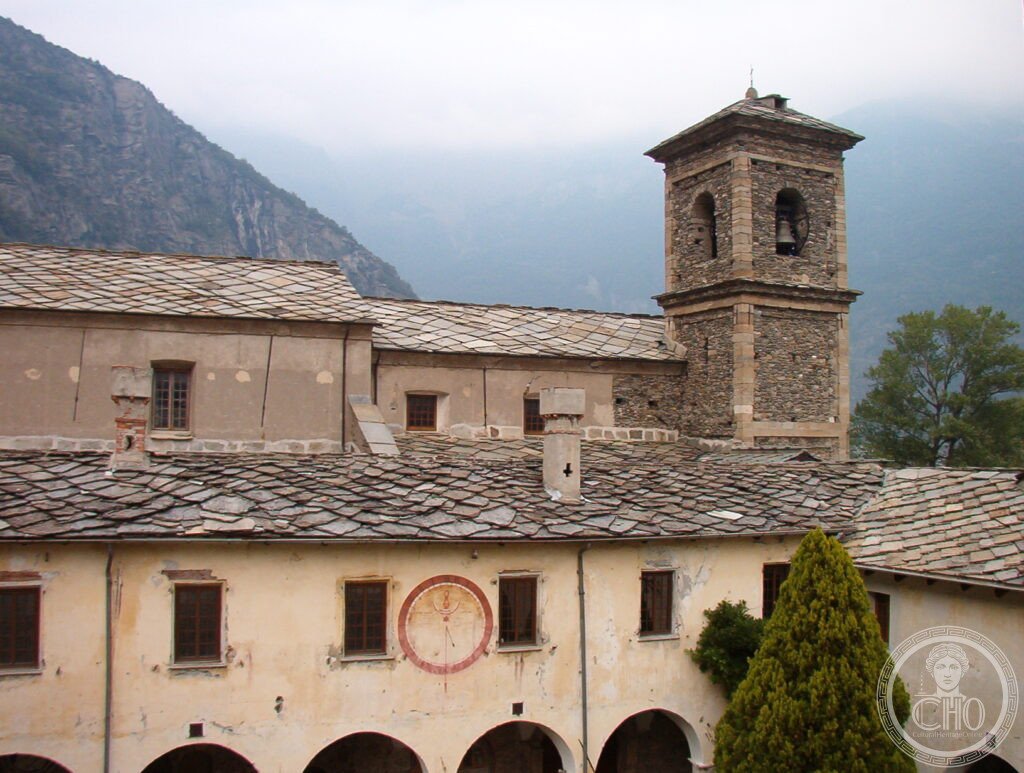
Founded in 726 by Abbo, brother-in-law of Charles Martel, on the old Roman road over the Mont Cenis, Novalesa Abbey was the most important Carolingian scriptorium of north-western Italy and the place where, by tradition, Charlemagne stopped to pray before the campaign against the Lombards in 773.
At a glance
Novalesa Abbey stands in the Val Cenischia, a narrow lateral valley of the Susa valley in the Piedmontese Alps, at an altitude of about 800 m, 60 km west of Turin. Founded in 726 by the Frankish nobleman Abbone (father-in-law or brother-in-law of Charles Martel, depending on the source), it was built to serve the Mont Cenis pass — the main crossing between France and Italy on the Charlemagne road, used by pilgrims, armies, merchants and popes for centuries. By the 9th century, Novalesa had become one of the most important monasteries in northern Italy: a major scriptorium producing illuminated manuscripts, a hospice for travellers on the Mont Cenis route, and a library of over 6,000 volumes that was destroyed by the Saracens in 906. The abbey was sacked by Saracen raiders and abandoned for a century; restored by the Benedictines in 1028, it passed through centuries of varying fortune — Carolingian golden age, Saracen sack, medieval revival, Napoleonic suppression in 1798, return of the monks in 1973. It is now inhabited by a Benedictine community from the Congregation of Subiaco.
Key facts
- Founded: 726 by Abbone (Frankish nobleman related to Charles Martel); one of the oldest surviving Benedictine houses in the western Alps
- Charlemagne: according to the abbey chronicle, Charlemagne stopped at Novalesa in 773 to pray before crossing the Mont Cenis pass to conquer the Lombards; an anonymous monk wrote the Chronicon Novaliciense here c. 1050
- Scriptorium: 9th-century scriptorium produced illuminated manuscripts of exceptional quality; library of 6,500 volumes before the Saracen sack of 906
- Saracen sack: 906 — the library burned; the monks fled to Turin with what they could carry; many manuscripts are now in the Biblioteca Reale, Turin
- Chapels: the complex includes 4 chapels of the 7th–9th century (San Savino, San Eldrado, Santa Maria, San Michele) — the chapel of San Eldrado has 12th-century frescoes of extraordinary quality
- Today: active Benedictine community (Subiaco Congregation); open to visitors; bookshop and small museum of monastic life
History
The foundation charter of 726 survives (in a 9th-century copy) and makes Novalesa one of the few Carolingian monasteries in Italy with a documented foundation. Abbone built it at the point where the road from Turin reaches the foot of the Mont Cenis pass — a position of maximum strategic and commercial importance in a period when the pass was the primary land route between the Frankish kingdom and the Lombard peninsula. The abbey controlled the hospice and bridge at the pass and grew enormously wealthy from transit tolls and royal gifts. The imperial connection was cemented when Charlemagne — then embarked on his Italian campaign to overthrow Desiderius, king of the Lombards — stopped to pray at Novalesa in 773. This visit was commemorated in the Chronicon Novaliciense, written by an anonymous monk of the Novalesa tradition around the mid-11th century and one of the most important sources for Carolingian history in northern Italy.
The Saracen raid of 906 was catastrophic: the library of 6,500 volumes (an extraordinary collection for the period, comparable only to the great libraries of Lorsch and Saint-Gall) was burned; the monks fled to Turin carrying their relics and whatever manuscripts they could save. Many of these manuscripts are now in the Biblioteca Reale, Turin. The abbey was restored by Benedict I, Count of Turin, in 1028 and returned to the Benedictines. After centuries of varying fortunes — repeated gifts from the Savoy dynasty, Napoleonic suppression in 1798, decades of secular use — a community of Benedictine monks from the Subiaco Congregation returned in 1973 and has inhabited the abbey ever since.
What you see
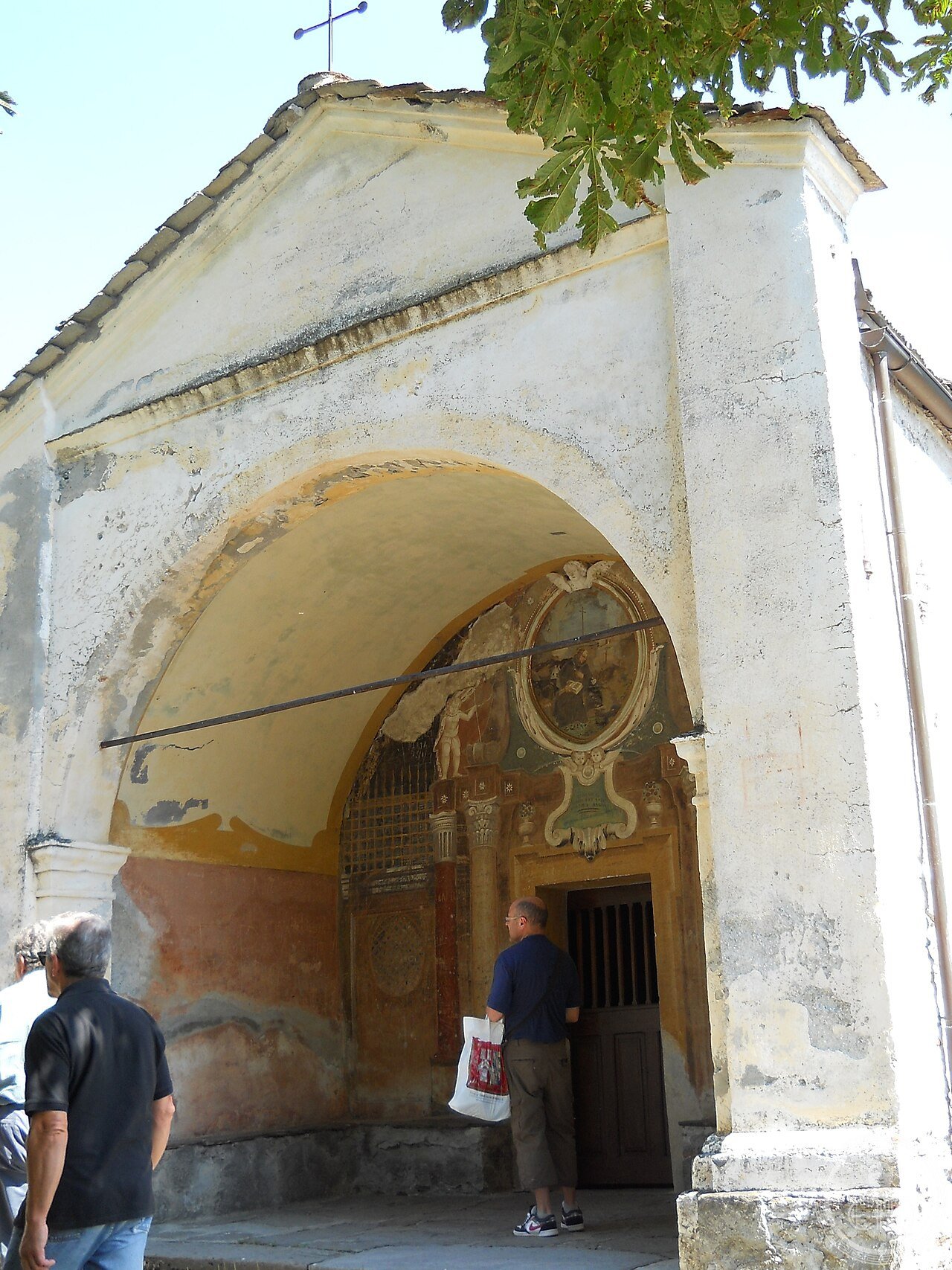
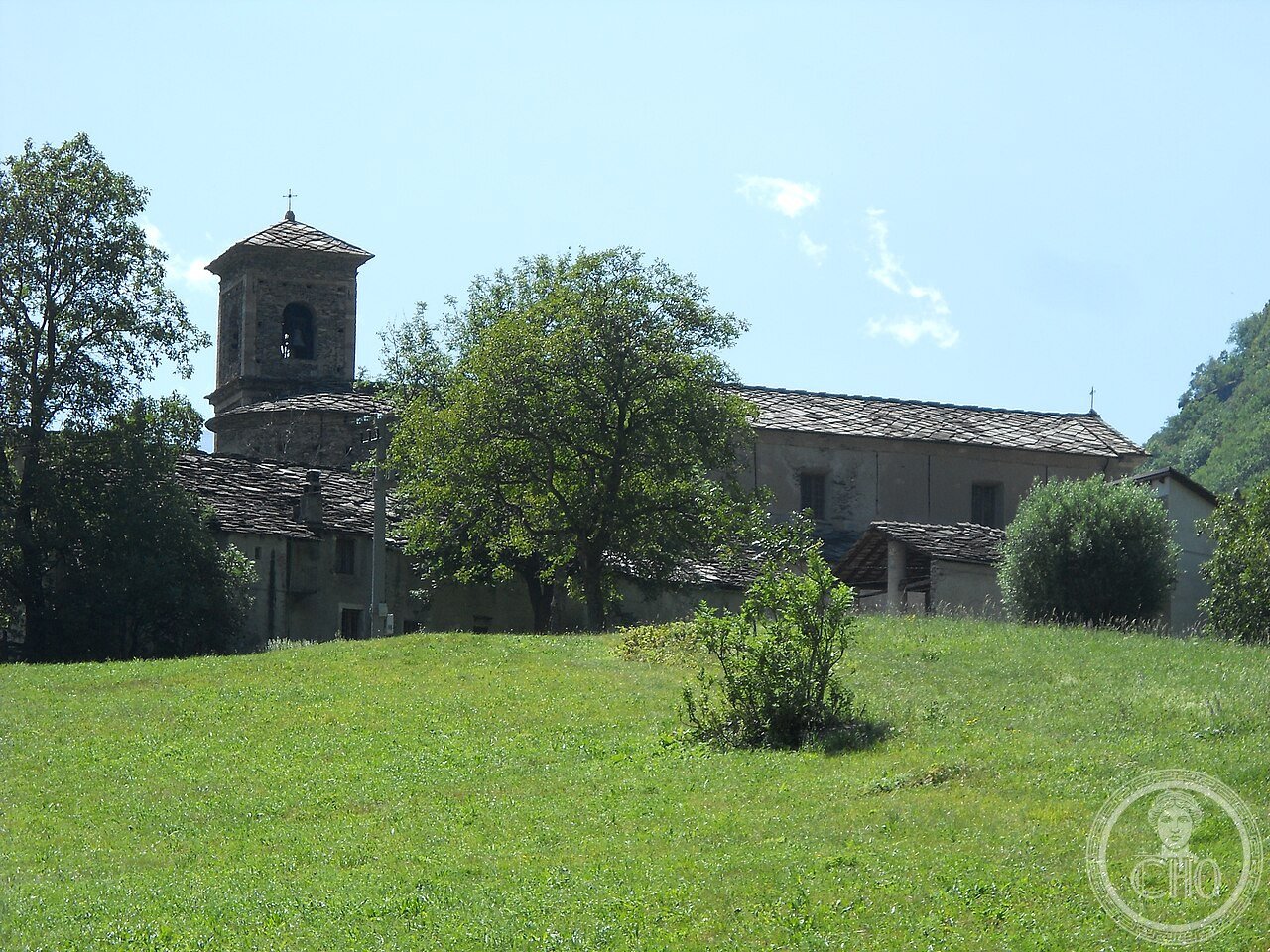
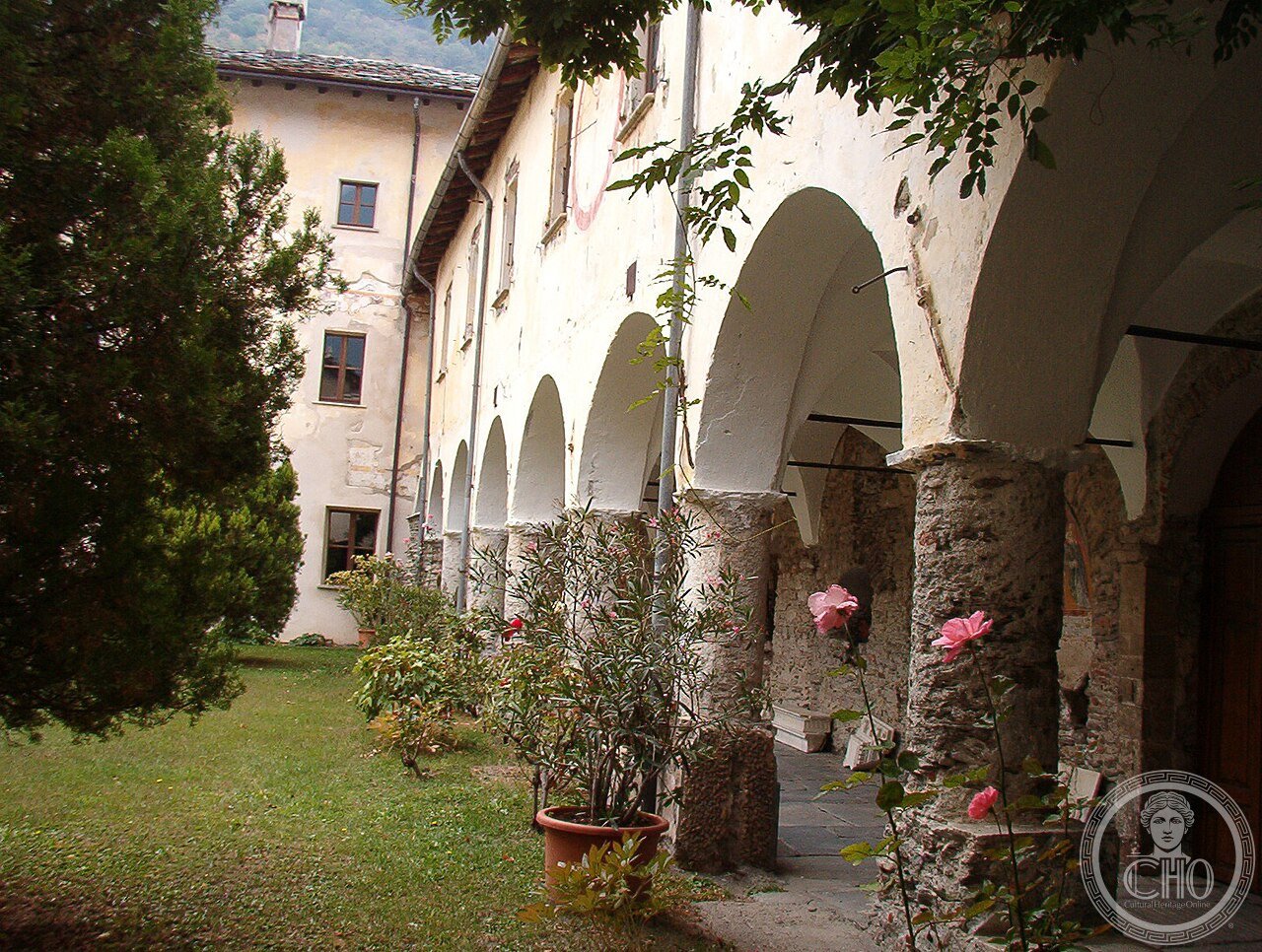
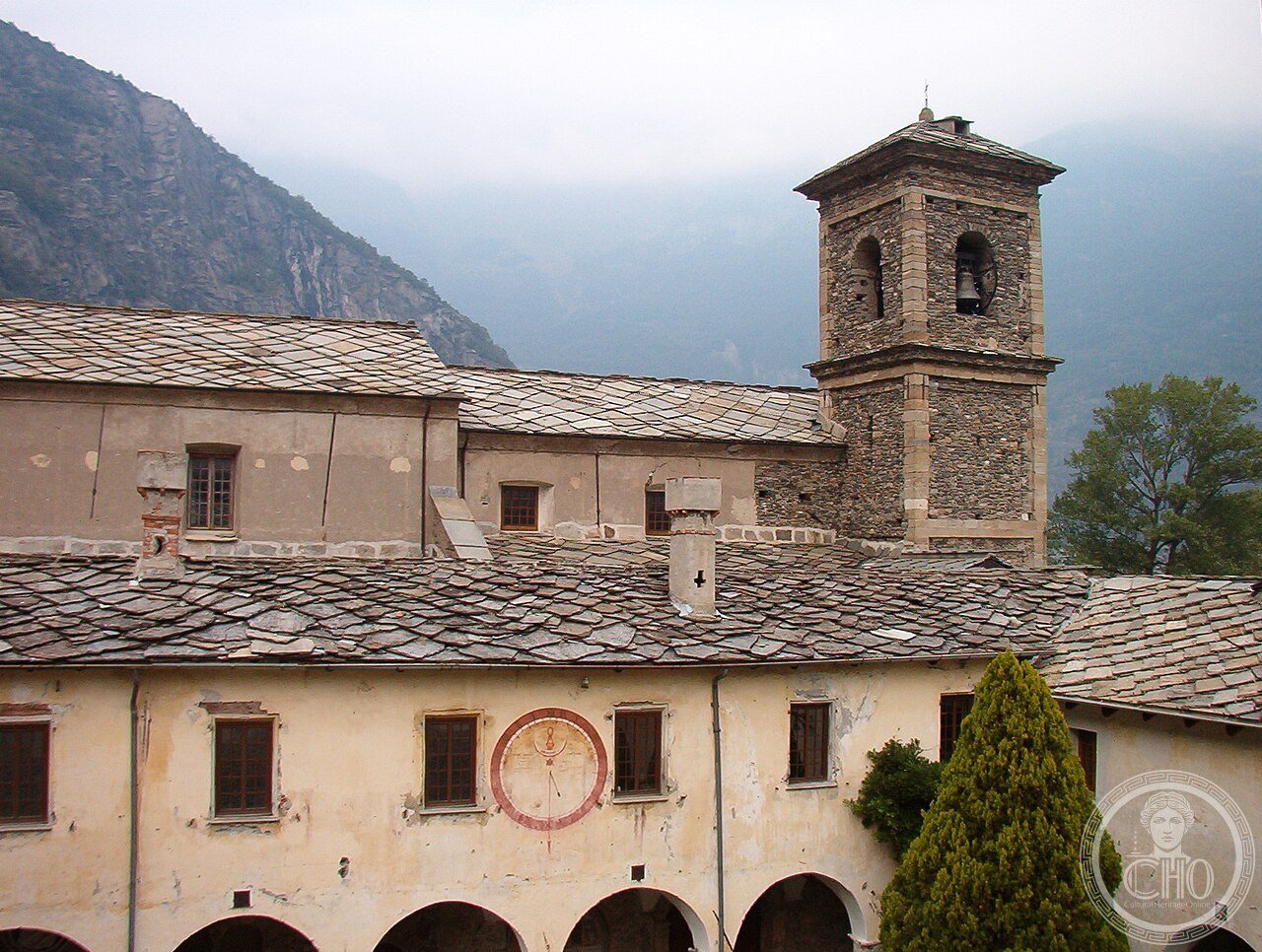
The main abbey church is largely 18th century, rebuilt after a long period of abandonment. The remarkable buildings are the four subsidiary chapels from the early medieval period, scattered around the abbey precinct. The chapel of San Eldrado (dedicated to a Provençal monk who lived as a hermit near the abbey in the 9th century) retains a remarkable cycle of Romanesque frescoes of the 12th century: the Life of Saint Eldrado and scenes from the Life of Saint Nicholas, painted in a style that combines Byzantine spatial conventions with the graphic energy of Lombard Romanesque carving. The three other chapels (Santa Maria, San Savino, San Michele) retain structural fabric from the 7th-9th century that makes them among the earliest surviving ecclesiastical buildings in Piedmont.
The monastery also maintains a small museum of monastic life and a well-stocked bookshop specialising in patristics, monastic history and Benedictine spirituality. The valley setting — a narrow gorge with cliffs of schist and gneiss rising steeply on both sides, alpine meadows above, the Mont Cenis road visible on the hillside — is one of the most dramatic in the Piedmontese Alps.
Practical information
- Opening hours: Mon–Sat 09:00–12:00 and 14:00–17:00; closed Sunday morning
- Admission: free; donation appreciated
- Chapels: guided tour of the medieval chapels recommended; ask at the reception
- Road: accessible by car from Susa (10 km); no public transport into the valley
- Time needed: 1.5 hours for abbey, chapels and small museum
Getting there
By car: from Turin (60 km), take A32 motorway west, exit Oulx/Susa, then SS25 to Novalesa village. From Susa, 10 km up the Val Cenischia road. No public bus service into the valley. GPS: 45.1785° N, 6.9894° E.
Nearby
- Susa — Roman and medieval town with the Arco di Augusto, the Porta Savoia and the Cattedrale di San Giusto, 10 km east
- Colle del Moncenisio — the historic Alpine pass with the man-made lake, 25 km west; the old road passes beside the abbey
- Sacra di San Michele — the other great Piedmontese abbey-fortress on the Val di Susa, 50 km east toward Turin; the “two bookends” of the Susa valley monastic tradition
Sources
- Wikipedia — “Novalesa Abbey” (en.wikipedia.org/wiki/Novalesa_Abbey)
- Chronicon Novaliciense (anonymous, 11th century), c. 1050 (primary source)
- Luciana Lanzetti, L’Abbazia di Novalesa, Priuli e Verlucca, 2002
- Benedictine Community of Novalesa — official information (abbazianovalesa.org)
Find it on the map
See this place and what’s around it →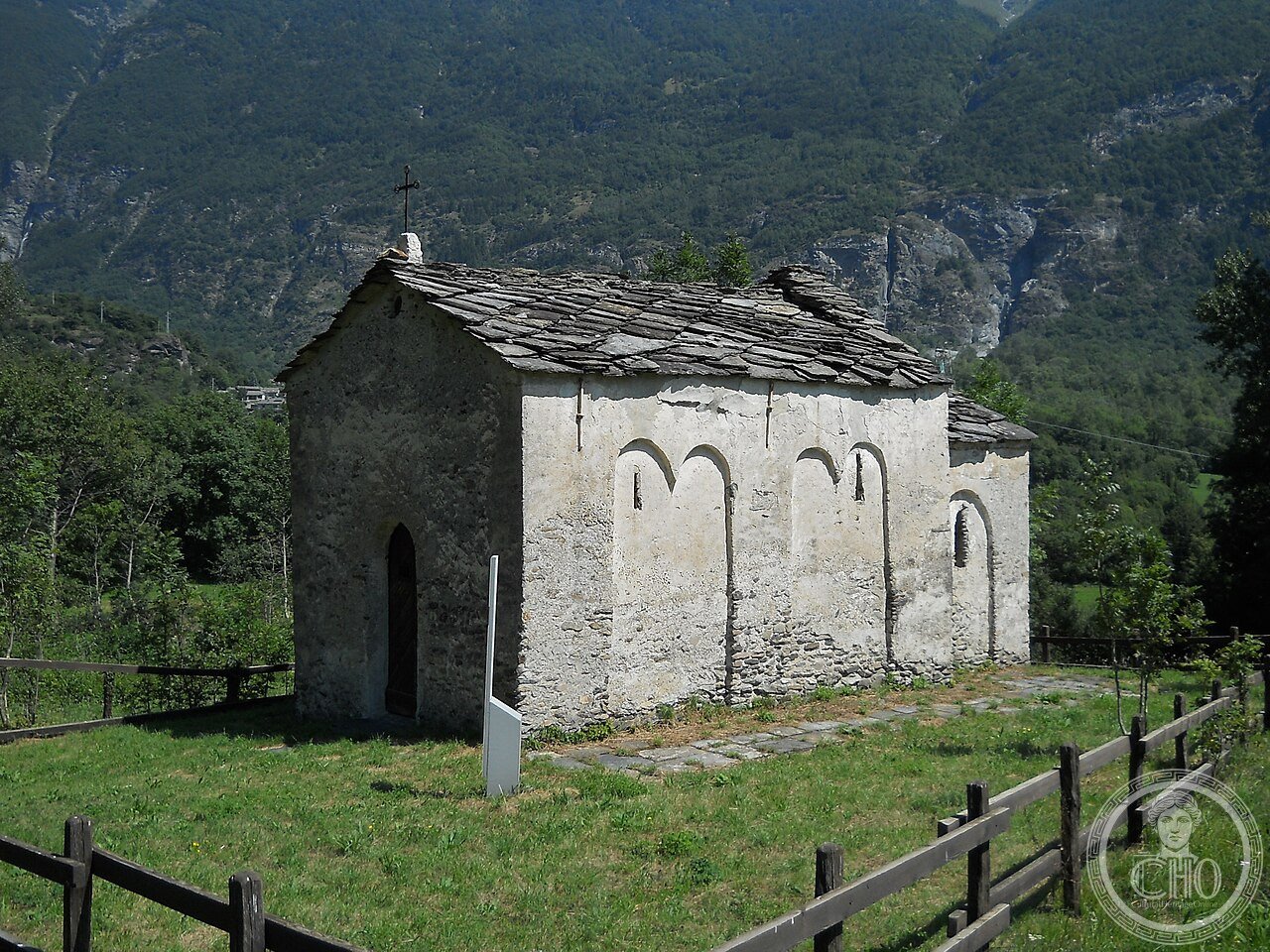
📷 Become a Cultural Heritage Online photographer
Share your photos of places: they stay published under your name as the author. The more they're seen, the more you get noticed — and soon a contest will reward the most appreciated photos.
Log in or sign up free to add a photoIs this page about you?
This page is read by travellers and heritage enthusiasts who find it on Google. Tell us how you are connected to this place and we will take it from there.