travel

UNESCO Heritage Sites Near Ellora Caves, India

UNESCO Heritage Sites Near Ellora Caves, India

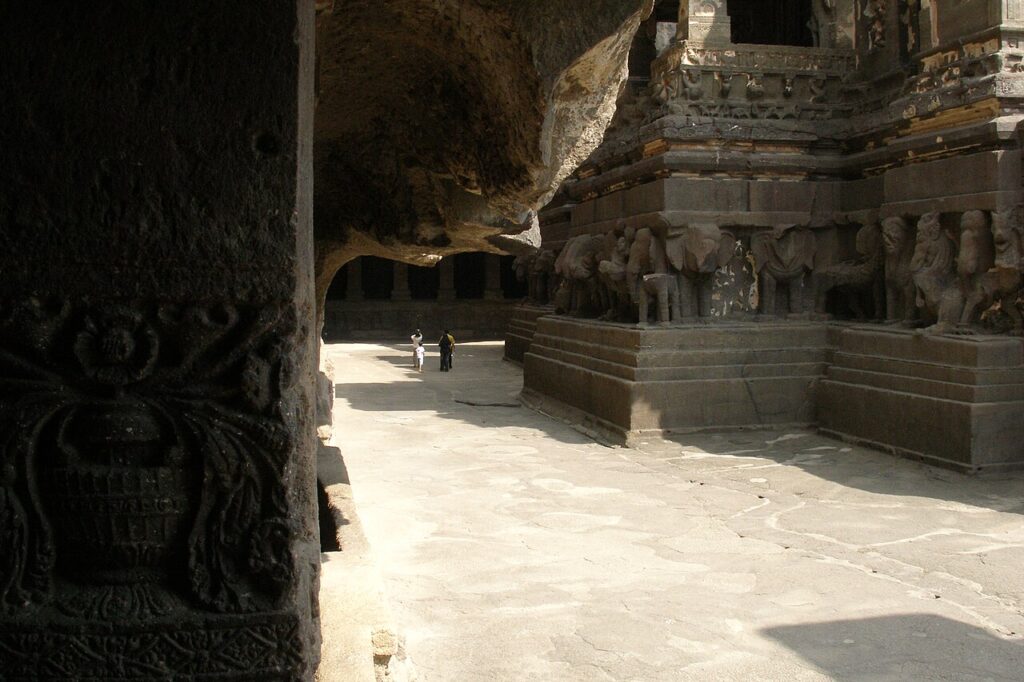
Ellora is a UNESCO World Heritage Site of 34 rock-cut temples, monasteries, and prayer halls carved from a basalt escarpment in Maharashtra between approximately 600 and 1000 CE, representing Buddhism, Hinduism, and Jainism in a single complex. At its centre, the Kailasa Temple — carved top-down from living rock by removing an estimated 276,000 tonnes of basalt — stands twice the footprint of the Parthenon and remains the largest monolithic rock-cut structure in the world.

A historic gate in the walls of Harar Jugol, Ethiopia — one of five gates in the 16th-century fortified wall surrounding the old city, UNESCO World Heritage Site

UNESCO Heritage Sites Near Harar Jugol, Ethiopia

Harar Jugol, UNESCO-listed since 2006, is a 16th-century walled city in eastern Ethiopia containing more than 80 mosques, the house where Rimbaud spent his trading years, and a nightly ritual in which wild spotted hyenas are fed by hand at the Fallana Gate. The 4.5-kilometre wall and its five gates enclose a living Islamic urban tradition that developed in near-isolation from the surrounding Ethiopian highlands for three centuries.

UNESCO Heritage Sites Near Fasil Ghebbi, Gondar

UNESCO Heritage Sites Near Fasil Ghebbi, Gondar

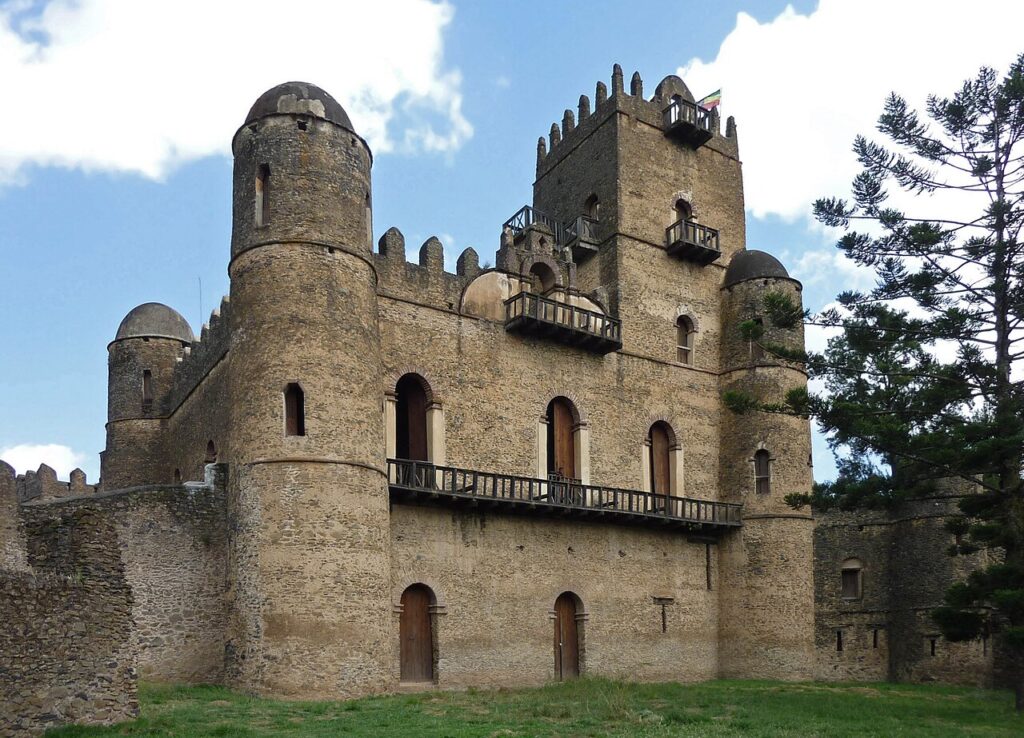
Fasil Ghebbi, UNESCO-listed since 1979, is a 70,000-square-metre royal compound in Gondar, Ethiopia, containing palaces built by six emperors between 1636 and the late 17th century — a fusion of Aksumite stonework, Portuguese Baroque, and Indian arch forms produced at the height of Ethiopian international trade. Fasilides’ Bath, 2 km from the main compound, is flooded once a year for the Timkat Epiphany ceremony attended by thousands of pilgrims.

UNESCO Heritage Sites Near Lalibela Churches

UNESCO Heritage Sites Near Lalibela Churches

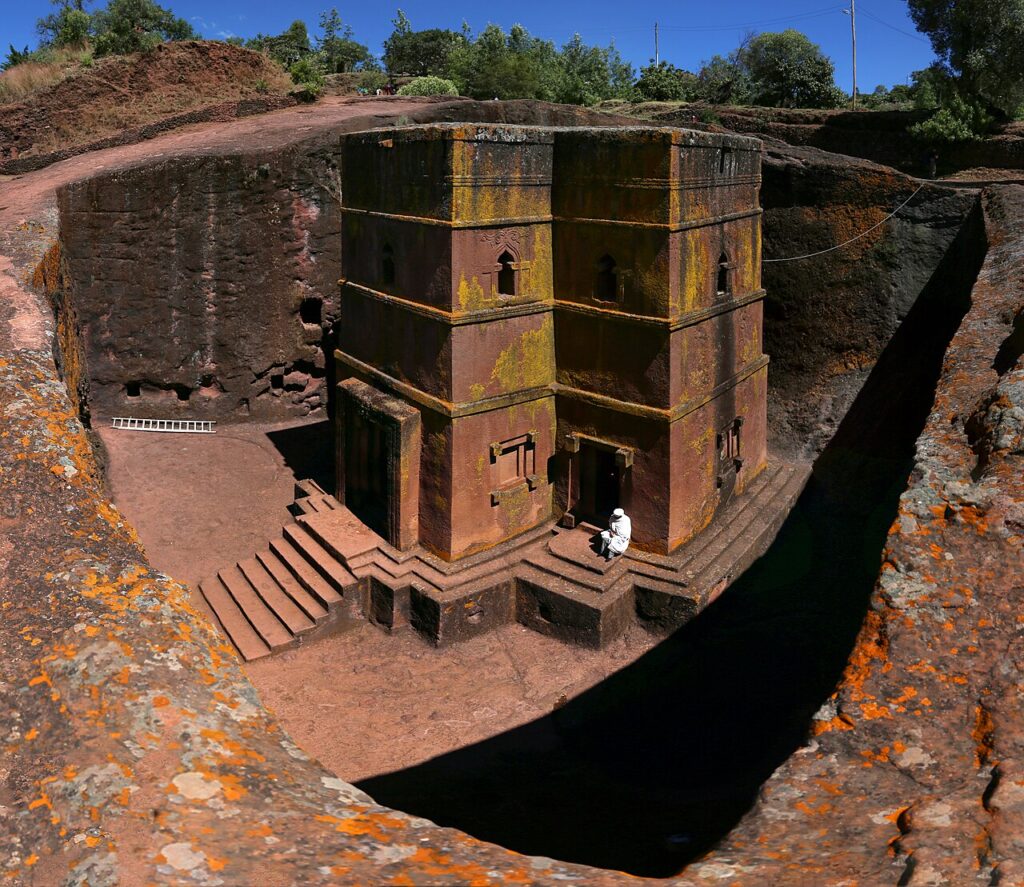
Lalibela’s eleven monolithic churches, UNESCO-listed since 1978, were carved directly from the volcanic bedrock of the Ethiopian highlands in the 12th and 13th centuries — each a single piece of rock hollowed out rather than assembled from quarried blocks. The site remains in daily liturgical use and draws tens of thousands of Orthodox pilgrims each year to a complex its builders designed as a New Jerusalem.

UNESCO Heritage Sites Near Aksum, Ethiopia

UNESCO Heritage Sites Near Aksum, Ethiopia

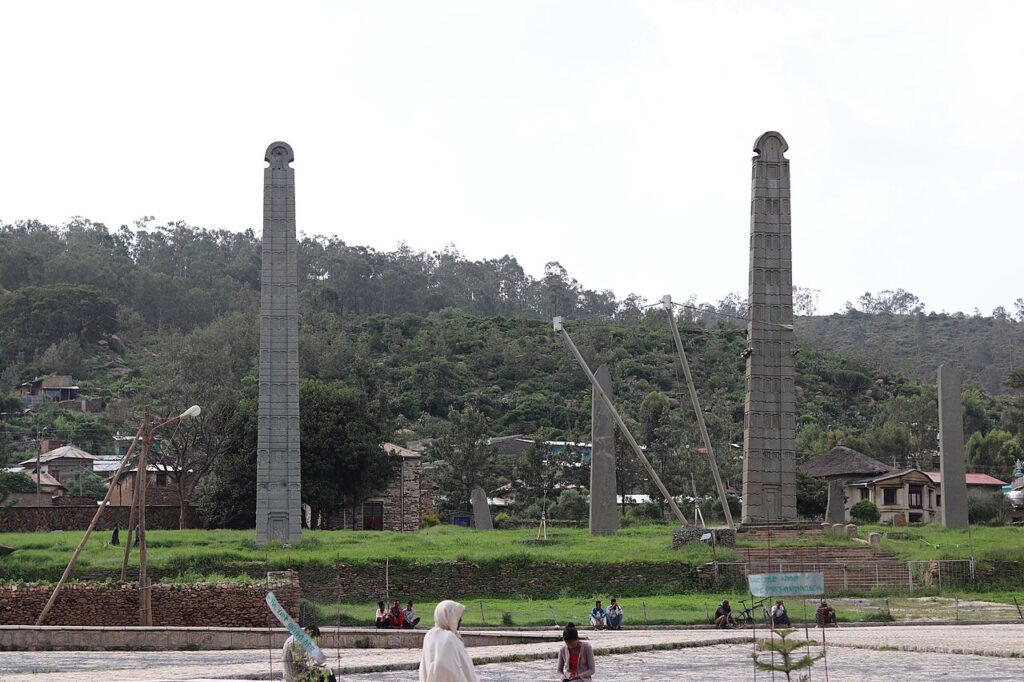
Aksum, UNESCO-listed since 1980, was the capital of an ancient empire that traded with Rome and India and adopted Christianity around 330 CE. The city holds roughly 120 granite stelae — including a 24-metre obelisk looted by Mussolini in 1937 and returned after 68 years — as well as the chapel that Ethiopian Orthodox tradition identifies as the resting place of the Ark of the Covenant.

UNESCO Heritage Sites Near Côa Valley, Portugal

UNESCO Heritage Sites Near Côa Valley, Portugal

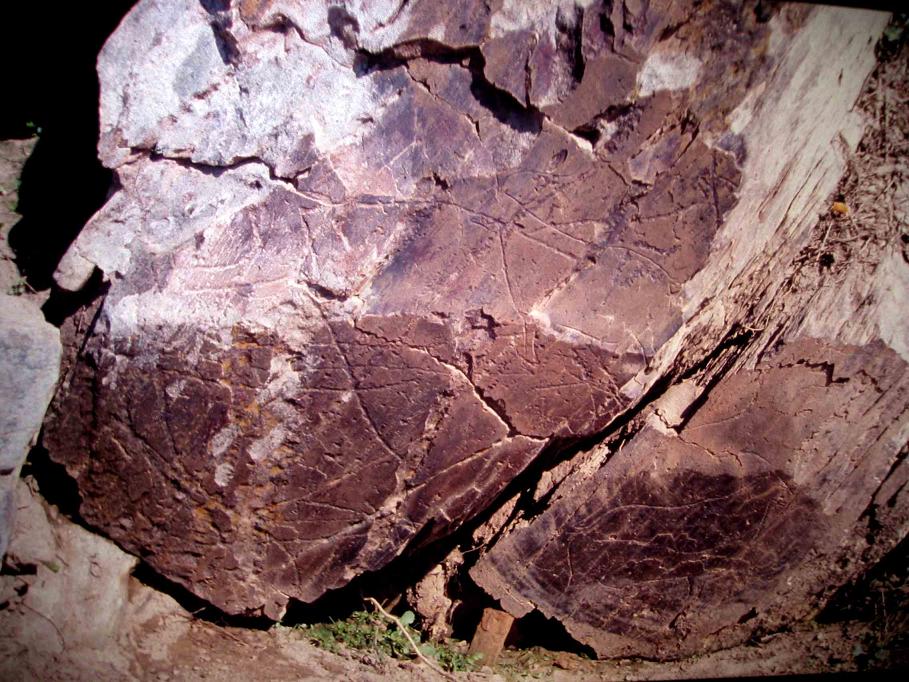
The Côa Valley Archaeological Park in northeastern Portugal protects the largest concentration of open-air Palaeolithic rock art in the world — approximately 1,200 engraved panels of horses, aurochs, and ibex carved into schist bedrock between 22,000 and 10,000 BCE. UNESCO-listed since 1998 and extended to include Siega Verde (Spain) in 2010, the site was saved from flooding after the cancellation of the Foz Côa dam in 1996 following an international campaign. Guided visits depart from the Museu do Côa in Vila Nova de Foz Côa; the Alto Douro Wine Region lies 80 km to the west.

UNESCO Heritage Sites Near Alto Douro Wine Region

UNESCO Heritage Sites Near Alto Douro Wine Region

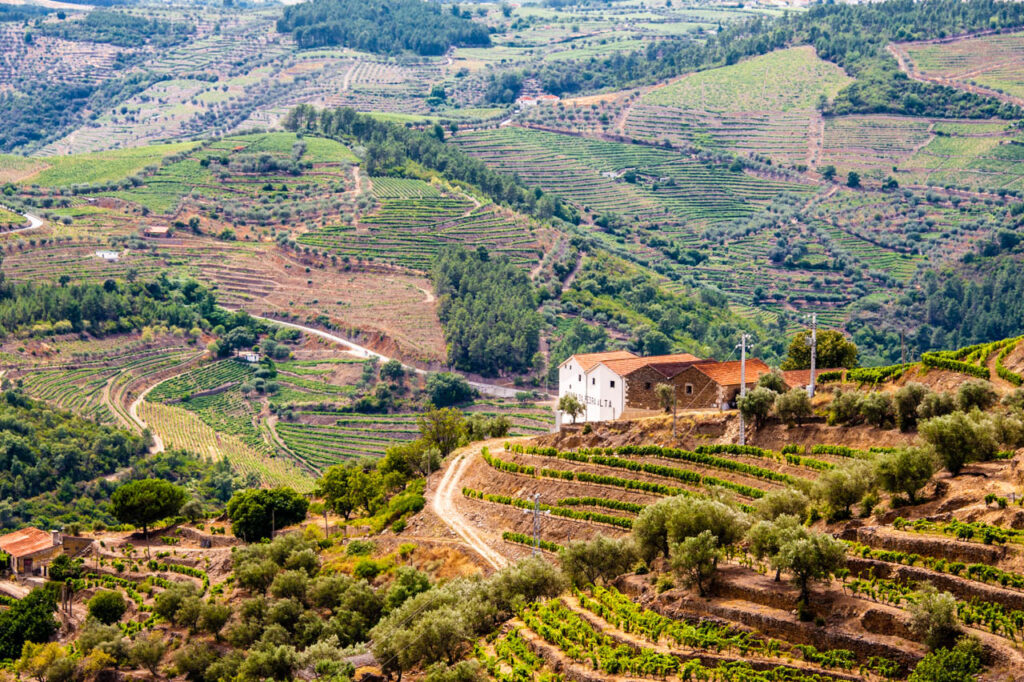
The Alto Douro Wine Region in northeastern Portugal is a UNESCO World Heritage Site (2001) and the world’s oldest officially demarcated wine appellation — a boundary drawn in 1756, 99 years before Bordeaux’s famous classification. The 24,600-hectare landscape of hand-built terraced vineyards (socalcos), historic quintas, and the scenic Douro Line railway stretches between Mesão Frio and Barca d’Alva, producing Port wine and an increasingly prominent range of dry table wines from over 80 indigenous grape varieties.

UNESCO Heritage Sites Near Naumburg Cathedral, Germany

UNESCO Heritage Sites Near Naumburg Cathedral, Germany

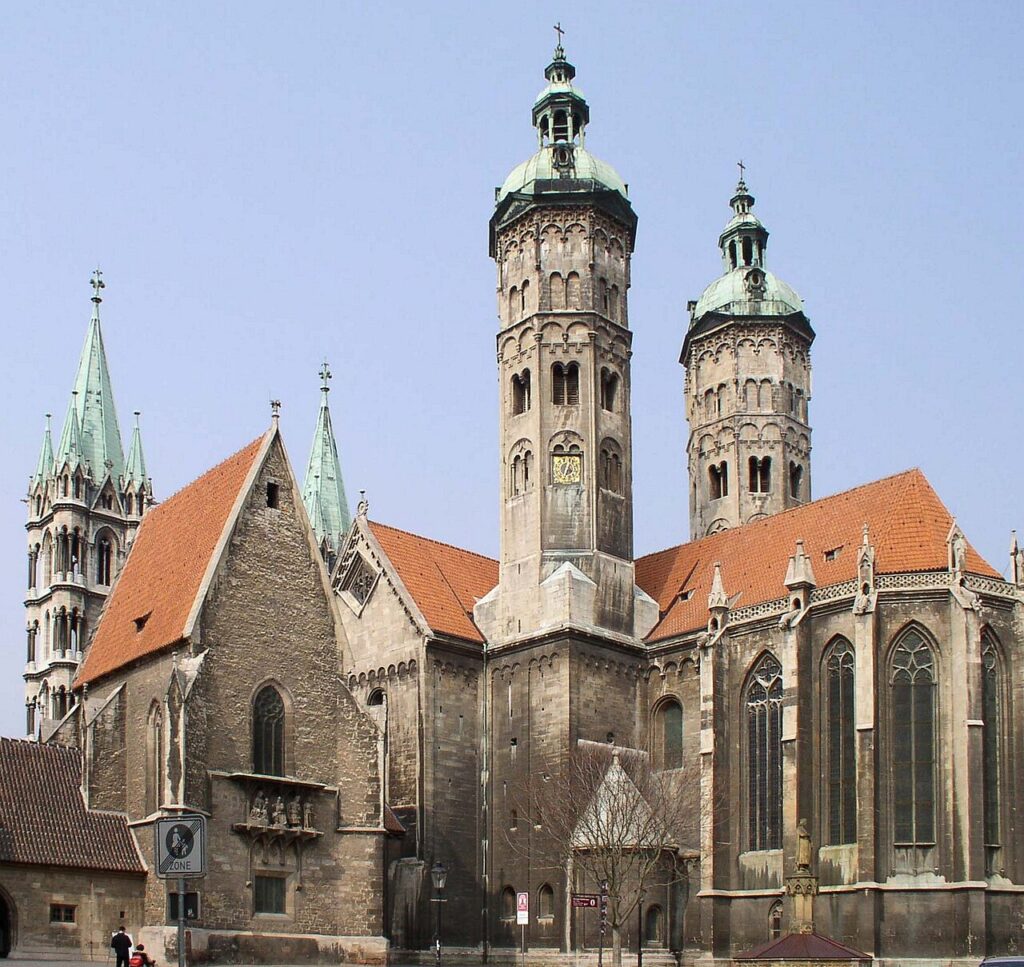
Naumburg Cathedral in Saxony-Anhalt, a UNESCO World Heritage Site since 2018, holds the twelve Founders’ Statues carved by the anonymous Naumburg Master around 1250 — among them the statue of Uta von Ballenstedt, whose individuated face and distinctive gesture have made her the most reproduced image of a medieval German noblewoman and a putative model for Disney’s Snow White.

UNESCO Heritage Sites Near Stralsund and Wismar, Baltic

UNESCO Heritage Sites Near Stralsund and Wismar, Baltic

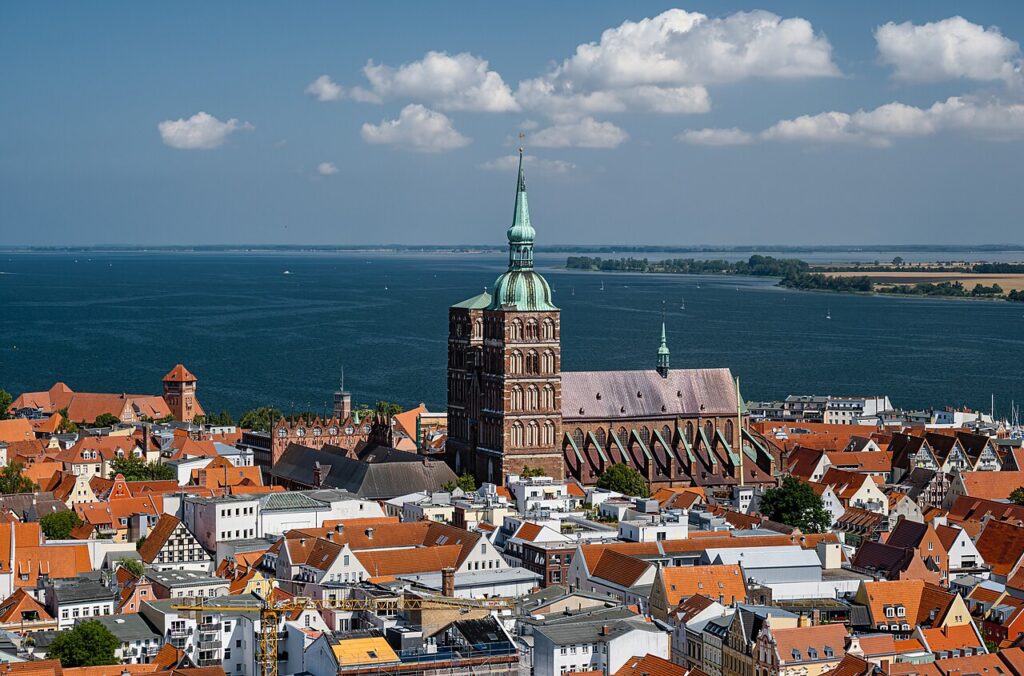
Stralsund and Wismar, two Hanseatic cities on the Baltic coast of Mecklenburg-Vorpommern, form a single UNESCO World Heritage Site inscribed in 2002. Both cities were Swedish possessions from 1648 — Wismar until 1803, Stralsund until 1815 — and their Brick Gothic churches, market squares, and harbour fronts preserve the architecture and urban structure of the medieval Baltic trading world.

Scroll to Top