Six houses in Ixelles and Saint-Gilles, from Horta’s Hôtel Tassel of 1893 to his own house and studio, now the Horta Museum: 3.2 kilometres on foot.
Where the style started
Belgian Art Nouveau begins in a handful of streets south of the centre, and the walk below takes six houses built between 1893 and 1901. They are small buildings, three or four floors, built for families or for architects themselves, and most of them are still private. The distance is 3.2 kilometres, the ground is flat, and the walk is short enough to do in an afternoon with time to stand in front of each door.
Two houses of 1893
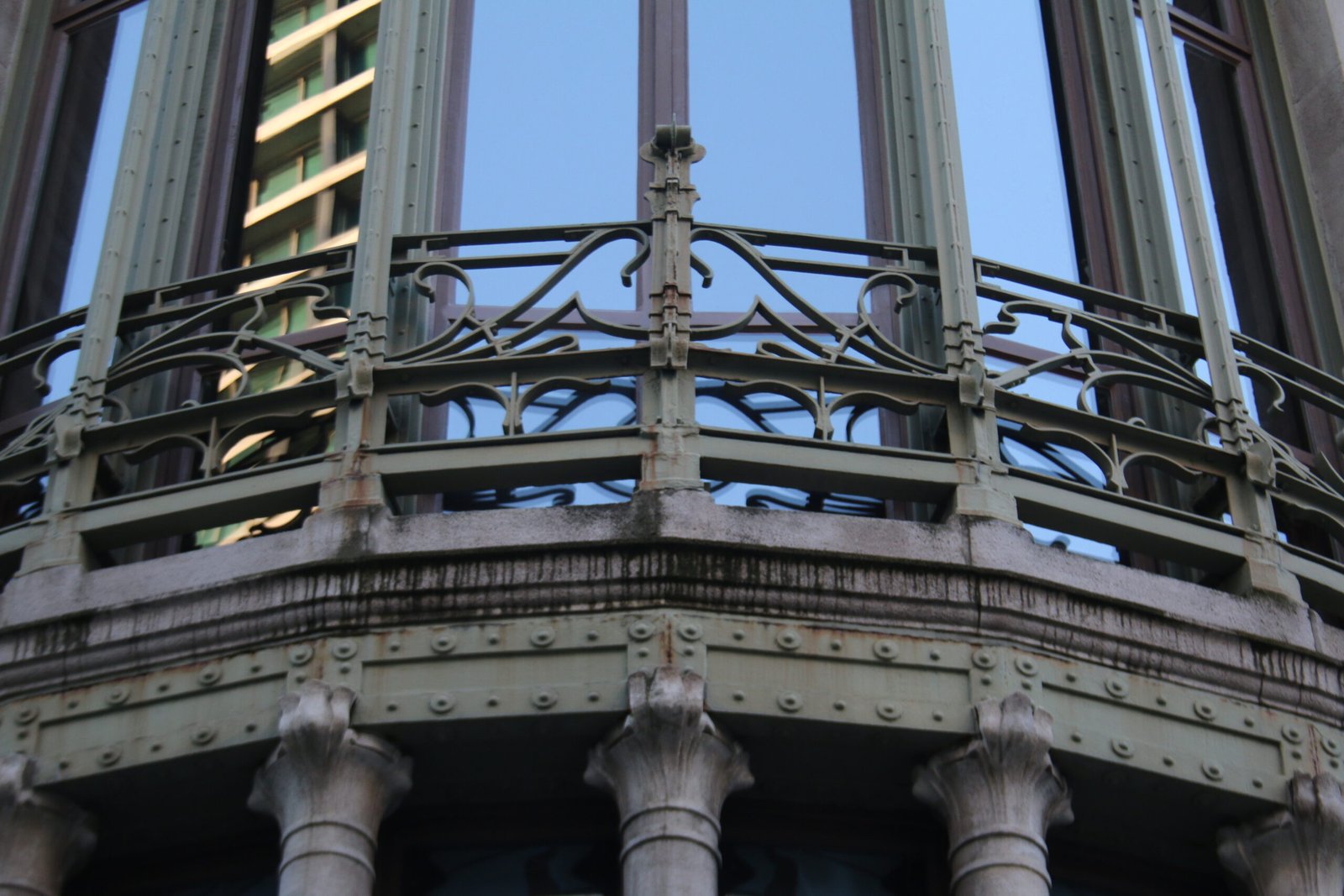
Start at the Hôtel Tassel, in rue Paul-Émile Janson, where Victor Horta put an exposed iron frame inside a private house for the first time. The building is from 1893–1894 and it is a UNESCO site, but it is also a private house: the visit is from the pavement, and the pavement is enough to see how the stone and iron curve into each other.
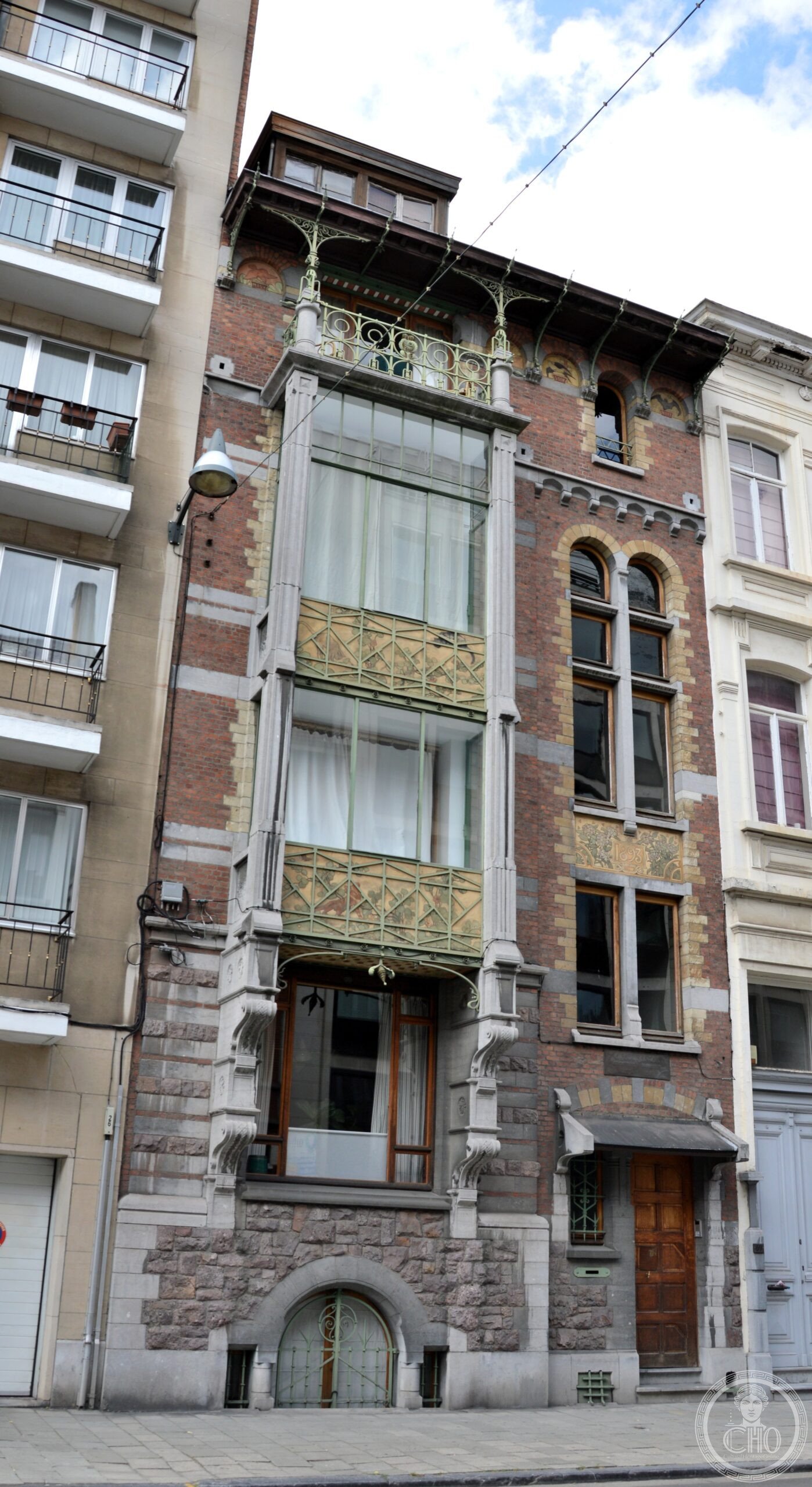
The same year, on rue Defacqz, Paul Hankar built his own house. Hankar House is the other founding building of Brussels Art Nouveau: a traditional plan, and the whole argument put into the façade, with red brick against blue stone, bands of sgraffito across the upper floors and wrought-iron balconies. It has been a listed monument since 1975 and it is still lived in.
The two streets that became a gallery
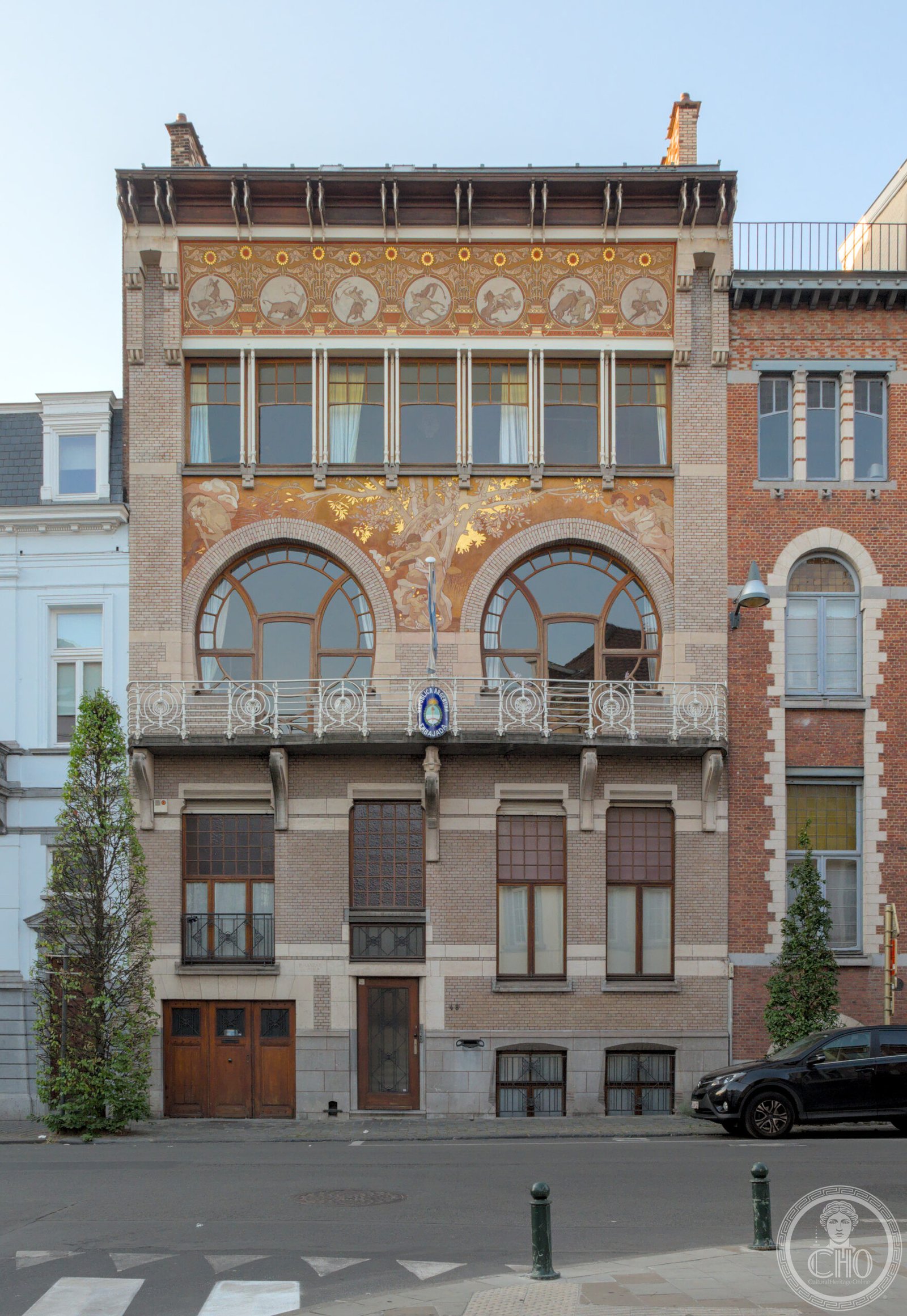
Hankar added the Hôtel Ciamberlani on the same street in 1897, for the Symbolist painter Albert Ciamberlani. The façade is broken from classical symmetry and the iron beam is left frankly on show, which was the point: the structure was not hidden, it was part of the decoration. Walk the street once on each side: the two houses talk to each other across the pavement.
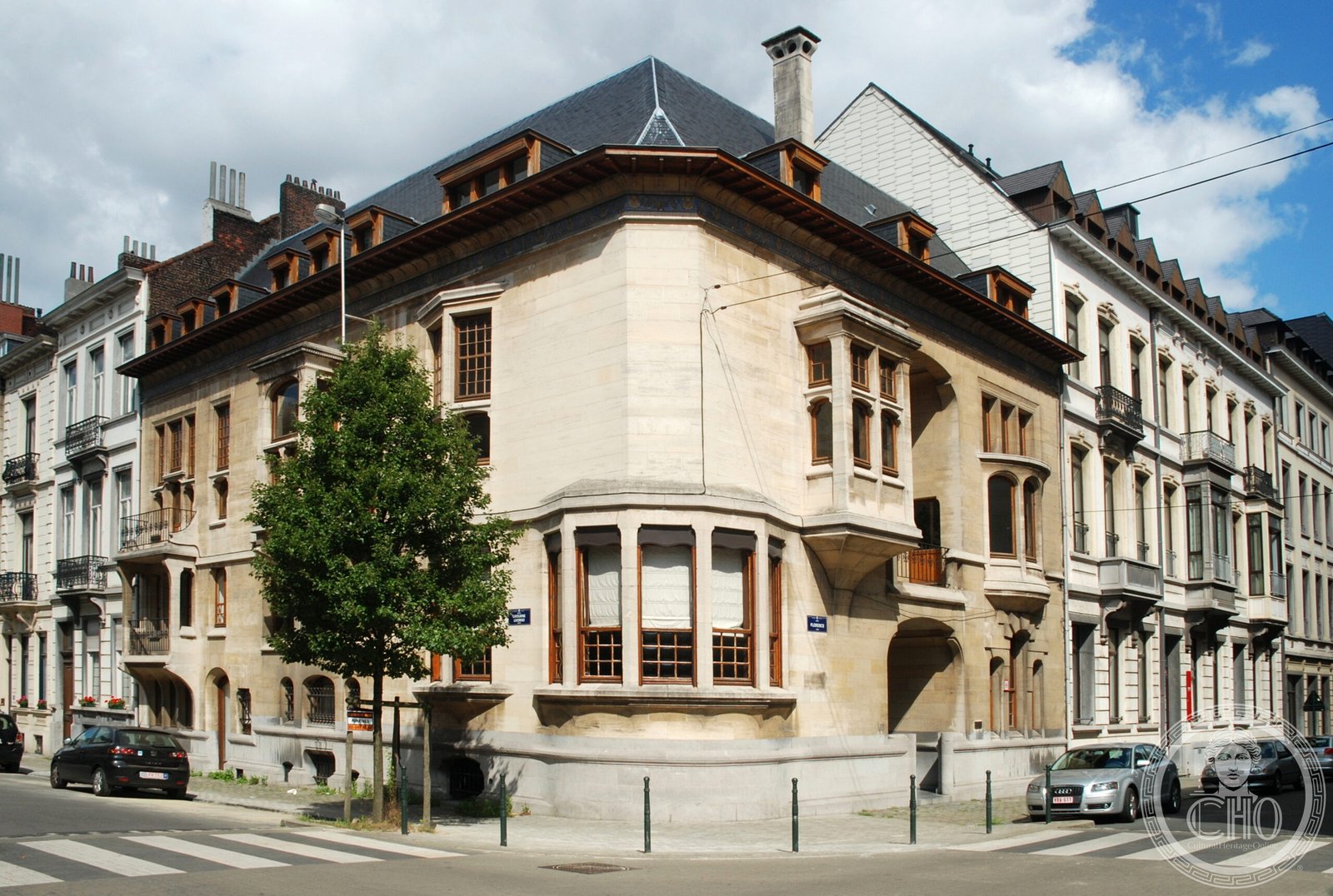
A few blocks away, two quieter houses by Horta show the same language at a smaller scale. The Hôtel Otlet, built by Octave van Rysselberghe between 1894 and 1898 for the bibliographer Paul Otlet, is an elegant corner house off the Avenue Louise; the Hôtel Winssinger (1894–1897) has a white-and-blue stone front that Horta himself remodelled in 1928–29, when he turned his own building into flats.
The house Horta built for himself
The walk ends at the Horta Museum, the house and studio Horta built for himself between 1898 and 1901 in rue Américaine. It is the only one of his houses open to the public, and it is the place to see the interiors the other façades hide: the stair, the iron, the glass, the light. Book before you go: it is small, and it closes on Mondays.
The full route, with the order of the stops, is on the Art Nouveau in Brussels walking tour page. The other houses are private, so the walk is a walk of façades, and it rewards a slow afternoon rather than a rushed morning.
Sources
- Hôtel Tassel · https://culturalheritageonline.com/places/hotel-tassel-brussels/
- Hôtel Otlet · https://culturalheritageonline.com/places/hotel-otlet-brussels/
- Hôtel Winssinger · https://culturalheritageonline.com/places/hotel-winssinger-brussels/
- Hankar House · https://culturalheritageonline.com/places/hankar-house-brussels/
- Hôtel Ciamberlani · https://culturalheritageonline.com/places/hotel-ciamberlani-brussels/
- Horta Museum · https://culturalheritageonline.com/places/musee-horta-brussels/
- Art Nouveau in Brussels walking tour · https://culturalheritageonline.com/itineraries/art-nouveau-brussels-horta-walking-tour/
Spotted an error? Write to [email protected] and we correct it the same day.