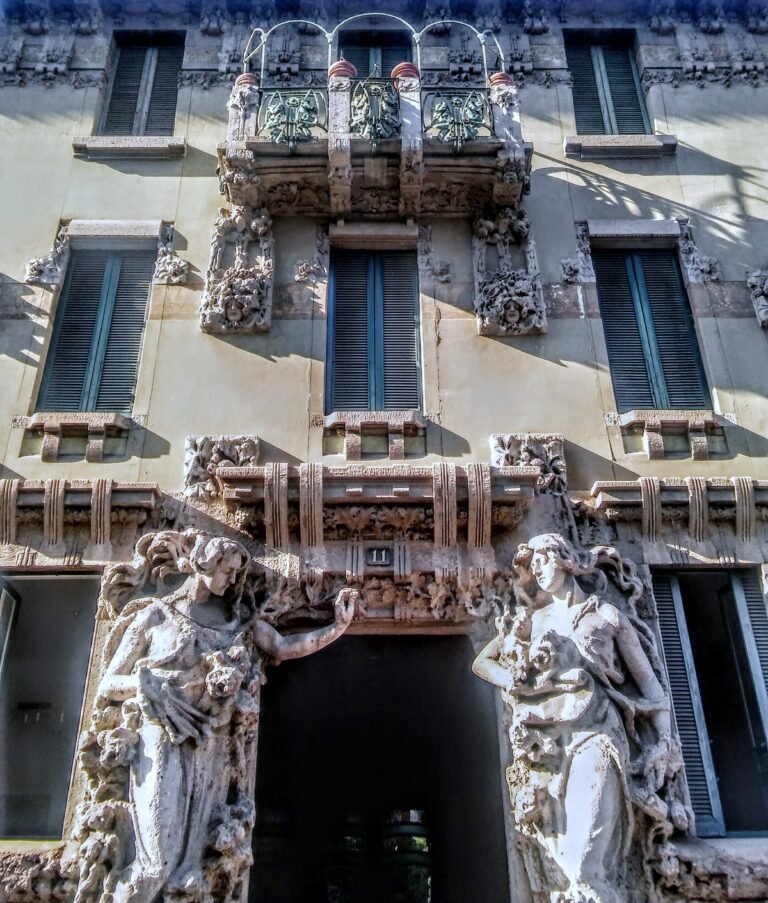
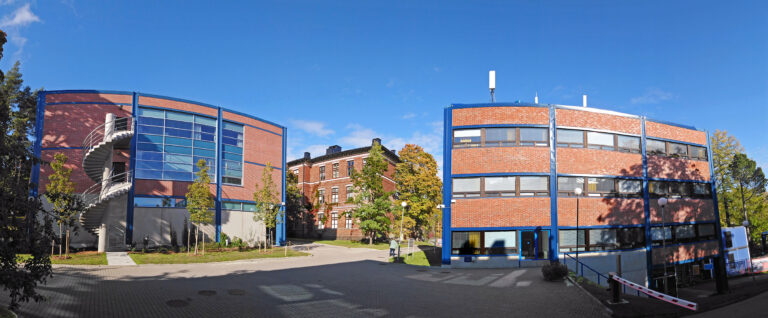
Five buildings of EUR on foot: the Salone delle Fontane, the former INA/INPS ministry, Libera’s Palazzo dei Congressi, the Palazzo della Civiltà Italiana and the Museum of Roman Civilization.
A district built for a fair that never opened
EUR was planned for 1942, for a world exhibition that the war cancelled. The buildings were designed anyway, and then finished after it: an entire district of wide streets, white stone and travertine, laid out around an artificial lake and two axes that were meant to carry visitors from the railway to the river. The result is the largest and most coherent group of rationalist architecture in Italy, and the reason this walk works is that everything stands within a kilometre and a half of everything else.
Take Metro B to EUR Palasport or EUR Fermi and start at the water. The first stop, the Salone delle Fontane, is the reception hall at the centre of the district, a long volume built to hold crowds; from there the walk moves between the ministry buildings and the lake.
The administrative front
The former INA/INPS building is the work of Cesare Bazzani, 1928, and it began as the seat of the Ministry of National Education before passing through the hands of the insurance institute that gave it its other name. It is the kind of architecture the district does best: a long, calm front, stone to the ground floor, offices above, no decoration that is not structural.
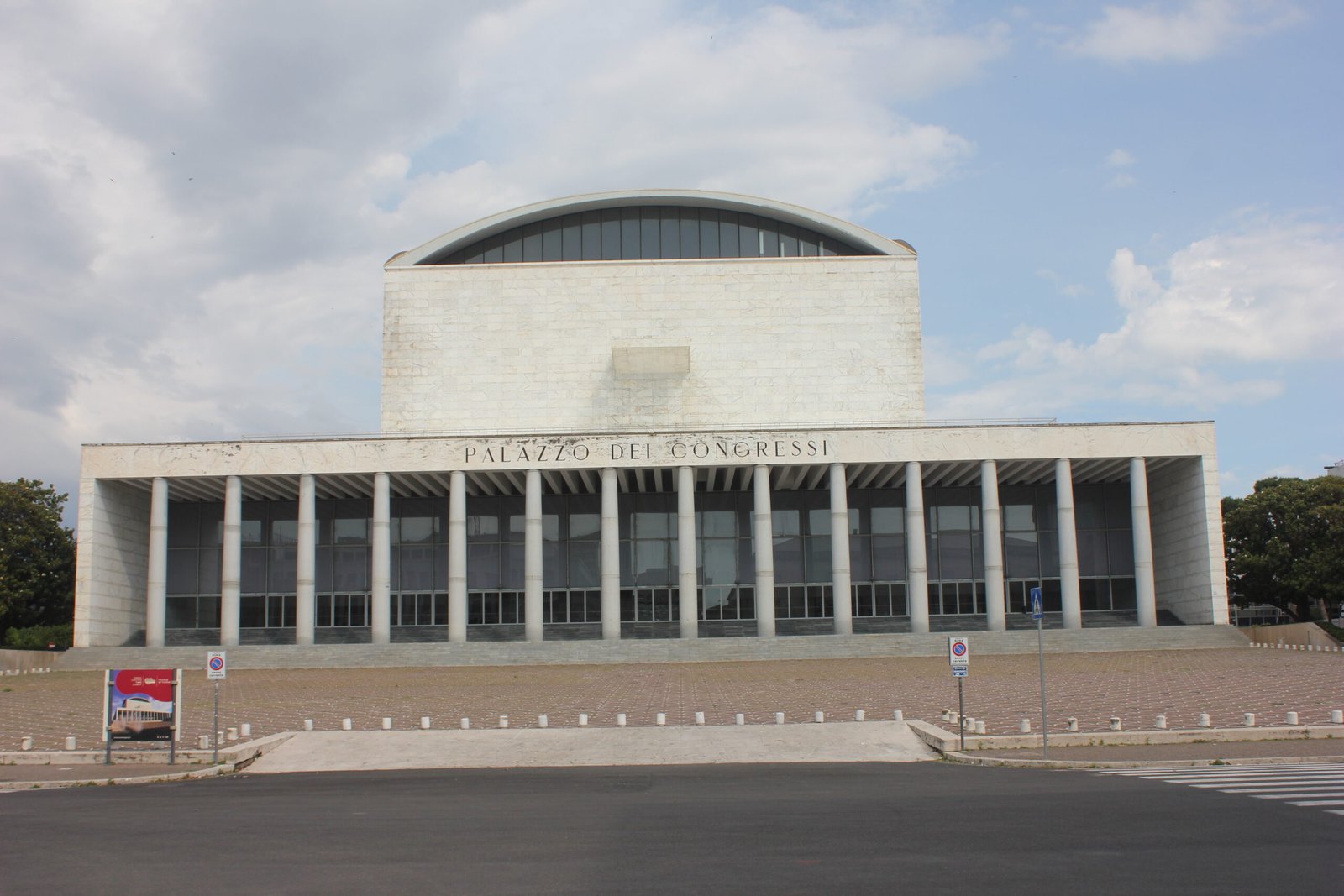
A few minutes away, on the other side of the square, Palazzo dei Congressi is Adalberto Libera’s building: a 45-metre cube of travertine designed in 1937 for the fair, completed only in 1954. It hosted the fencing tournament at the 1960 Olympics and it is a convention centre now. Walk round it before going in: the entrance is on the side, and the cube only makes sense from a distance.
The square colosseum
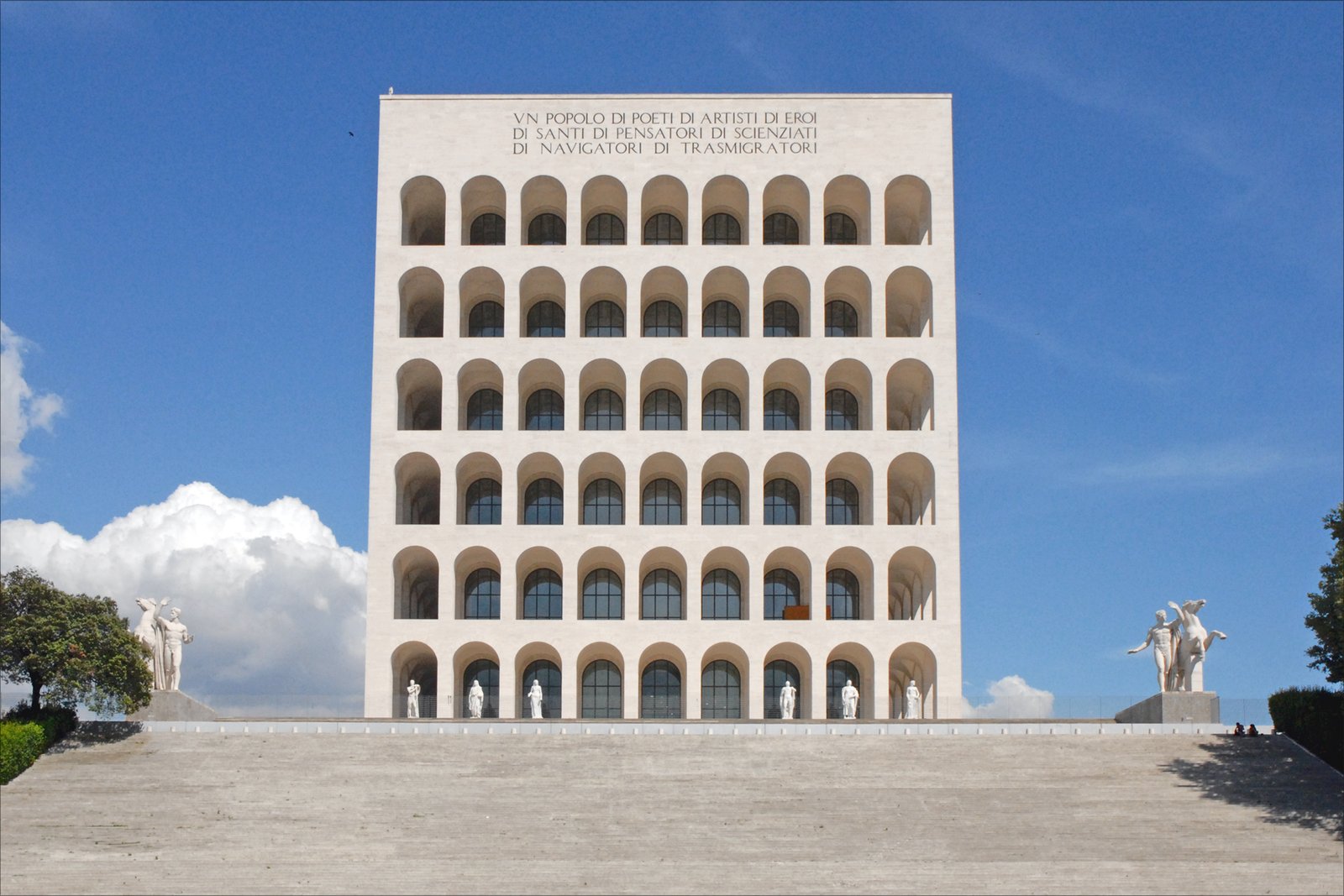
The Palazzo della Civiltà Italiana is what everyone comes for. Begun in 1938, it takes the idea of the Colosseum and turns it into a stack of arches, six rows of nine below and above a solid base, in travertine, with nothing else on it. From the front it looks like a single object; walk round to the side and the thing is much shallower than you expect, which is the trick of the building. It stands on a raised podium with steps, and there is no shade anywhere near it in summer.

Concrete vaults and Roman casts
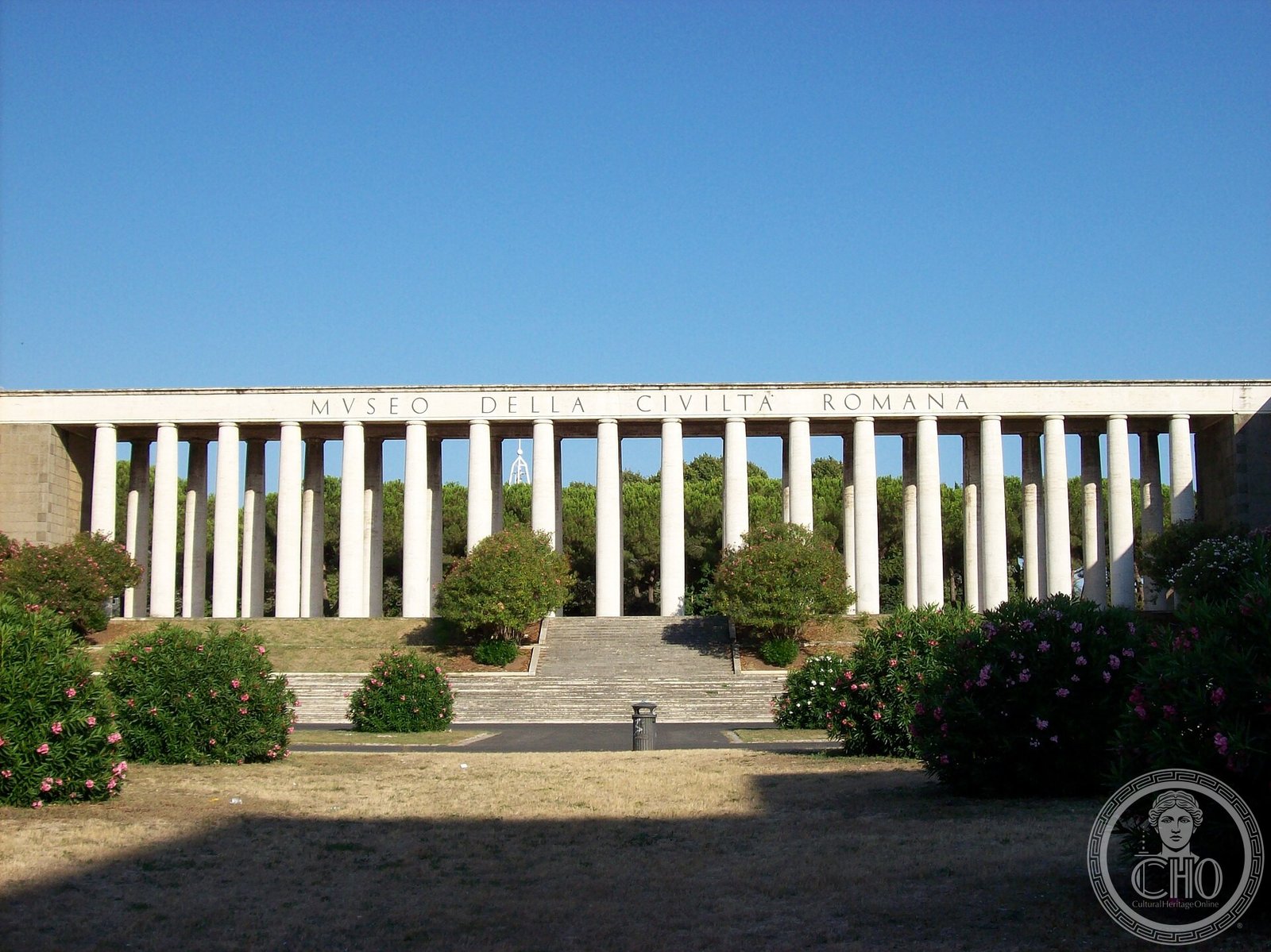
The walk ends at the Museum of Roman Civilization, a building of severe concrete vaults on the far side of the district. Inside, the collection is made of casts, models and reconstructions: a full-scale model of Rome in the fourth century, casts of the columns of Trajan and Marcus Aurelius, copies of statues from every province. It is a nineteenth-century idea carried out in a twentieth-century building, and it is the best place in the city to understand what the Romans built.
The five stops add up to 3.9 kilometres on the streets, about three hours including the museum. The district is flat, the pavements are wide, and the metro takes you back from EUR Fermi. The full route, with the order of the stops, is on the Rationalism in Rome walking tour page.
Sources
- Salone delle Fontane · https://culturalheritageonline.com/places/salone-delle-fontane/
- Former INA/INPS building · https://culturalheritageonline.com/places/building-of-the-former-ina-inps-ministry-of-education-university-and-research/
- Palazzo dei Congressi · https://culturalheritageonline.com/places/palazzo-congressi-eur/
- Palazzo della Civiltà Italiana · https://culturalheritageonline.com/places/palazzo-della-civilta-italiana-roma-eur/
- Museum of Roman Civilization · https://culturalheritageonline.com/places/museum-of-roman-civilization/
- Rationalism in Rome walking tour · https://culturalheritageonline.com/itineraries/rationalism-rome-eur-walking-tour/
Spotted an error? Write to [email protected] and we correct it the same day.