

A Greek Summer: Ten Heritage Sites from Athens to Thessaloniki
Ten heritage sites in one summer loop through the Greek mainland: the Acropolis of Athens, then down into the Peloponnese
Ten heritage sites in one summer loop through the Greek mainland: the Acropolis of Athens, then down into the Peloponnese
Ten heritage cities in one September loop: modernista Barcelona, Roman Tarragona and the Mudéjar Aljafería of Zaragoza in the north-east;
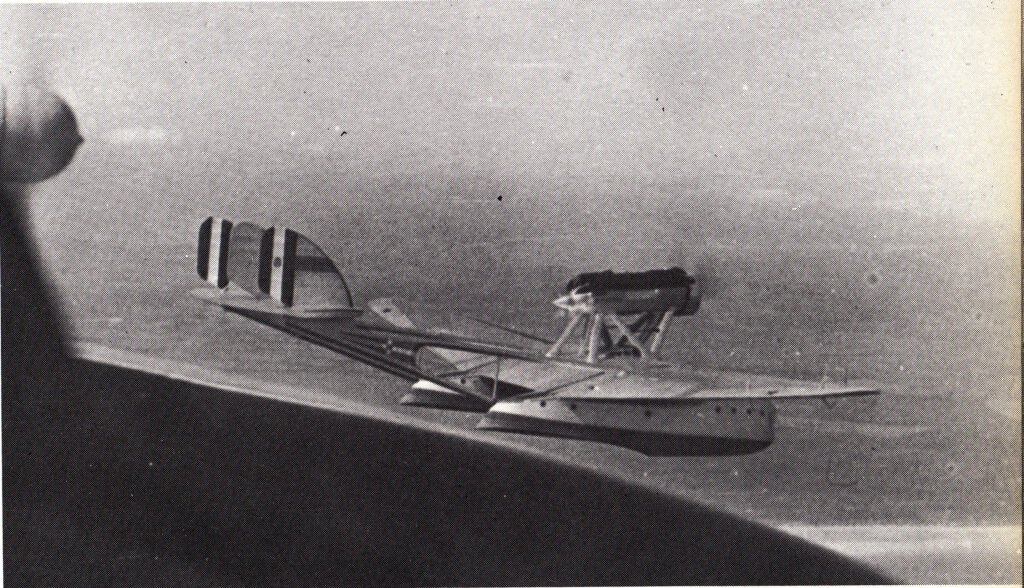
This is not a route anyone can drive. Between 1930 and 1933 Italian seaplanes crossed the Atlantic in formation, and what remains of those flights are three sites on two continents. The Idroscalo di Orbetello is the Tuscan lagoon base the squadrons trained at and left from — for Rio in 1930, for Chicago in 1933. On the Chicago lakefront, in Burnham Park, stands an ancient Roman column taken from Ostia and sent by Mussolini’s government in 1934 to commemorate the 1933 flight; it has been contested ever since. In New York, the Palazzo d’Italia opened at Rockefeller Center in 1935 as official Italy’s showcase on Fifth Avenue: Piccirilli’s fascist-flavoured glass panel there was boarded over days after Pearl Harbor and replaced in 1965. Three surviving places, and three different ways a country has handled the same memory.
Ten heritage cities in one September loop: Paris, Versailles and Rouen in the north; the coronation cathedral of Reims, royal
A thematic chain, not a day trip: five surviving case del fascio across Italy and Albania, each with a different
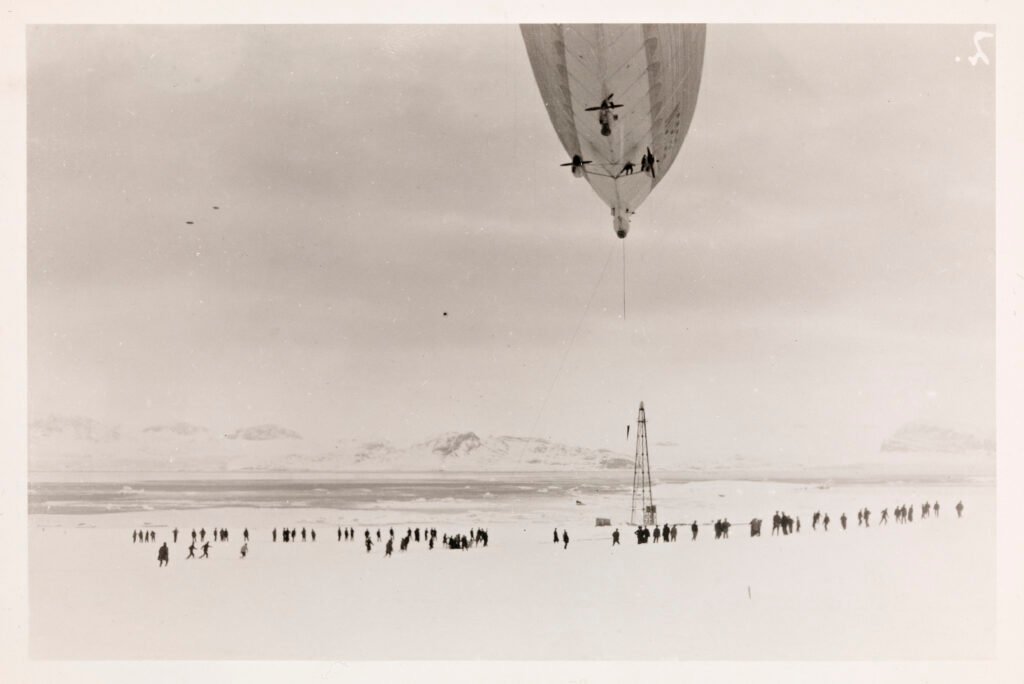
Two stops, two steel masts, and eleven hundred kilometres of open Arctic between them — which is why this page does not pretend to be a route. Both airships that flew north from Europe used the same corridor. At Vadsø, on the island of Vadsøya, the red mooring mast still stands: the last mainland anchorage, where the Norge moored in May 1926 and the Italia in May 1928. The second mast is at Ny-Ålesund, in Kings Bay on Svalbard, at 79° North. The Norge left from it on 11 May 1926 for the first verified journey to the North Pole; the Italia was based there before the flight of 1928 from which it did not return. Two pieces of engineering left standing where almost nobody passes, marking an attempt that succeeded once and ended in disaster when it was repeated.
Five stops across Forlì and Predappio, the two Romagna towns the regime rebuilt as its showcase: Bazzani’s post office on
Padua’s rationalism is scattered rather than monumental, and it does not stop in 1943. Five stops over twelve kilometres. Quirino De Giorgio designed the Cinema Altino on Via Altinate between 1946 and 1952, in the years when his futurist signature settled into something calmer. Gio Ponti’s Palazzo Liviano, won in a 1934 competition and built between 1937 and 1943, is the humanities seat of the university on Piazza Capitaniato. The former Kofler works, which made perfume, powder and soap, left a streamline-moderne corner that gave its quarter a nickname. The church of the Holy Family, built in brick and Istrian stone between 1936 and 1940, serves the San Giuseppe district around it. The last stop leaves the city for Rubano, and one of the rural party houses De Giorgio built across the countryside in 1937–39. Stefano Vigolo tells the full story in a separate article.
EUR was built for a universal exposition that never opened. Rome began the quarter for 1942; the war cancelled the event and left the buildings, and three of them stand within a two-kilometre walk. The Palazzo della Civiltà Italiana is Italian Rationalism at its most theatrical: a travertine cube of 216 arches, finished in 1943 for an exhibition nobody attended. Gaetano Minnucci’s Palazzo degli Uffici was the first permanent building on the site, raised in under two years as the working headquarters of the exposition itself — the office that built the quarter, inside the quarter. Adalberto Libera’s Palazzo dei Congressi, the winning entry in the 1937 competition, is a forty-five-metre cube wrapped around a single luminous void. Three buildings, three scales of ambition, and a quarter that became a Roman district by accident. Stefano Vigolo tells the full story in a separate article.
Nine seaside colonies along forty kilometres of the Romagna coast, from Busiri Vici’s Le Navi at Cattolica to the Colonia