
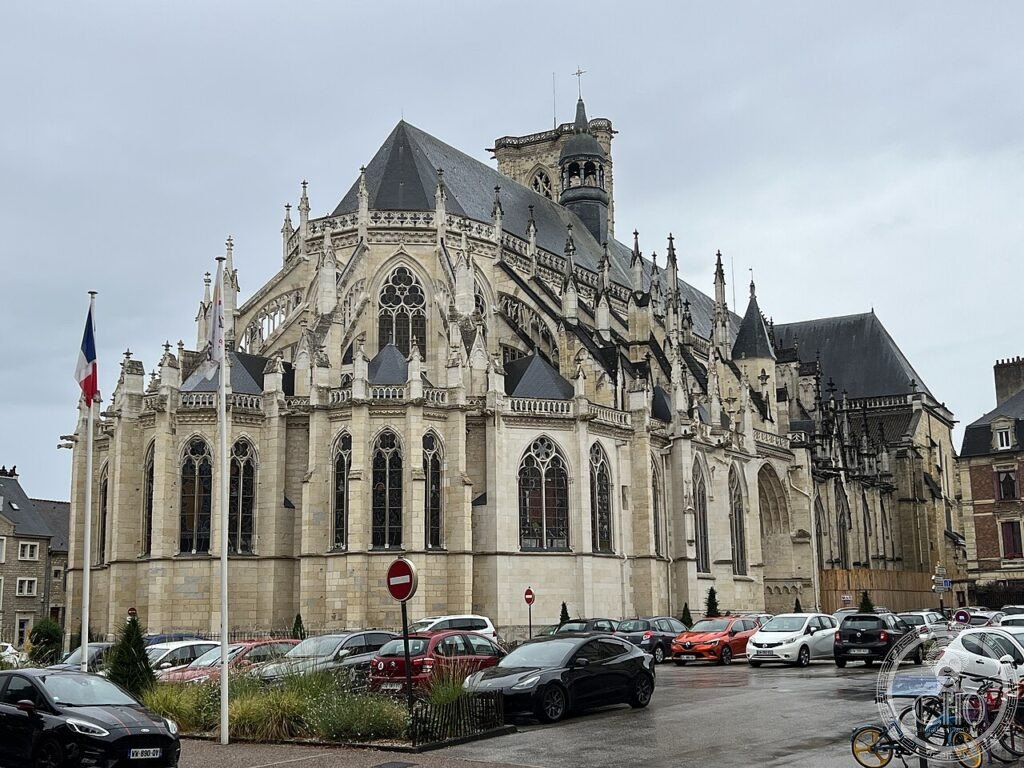
Due cori contrapposti, uno romanico rivolto a ovest e uno gotico rivolto a est, fanno di questa cattedrale un caso unico in Francia. Nella notte tra il 15 e il 16 luglio 1944, bombe alleate destinate ai depositi ferroviari colpirono per errore il centro storico di Nevers, distruggendo gran parte del coro gotico — ricostruito identico tra il 1946 e il 1966.
At a glance
Nevers Cathedral (Cathédrale Saint-Cyr-et-Sainte-Julitte) presents an architectural rarity in France: two opposing apses, the result of an incomplete Gothic-period rebuilding of an earlier Romanesque cathedral that left the building with a Romanesque choir facing west (11th century, built on Carolingian foundations) and a Gothic choir facing east (14th century), rather than the single, unified choir typical of most French cathedrals. Fires in 1211 and 1308 had prompted the Gothic rebuilding of the nave and eastward choir, with Flamboyant Gothic lateral chapels added in the 15th century and a tower in the 16th, but the original westward Romanesque choir was never removed, leaving the two-apse configuration intact into the modern era. On the night of 15-16 July 1944, Allied bombs intended for railway depots struck the historic centre of Nevers by mistake, with two bombs falling directly on the Gothic choir and destroying much of it — a catastrophe that, alongside the damage, also exposed previously unknown vestiges of a 6th-century baptistery. Reconstruction, carried out identically to the pre-war structure, took place from 1946 to 1966.
Key facts
- Double apse: a Romanesque choir (11th century, on Carolingian foundations) facing west, and a Gothic choir (14th century) facing east — a configuration unique among French cathedrals, resulting from an incomplete medieval rebuilding
- Medieval building campaigns: fires in 1211 and 1308 prompted Gothic reconstruction of the nave and east choir; Flamboyant Gothic lateral chapels added 15th century; tower added 16th century
- 1944 bombing: night of 15-16 July 1944, Allied bombs aimed at railway depots struck the historic centre in error; two bombs hit the Gothic choir directly, causing major destruction
- Archaeological discovery: the 1944 bombing damage exposed previously unknown remains of a 6th-century baptistery beneath the cathedral
- Reconstruction: 1946-1966, rebuilt identically to the pre-war structure
History
Nevers Cathedral’s double-apse configuration reflects a specific and unusual pattern in medieval church-building practice: rather than demolishing the earlier Romanesque choir when Gothic reconstruction began following the 1211 and 1308 fires, the builders instead left the original westward-facing Romanesque apse standing while adding an entirely new, conventionally oriented Gothic choir at the opposite end of the building — a decision whose exact original rationale is not fully documented but whose physical result, two facing apses of different architectural periods within a single cathedral, survives as a genuinely rare configuration among French cathedrals, most of which were fully rebuilt or demolished and replaced rather than left with two coexisting choir structures.
The cathedral’s most dramatic modern episode came on the night of 15-16 July 1944, when Allied bombers, targeting railway infrastructure to disrupt German logistics in the period following the Normandy landings, struck Nevers’s historic centre by mistake rather than their intended depot targets — a tragic but far from isolated occurrence during the Allied bombing campaign in France, where navigational and targeting errors periodically caused civilian and heritage damage far from military objectives. Two bombs fell directly on the cathedral’s Gothic choir, causing extensive destruction, though the disaster also had an unexpected archaeological consequence: clearing and assessment of the bomb-damaged structure revealed previously unknown remains of a 6th-century baptistery beneath the building, adding a significant early Christian-period discovery to the cathedral’s documented history. The subsequent reconstruction, carried out from 1946 to 1966 to rebuild the choir identically to its pre-war form, represents one of many French heritage restoration projects undertaken in the decades following the Second World War to repair wartime destruction while preserving historical authenticity as closely as possible.
What you see
The two opposing apses are the cathedral’s essential distinguishing feature, and walking from the Romanesque west choir to the Gothic east choir within a single building gives visitors a direct, physically legible comparison between the two architectural styles rarely available within one structure elsewhere in France. The Romanesque crypt beneath the west choir preserves earlier medieval fabric, while the Flamboyant Gothic lateral chapels added in the 15th century and the cathedral’s modern stained glass, installed as part of the post-war reconstruction, complete the building’s layered architectural history spanning from Carolingian foundations through 20th-century restoration.
Practical information
- Opening hours: generally 9:00-12:00 and 14:00-17:30, daily except Tuesday (hours vary seasonally)
- Guided tours: free, run by the association Regards sur la Cathédrale; summer schedule generally daily except Sunday mornings, 10:00-12:30 and 14:30-18:30 (dates vary by year)
- Admission: free; main entrance at 32 Cloître Saint-Cyr, facing the town hall; accessible entrance via the south portal
Getting there
Nevers has direct rail connections from Paris Gare de Bercy, taking approximately 2 hours. By car, Nevers sits on the A77 motorway. The cathedral stands in the historic centre, walkable from Nevers train station in approximately 15-20 minutes. GPS: 46.9871° N, 3.1572° E.
Nearby
- Palais Ducal de Nevers — in the historic centre, a short walk from the cathedral; a Renaissance ducal palace
- Nevers historic centre and faïence tradition — Nevers is historically renowned for its decorative ceramic faïence, with workshops and museum collections in the town
- La Charité-sur-Loire — approximately 25 minutes by car; a UNESCO Camino de Santiago site with a major Cluniac priory church
Sources
- Ville de Nevers — official heritage information (nevers.fr)
- Nevers Tourisme — official visitor portal (nevers-tourisme.com)
- Restaurons Notre-Dame — “La reconstruction à l’identique de la cathédrale Saint-Cyr-et-Sainte-Julitte de Nevers” (restauronsnotredame.org)
- Wikipedia — “Cathédrale Saint-Cyr-et-Sainte-Julitte de Nevers” (fr.wikipedia.org)
Find it on the map
See this place and what’s around it →📷 Become a Cultural Heritage Online photographer
Share your photos of places: they stay published under your name as the author. The more they're seen, the more you get noticed — and soon a contest will reward the most appreciated photos.
Log in or sign up free to add a photoIs this page about you?
This page is read by travellers and heritage enthusiasts who find it on Google. Tell us how you are connected to this place and we will take it from there.