
A semi-classical Indian dance form blending martial arts, acrobatics and storytelling, performed by all-male troupes across three regional styles in West Bengal, Jharkhand and Odisha.
In UNESCO’s words
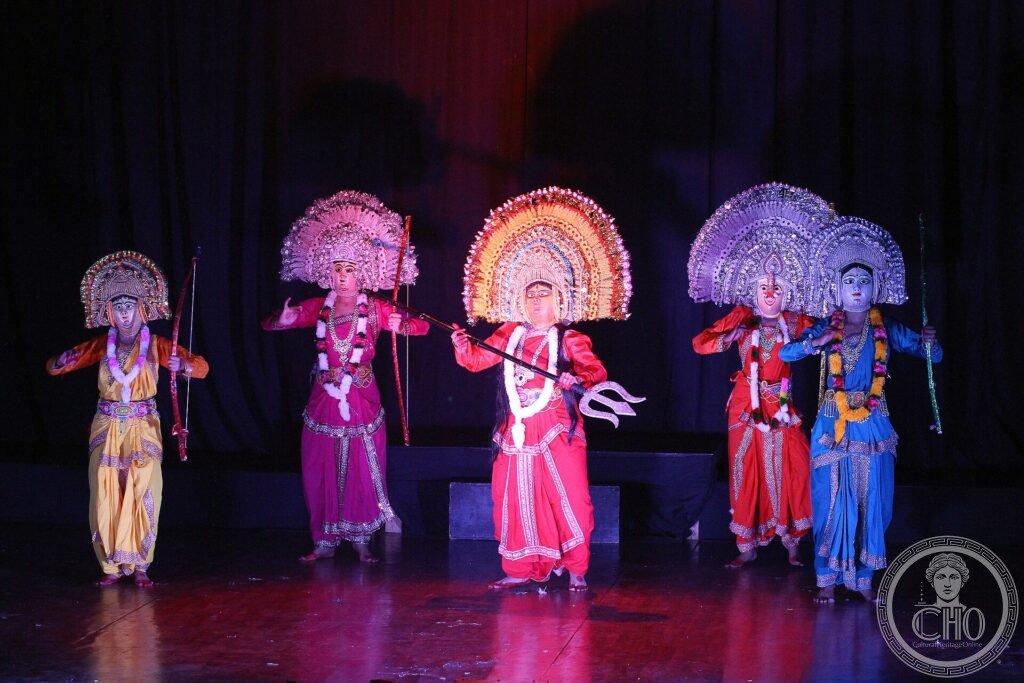
Chhau dance is a tradition from eastern India that enacts episodes from epics including the Mahabharata and Ramayana, local folklore and abstract themes. Its three distinct styles hail from the regions of Seraikella, Purulia and Mayurbhanj, the first two using masks. Chhau dance is intimately connected to regional festivals, notably the spring festival Chaitra Parva. Its origin is traceable to indigenous forms of dance and martial practices. Its vocabulary of movement includes mock combat techniques, stylized gaits of birds and animals and movements modelled on the chores of village housewives. Chhau is taught to male dancers from families of traditional artists or from local communities. The dance is performed at night in an open space to traditional and folk melodies, played on the reed pipes ''mohuri'' and ''shehnai.'' The reverberating drumbeats of a variety of drums dominate the accompanying music ensemble. Chhau is an integral part of the culture of these communities. It binds together people from different social strata and ethnic background with diverse social practices, beliefs, professions and languages. However, increasing industrialization, economic pressures and new media are leading to a decrease in collective participation with communities becoming disconnected from their roots.
Official description, UNESCO Intangible Cultural Heritage List — Chhau dance
At a glance
Chhau is a dance tradition from eastern India that tells stories through movement. It draws on three distinct regional styles—Seraikella, Purulia and Mayurbhanj—each with its own character. The dances enact episodes from the Mahabharata and Ramayana, local folklore and abstract themes. Two of the styles use masks; all three combine stylized movements of birds and animals, mock combat techniques and gestures based on everyday village work.
Origins & history
Chhau's origins trace to indigenous forms of dance and martial practices in eastern India. The three regional styles developed in their respective areas, each absorbing local influences while maintaining distinct identities. The tradition became intimately connected to regional festivals, particularly the spring festival Chaitra Parva, where it continues to be performed.
The practice
Chhau is taught to male dancers from families of traditional artists or from local communities. Performances take place at night in open spaces, with dancers moving through mock combat, stylized animal gaits and movements modelled on village housework. The two mask-wearing styles—Seraikella and Purulia—use painted faces to convey character; Mayurbhanj performers rely on facial expression. Traditional reed pipes called mohuri and shehnai, along with reverberating drumbeats from a variety of drums, accompany the dance.
Cultural significance
Chhau binds together people from different social strata and ethnic backgrounds with diverse beliefs, professions and languages. It remains an integral part of community culture and collective identity. However, industrialization, economic pressures and new media are reducing participation, causing communities to become disconnected from the tradition.
Key facts
- Country: India
- Inscribed: 2010
- UNESCO list: Representative List of the Intangible Cultural Heritage of Humanity
- UNESCO reference: 00337
- UNESCO vocabulary: Acrobatics; Dance; Hinduism; Representative literary works
- Map: Seraikella — the locality named in UNESCO’s official description of this element
Where to experience it
Chhau dance thrives in three distinct regional centres: Seraikella, Purulia and Mayurbhanj in eastern India. The spring festival Chaitra Parva provides the primary opportunity to witness live performances, as Chhau remains intimately connected to this regional celebration. Performances traditionally take place at night in open spaces, accompanied by traditional folk melodies played on reed pipes and dominated by the reverberating drumbeats of various drums. Visitors interested in experiencing this tradition should consult local cultural calendars for seasonal schedules and community celebrations across these three regions.
Sources & resources
- UNESCO — official element page: Chhau dance
- UNESCO — open data record: Intangible Heritage List, reference 00337
- UNESCO — official video: UNESCO film on this element — embedded on this page
- UNESCO — official photograph: Photograph of this element — Sangeet Natak Akademi — Sangeet Natak Akademi, New Delhi, 2009
- Reference — Wikipedia (secondary): Chhau — consulted as a secondary reference, not as confirmation
- Cultural Heritage Online: Our archive and city guides

Find it on the map
See this place and what’s around it →📷 Become a Cultural Heritage Online photographer
Share your photos of places: they stay published under your name as the author. The more they're seen, the more you get noticed — and soon a contest will reward the most appreciated photos.
Log in or sign up free to add a photo