
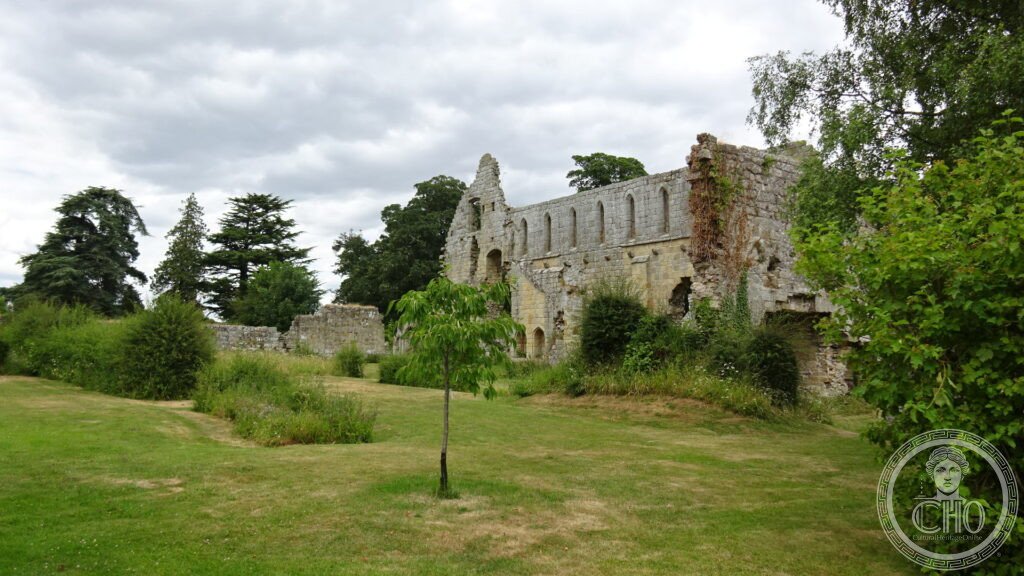
Fatta saltare con la polvere da sparo dopo la soppressione del 1537, l’abbazia di Jervaulx sopravvive oggi come rudere privato immerso nel verde della Wensleydale, dove i monaci cistercensi produssero per primi il celebre formaggio che porta il nome della valle.
At a glance
Jervaulx Abbey lies in open countryside near the village of East Witton, in Wensleydale, North Yorkshire. Founded in 1145 as a Savigniac house at Fors and relocated to this site around 1156, the community was absorbed into the Cistercian order as a daughter house of Byland Abbey. Its church, once 270 feet long, was deliberately destroyed with gunpowder in 1537 following the dissolution of the monasteries and the execution of its last abbot, Adam Sedbergh, for his part in the Pilgrimage of Grace. Unlike most major Yorkshire abbey ruins, Jervaulx has never passed into English Heritage or National Trust care: it remains privately owned, run on an honesty-box basis by the same family since 1971. The abbey is also remembered as the original home of Wensleydale cheese, first made here by the monks from ewes’ milk.
Key facts
- Founded: 1145 as a Savigniac community at Fors; relocated to this site around 1156 and brought under Cistercian control as a daughter house of Byland Abbey
- Church: approximately 270 feet long by 63 feet wide before its deliberate destruction by gunpowder in 1537
- Last abbot: Adam Sedbergh, executed at Tyburn in June 1537 for joining the Pilgrimage of Grace uprising
- Surviving buildings: the southwest door, cloister ranges, chapter house and dormitory, and one of the best-preserved monastic meat kitchens in England
- Wensleydale cheese: traditionally traced to this abbey, where monks first made the cheese from ewes’ milk
- Ownership: privately owned since a 1971 purchase by Major and Mrs W.V. Burdon’s family — not managed by English Heritage or the National Trust
History
The community that became Jervaulx Abbey was founded in 1145 as a Savigniac house at Fors, a site that proved too exposed and infertile to sustain the monks. Around 1156 they moved down into Wensleydale to the present site beside the River Ure, where the order’s 1147 merger with the Cistercians placed the new abbey under the oversight of Byland Abbey. Over the following decades Jervaulx grew into a substantial Cistercian house, its economy built on sheep farming and, by tradition, on cheesemaking: monks here are credited with first producing what became known as Wensleydale cheese, using ewes’ milk from their flocks.
Jervaulx’s end came abruptly with the dissolution of the monasteries. Its last abbot, Adam Sedbergh, joined the Pilgrimage of Grace, the 1536-37 rebellion against Henry VIII’s religious reforms, and was hanged at Tyburn in June 1537 as a consequence. The abbey itself was surrendered the same year and its great church, some 270 feet long, was deliberately blown up with gunpowder, reducing what had been one of Wensleydale’s largest buildings to the broken walls and arches visible today.
The ruined site passed through several noble families after the dissolution, from a grant to Matthew Stuart, 4th Earl of Lennox, through the Bruce family, before being sold in 1887 to the industrialist S. Cunliffe Lister for the considerable sum of £310,000. Major and Mrs W.V. Burdon acquired the abbey in 1971, and their family has maintained it in private hands ever since, opening the ruins to the public on an honesty-box basis rather than through a national heritage body.
What you see
Jervaulx’s ruins are unusually informal compared with the manicured lawns of most English Heritage sites: wildflowers, shrubs, and even trees have rooted themselves among the fallen masonry, giving the abbey church’s long broken nave and the surviving southwest doorway a distinctly overgrown, romantic character. The scale of the demolished church is still legible in the footprint of its walls, running the better part of 270 feet from the west door towards the vanished east end.
Around the cloister, the chapter house, dormitory range, and a monastic kitchen survive in enough detail to read the working life of the community: the kitchen in particular is considered one of the best-preserved examples of its type among England’s ruined abbeys, with clear traces of the fireplaces and drainage that supported meal preparation for a community of monks and lay brothers.
Practical information
- Opening hours: daily, dawn to dusk
- Entry: honesty-box donation, suggested £5 for adults and £3 for children; £1 honesty-box parking fee
- Status: privately owned and maintained — receives no funding from English Heritage or the National Trust; the ruins may occasionally close for private events such as weddings
- Time needed: 30-45 minutes
Getting there
Jervaulx Abbey stands beside the A6108 near East Witton, about 14 miles northwest of Ripon and a similar distance southeast of Leyburn, in Wensleydale. The nearest railway stations are at Northallerton or Darlington, both roughly 45 minutes away by car; there is no direct rail or regular bus service to the site itself. A small car park sits beside the road at the entrance. GPS: 54.2671° N, -1.7380° E.
Nearby
- Middleham Castle — a ruined medieval castle a few miles west, once home to Richard III as a boy
- Wensleydale Creamery, Hawes — further up the dale, the modern producer that continues the cheesemaking tradition linked to Jervaulx’s monks
- Aysgarth Falls — a set of limestone waterfalls on the River Ure, further along Wensleydale
Sources
- Jervaulx Abbey official site — visitor and ownership information (jervaulxabbey.com)
- Historic England — National Heritage List for England, list entry 1020493
- Wikipedia — “Jervaulx Abbey” (en.wikipedia.org)
Find it on the map
See this place and what’s around it →📷 Become a Cultural Heritage Online photographer
Share your photos of places: they stay published under your name as the author. The more they're seen, the more you get noticed — and soon a contest will reward the most appreciated photos.
Log in or sign up free to add a photoIs this page about you?
This page is read by travellers and heritage enthusiasts who find it on Google. Tell us how you are connected to this place and we will take it from there.