
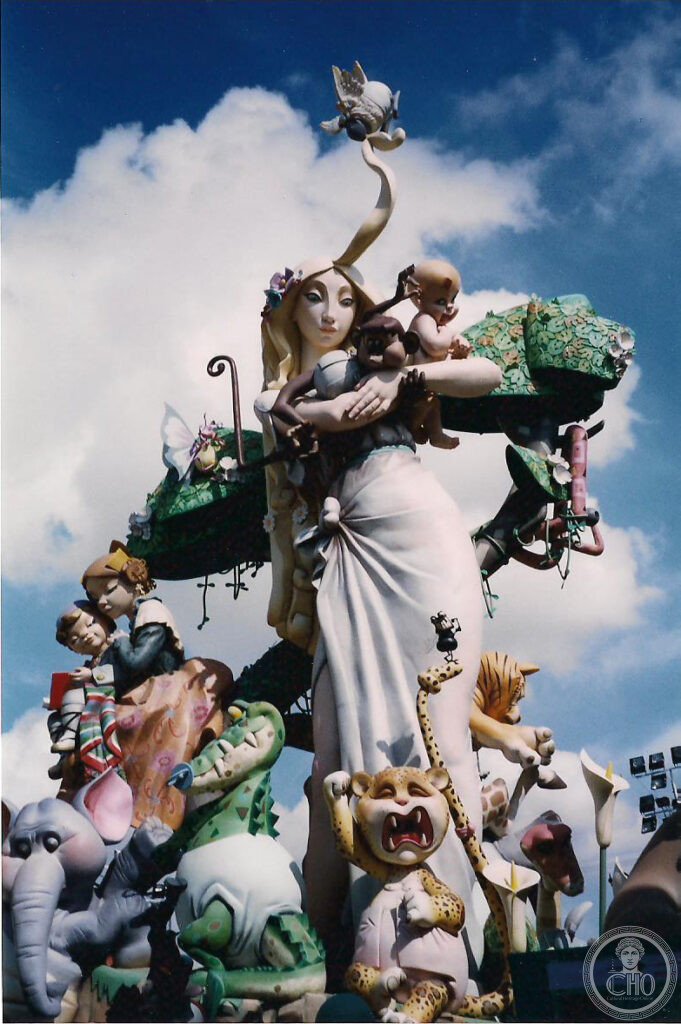
Each March, Valencia’s neighbourhoods ignite elaborate wooden monuments in a five-day festival of fire, music, and collective creation that has burned bright for centuries.
In UNESCO’s words
The main feature of the Fallas Festivity, a tradition of communities in Valencia and its diaspora celebrating the coming of spring, is the giant falla. The falla is a monument made up of ninots (caricature pieces) created by local artists and craftspeople that provides a commentary on current social issues. Erected in the town square, the falla is set alight at the end of the festivity, which runs from March 14 to 19, to symbolize the coming of spring, purification and a rejuvenation of community social activity. In the meantime, marching bands parade the streets, outdoor meals are held and fireworks staged. Each year, a Fallas Queen is elected to promote the festivity throughout the year encouraging locals and visitors to take part. Know-how associated with the practice is transmitted within families, particularly those involved in the construction of the ninots who belong to different guilds among participating communities. The Fallas Festivity provides an opportunity for collective creativity and the safeguarding of traditional arts and crafts. It is also a source of community pride, contributor to cultural identity and enhances social cohesion. In the past, the festivity was also a way of preserving the Valencian language when it was prohibited.
Official description, UNESCO Intangible Cultural Heritage List — Valencia Fallas festivity
At a glance
The Fallas Festivity is a spring celebration held annually from March 14 to 19 by communities in Valencia and their diaspora. At its centre stands the falla, a monument built from ninots—caricature pieces created by local artists and craftspeople that comment on current social issues. The falla is erected in the town square and set alight at the end of the festivity to symbolize spring's arrival, purification, and community renewal. Throughout the festival, marching bands parade, outdoor meals are held, and fireworks are staged. A Fallas Queen is elected each year to promote participation among locals and visitors.
Origins & history
The Fallas Festivity emerges from Valencia's craft traditions and community bonds. Knowledge of its practice—particularly the construction of ninots—passes within families and among different guilds of participating communities. Historically, the festivity served an important cultural function by helping preserve the Valencian language during a period when it was prohibited.
The practice
Local artists and craftspeople create ninots, the caricature pieces that form the falla. These monuments are constructed by members of community groups and placed in town squares. The practice is transmitted through families and guild networks within participating communities. During the festival days from March 14 to 19, marching bands parade the streets while outdoor meals are held and fireworks are staged. On the final night, all fallas are set alight to mark the festivity's end.
Cultural significance
The Fallas Festivity provides an opportunity for collective creativity and safeguards traditional arts and crafts. It serves as a source of community pride, contributes to cultural identity, and enhances social cohesion among participants. The burning of the monuments symbolizes purification and the rejuvenation of community life, reinforcing the tradition's meaning for those who participate.
Key facts
- Country: Spain
- Inscribed: 2016
- UNESCO list: Representative List of the Intangible Cultural Heritage of Humanity
- UNESCO reference: 00859
- UNESCO vocabulary: Festivals
- Map: Valencia — the locality named in UNESCO’s official description of this element
Where to experience it
The Fallas Festivity takes place in Valencia and its diaspora communities from March 14 to 19 each year. During these dates, town squares fill with elaborate falla monuments made of ninots crafted by local artists, while marching bands parade the streets, outdoor meals are shared, and fireworks light the sky. Visitors can witness the collective creativity of neighbourhood commissions and observe traditional arts and crafts being practised. The festivity culminates on the final night when the fallas are set alight to symbolize spring's arrival and community renewal. A newly elected Fallas Queen helps promote the celebration throughout the year, encouraging participation from both locals and visitors.
Sources & resources
- UNESCO — official element page: Valencia Fallas festivity
- UNESCO — open data record: Intangible Heritage List, reference 00859
- UNESCO — official video: UNESCO film on this element — embedded on this page
- UNESCO — official photograph: Volunteers putting the bunches to make a flower robe — Josep Zaragoza, 2011
- Reference — Wikipedia (secondary): Fallas — consulted as a secondary reference, not as confirmation
- Cultural Heritage Online: Our archive and city guides

Find it on the map
See this place and what’s around it →📷 Become a Cultural Heritage Online photographer
Share your photos of places: they stay published under your name as the author. The more they're seen, the more you get noticed — and soon a contest will reward the most appreciated photos.
Log in or sign up free to add a photo