
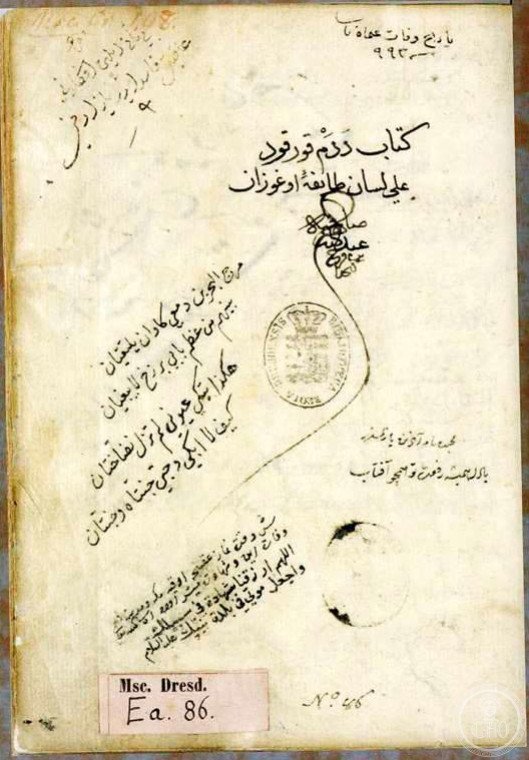
Book of Dede Korkut
An ancient epic cycle of Oghuz Turkic tales, transmitted orally and through manuscript, preserving the moral wisdom and pre-Islamic beliefs of nomadic peoples across Central Asia and the Caucasus.
At a glance
The Book of Dede Korkut stands among the most celebrated dastans—epic narrative cycles—of Turkic tradition. These interconnected stories transmit the values, social codes, and spiritual worldview of Oghuz Turkic communities through verse and prose. The epic has been preserved in only three known manuscripts: two held in European archives (Vatican and Dresden) and a third discovered in Iran in 2018. Performed and recited across generations, the tales remain a living oral tradition alongside their written record.
Origins & history
The Book of Dede Korkut belongs to a vast corpus of Turkic and Mongolian epics—more than 1,000 recorded versions exist across these language families. The narrative framework centers on Dede Korkut (Korkyt Ata in Turkmen, Dədə Qorqud in Azerbaijani), a legendary wise man and spiritual guide to the Oghuz peoples. The stories encode pre-Islamic and early Islamic values alongside ancestral wisdom. Their origins lie in the oral traditions of nomadic Turkic societies, gradually committed to manuscript form.
The practice
The epic is experienced through recitation and performance, typically in verse form interspersed with prose passages. Dede Korkut himself appears as narrator and moral commentator, framing tales of heroic deeds, family trials, love, and honor. The stories depict the lives and conflicts of Oghuz warrior clans, their encounters with enemies, and tests of loyalty and wisdom. Performers—whether reading from manuscript or drawing on memorized tradition—convey not only narrative but the social values embedded within each tale: bravery in battle, respect for elders, the bonds of kinship, and loyalty to community.
Cultural significance
For Azerbaijani, Turkish, Turkmen, and Kazakh communities, the Book of Dede Korkut represents a shared cultural mirror. The epic articulates the moral and spiritual foundation of Oghuz identity, particularly the balance between nomadic life, honor, and faith. Its preservation across three continents—in Vatican archives, German collections, and private Iranian holdings—reflects both its historical importance and the diaspora of Turkic peoples. The tales continue to be retold, adapted, and celebrated as a touchstone of heritage.
Key facts
- Transmitted in three known manuscripts: Vatican, Dresden, and a private collection in Gonbad-e Kavus, Iran (discovered 2018)
- Shared cultural heritage of Azerbaijan, Turkey, Turkmenistan, and Kazakhstan
- Part of over 1,000 recorded Turkic and Mongolian epic traditions
- UNESCO Intangible Cultural Heritage, reference 01399
- Anchor community: Baku, Azerbaijan (40.3752, 49.83502)
Where to experience it
Baku and other centers across Azerbaijan remain the living heartland of Dede Korkut tradition. The epic is encountered through scholarly editions, performed recitations, and cultural celebrations throughout Azerbaijan, Turkey, and Turkmenistan. Readers and performers—from academic institutions to community gatherings—continue to animate these stories, ensuring the moral wisdom and heroic vision of the Oghuz peoples remain audible to new generations.
Sources & resources
Find it on the map
See this place and what’s around it →📷 Diventa un fotografo di Cultural Heritage Online
Condividi le tue foto dei luoghi: restano pubblicate con la tua firma come autore. Più vengono viste, più ti fai conoscere — e presto un concorso premierà le foto più apprezzate.
Accedi o registrati gratis per aggiungere una foto