

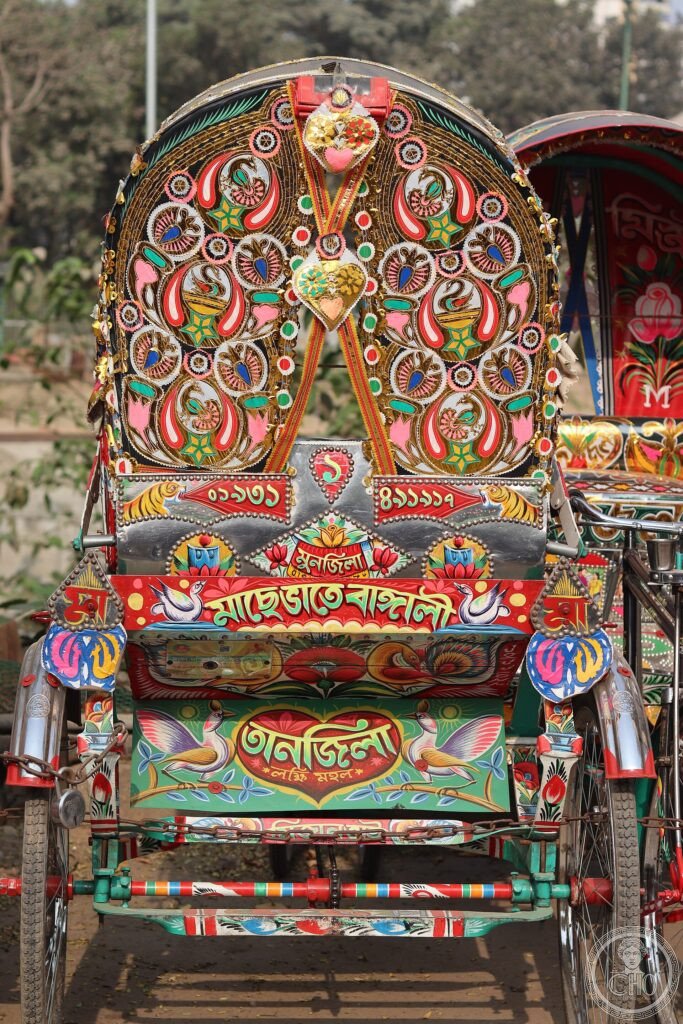
Street artists transform the canvas roofs of Bangladesh’s iconic three-wheeled rickshaws into vehicles of neo-romantic expression, painting landscapes, portraits, and personal narratives that celebrate the driver’s identity and dreams.
In UNESCO’s words
The rickshaw is a small, three-wheeled passenger vehicle that is pulled by one person. It is a recognized feature of Dhaka and Bangladesh as a whole. Traditionally made by hand by a small group of craftsmen, almost every part of a rickshaw is painted with colourful floral patterns, natural imagery, birds and animals, creative depictions of historical events, fables, national heroes, movie stars and text. Rickshaws are also decorated extensively with tassels, plastic flowers and tinsel. As they are slow-moving vehicles, the paintings and decorations are easily visible to onlookers, thus becoming a roving exhibition. Decorated rickshaws are emblematic of urban life in Dhaka, resulting in exhibitions and festive events and often featuring in films and other artworks. The traditional process of fashioning rickshaws is transmitted by craftsmen in rickshaw workshops, orally and through hands-on training. Rickshaw painting artists work on commission and usually pass on their knowledge and skills to their children and close relatives. While all rickshaw craftsmen are men, painters include men and women. Rickshaws and rickshaw painting are viewed as a key part of the city’s cultural tradition and a dynamic form of urban folk art, providing inhabitants with a sense of shared identity and continuity.
Official description, UNESCO Intangible Cultural Heritage List — Rickshaws and rickshaw painting in Dhaka
At a glance
A rickshaw is a small, three-wheeled passenger vehicle pulled by one person. In Dhaka and throughout Bangladesh, rickshaws are distinguished by their extensive hand-painted decorations and ornaments. Almost every part is painted with colourful floral patterns, natural imagery, birds, animals, historical events, fables, national heroes, movie stars and text. They are also decorated with tassels, plastic flowers and tinsel. Because rickshaws move slowly through city streets, these paintings and decorations function as a roving exhibition, visible to everyone who encounters them.
Origins & history
The tradition of rickshaw painting has been transmitted by craftsmen working in rickshaw workshops, passed down orally and through hands-on training across generations. Rickshaw painting artists traditionally pass their knowledge and skills to their children and close relatives, maintaining the practice within families and small communities of makers.
The practice
Rickshaw craftsmen, all men, handcraft the vehicles themselves. Rickshaw painters—both men and women—work on commission, creating the decorative artwork. They paint colourful patterns, natural imagery, birds and animals, creative depictions of historical events, fables, national heroes, movie stars and text across the rickshaw's surfaces. The decorations are completed with tassels, plastic flowers and tinsel. The finished vehicles showcase the collaborative skill of multiple artisans working within traditional workshop practices.
Cultural significance
Rickshaws and their paintings are viewed as a key part of Dhaka's cultural tradition and a dynamic form of urban folk art. The decorated vehicles have become emblematic of urban life in the city, featuring in exhibitions, festive events, films and other artworks. For inhabitants, rickshaw painting provides a sense of shared identity and cultural continuity within the urban landscape.
Key facts
- Country: Bangladesh
- Inscribed: 2023
- UNESCO list: Representative List of the Intangible Cultural Heritage of Humanity
- UNESCO reference: 01589
- UNESCO vocabulary: Craft workers; Painting; Urban transport; Vehicles
- Map: Dhaka — the locality named in UNESCO’s official description of this element
Where to experience it
Rickshaw painting is encountered throughout Dhaka's streets and lanes, where decorated three-wheelers serve as primary transport and roving exhibitions of urban folk art. Visitors cannot traverse the city without encountering these mobile masterpieces, particularly in older neighborhoods and market areas where rickshaws remain dominant vehicles. Workshops where craftsmen and painters work by hand offer glimpses into the traditional creation process, while festive events and exhibitions throughout the city celebrate this dynamic art form that has become emblematic of Dhaka's cultural identity.
Sources & resources
- UNESCO — official element page: Rickshaws and rickshaw painting in Dhaka
- UNESCO — open data record: Intangible Heritage List, reference 01589
- UNESCO — official video: UNESCO film on this element — embedded on this page
- UNESCO — official photograph: Rickshaw artist Sayed Ahmed Hossain — Shahabul Alam Sajib, Bangladesh, 2022
- Reference — Wikipedia (secondary): Rickshaw painting of Bangladesh — consulted as a secondary reference, not as confirmation
- Cultural Heritage Online: Our archive and city guides

Find it on the map
See this place and what’s around it →📷 Become a Cultural Heritage Online photographer
Share your photos of places: they stay published under your name as the author. The more they're seen, the more you get noticed — and soon a contest will reward the most appreciated photos.
Log in or sign up free to add a photo