
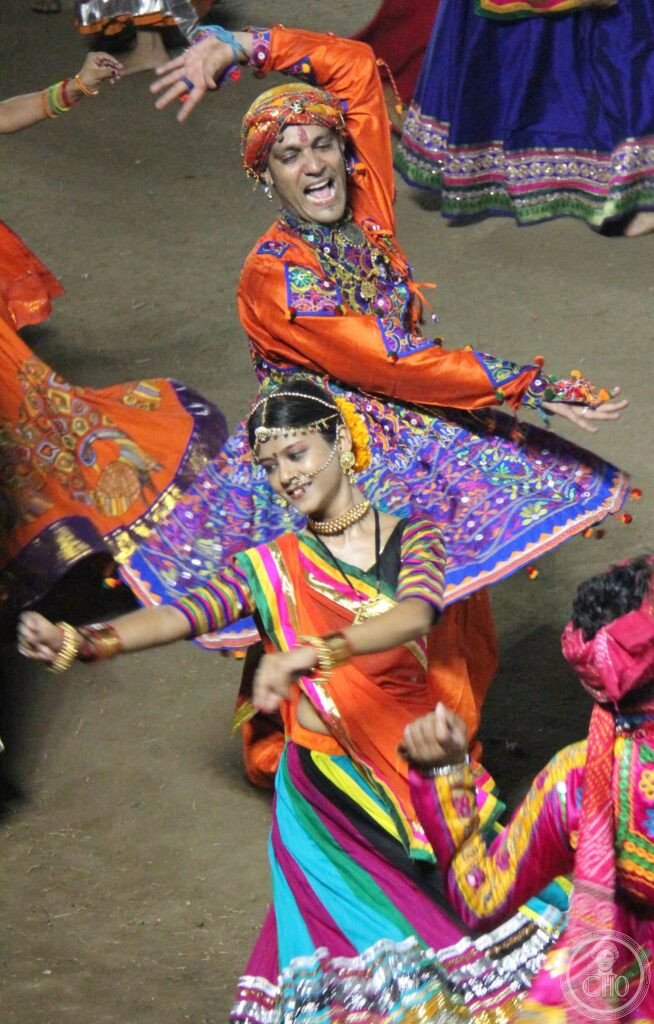
Garba
A circular women’s dance performed during Navaratri, Gujarat’s Nine Nights festival honoring the mother goddess—now danced across the Indian diaspora by people of all ages.
At a glance
Garba is a social circle dance rooted in Hindu ritual and celebration. Women traditionally lead the practice during the annual Navaratri festival, which honors Amba Mata, an incarnation of Durga. The dance has spread far beyond Gujarat, performed at festivals and community events by Indian diaspora communities worldwide. It is characterized by rhythmic movement, communal participation, and the symbolic presence of an earthen pot or goddess image at the circle’s center.
Origins & history
Garba emerges from Gujarat as a devotional practice tied to Navaratri, the nine-night Hindu festival celebrating the primordial mother. The dance is traditionally performed by women as an act of reverence during these annual observances. Over time, garba has become a vehicle for social bonding and cultural continuity, embraced by successive generations and adapted by Indian communities living abroad.
The practice
Dancers form concentric circles around a central symbol—either an earthen pot with holes revealing a flame inside, representing the jiva or soul within the womb, or a picture or statue of the goddess Amba. The rhythmic movement is intricate and synchronized, performed to traditional music. At the end of each Navaratri evening, participants often transition to dandiya raas, a sibling circle-dance in which dancers hold a stick in each hand and tap out rhythms with a partner. Everyone is invited to join; people of all ages dance together in a spirit of communal celebration.
Cultural significance
Garba embodies both spiritual devotion and social cohesion. It is a practice through which communities honor the divine feminine while reinforcing bonds between dancers and across generations. The inclusion of all ages and the voluntary participation of the wider community reflect values of equality and shared cultural identity. For diaspora populations, garba remains a tangible connection to ancestral heritage and Gujarat’s living tradition.
Key facts
- Countries: India
- Anchor community: Ahmedabad, Gujarat
- UNESCO Intangible Cultural Heritage: 2024 (reference 01962)
- Primary season: Navaratri (September–October)
- Associated practice: Dandiya raas
Where to experience it
Ahmedabad and Gujarat are the heartland of garba practice. The dance is performed during Navaratri celebrations at fairs, community feasts, and temples throughout the region. Many cities with significant Gujarati populations—in India and abroad—host Navaratri celebrations where garba is danced. Check local community centers and cultural organizations for festival dates and venues in your area.
Sources & resources
Find it on the map
See this place and what’s around it →📷 Diventa un fotografo di Cultural Heritage Online
Condividi le tue foto dei luoghi: restano pubblicate con la tua firma come autore. Più vengono viste, più ti fai conoscere — e presto un concorso premierà le foto più apprezzate.
Accedi o registrati gratis per aggiungere una foto