
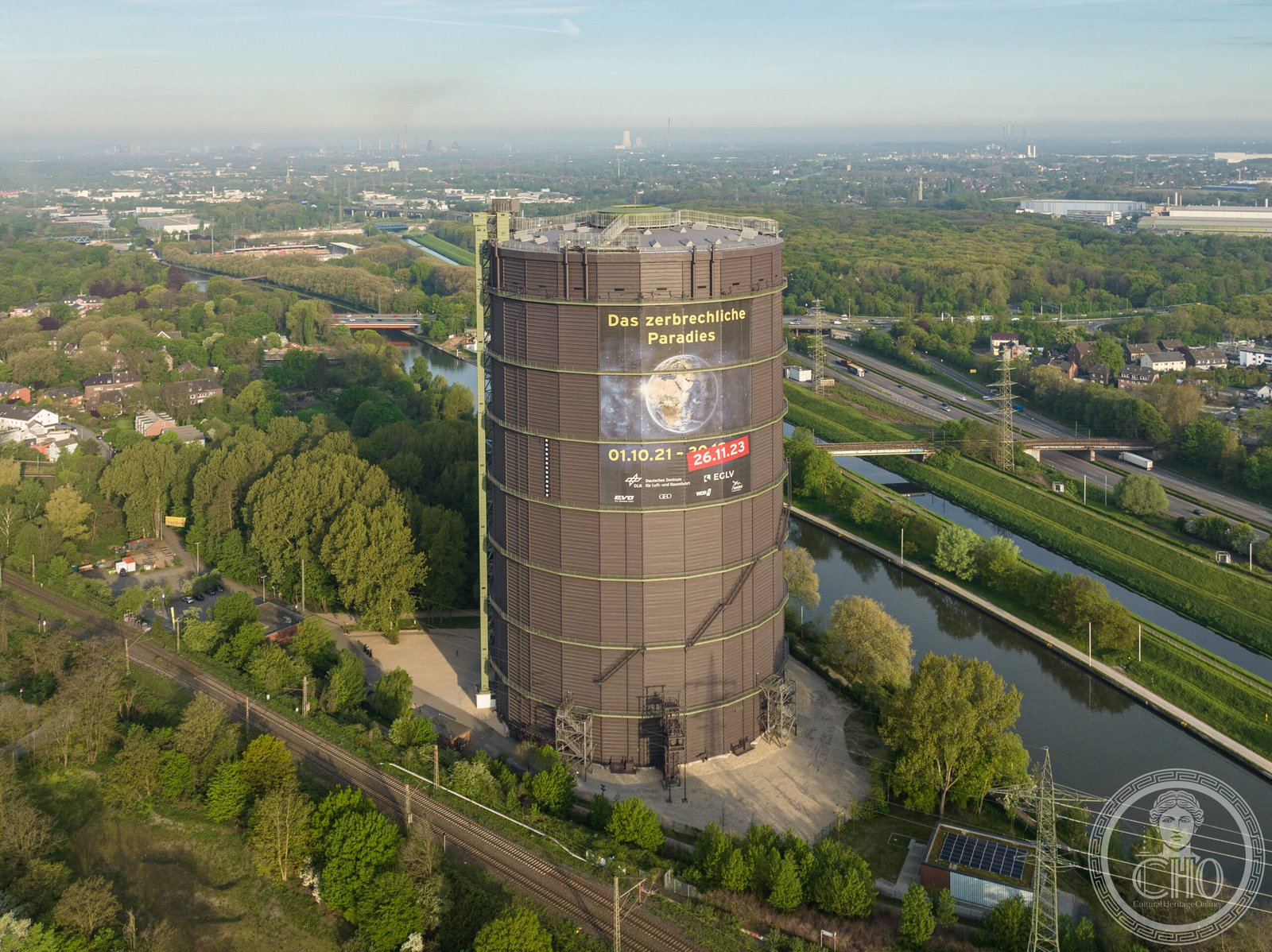
Gasometer Oberhausen
A decommissioned gas holder transformed into a landmark exhibition space, bridging industrial heritage and contemporary art.
At a glance
The Gasometer Oberhausen stands as a striking example of industrial architecture repurposed for cultural use. Once essential to the city’s gas infrastructure, this cylindrical structure now hosts large-scale exhibitions and artistic installations that draw international audiences.
History
Built in the 1920s, the gasometer played a vital role in Oberhausen’s industrial operations. World War II left the structure severely damaged, but it was subsequently rebuilt. The shift from industrial function to cultural venue reflects broader European trends in adaptive reuse and heritage preservation.
What you see
The gasometer’s cylindrical form dominates the skyline, a monument to early twentieth-century industrial engineering. Its massive scale and solid construction create a dramatic exhibition interior capable of accommodating ambitious artistic projects, including monumental installations.
Cultural significance
As an anchor point for both the European Route of Industrial Heritage and the Industrial Heritage Trail, the gasometer symbolizes the continent’s industrial past. Its role as a contemporary art venue—hosting works by Christo and Jeanne-Claude among other internationally renowned artists—demonstrates how industrial structures can foster creative expression while honoring their heritage.
Key facts
- Country: Germany
- City: Oberhausen
- Coordinates: 51.49416667, 6.87055556
- Constructed: 1920s; rebuilt after World War II damage
- Function: Former gas holder; current exhibition venue
Practical information & getting there
The gasometer is located in Oberhausen, in the Ruhr region of North Rhine-Westphalia. Check the venue’s website for current exhibitions, hours, and admission details before planning your visit.
Sources & resources
Find it on the map
See this place and what’s around it →📷 Diventa un fotografo di Cultural Heritage Online
Condividi le tue foto dei luoghi: restano pubblicate con la tua firma come autore. Più vengono viste, più ti fai conoscere — e presto un concorso premierà le foto più apprezzate.
Accedi o registrati gratis per aggiungere una foto