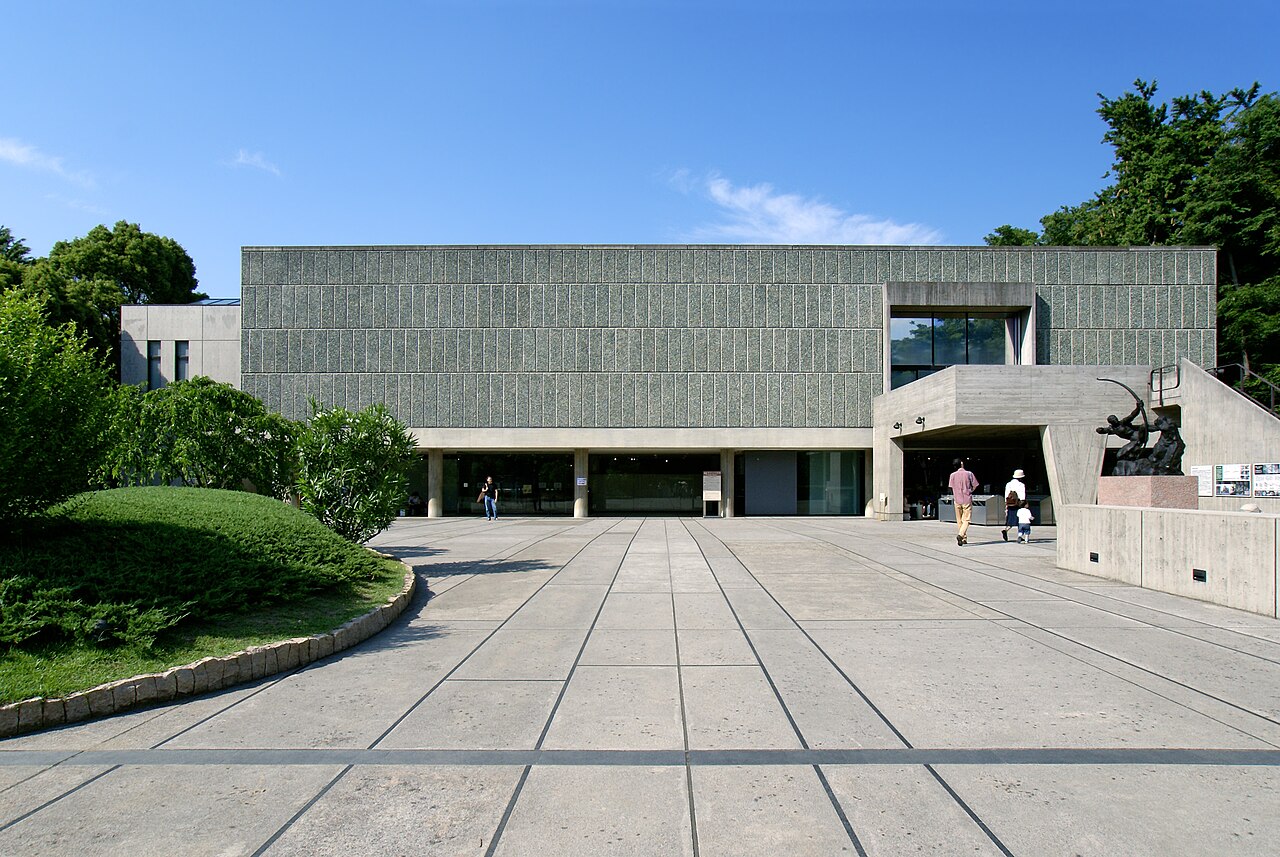
The World Heritage sites nearest to the Architectural Work of Le Corbusier are in Japan: Tomioka Silk Mill and Related Sites is 76 km from the National Museum of Western Art in Tokyo, and Fujisan is 88 km away. The subject site is a transnational serial property of seventeen buildings across seven countries, inscribed in 2016. Its Japanese component, the National Museum of Western Art in Ueno Park, Tokyo, anchors this article’s distances.
The World Heritage sites within reach of the Tokyo component
The distances below are straight lines between the reference points that UNESCO publishes for each property, measured from the National Museum of Western Art in Tokyo. They tell you what is close. They do not tell you how long the road takes, which depends on the season and the route.
| Site | Country | Distance | Inscribed | Type |
|---|---|---|---|---|
| Tomioka Silk Mill and Related Sites | Japan | 76 km | 2014 | Cultural |
| Fujisan, sacred place and source of artistic inspiration | Japan | 88 km | 2013 | Cultural |
| Sites of Japan’s Meiji Industrial Revolution: Iron and Steel, Shipbuilding and Coal Mining | Japan | 107 km | 2015 | Cultural |
| Shrines and Temples of Nikko | Japan | 116 km | 1999 | Cultural |
| Historic Villages of Shirakawa-go and Gokayama | Japan | 265 km | 1995 | Cultural |
| Sado Island Gold Mines | Japan | 276 km | 2024 | Cultural |
Read together, the closest Japanese sites trace a nation moving from agricultural craft to industrial modernism. Tomioka Silk Mill, from the late 19th century, shows the first transferring of French mass-production techniques to Japanese silk. The Meiji Industrial Revolution sites, inscribed in 2015, testify to the broader shift through iron, shipbuilding and coal. The National Museum of Western Art, at the centre of this circle, is itself a product of that modernising trajectory: a building by Le Corbusier that cemented Modern Movement ideas in Japan.
A serial property that maps a new architectural language
The Architectural Work of Le Corbusier is not a single building but a series of seventeen component sites across seven countries on three continents. UNESCO inscribed it in 2016 for the way these buildings, implemented over half a century, attest to the internationalization of architectural practice. The series includes the Villa Savoye near Paris, the Unité d’habitation in Marseille, the Capitol Complex in Chandigarh, and the National Museum of Western Art in Tokyo. Together they represent, in UNESCO’s words, an outstanding response to fundamental issues of architecture and society in the 20th century.
The museum of unlimited growth in Ueno Park
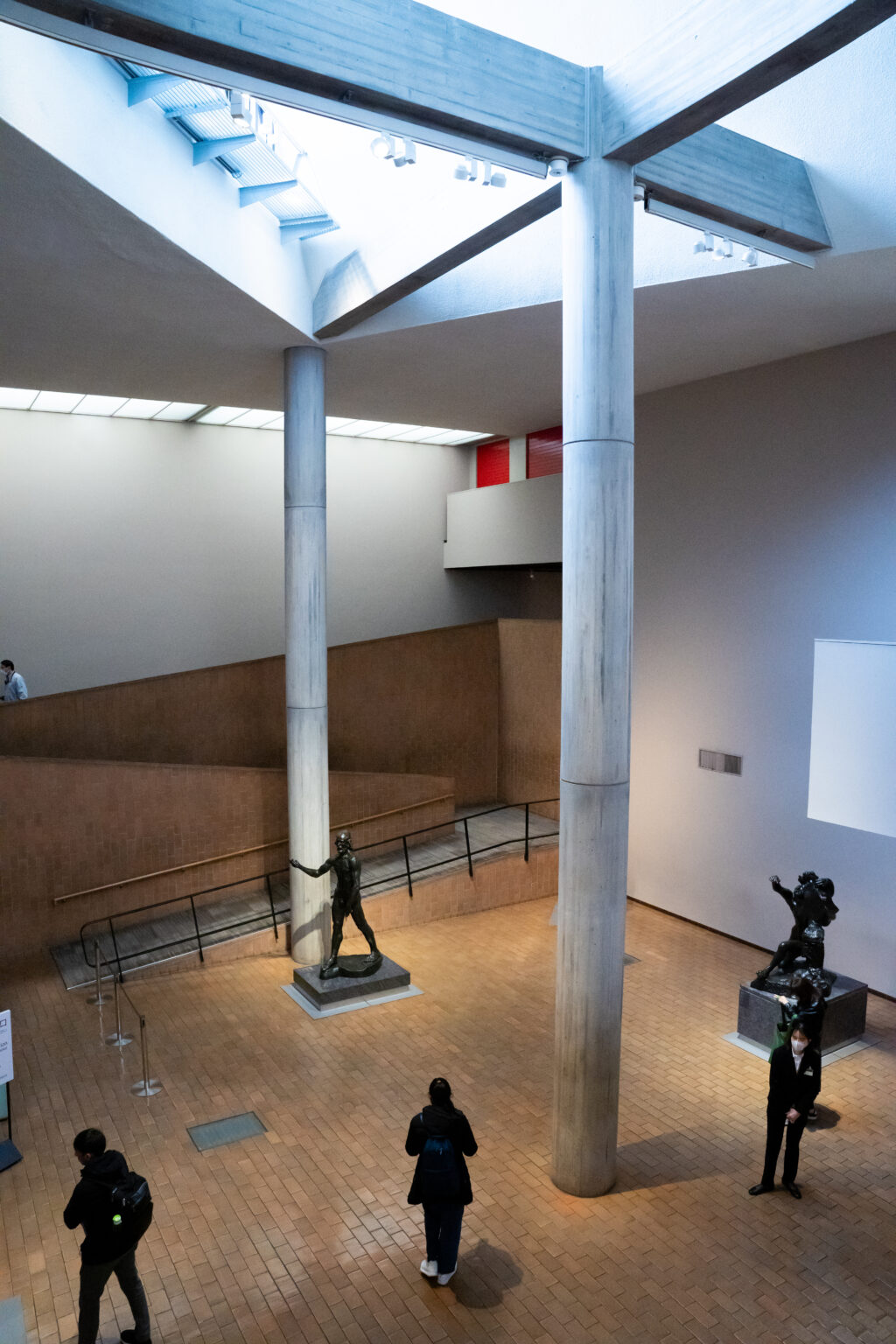
The Japanese component of the series is the National Museum of Western Art in Tokyo. Its design is based on a square spiral plan in which galleries expand outward from a central core as collections grow. Le Corbusier conceived this type as a way to add floor space at the perimeter without disrupting visitor circulation through existing rooms. The Tokyo building demonstrates how that idea, developed in response to Western museum needs, was adapted to cement Modern Movement principles in a country that had only recently industrialised.
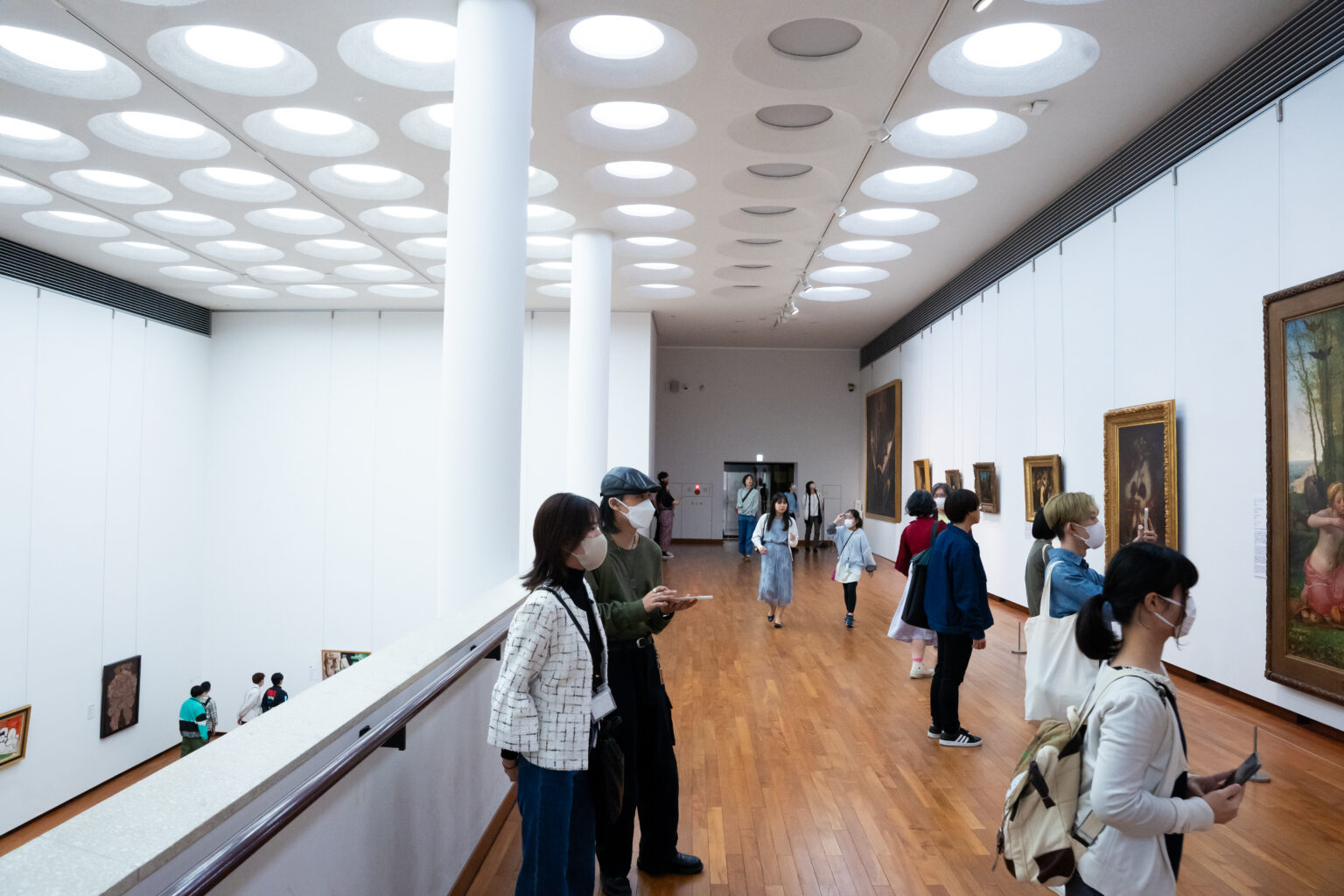
UNESCO’s brief synthesis notes that some component sites immediately assumed iconic status and had world-wide influence. The same text lists the National Museum of Western Art among those that acted as catalysts for spreading ideas around their own regions. The building’s pilotis, free plan, and rooftop terrace apply Le Corbusier’s Five Points of a New Architecture to a public institution rather than a private villa.
How the Tokyo component relates to its neighbours
The National Museum of Western Art sits in a different world from Tomioka Silk Mill, eighty kilometres to the northwest in Gunma prefecture. Tomioka was built for the reeling of raw silk using machinery and expertise imported from France; its experimental farm, school, and cold-storage facility represent the agricultural and educational infrastructure of industrialisation. The museum, by contrast, was built to house Western art and to stand as a piece of Western architecture on Japanese soil. Where Tomioka shows Japan importing technique, the Le Corbusier building shows Japan importing an entire architectural language.
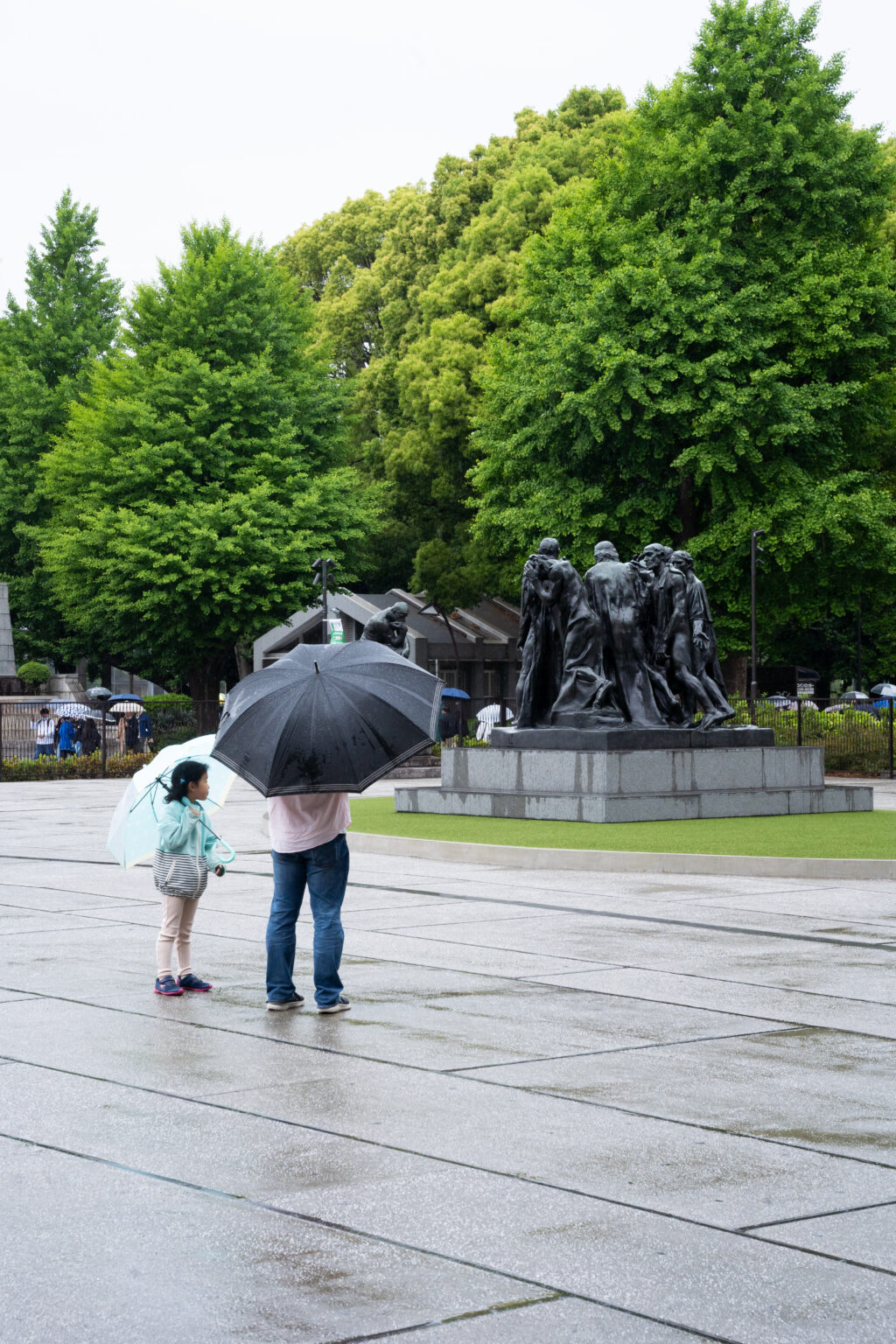
The connection between the two sites is not stylistic but structural: both were products of Japan’s deliberate, rapid integration into European systems of production and knowledge. UNESCO’s description of Fujisan, 88 km from Tokyo, adds a further layer. Fujisan has been a sacred site and a source of artistic inspiration for centuries, and its 19th-century woodblock prints made it an internationally recognized icon of Japan. The modern architecture of Le Corbusier and the sacred landscape of Fujisan represent two poles of Japan’s interface with external ideas: one looking forward to an industrial future, the other looking back to a landscape tradition that had already shaped European art.
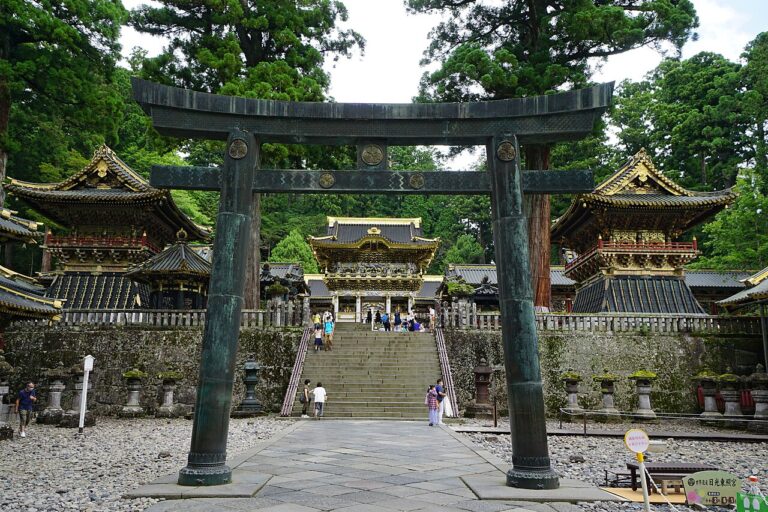
The shrines and temples of Nikko, 116 km from Tokyo, are the closest ancient religious site in this group. Inscribed in 1999, they are closely associated with the history of the Tokugawa Shoguns. The Meiji Industrial Revolution sites, 107 km away, mark the rise of industrial Japan. The Le Corbusier building stands at the midpoint of this historical arc: a modern architectural work in a country that had passed through the shogunate, the Meiji industrialisation, and the internationalisation of the 20th century.
Frequently Asked Questions
Which UNESCO World Heritage sites are near the Architectural Work of Le Corbusier?
Measured from the National Museum of Western Art in Tokyo, Tomioka Silk Mill is 76 km away, Fujisan 88 km, the Meiji Industrial Revolution sites 107 km and the Shrines and Temples of Nikko 116 km. Further out are Shirakawa-go and Gokayama (265 km) and Sado Island Gold Mines (276 km).
How many buildings make up the Le Corbusier World Heritage property?
Seventeen buildings across seven countries on three continents form the series. They were built over a period of half a century and include the Villa Savoye in France, the Capitol Complex in Chandigarh, India, and the National Museum of Western Art in Tokyo, Japan.
When was the Le Corbusier World Heritage property inscribed?
In 2016, at the 40th session of the World Heritage Committee in Istanbul. The inscription recognises the series for its creative genius, its unprecedented interchange of human values across the Modern Movement, and its association with ideas of outstanding universal significance.
Which Le Corbusier building is in Japan?
The National Museum of Western Art in Ueno Park, Tokyo, is the only component of the series in Japan. Le Corbusier designed it as a museum of unlimited growth, with a square spiral plan that allows galleries to expand outward from a central core.
Sources
- UNESCO World Heritage Centre — The Architectural Work of Le Corbusier, an Outstanding Contribution to the Modern Movement (inscribed 2016). https://whc.unesco.org/en/list/1321/
- UNESCO World Heritage Centre — Tomioka Silk Mill and Related Sites (inscribed 2014). https://whc.unesco.org/en/list/1449/
- UNESCO World Heritage Centre — Fujisan, sacred place and source of artistic inspiration (inscribed 2013). https://whc.unesco.org/en/list/1418/
- UNESCO World Heritage Centre — Sites of Japan’s Meiji Industrial Revolution: Iron and Steel, Shipbuilding and Coal Mining (inscribed 2015). https://whc.unesco.org/en/list/1484/
- UNESCO World Heritage Centre — Shrines and Temples of Nikko (inscribed 1999). https://whc.unesco.org/en/list/913/
- Le Corbusier — World Heritage (official serial property site). https://lecorbusier-worldheritage.org/en/
Spotted an error? Write to [email protected] and we correct it the same day.