
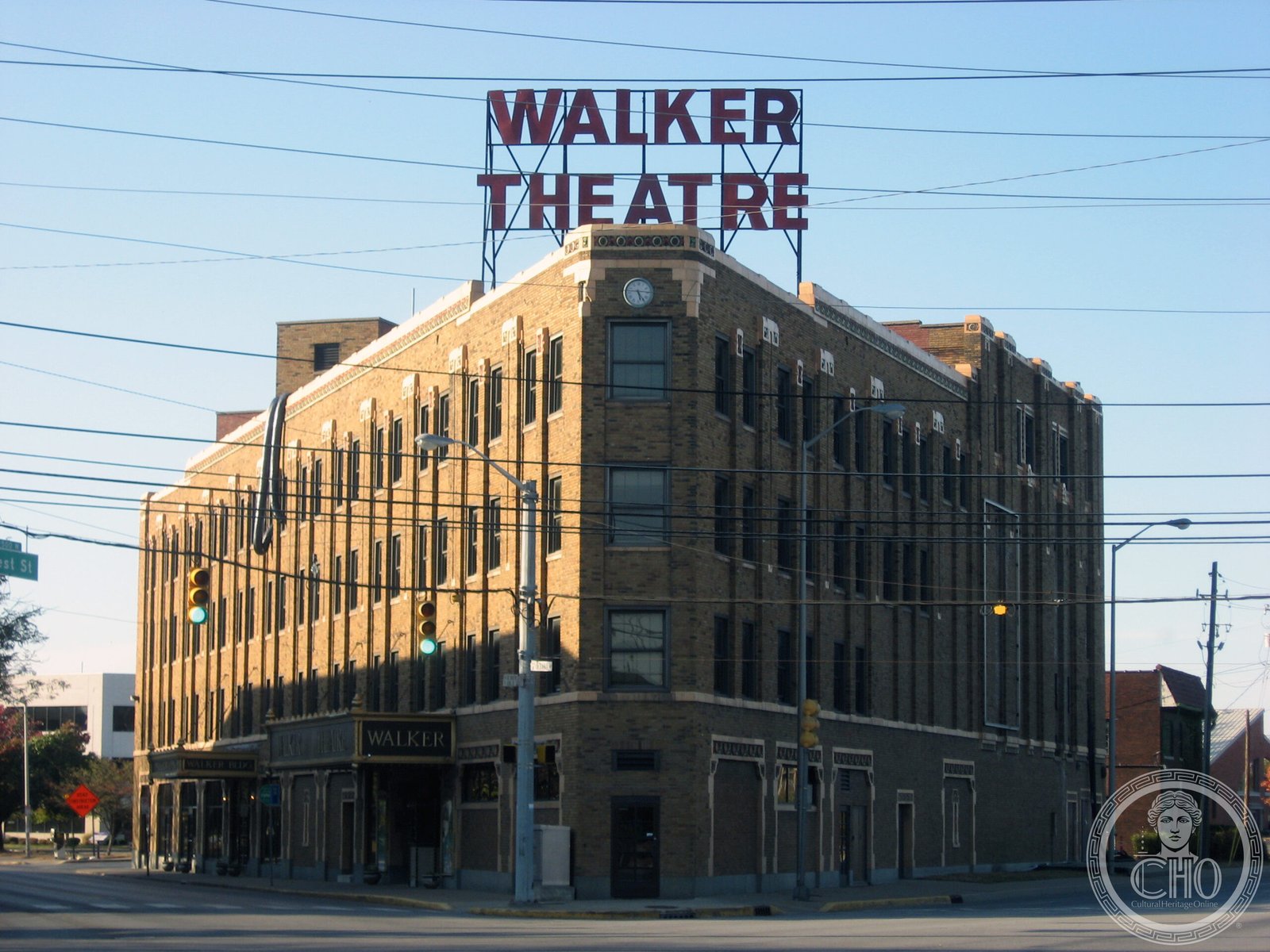
Built in 1927 to honour the legacy of America’s first self-made female millionaire, the Madam C.J. Walker Theatre Center on Indiana Avenue is a four-story Moorish Art Deco landmark that served as the cultural and commercial hub of Indianapolis’s African American community for decades — a building that simultaneously celebrated Black entrepreneurship and housed a community’s social life.
At a glance
The Madam C.J. Walker Theatre Center at 617 Indiana Avenue in Indianapolis was completed in 1927 by the Madam C.J. Walker Manufacturing Company — the beauty care empire founded by Sarah Breedlove, known as Madam C.J. Walker, who died in 1919 before the building was completed. Designed in a Moorish Art Deco style by Indianapolis architects Rubush & Hunter, the four-story building housed the Walker Theatre (a 1,148-seat entertainment venue), professional offices leased to Black doctors and lawyers, retail spaces, and a ballroom that became one of Indianapolis’s most important venues for jazz. The building was designated a National Historic Landmark in 1991 for its significance both in African American history and in the history of American vernacular architecture.
Key facts
- Location: 617 Indiana Avenue, Indianapolis, Indiana
- Architects: Rubush & Hunter
- Completed: 1927
- Style: Moorish Art Deco / French Empire hybrid
- Venue: Walker Theatre (1,148 seats); ballroom; professional offices; retail
- Status: National Historic Landmark (1991); National Register of Historic Places
- Significance: Built by the Madam C.J. Walker Manufacturing Company; hub of Indianapolis’s African American cultural and business community
History
Sarah Breedlove — known as Madam C.J. Walker — was born to formerly enslaved parents in Louisiana in 1867 and became, through the commercialization of hair care products developed for Black women, the first self-made female millionaire in the United States. She founded the Madam C.J. Walker Manufacturing Company in Indianapolis in 1910, making the city the headquarters of a national operation that employed thousands of agents selling her products door-to-door and through mail order. When she died in 1919 her estate valued at more than half a million dollars, her daughter A’Lelia Walker Robinson and her executives began planning the building that would serve as a permanent monument to the company’s success and to the community the Walkers had served.
The building was designed by Rubush & Hunter, a white Indianapolis architectural firm. The programme was ambitious: rather than a simple office building, the Walker heirs specified a complex that would provide the Black professional community of Indianapolis with the offices, services, and cultural venues it had been denied in the city’s segregated commercial core. The Walker Theatre became the principal entertainment venue for Indianapolis’s African American residents. The Casino ballroom on the fourth floor hosted performances by jazz luminaries including Count Basie, Cab Calloway, and Duke Ellington during the decades when Indiana Avenue was the centre of a thriving local jazz scene.
The building fell into disrepair in the 1960s and 1970s as the Indiana Avenue neighbourhood declined following urban renewal projects and population shifts. A restoration effort beginning in the 1980s and supported by the Madam Walker Urban Life Center (later the Madam Walker Legacy Center) brought the building back to use, and it now serves as a community and cultural centre while maintaining the Walker legacy as its central mission.
What you see
The building’s Moorish Art Deco exterior synthesises two ornamental traditions that would seem unlikely partners: the horseshoe arches, geometric tile patterns, and arabesque ornament of Moorish architecture; and the vertical thrust, stylised ornament, and terracotta cladding of American Art Deco commercial buildings of the 1920s. The result is a facade that reads as exotic and monumental on Indiana Avenue, using architectural vocabulary that connotes cultural sophistication and ethnic pride simultaneously.
The Walker Theatre interior, when visible during public events, shows the decorative programme at its most concentrated: the Moorish arches and Deco detailing extend into the auditorium, and the painted ceiling and ornamental plasterwork have been restored to something close to their original character. The building is best experienced during one of the events that the Madam Walker Legacy Center presents; at other times the exterior and lobby are the primary accessible spaces.
Practical information
- Access: The Madam Walker Legacy Center hosts public events and tours. The building is open during business hours; the lobby is accessible during events.
- Tours: Guided tours of the building and its history are available; check the Madam Walker Legacy Center website for current scheduling.
- Events: The Walker Theatre hosts live music, film screenings, and cultural events; the building is most fully experienced during an event.
- Time needed: 1-2 hours for a guided tour; add time for an event.
Getting there
The Madam C.J. Walker Theatre Center is at 617 Indiana Avenue in the near north side of Indianapolis. The building is approximately one mile northwest of Monument Circle (the centre of downtown Indianapolis). IndyGo bus service connects the Indiana Avenue corridor to downtown. By car, the building is accessible from I-65 (Exit 113 for Martin Luther King Jr. Street) and from the downtown grid. Parking is available on Indiana Avenue and in adjacent lots.
Nearby
- Indiana Avenue Jazz District — The historic cultural corridor where the Walker Theatre anchors the built heritage; several blocks of Indiana Avenue retain the commercial character of the 1920s-1950s African American entertainment district.
- Crown Hill Cemetery (1863) — The largest cemetery in Indiana, containing the graves of President Benjamin Harrison, poet James Whitcomb Riley, and John Dillinger, among many others; approximately one mile northwest of the Walker Building.
- Indianapolis Museum of Art at Newfields (1883) — The city’s principal art museum on North Michigan Road, approximately two miles north, with significant collections including American decorative arts of the period of the Walker Building’s construction.
- Monument Circle — The central public space of Indianapolis, featuring the Indiana Soldiers and Sailors Monument (1902), one mile southeast of the Walker Building.
Sources
- National Historic Landmark nomination: Madam C.J. Walker Building, Indianapolis, Indiana, National Park Service, 1991.
- Bundles, A’Lelia. On Her Own Ground: The Life and Times of Madam C.J. Walker. Scribner, 2001.
- Indiana Landmarks. Historic Landmarks of Indianapolis. Indianapolis: Indiana Landmarks Foundation.
- Bodenhamer, David J., and Robert G. Barrows, eds. The Encyclopedia of Indianapolis. Indiana University Press, 1994.
- Wikipedia, “Madam Walker Theatre Center,” https://en.wikipedia.org/wiki/Madam_Walker_Theatre_Center.
Find it on the map
See this place and what’s around it →📷 Become a Cultural Heritage Online photographer
Share your photos of places: they stay published under your name as the author. The more they're seen, the more you get noticed — and soon a contest will reward the most appreciated photos.
Log in or sign up free to add a photoIs this page about you?
This page is read by travellers and heritage enthusiasts who find it on Google. Tell us how you are connected to this place and we will take it from there.