

The cathedral of steam: Gothic ambition in colonial Bombay
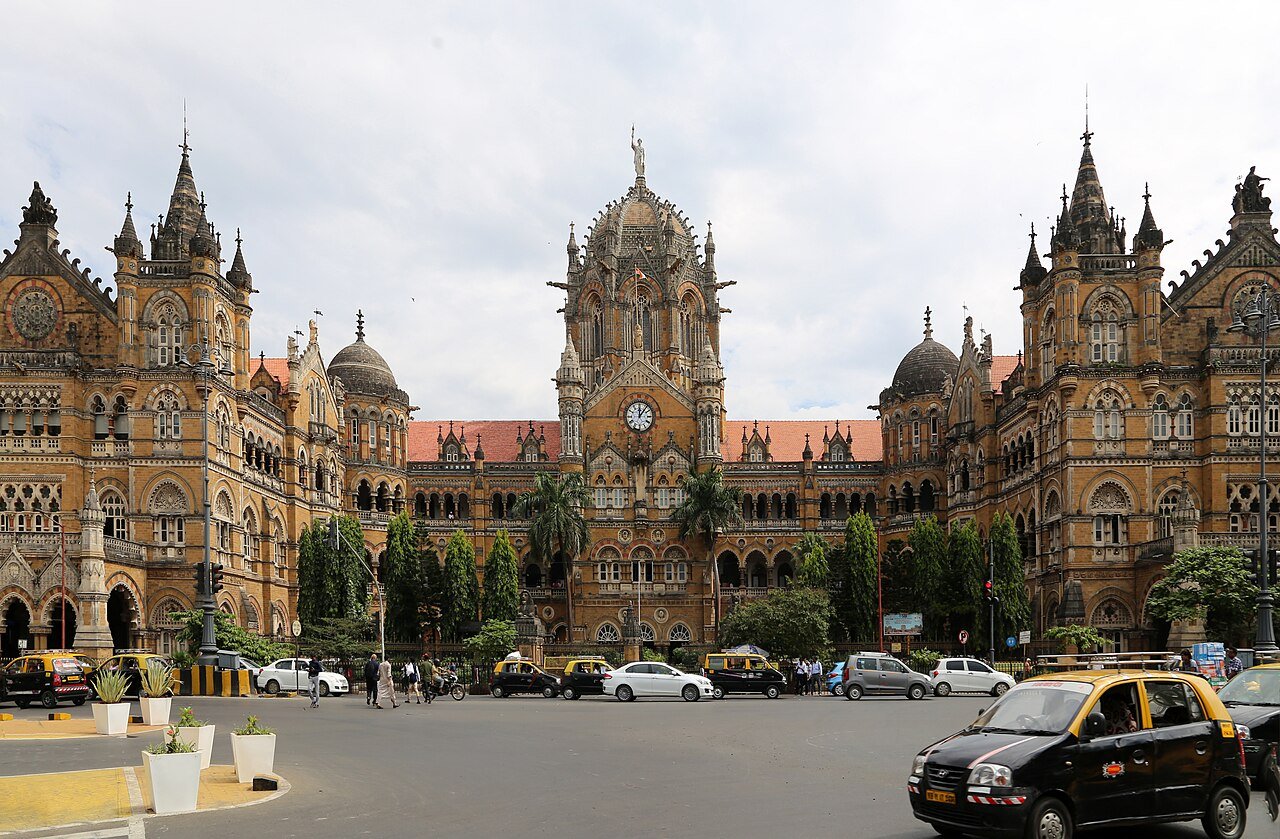
Completed in 1888, the Chhatrapati Shivaji Maharaj Terminus — known until 1996 as Victoria Terminus (VT) — is the most extraordinary railway station in the world. Designed by the British architect Frederick William Stevens in a style he called “Venetian Gothic” fused with traditional Indian decorative motifs, the building rises above central Mumbai like a secular cathedral: a monument to the Victorian faith in railways, empire, and progress.
UNESCO inscription: two traditions meet in stone
Inscribed in 2004 as part of the Victorian and Art Deco Ensemble of Mumbai, the Terminus was recognised by UNESCO as an outstanding example of Victorian Gothic Revival architecture — the first of its kind in the subcontinent — and as a symbol of the extraordinary creative synthesis that occurred when British engineering ambition met Indian decorative traditions. It is the busiest railway station in Asia and a functioning monument.
Frederick William Stevens and the fusion design
Stevens spent ten years designing and overseeing the building’s construction (1878–1888). He drew from the Gothic cathedrals of Venice, the railway stations of London, and the palace architecture of Mughal India. The central dome, surmounted by a statue of “Progress,” rises 55 metres. The façade is encrusted with gargoyles, peacocks, monkeys, and tigers executed by the Bombay School of Art under Indian craftsmen whose names were not recorded.
The building in detail: gargoyles, domes, and train sheds
Every surface of the Terminus repays close examination: polychrome Indian stone contrasted with English tiles; stained-glass windows depicting locomotives and ocean liners; hydraulic balancing cranes built into the roofline to move luggage. Behind the Gothic façade, an extraordinary Victorian iron-and-glass train shed covers a dozen platforms serving over 3 million passengers daily — the busiest commuter rail hub in the world.
Mumbai’s Victorian Gothic ensemble
The Terminus is the centrepiece of a larger inscribed ensemble that includes the Bombay High Court, the Rajabai Clock Tower, the University of Mumbai library, and the Municipal Corporation building — all designed in variants of Victorian Gothic and all concentrated around the historic Oval Maidan. Together they form one of the world’s finest concentrations of Victorian civic architecture outside Britain.
From Victoria to Shivaji: renaming and identity
In 1996, the government of Maharashtra renamed the station in honour of the 17th-century Maratha warrior king Chhatrapati Shivaji Maharaj, replacing the colonial dedication to Queen Victoria. The change provoked debate about history and identity, but the building’s architecture — the legacy of both Victorian ambition and Indian craft — remains unchanged, embodying the complex heritage of colonial Bombay.
A working monument: 3 million commuters a day
Unlike most UNESCO-listed buildings, CSMT remains intensely active. It serves as the headquarters of the Central Railway and the terminal for long-distance trains across India. The daily rhythm of the station — the crowds, the hawkers, the tiffin-wallahs, the departures board clicking over — is as much a part of its heritage as its Gothic stonework. Entry to the station is free; guided architectural tours are available on weekends.
Conservation and the challenge of living heritage
The building has undergone several restoration campaigns since 2004. The main challenge is maintaining the integrity of the Victorian fabric while modernising the infrastructure to handle 21st-century passenger volumes. A UNESCO-backed conservation plan focuses on stone cleaning, structural stabilisation, and the restoration of original decorative elements that have been covered or damaged over 130 years of intensive use.
Find it on the map
See this place and what’s around it →📷 Become a Cultural Heritage Online photographer
Share your photos of places: they stay published under your name as the author. The more they're seen, the more you get noticed — and soon a contest will reward the most appreciated photos.
Log in or sign up free to add a photo