
The Underground River: Eight Kilometres Through the Earth
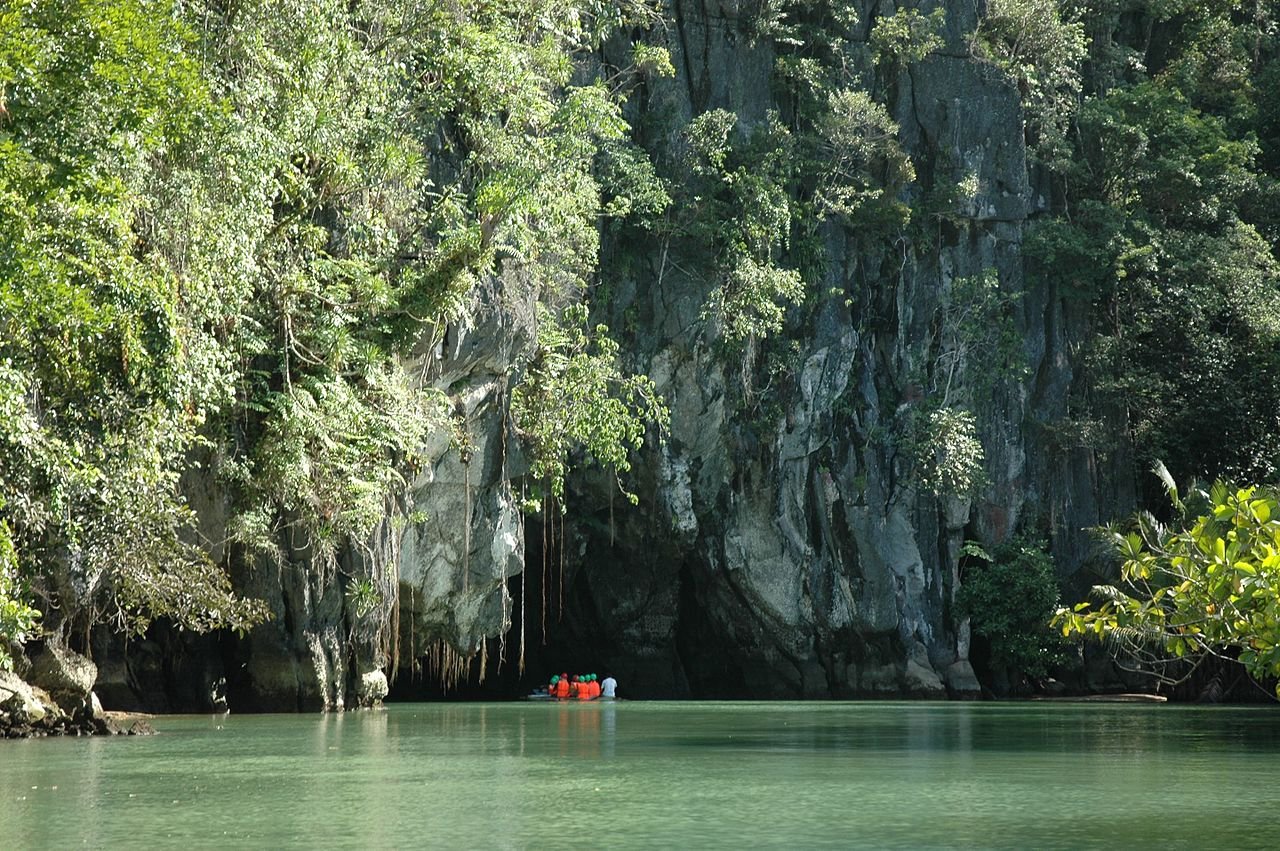
The Puerto Princesa Subterranean River is one of the most dramatic natural phenomena in Southeast Asia. The river runs for approximately 8.2 kilometres entirely underground through a spectacular limestone cave system before emptying directly into St. Paul Bay in the South China Sea — making it one of the longest navigable underground rivers in the world with a direct marine outlet. The cave follows the full course of the river from its mountain source to the sea, allowing visitors to travel by boat through the subterranean passage and experience the darkness, the sound of dripping water, and the soaring cave chambers first-hand. The entire system lies within the Puerto Princesa Subterranean River National Park in Palawan, Philippines, inscribed as a UNESCO World Heritage Site in 1999.
Cave Formations: A World of Stalactites and Stalagmites
The cave system is renowned for its extraordinary speleothem formations — the stalactites, stalagmites, cave curtains, flowstones, and cave pearls that have accumulated over millions of years of slow mineral deposition. The chambers vary dramatically in scale, from narrow passages barely wide enough for the river to pass through to the massive Cathedral Chamber, which soars to a height of approximately 60 metres and stretches over 300 metres in length. Specific formations have been given names by guides — the Quail, the Cauliflower, the Italian Candle — to help visitors orientate within the darkness. The active hydrology of the cave means that formations are still growing, and the interaction of the tidal saltwater intrusion from the sea with the freshwater river creates a brackish mixing zone with its own distinct chemical environment.
The Karst Landscape of Palawan
The underground river exists within the broader karst landscape of the St. Paul Mountain Range in northern Palawan, a terrain shaped over millions of years by the dissolution of limestone bedrock by slightly acidic rainwater. The surface topography is characterised by sharp limestone pinnacles, sinkholes, cave entrances, and abrupt hills rising from flat coastal plains — the classic features of tropical karst. Palawan itself is one of the least-developed and most biologically diverse provinces in the Philippines, stretching as a narrow island chain between the South China Sea and the Sulu Sea. The combination of intact forest cover, clean rivers, and a largely rural population has preserved the island in a condition that is increasingly rare in island Southeast Asia. The karst landscape of the park is a direct expression of this geological and ecological integrity.
Biodiversity Above Ground: Sea Turtles, Macaques, and Forest Birds
The terrestrial zones of the national park protect a mosaic of old-growth tropical forest, mangrove swamp, limestone scrub, and coastal beach habitat that supports an impressive array of endemic and endangered species. The park beaches serve as nesting sites for the green sea turtle (Chelonia mydas) and the hawksbill sea turtle (Eretmochelys imbricata), both of which return to Palawan beaches to lay eggs during the nesting season. Long-tailed macaques are abundant near the cave entrance, habituated to visitor presence over decades of tourism. The forest interior shelters the Palawan peacock-pheasant, one of the most spectacular birds in Southeast Asia, alongside the Philippine cockatoo (Cacatua haematuropygia), critically endangered due to illegal capture for the pet trade. The park constitutes an important refuge for Palawan-endemic vertebrates that exist nowhere else on Earth.
The Cave Ecosystem: Bats, Swiftlets, and Darkness
The cave interior supports a thriving ecosystem adapted to permanent darkness and sustained by the import of organic matter from outside. Approximately 800,000 swiftlets — the species responsible for the edible nests used in bird nest soup — roost in the cave roof and commute daily to coastal waters to feed on insects. The swiftlets share the cave with several bat species, including the large flying fox which roosts in dense colonies near the cave entrance. Bat guano falling to the cave floor provides the primary energy input for the underground food chain, sustaining populations of cave crickets, cockroaches, cave spiders, and specialised cave-adapted crabs and fish. The cave river itself supports a variety of freshwater fish species, some of which show reduced pigmentation and eye degeneration characteristic of cave-adapted populations. The ecosystem functions as a self-contained community dependent on commuting animals as the link between the cave interior and the outside world.
The Boat Tour Experience
Access to the underground river is exclusively by paddle boat, with trained guides accompanying each group through the navigable section of the cave. Visitors are issued helmets with headlamps and embark from a small beach at the cave mouth, where the river emerges into the sea through a wide arch of limestone. The permitted touring section extends approximately 4.3 kilometres into the cave — roughly half of the full underground course — covering the main chambers and most significant formations. The tour typically lasts between 45 minutes and one hour. The cave interior maintains a constant temperature of approximately 28 degrees Celsius with high humidity, creating a distinctive microclimate regardless of outside conditions. Advance booking is strongly recommended, as visitor numbers are regulated to protect cave air quality and wildlife disturbance levels.
Conservation Status and Management
The Puerto Princesa Subterranean River National Park is managed by the City Government of Puerto Princesa in partnership with the Department of Environment and Natural Resources (DENR) of the Philippines. The park was established as a protected area in 1971 and has been managed with increasing rigour since its UNESCO inscription. Daily visitor limits have been imposed to manage the impact of tourism on cave air quality — elevated carbon dioxide levels from visitors breathing in enclosed spaces can affect cave formations and cave-adapted wildlife. The surrounding forest is patrolled against illegal logging, hunting, and encroachment. The park was selected as one of the New Seven Wonders of Nature in a global poll in 2011, significantly increasing its international profile and visitor numbers, which has intensified the management challenge of balancing accessibility with conservation.
How to Get There
Puerto Princesa Subterranean River National Park is reached via Puerto Princesa City, the capital of Palawan province and a well-connected hub with direct flights from Manila and other Philippine cities. From Puerto Princesa, the cave entrance is approximately 80 kilometres away, accessible by van or minibus along a coastal road that passes through barangays and fishing communities. The journey takes approximately two hours. Most visitors travel as part of day tours organised by hotels in Puerto Princesa, which include transport, the boat tour, and often a seafood lunch on a beach near the cave. Independent travel is possible but requires arranging boat permits and transport separately. The best season for visits is during the dry months from November to May, when sea conditions allow stable boat access to the cave entrance.
Find it on the map
See this place and what’s around it →📷 Become a Cultural Heritage Online photographer
Share your photos of places: they stay published under your name as the author. The more they're seen, the more you get noticed — and soon a contest will reward the most appreciated photos.
Log in or sign up free to add a photo