
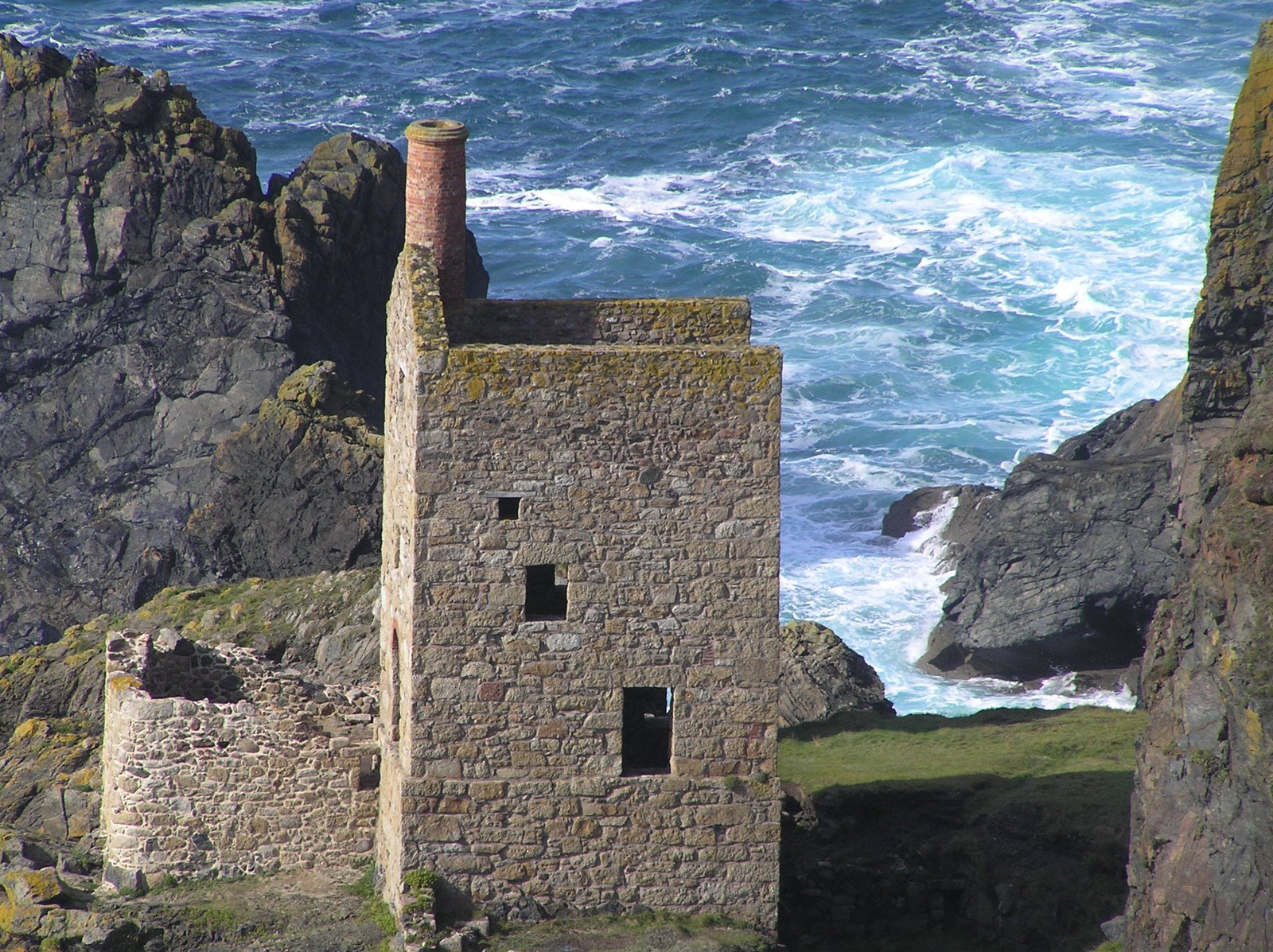
The Cradle of Industrial Hard-Rock Mining
Between roughly 1700 and 1914, Cornwall and West Devon transformed the global economy through the extraction of copper and tin from the ancient rocks of the Cornish peninsula. At the height of the mining boom in the mid-19th century, Cornwall produced two-thirds of the world’s copper supply. The landscape left behind — engine houses, mine shafts, processing floors, smelting stacks, ports, and worker communities — constitutes an industrial heritage of exceptional universal significance, inscribed by UNESCO in 2006.
The Cornish Beam Engine: Technology That Conquered the World
The single most important technological export of this landscape was the Cornish beam engine — a highly efficient pumping engine developed in the early 19th century to drain ever-deeper mine workings. Built at the foundries of Camborne, Redruth, and Hayle, these massive steam engines were shipped to mines across the globe: to the silver mines of Mexico, the copper mines of Cuba and Chile, the gold mines of South Africa, and the tin mines of Malaysia. Cornish engineers followed their engines, diffusing the technology worldwide.
Engine Houses: The Icons of the Landscape
The most visible legacy of the mining era is the engine house — a distinctive granite tower with a rounded chimney stack, built to house the beam engine and protect its machinery from the Atlantic weather. Hundreds of these structures survive across the landscape, many in dramatic clifftop positions along the coast between St Just and St Ives. The engine houses of Levant, Botallack (the “Crown Mines” perched on sea stacks), Pendeen, and Geevor are among the most photographed industrial monuments in Britain.
Tin and Copper: Different Ores, Shared Landscape
Tin and copper were often found in the same mineralised zones but required different processing techniques. Copper ore was dressed (crushed and sorted) on surface processing floors called “dressing floors” and transported to smelters, principally at Swansea in Wales. Tin was smelted locally in blowing houses, then assayed and sold at the tin coinage towns of Truro, Helston, Lostwithiel, Liskeard, and Penzance — a medieval system that survived until 1838. The remnants of both industries form layers of industrial archaeology across the same terrain.
The Minions and Bodmin Moor: Ancient to Industrial
The mining heritage of the site overlaps with a much older human landscape on Bodmin Moor and Dartmoor, where Bronze Age tin-streaming — the extraction of alluvial tin from river gravels — began over 3,500 years ago. The Hurlers stone circles on Bodmin Moor stand alongside medieval and post-medieval mining remains, giving the UNESCO landscape a time depth that stretches from prehistory to the industrial revolution. The landscape thus represents a near-continuous record of human exploitation of metal resources.
The Diaspora: Cornish Miners Around the World
The collapse of copper prices in the 1860s and the long decline of tin in the late 19th century drove waves of emigration — the “Cornish Diaspora” — as skilled miners took their expertise to North America, South America, Southern Africa, and Australia. Cities with significant Cornish mining heritage include Grass Valley (California), Butte (Montana), Pachuca (Mexico), and Ballarat (Australia). The phrase “wherever there is a hole in the ground, there you will find a Cornishman” became a Victorian saying.
Geevor and the Living Museum
Geevor Tin Mine near Pendeen operated until 1990, making it one of the last working mines in Cornwall. Now a museum and UNESCO Anchor Point, it offers underground tours of the mine workings and surface displays of the processing machinery. The adjacent Levant Mine (National Trust) houses the only working Cornish beam engine in its original location — still steamed on regular occasions, its 70-tonne beam swinging as it did when it pumped water from the mine nearly 200 metres below the Atlantic seabed.
The Coastal Path and Heritage Trails
The South West Coast Path follows the clifftops of the UNESCO site for much of its western stretch, offering walkers uninterrupted views of engine houses against the Atlantic sky. The Mineral Tramways network in the Camborne-Redruth area converts former mineral tramway routes into cycling and walking trails through the densest concentration of mining remains. The ten Anchor Points of the World Heritage Site — from Tavistock in Devon to the Isles of Scilly — provide visitor facilities and interpretation at key locations.
Find it on the map
See this place and what’s around it →📷 Become a Cultural Heritage Online photographer
Share your photos of places: they stay published under your name as the author. The more they're seen, the more you get noticed — and soon a contest will reward the most appreciated photos.
Log in or sign up free to add a photo