
The Oldest and Largest Impact Crater on Earth
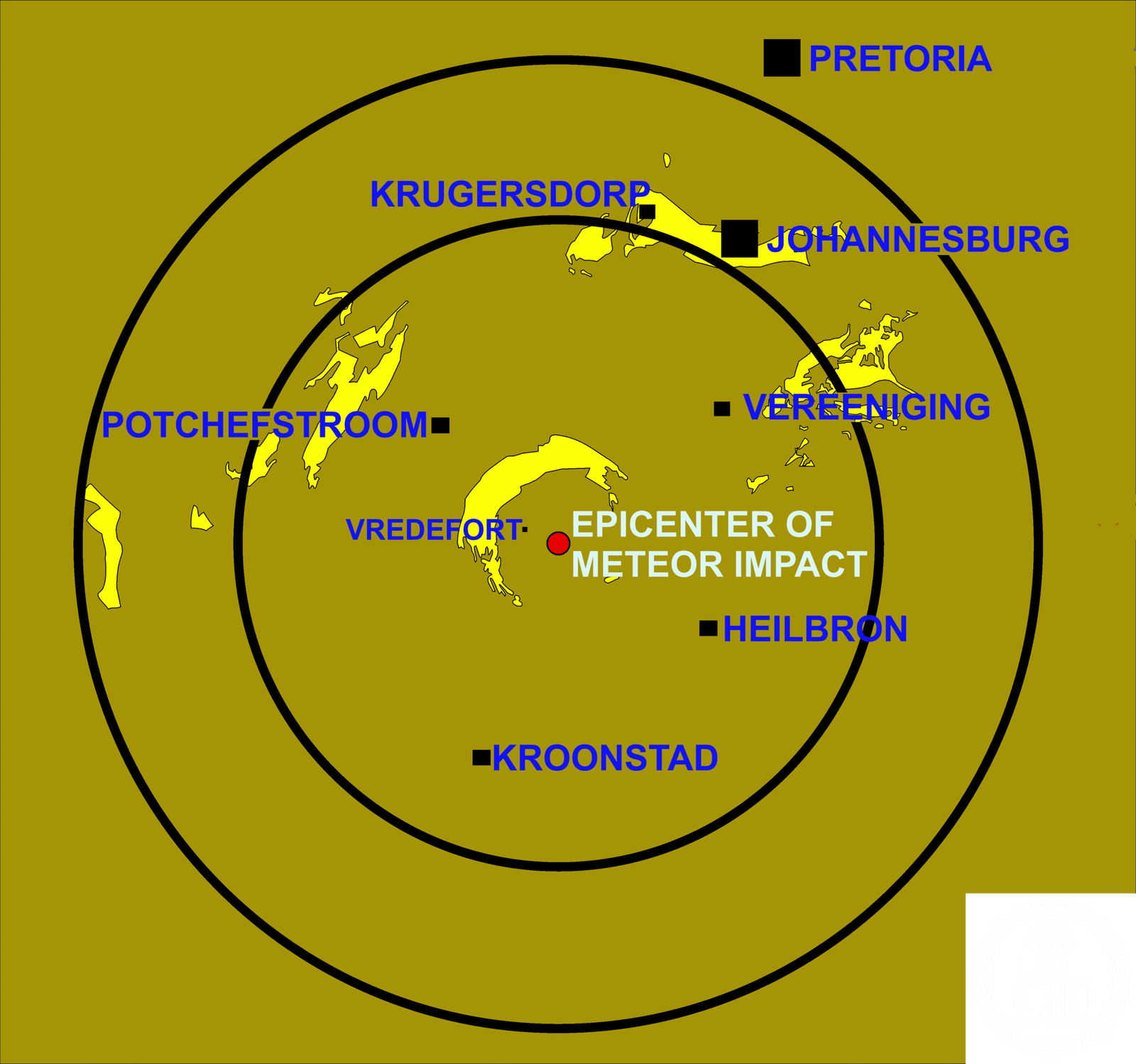
The Vredefort Dome in the Free State province of South Africa is the oldest confirmed meteorite impact structure on Earth, formed approximately 2.023 billion years ago. The original crater — estimated at 250–300 km in diameter — was created when an asteroid roughly 10–15 km wide struck the ancient Kaapvaal Craton with a force equivalent to billions of nuclear bombs. UNESCO inscribed the site in 2005 for its outstanding universal value as a geological record of planetary-scale events.
Planetary Impact: What Happened 2 Billion Years Ago
The asteroid impact released energy orders of magnitude greater than any recorded geological event in human history. Rocks were vaporised, melted, and blasted hundreds of kilometres away. The compression of rock generated unique minerals called coesite and stishovite (high-pressure forms of quartz), and created a characteristic rock called pseudotachylite — friction-melted rock found in seams throughout the dome — providing incontrovertible evidence of the hypervelocity impact.
The Dome Structure and Geological Exposure
Over two billion years of erosion have worn away the original crater floor, exposing the deep structural roots of the impact: a circular dome of uplifted ancient rocks at the centre of a system of concentric ridges and valleys. The exposed geology includes Archean basement rocks dating to 3.5 billion years, among the oldest exposed on Earth’s surface, alongside the characteristic impact-shocked granites and Witwatersrand sediments that host the world’s largest gold deposits.
The Witwatersrand: Gold Born from Cosmic Violence
The Vredefort impact is geologically linked to the Witwatersrand Basin — the richest gold-bearing geological formation ever discovered. The impact’s heat and pressure helped concentrate gold deposits in the sedimentary rocks of the basin. Over 40% of all gold ever mined by humanity has come from these rocks. The relationship between cosmic catastrophe and mineral wealth makes Vredefort unique among World Heritage Sites.
Shatter Cones: Fingerprints of the Impact
The most visually striking evidence of the Vredefort impact is found in shatter cones — conical fracture patterns in rock formed only under the extreme pressure of meteorite impacts or nuclear explosions. The Vredefort shatter cones, found in outcrops throughout the dome area, are among the largest and best-preserved in the world. They point convergently toward the original impact centre, allowing geologists to map the geometry of the ancient strike.
Ecology: The Grasslands of the Free State
The Vredefort Dome Nature Reserve protects the grassland and rocky outcrop habitats of the dome itself. The Vaal River cuts through the site, supporting riverine woodland with yellowwood, white stinkwood, and Cape ash. Mammal species include eland, zebra, black wildebeest, and various antelope. The birdlife is diverse, with Secretarybird, Blue Crane (South Africa’s national bird), and various raptors nesting among the rocky ridges of the dome.
Scientific Research and the Impact Record
The Vredefort Dome has been the subject of intensive geological research since the late 19th century. Early geologists debated whether the circular structure was volcanic in origin; only in the 1960s did researchers accept its impact origin, following the identification of shocked quartz and pseudotachylite. Today the site is a benchmark reference for planetary impact science, used to interpret craters on the Moon, Mars, and other bodies in the solar system.
Visiting: Parys and the Dome
The nearest town to the Vredefort Dome is Parys, on the Vaal River, approximately 120 km from Johannesburg. The town serves as the gateway for visitors exploring the dome’s geology along the Vredefort Dome World Heritage Route. Guided geological tours, river rafting on the Vaal, and 4×4 trails through the nature reserve make the site accessible to both science enthusiasts and general visitors. The Dome Visitor Centre provides context on the impact event and its global geological significance.
Find it on the map
See this place and what’s around it →📷 Become a Cultural Heritage Online photographer
Share your photos of places: they stay published under your name as the author. The more they're seen, the more you get noticed — and soon a contest will reward the most appreciated photos.
Log in or sign up free to add a photo