The Arabian Peninsula is home to more than twenty UNESCO World Heritage Sites across six countries, spanning Bronze Age burial fields, pre-Islamic rock art, medieval merchant cities, and one of the world’s last intact frankincense landscapes. These inscriptions trace a sweep of human history reaching back five thousand years — from the Dilmun civilization of Bahrain’s coast to the towering mud-brick skyline of Shibam, from the subterranean water engineering of Oman’s falaj systems to the vast sand seas of the Empty Quarter. From Cultural Heritage Online.
The shape of the Arabian Peninsula’s World Heritage list
The six countries of the Arabian Peninsula that hold UNESCO inscriptions — Saudi Arabia, Oman, Yemen, Bahrain, the United Arab Emirates, and Qatar — collectively account for a list dominated by cultural designations. Of the roughly twenty-two sites recognised across these nations, only a small number carry natural or mixed criteria: Yemen’s Socotra Archipelago stands as the region’s most prominent natural inscription, while Saudi Arabia’s ‘Uruq Bani Ma’arid, inscribed in 2023, represents a protected expanse of windblown sand dunes in the southern Rub’ al-Khali.
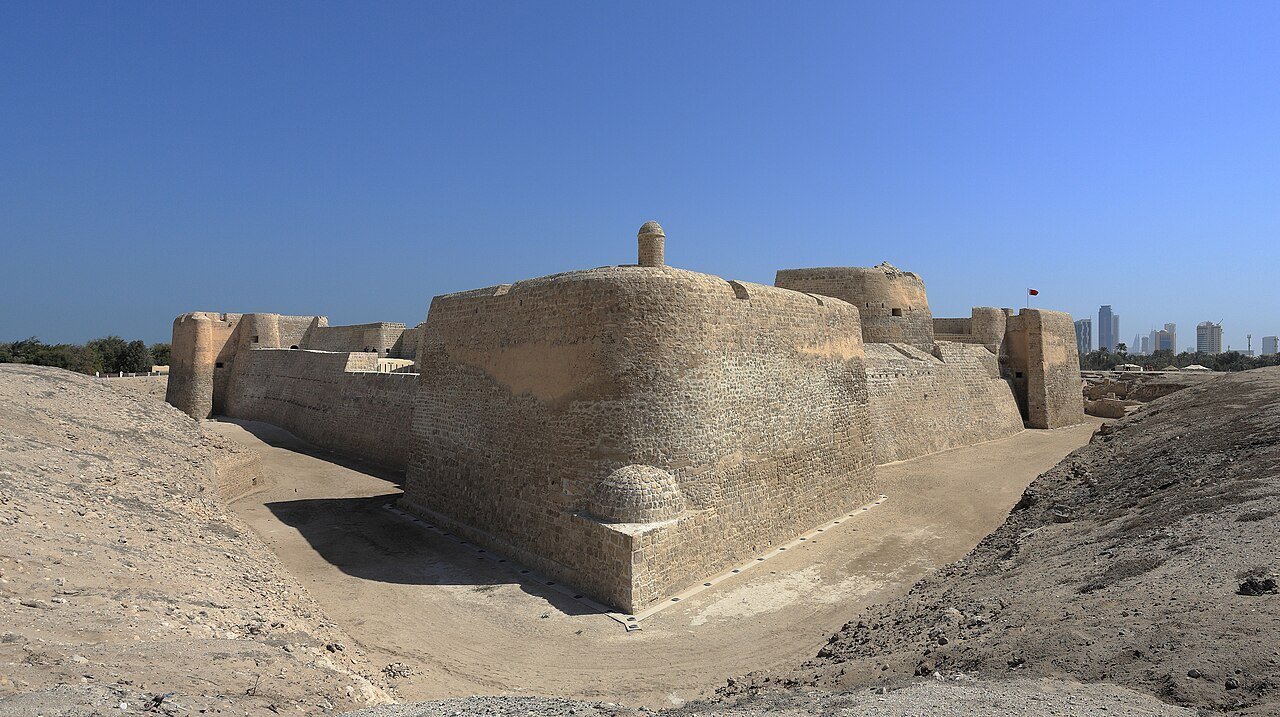
The list spans a remarkable chronological range. Yemen’s Old Walled City of Shibam, inscribed in 1982, is among the earliest Arabian Heritage registrations and one of the oldest UNESCO sites in the entire Arab world. At the other end, Bahrain’s Dilmun Burial Mounds (2019) and Qatar’s Al Zubarah Archaeological Site (2014) reflect a more recent wave of recognition as Gulf states have invested in archaeology and heritage diplomacy. The overall picture is of a region whose heritage value has been consistently affirmed — and in several cases complicated — by rapid urban development and, in Yemen’s case, active armed conflict.
Countries with the most inscriptions
Saudi Arabia leads the Peninsula with seven inscribed sites, a roster that ranges from the Nabataean rock-cut tombs of Al-Hijr (Hegra) — the first Saudi site to receive inscription, in 2008 — to Historic Jeddah with its layered coral-stone architecture, and the Al-Ahsa Oasis, the largest date-palm oasis on earth. The kingdom’s list reflects a deliberate strategy of nominating sites that predate the Islamic period alongside those that represent the early centuries of Islamic civilisation, positioning Saudi Arabia as a custodian of deep, plural history.
Oman follows with five sites, all cultural. Its inscriptions include Bahla Fort, one of the region’s oldest continuously inhabited strongholds, and the Land of Frankincense, a group of sites in the Dhofar region that traces the ancient incense trade routes linking Arabia to the Mediterranean world. Yemen also holds five inscriptions: four cultural sites, all of which are currently listed as endangered due to the ongoing civil war, and the Socotra Archipelago, whose endemic biodiversity earned natural-heritage status in 2008. Bahrain rounds out the mid-tier with three inscriptions, each documenting a distinct layer of the island’s history.
Cross-border and serial sites
No formally cross-border UNESCO site spans two Arabian Peninsula nations, but serial inscriptions — a single nomination comprising multiple distinct components — appear in the list. Oman’s Aflaj Irrigation Systems, inscribed in 2006, is the clearest example: the site groups five geographically separate falaj networks that share a common engineering tradition traceable to at least the fifth century. Each component functions as a living, community-managed water channel, and the serial format allowed UNESCO to recognise the breadth of the system without confining the inscription to a single structure.
The UAE’s Cultural Sites of Al Ain similarly groups four discrete areas — Hafit, Hili, Bidaa Bint Saud, and the historic oases — under one inscription, capturing a three-thousand-year continuum of settlement in the Abu Dhabi interior. Yemen’s Land of Frankincense (shared thematically but not formally with Oman’s Dhofar sites) and Saudi Arabia’s Rock Art in the Hail Region, which covers petroglyphs scattered across two separate sites in the Nefud Desert, follow the same serial logic. The approach has proved especially suited to Arabian heritage, where significant remains are often dispersed across arid landscapes rather than concentrated in single monumental complexes.
Natural and mixed-criteria sites
Natural designations remain rare on the Peninsula. Yemen’s Socotra Archipelago, a group of four islands in the Arabian Sea, is the region’s landmark natural inscription: its isolation over millions of years produced a flora unlike anywhere else on earth, with more than a third of its plant species found nowhere else. The archipelago’s dragon blood trees and endemic bird populations have made it a reference point in global biodiversity conservation, though access and protection have become severely constrained by the conflict on the Yemeni mainland.
Saudi Arabia’s ‘Uruq Bani Ma’arid, inscribed in 2023, extends across the western edge of the Rub’ al-Khali and supports populations of Arabian oryx, sand gazelles, and other desert-adapted fauna. Its inscription is notable in part because it indirectly acknowledges the region’s earlier conservation failure: Oman’s Arabian Oryx Sanctuary was delisted in 2007 after the protected area was reduced and oil extraction commenced — the first site ever removed from the World Heritage List. The Saudi inscription signals a renewed commitment to protecting the same species in adjacent habitat.
Explore the Arabian Peninsula’s UNESCO heritage
CHO publishes individual country guides for each nation on the Peninsula with UNESCO inscriptions. Use the links below to browse full site-by-site breakdowns, maps, and editorial history for each country.
- Saudi Arabia (7 sites)
- Oman (5 sites)
- Yemen (4 sites)
- United Arab Emirates (2 sites)
- Bahrain (3 sites)
- Qatar (1 site)
Every site in this list is pinpointed on CHO’s interactive heritage map, with GPS coordinates and sourced editorial history. See our guide to UNESCO World Heritage criteria, and our piece on cultural travel beyond mass tourism.
Frequently Asked Questions
How many UNESCO World Heritage Sites does the Arabian Peninsula have?
The Arabian Peninsula countries covered by CHO’s guides — Saudi Arabia, Oman, Yemen, the United Arab Emirates, Bahrain, and Qatar — collectively hold twenty-two UNESCO World Heritage Sites. The sites span cultural, natural, and serial designations, with the large majority carrying cultural criteria.
Which country in the Arabian Peninsula has the most UNESCO World Heritage Sites?
Saudi Arabia leads the region with seven inscribed sites, ranging from the Nabataean city of Al-Hijr in the northwest to the Al-Ahsa Oasis in the Eastern Province. Oman and Yemen each follow with five inscriptions.
Are any Arabian Peninsula UNESCO sites currently listed as endangered?
Yes. All four of Yemen’s cultural World Heritage Sites — Shibam, Old Sana’a, Historic Zabid, and the Landmarks of the Ancient Kingdom of Saba — are on UNESCO’s List of World Heritage in Danger due to the ongoing civil conflict. The designation reflects both direct physical damage and the collapse of heritage-management infrastructure in the country.
What makes the Socotra Archipelago significant as a natural World Heritage Site?
Socotra, an archipelago of four islands off Yemen’s coast, was inscribed in 2008 for its exceptional biodiversity: more than a third of its plant species are endemic, including the iconic dragon blood tree found nowhere else on earth. The islands’ long isolation in the Arabian Sea created an evolutionary laboratory comparable in some respects to the Galapagos.
Sources used in this article
- UNESCO — List of World Heritage Sites in the Arabian Peninsula.
- CHO magazine — What is a World Heritage Site?
- CHO — Interactive map of heritage sites.
—
Sources
- S1 — Potts, Daniel T. The Arabian Gulf in Antiquity: From the Beginning to the Coming of Islam. Oxford University Press, 1990. ISBN 978-0-19-814390-1.
- S2 — Heard-Bey, Frauke. From Trucial States to United Arab Emirates. Longman, 1982. ISBN 978-0-582-78032-3.
Spotted an error? Write to editorial@culturalheritageonline.com and we correct it the same day.