Cameroon has three UNESCO World Heritage Sites — two natural and one cultural — spanning dense equatorial rainforest, a vast transnational river basin, and a recently recognised highland landscape of dry-stone architecture that pushes the country’s inscribed heritage into a new dimension. Small in number, these designations are large in ecological and historical weight, ranging from some of Central Africa’s most intact wilderness to the archaeological traces of communities who carved a civilisation out of the Mandara Mountains. From Cultural Heritage Online.
Why Cameroon’s list looks the way it does
Cameroon occupies an unusual position on the UNESCO map: a country of extraordinary biodiversity and deep cultural layering, yet one with only three inscribed sites as of 2025. This reflects both the logistical challenges of assembling nomination dossiers for remote areas and the sheer complexity of managing protected zones that straddle international borders. The country’s tentative list, which includes archaeological sites and colonial-era railway infrastructure, signals that the pipeline is active even if the pace of new inscriptions has been slow.
The cultural and natural split also tells a story about where international attention has historically fallen. Both of Cameroon’s earlier inscriptions were natural sites, driven by the global priority placed on tropical forest conservation in the late twentieth century. The 2025 addition of a purely cultural landscape marks a shift, acknowledging the archaeological record of the Mandara highlands alongside the country’s already-recognised ecological wealth.
The first inscriptions
Cameroon’s World Heritage story begins in 1987, making it one of the earlier African states to achieve an inscription. That founding entry came from the natural world:
- Dja Faunal Reserve (1987, Natural) — described by UNESCO as one of the largest and best-protected rainforests in Africa, the reserve spans roughly 526,000 hectares of lowland forest and is home to an exceptional density of primates, including the western lowland gorilla and the chimpanzee.
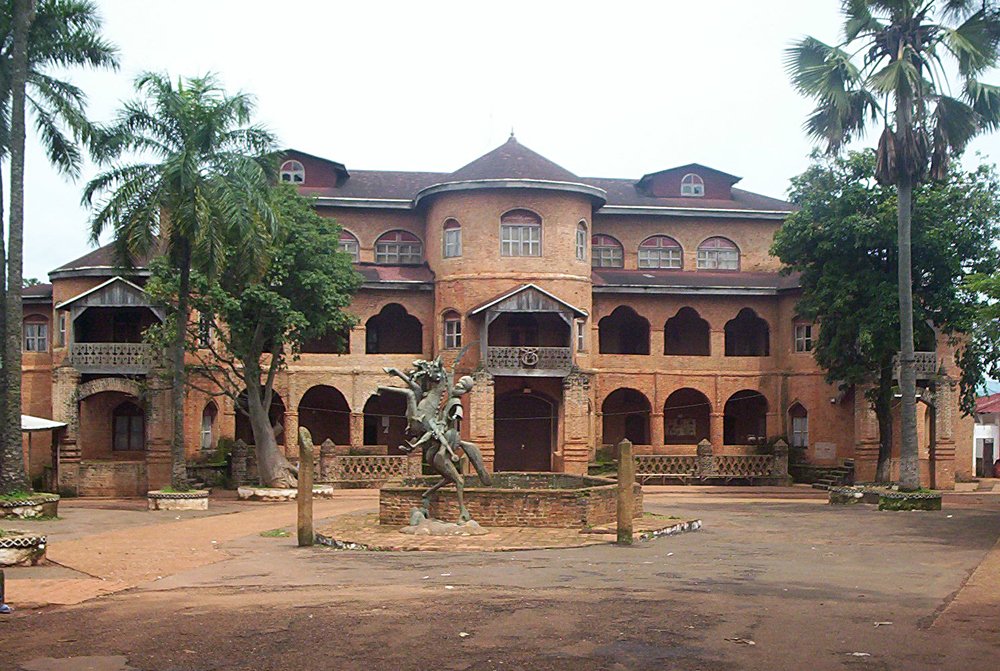
No cultural site joined the list until 2025, a gap of nearly four decades. That reflects the nomination priorities of successive governments as much as any lack of eligible heritage; Cameroon’s built and archaeological record is extensive, from the palace complexes of the Bamileke plateau to pre-Islamic sites across the far north.
The most visited — and the alternatives
Of the three inscribed sites, the Dja Faunal Reserve draws the most international notice, cited repeatedly in conservation literature as a benchmark for intact Central African rainforest. Access is deliberately limited, which has kept visitor numbers modest and the ecosystem largely undisturbed. The reserve is one of the few places on the continent where forest elephant, bongo, and multiple great ape species share a protected range at this scale.
For travellers willing to look beyond the better-known reserves, Cameroon’s list offers two compelling alternatives. The Sangha Trinational (2012, Natural) straddles the borders of Cameroon, the Central African Republic, and the Republic of the Congo, encompassing around 750,000 hectares of contiguous forest across three national parks — a landscape of rivers, swamp forests, and forest clearings known locally as bais, where forest elephants gather in remarkable concentrations. Then there is the Diy-Gid-Biy Cultural Landscape of the Mandara Mountains (2025, Cultural), which comprises sixteen archaeological localities containing dry-stone enclosures, terraces, and habitation structures thought to date from between the twelfth and seventeenth centuries — an architectural tradition built without mortar on the slopes of volcanic highlands.
Natural and shared sites
Both of Cameroon’s natural inscriptions are protected areas where the human footprint has been kept deliberately light. The Dja Faunal Reserve sits in the south-central part of the country, encircled on three sides by the Dja River, which forms a natural boundary for one of Africa’s most species-rich forest blocks. The Sangha Trinational represents something rarer still: a genuinely multinational conservation area managed in coordination across three sovereign states. It was inscribed in 2012 as a serial transnational site, recognising that the ecological integrity of the forest does not respect political borders and that effective protection requires cross-border governance frameworks.
The Sangha complex in particular has become a reference point in discussions about transboundary conservation, demonstrating that large mammal corridors, water catchment protection, and forest carbon storage can be jointly managed at scale. Within Cameroon’s portion, Lobeke National Park forms the anchor, protecting riverine forests and the gallery corridors that connect the broader basin.
How to find them
All three inscribed sites lie in areas of Cameroon that reward careful planning. The Dja Faunal Reserve and Lobeke National Park are most accessible via Bertoua and Yokadouma respectively in the south-east; the Mandara Mountains landscape is reached from Maroua in the far north. Road infrastructure varies considerably by season, and advance coordination with local guides and conservation authorities is standard practice for both natural parks.
Cameroon’s World Heritage sites sit alongside thousands of other places on CHO’s interactive map, with GPS and sourced editorial history for each. See also our guides to Italy’s and France’s UNESCO sites, and our piece on cultural travel beyond mass tourism.
Frequently Asked Questions
How many UNESCO World Heritage Sites does Cameroon have?
As of 2025, Cameroon has three UNESCO World Heritage Sites: the Dja Faunal Reserve (1987), the Sangha Trinational (2012), and the Diy-Gid-Biy Cultural Landscape of the Mandara Mountains (2025). Two are natural inscriptions and one is cultural.
What was Cameroon’s first UNESCO World Heritage Site?
Cameroon’s first inscription was the Dja Faunal Reserve, designated in 1987. It is one of the largest and best-protected tropical rainforests in Africa, covering around 526,000 hectares and sheltering a notable diversity of primate species including western lowland gorillas and chimpanzees.
What is the Sangha Trinational and which countries share it?
The Sangha Trinational is a transboundary natural World Heritage Site inscribed in 2012, covering approximately 750,000 hectares of contiguous forest across Cameroon, the Central African Republic, and the Republic of the Congo. It is managed jointly by all three countries and is recognised for its forest elephant populations and intact river-basin ecosystems.
What is the Diy-Gid-Biy Cultural Landscape of the Mandara Mountains?
Inscribed in 2025, Diy-Gid-Biy is Cameroon’s first and only cultural World Heritage Site, comprising sixteen archaeological localities in the Mandara Mountains of the country’s far north. The sites contain dry-stone enclosures, terraces, and habitation structures thought to have been constructed between the twelfth and seventeenth centuries by communities who adapted highland terrain through sophisticated mortarless architecture.
Sources used in this article
- UNESCO — State Party Cameroon — World Heritage list.
- UNESCO — Cameroon: World Heritage Sites.
- CHO magazine — What is a World Heritage Site?
- CHO — Interactive map of heritage sites.