
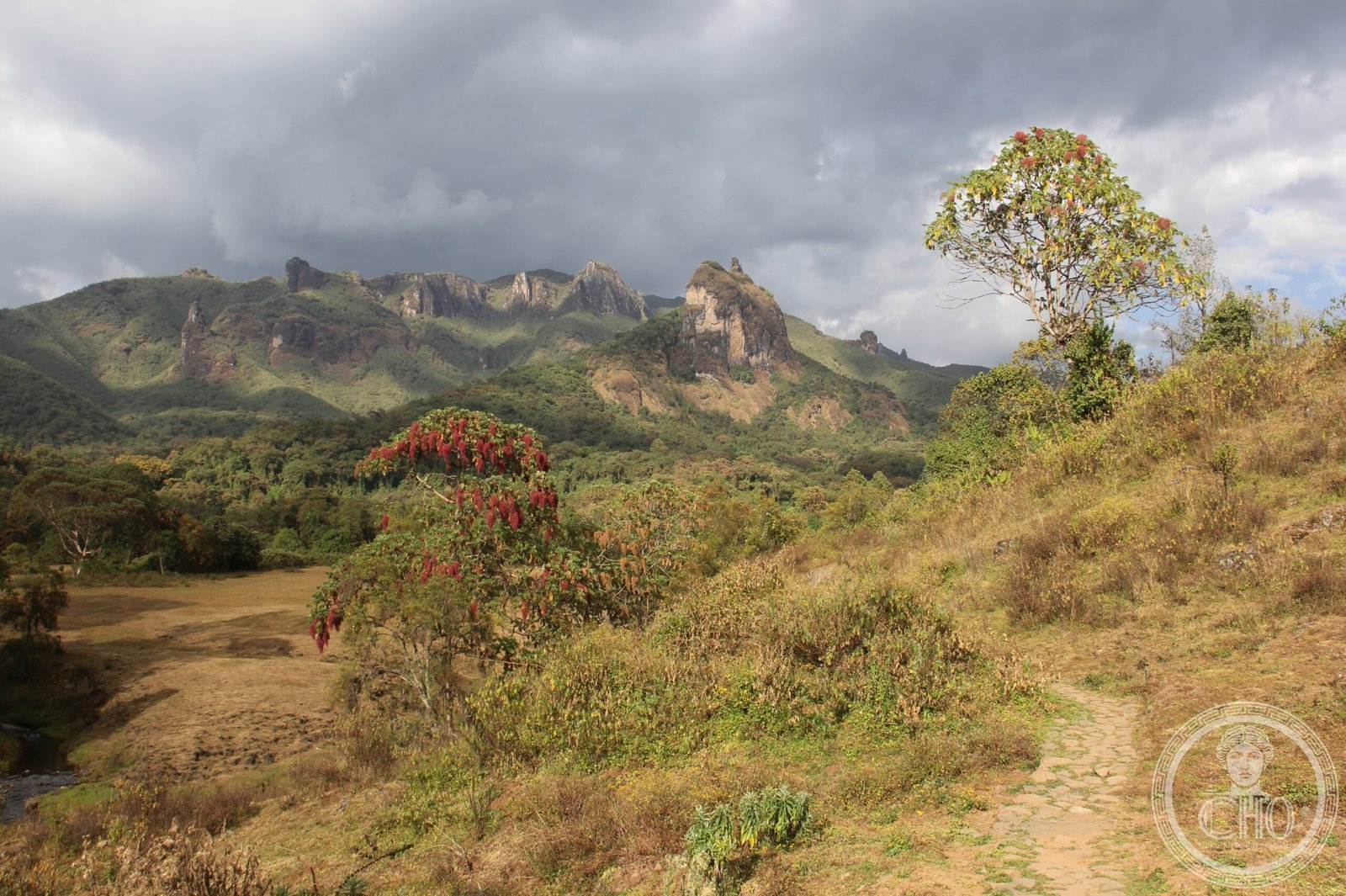
Nel sud dell’Etiopia, oltre i 4.000 metri delle vette del Massiccio del Sanetti, si estende il più grande ecosistema afroalpino contiguo del pianeta: le Montagne di Bale. Praterie di erica gigante e senecio colonnare avvolgono un altopiano desolato e magnifico dove vive il rarissimo lupo etiopico — il canide più minacciato del mondo, con meno di 500 esemplari rimasti — e il nyala di montagna, un antilope endemico dell’Etiopia che non si trova da nessun’altra parte al mondo. Verso il sud, l’altopiano scende nella Harenna Forest, una delle ultime grandi foreste montane dell’Etiopia. Patrimonio UNESCO dal 2024.
At a glance
Bale Mountains National Park is a protected area of approximately 2,200 km² in the Bale Zone of Oromia Region, south-central Ethiopia. It encompasses the Sanetti Plateau (3,500–4,377 m above sea level), the Harenna Escarpment and the Harenna Forest, and the Web Valley. UNESCO inscribed it in 2024 (ref. 111) for its exceptional natural values: the largest Afroalpine ecosystem in Africa, two endemic large mammals (Ethiopian wolf and mountain nyala), and the critical headwaters of major East African rivers (the Wabe Shebelle and the Web, both ultimately flowing to the Indian Ocean via Somalia).
Key facts
- UNESCO: World Heritage since 2024 (Bale Mountains National Park, ref. 111)
- Ethiopian wolf: c. 500 individuals remain worldwide — the world’s rarest canid; the Bale Mountains hold the largest single population
- Mountain nyala: an endemic Ethiopian antelope, found only in the Bale and Arsi mountains; c. 2,500–3,500 individuals
- Highest point: Tullu Dimtu, 4,377 m — the second-highest peak in Ethiopia
- Harenna Forest: one of the largest remaining cloud forests in Ethiopia; possible wild coffee origin area
- Other wildlife: gelada baboon, Menelik’s bushbuck, serval cat, olive baboon, African wild dog
History
The Bale Mountains have been inhabited for thousands of years by the Oromo people, who have grazed cattle on the moorland and farmed the mountain valleys. The high plateau was sacred ground — avoided and feared as the home of spirits. European natural history expeditions in the late 19th and early 20th century documented the extraordinary endemic fauna; the mountain nyala (Tragelaphus buxtoni) was only formally described in 1910 by naturalist Ivor Buxton.
The national park was established by Emperor Haile Selassie in 1969. The Ethiopian wolf — known as the “red jackal” or kebero in Amharic — was a common sight on the Sanetti Plateau before habitat loss and disease (rabies and canine distemper, often transmitted from domestic dogs) reduced its numbers drastically. The Ethiopian Wolf Conservation Programme, operating since 1995, has stabilised the population. UNESCO inscription in 2024 recognised the site’s global significance.
What you see
The Sanetti Plateau is one of the most extraordinary landscapes in Africa: vast, silent moorland at 4,000 m, carpeted with giant heather (Erica arborea), giant lobelias (Lobelia rhynchopetalum) reaching 5 m, and Senecio johnstonii, with views across seemingly endless Afroalpine grassland. Ethiopian wolves are routinely seen on the plateau, hunting Ethiopian mole-rats (their primary prey) in broad daylight — one of the most reliable carnivore-watching experiences in Africa.
The Harenna Forest below the escarpment is a dramatic counterpoint: dripping cloud forest with giant wild figs, old-growth podocarpus trees, and the resident Harenna lions (a genetically distinct population). The Web Valley has excellent mountain nyala and gelada viewing.
Practical information
- Base: Goba (the nearest town, 22 km from the park gate)
- Accommodation: Goba Wabe Shebelle Hotel (comfortable base); camping permitted in the park
- Guide: park scouts required for all hiking; guides for the Sanetti Plateau recommended
- Best time: November–February (dry season; Ethiopian wolf activity peaks; plateau accessible by 4WD)
Getting there
Fly from Addis Ababa to Goba or Robe airports (Ethiopian Airlines; 1 hr). Alternatively, drive from Addis Ababa via Shashemene (430 km, 6–7 hrs on good roads). Park entrance at Dinsho village. GPS (Sanetti Plateau): 6.75° N, 39.75° E.
Nearby
- Awash National Park — the accessible eastern-slope savanna park, 400 km north-east
- Sof Omar Caves — one of the longest cave systems in Africa, 100 km south-east
- Simien Mountains (UNESCO) — the other great Ethiopian mountain national park, home to the gelada baboon, 750 km north
Sources
- UNESCO World Heritage Centre — “Bale Mountains National Park” (ref. 111)
- Ethiopian Wolf Conservation Programme — population data
- Encyclopaedia Britannica — Ethiopian wolf; Bale Mountains
Find it on the map
See this place and what’s around it →📷 Become a Cultural Heritage Online photographer
Share your photos of places: they stay published under your name as the author. The more they're seen, the more you get noticed — and soon a contest will reward the most appreciated photos.
Log in or sign up free to add a photo