
Sull’isola di Björkö nel Lago Mälaren, a trenta chilometri ad ovest di Stoccolma, sorge Birka: la prima città della Svezia, fondata intorno al 750 d.C. come emporio commerciale dove si incrociavano le rotte vichinghe dal Mar Baltico alla Rus’ di Kiev e alla Via della Seta. Attiva per meno di tre secoli (c. 750–975 d.C.), è oggi un sito archeologico intatto con sepolture, terrapieni e i resti della “Terra Nera” che testimoniano la vita di 700–1.000 abitanti. Patrimonio UNESCO dal 1993 insieme all’adiacente Hovgården (residenza reale sull’isola di Adelsö).
At a glance
Birka, on the island of Björkö in Lake Mälaren, is the oldest known town in Sweden and one of the most significant Viking Age (750–975 AD) archaeological sites in Scandinavia. A prosperous trading emporium, Birka connected Frankish and Byzantine merchants with Scandinavian and Slavic traders; finds include Arabic silver coins (dirhams), Byzantine silk, Carolingian glassware and furs from the Russian forests. The town was abandoned around 975 AD when the trade routes shifted. Today the island preserves intact earthworks, harbour mounds, over 3,000 graves and the “Black Earth” settlement layer — a UNESCO World Heritage Site since 1993, together with Hovgården (the nearby Viking-era royal estate on Adelsö island).
Key facts
- UNESCO: World Heritage since 1993 (Birka and Hovgården, ref. 555)
- Period: c. 750–975 AD (Viking Age)
- Graves: over 3,000 burial mounds and chamber graves surrounding the town
- Trade connections: Arabic silver, Byzantine silk, Frankish glass and Scandinavian furs all found on site
- Saint Ansgar: the first Christian missionary to Scandinavia visited Birka twice (829 and 852 AD)
- Hovgården: royal estate on Adelsö island opposite Björkö; includes a runestone and medieval church
History
Founded around 750 AD, probably by decision of the Svea kings, Birka served as the commercial gateway of Sweden. Located on a well-defended island in Lake Mälaren, at the intersection of inland river routes and Baltic sea lanes, it attracted merchants from across the known world. The town’s population of 700–1,000 was remarkably cosmopolitan: craftspeople, traders, warriors, slaves and clerics coexisted within earthwork defences.
In 829 AD, the Frankish monk Ansgar arrived as a missionary — the first Christian preacher in Scandinavia. He returned in 852. Birka was never fully Christianised, but the visit marks the beginning of Northern Europe’s engagement with Christianity. The town declined rapidly after 975 AD, when the shifting of trade routes and the silting of the harbour led to its abandonment; the trading function moved to Sigtuna. Systematic excavations began in the 1870s under Hjalmar Stolpe, who documented the extraordinary burial finds now in the Swedish History Museum (Stockholm). The site remains largely unexcavated — a frozen moment of 10th-century urban life.
What you see
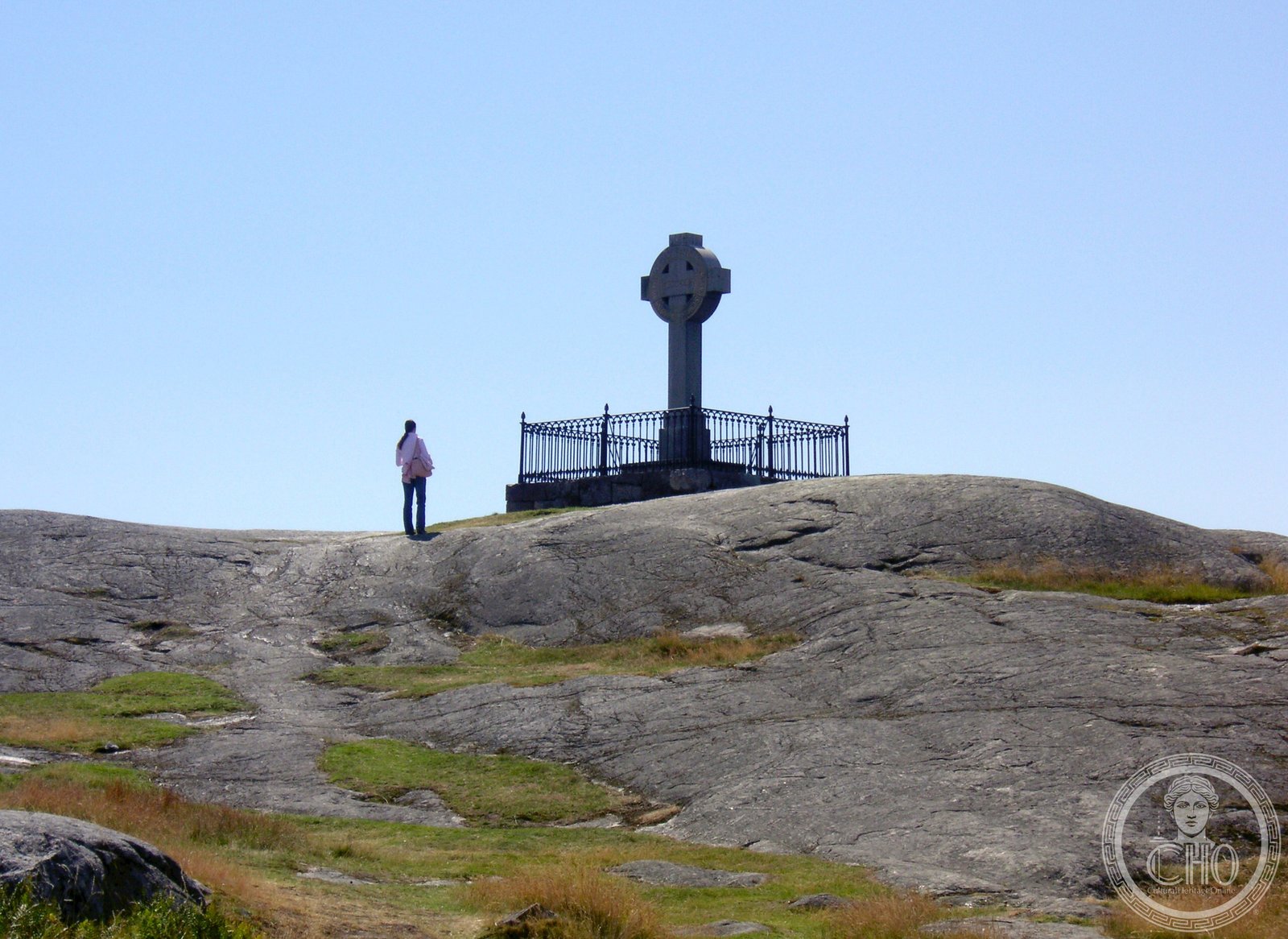
Björkö island is small and rural, accessible only by boat. The visible remains include: the “Garrison” (Borgen) earthwork fortress on the hill; the Black Earth area where the settlement stood (visible as a dark soil layer); low mounds of the harbour; and the extraordinary “birch island” landscape of grassy slopes covered in burial mounds. A museum at the harbour shows finds and reconstructions.
On Adelsö island (Hovgården, a short boat ride), the royal estate complex includes a medieval church, a runestone, and earthwork mounds from the Viking and pre-Viking periods — used by kings who taxed trade passing through Birka.
Practical information
- Ferry: regular summer ferry service from Stadshusbron (City Hall jetty) in central Stockholm, c. 3 hrs round trip; day tours also available
- On Björkö: small museum and guided tour of the site; café in summer
- Best time: May–September (ferries operate); winter access only by private boat
- Hovgården: accessible by ferry from Björkö or from Adelsö village
Getting there
Birka is reached by ferry from Stockholm Stadshusbron (City Hall jetty) in central Stockholm; journey c. 1.5 hrs each way. Day tours operate in summer (May–September). By car, drive to Adelsö and take a boat to Björkö, or park at Ekerö and take the seasonal ferry. GPS: 59.33° N, 17.54° E.
Nearby
- Stockholm — the Swedish capital, 30 km east across Lake Mälaren
- Drottningholm Palace (UNESCO) — the Swedish royal residence with its baroque theatre, 15 km south-east on Lake Mälaren
- Sigtuna — Birka’s successor as Sweden’s first Christian town, with 11th-century ruined churches, 30 km north
Sources
- UNESCO World Heritage Centre — “Birka and Hovgården” (ref. 555)
- Encyclopaedia Britannica — Birka Viking settlement
- Swedish History Museum (Stockholm) — Birka collections catalogue
Find it on the map
See this place and what’s around it →📷 Become a Cultural Heritage Online photographer
Share your photos of places: they stay published under your name as the author. The more they're seen, the more you get noticed — and soon a contest will reward the most appreciated photos.
Log in or sign up free to add a photo