
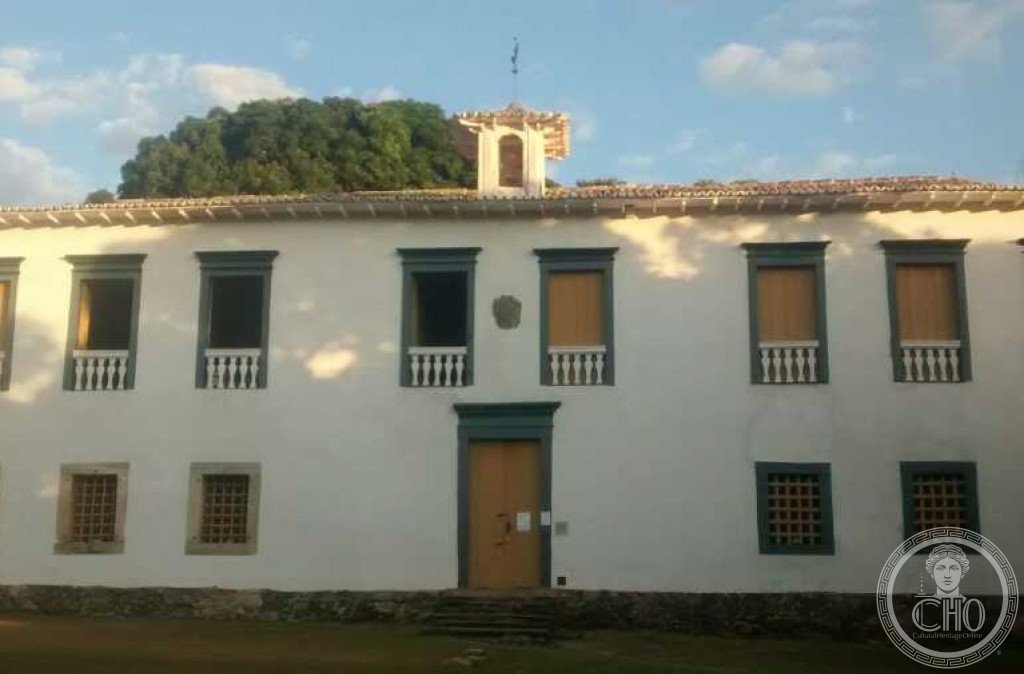
In the Brazilian interior, 300 kilometres from Brasília, the town of Goiás — popularly called “Goiás Velho” — preserves one of the best-kept eighteenth-century colonial centres in the Americas. Founded by Portuguese bandeirantes in the 1720s during the Cerrado gold rush, it was the capital of the state of Goiás until 1937. Its Baroque churches, lime-and-stone houses, cobbled streets and living tradition of sacred art made it a UNESCO World Heritage site in 2001, an exceptional testimony to Portuguese colonisation in the South American interior.
At a glance
The historic centre of the town of Goiás (known as Goiás Velho, “Old Goiás”) is a small colonial settlement in west-central Brazil in the state of Goiás. Founded in the 1720s as a gold-prospecting camp by the Portuguese bandeirante (explorer) Bartolomeu Bueno da Silva, it grew rapidly and became the capital of the captaincy (later state) of Goiás. The town preserves its 18th-century layout and vernacular architecture — low whitewashed stone houses with ochre terracotta roofs, baroque churches on cobblestone squares — virtually unchanged. UNESCO inscribed it in 2001 as an “outstanding example of a living urban ensemble created during the Portuguese colonial period.”
Key facts
- UNESCO: World Heritage since 2001 (Historic Centre of the Town of Goiás, ref. 993)
- Founded: 1725 by Bartolomeu Bueno da Silva Jr. (“Anhanguera”)
- State capital: capital of Goiás state 1749–1937; replaced by Goiânia in 1937
- Architecture: 18th-century vernacular Portuguese colonial — stone, lime, terracotta
- Festival: Fogaréu (Semana Santa) — dramatic Holy Week torch procession through the old streets
- River: Rio Vermelho runs through the historic centre; floods occasionally but shapes the urban character
History
In 1725, the Portuguese explorer Bartolomeu Bueno da Silva Jr. — known as Anhanguera (“Old Devil”) after his father who had first explored the region — discovered gold along the Rio Vermelho. The camp that grew around his find was called Vila Boa de Goiás and officially designated the capital of the captaincy of Goiás in 1749. At its 18th-century peak, Goiás was a prosperous colonial capital: its baroque churches, convents, prisons and governors’ palaces were built in the local style — stone foundations, mud-and-lime walls, hand-fired clay tiles.
When the gold ran out in the early 19th century, Goiás declined. The state capital moved to the newly built Goiânia in 1937, and the lack of investment inadvertently preserved the old town exactly as it was. By the time its value was recognised, the colonial fabric was largely intact. The 1970s floods damaged some structures but UNESCO inscription in 2001 brought funding for restoration. Today Goiás Velho is a living town of about 20,000 people — not a museum, but an inhabited colonial city.
What you see
The historic core is compact and walkable. Key landmarks: the 18th-century Church of São Francisco de Paula (the most refined baroque church); the Palácio Conde dos Arcos (the colonial governor’s palace, now a museum); the Igreja de Nossa Senhora da Boa Morte (housing works by the sculptor Veiga Valle); the colonial jail and the market square. Streets are paved with rounded river stones; facades are whitewashed or ochre; heavy wooden window frames with iron bars characterise every block.
The Fogaréu — a torchlit Holy Week procession of hooded figures through the dark streets — is one of Brazil’s most haunting religious spectacles, described as unchanged since the 18th century.
Practical information
- Access: 300 km west of Brasília by road (BR-070 then BR-158); no rail; bus from Goiânia (2 hrs)
- Best time: April (Fogaréu/Easter week) and June–August dry season; avoid January–March (flood risk)
- Stay: pousadas in the historic centre; limited luxury options
- Palácio Conde dos Arcos: open Tuesday–Sunday; the best introduction to colonial history
Getting there
By bus from Goiânia (2 hrs) or Brasília (4 hrs). By car: 336 km from Brasília via BR-060 and GO-070. The nearest airport is Goiânia (Santa Genoveva). GPS: 15.93° S, 50.13° W.
Nearby
- Goiânia — the state capital, a modernist city with excellent museums, 130 km south-east
- Chapada dos Veadeiros (UNESCO) — the extraordinary tablelands national park with waterfalls and cerrado, 220 km north-east
- Brasília (UNESCO) — the modernist federal capital, 300 km east
Sources
- UNESCO World Heritage Centre — “Historic Centre of the Town of Goiás” (ref. 993)
- Encyclopaedia Britannica — Goiás (city)
- IPHAN (Instituto do Patrimônio Histórico e Artístico Nacional) — Goiás Velho documentation
Find it on the map
See this place and what’s around it →📷 Become a Cultural Heritage Online photographer
Share your photos of places: they stay published under your name as the author. The more they're seen, the more you get noticed — and soon a contest will reward the most appreciated photos.
Log in or sign up free to add a photo