
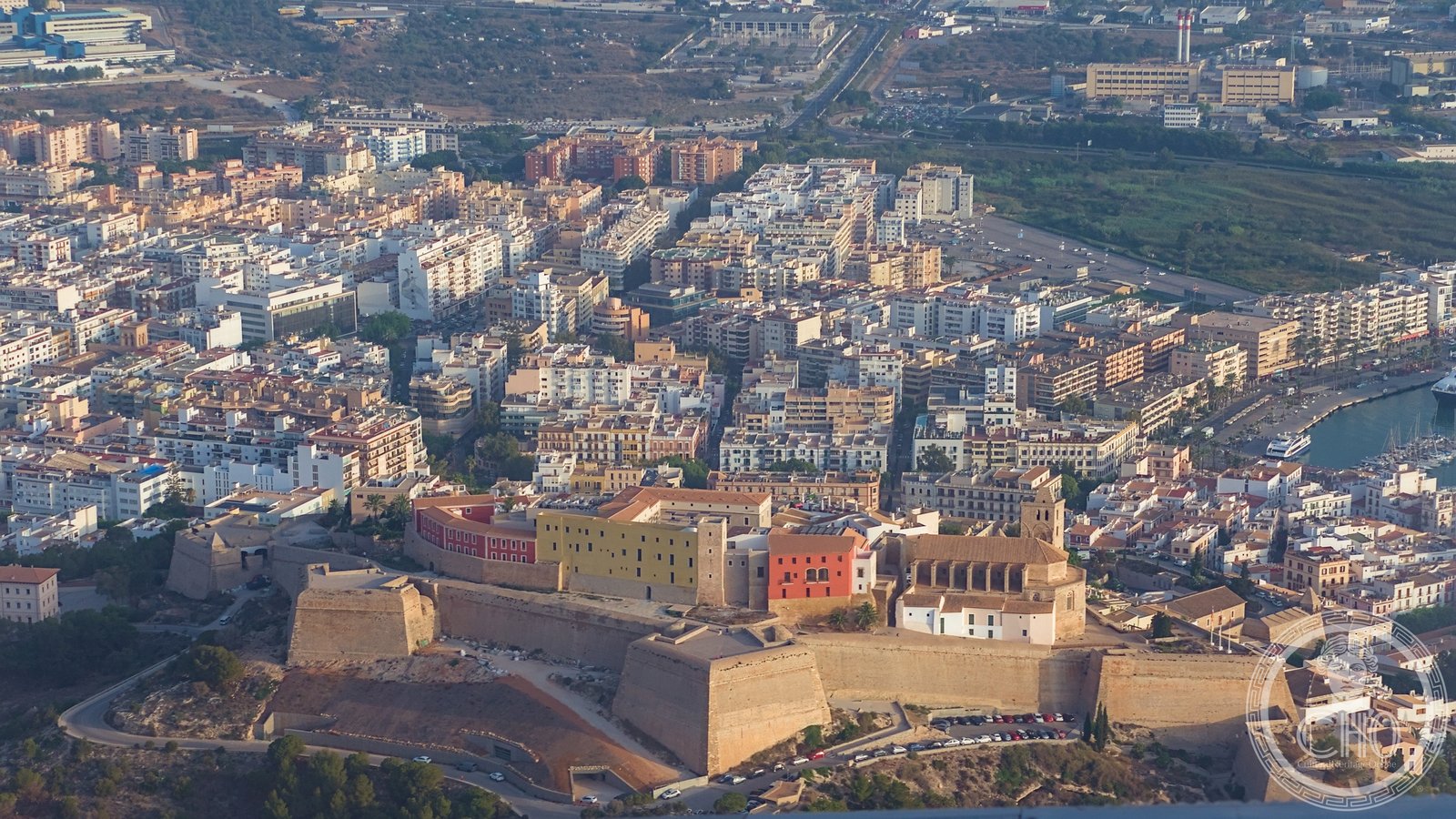
Ibiza è un sito UNESCO doppio: da un lato il Dalt Vila, la città murata medievale che domina il porto sull’altura di un promontorio punico-romano, con le sue mura bastionate del Rinascimento ancora intatte. Dall’altro, le praterie di Posidonia oceanica che circondano l’isola — la specie vegetale marina più importante del Mediterraneo, ossigenatore del mare e nursery per la fauna ittica. Due valori straordinari per una sola isola, riconosciuti dall’UNESCO nel 1999.
At a glance
Ibiza’s UNESCO World Heritage inscription (1999) encompasses two outstanding elements: the Punic-Roman and medieval walled city of Dalt Vila, and the seagrass meadows of Posidonia oceanica that fringe the island. Dalt Vila (meaning “upper city” in Catalan) is one of the best-preserved examples of 16th-century Italian Renaissance military architecture in Spain; its walls, designed by the Italian engineer Giovanni Battista Calvi, have remained intact. The Posidonia meadows, one of the oldest and largest in the Mediterranean, are of exceptional ecological value as an oxygen producer, carbon sink and marine nursery.
Key facts
- UNESCO: World Heritage since 1999 (Ibiza, Biodiversity and Culture, ref. 417)
- Dalt Vila: walled hilltop city with Renaissance bastions, occupied since Phoenician times
- Posidonia: seagrass meadows covering much of the seabed around Ibiza — some over 100,000 years old
- Walls: designed 1554–1585 by Italian engineer Giovanni Battista Calvi
- Punic: Ibiza (ancient Ebusus) was a major Phoenician-Punic settlement from c. 650 BC
- Two elements: cultural (Dalt Vila) + natural (Posidonia) combined in one inscription
History
Ibiza was colonised by the Phoenicians around 650 BC as the island of Ebusus, becoming a significant Carthaginian trade and production centre. After passing through Roman, Byzantine and Moorish rule, it was conquered by the Crown of Aragon in 1235. In the 16th century, threatened by Ottoman expansion in the Mediterranean, the Spanish Crown commissioned Italian military engineer Giovanni Battista Calvi to redesign Dalt Vila’s fortifications. The resulting walls, completed between 1554 and 1585, introduced the most advanced Renaissance military architecture of the time to Ibiza — a system of angular bastions designed to withstand artillery fire.
The Posidonia oceanica meadows surrounding Ibiza are ancient — some mats date back over 100,000 years — and represent one of the Mediterranean’s most important marine ecosystems. Their exceptional extent and condition, combined with the integrity of Dalt Vila, led UNESCO to inscribe Ibiza in 1999 under criteria that recognise both cultural and natural outstanding universal value simultaneously.
What you see
Dalt Vila rises above Ibiza Town on a rocky promontory, enclosed by 3 km of Renaissance walls with seven bastions. Entering through the Portal de ses Taules — a 16th-century gateway flanked by Roman statues — visitors climb through narrow white-washed streets to the cathedral, built on the site of a mosque on the highest point, with panoramic views over the port and the sea.
The Puig des Molins cemetery, another component of the UNESCO zone, holds thousands of Punic and Roman tombs. The Posidonia meadows, while invisible from shore, are visible by snorkelling or diving in the clear waters around Ses Salines Natural Park.
Practical information
- Dalt Vila: open year-round; best visited early morning or evening in summer
- Archaeological Museum of Ibiza and Formentera: inside Dalt Vila
- Puig des Molins: UNESCO necropolis open Tuesday–Sunday
- Posidonia: snorkel at Ses Salines or Cala Llonga for seagrass viewing
Getting there
Ibiza has an international airport (IBZ) with connections from across Europe and mainland Spain. Dalt Vila is a 10-minute walk from the harbour in Ibiza Town. GPS (Dalt Vila): 38.91° N, 1.43° E.
Nearby
- Formentera — the small neighbouring island (30-min ferry), with exceptional Posidonia waters and quiet beaches
- Ses Salines Natural Park — salt flats with flamingos, rich marine life, and the best seagrass snorkelling
- Es Vedrà — a dramatic rocky islet off the south-west coast, a marine reserve
Sources
- UNESCO World Heritage Centre — “Ibiza, Biodiversity and Culture” (ref. 417)
- Encyclopaedia Britannica — Ibiza; Posidonia oceanica
- Govern de les Illes Balears — official heritage documentation
Find it on the map
See this place and what’s around it →📷 Become a Cultural Heritage Online photographer
Share your photos of places: they stay published under your name as the author. The more they're seen, the more you get noticed — and soon a contest will reward the most appreciated photos.
Log in or sign up free to add a photo