Romania has 11 UNESCO World Heritage Sites, spanning a Bronze Age mining landscape, medieval painted monasteries, primeval forest stretching across an entire mountain range, and two freshly inscribed additions from 2024 — a testament to how many different civilisations have left their mark on this corner of Europe. From Cultural Heritage Online.
Why Romania’s list looks the way it does
Romania’s 11 sites divide into nine cultural and two natural inscriptions, a ratio that reflects the country’s extraordinary density of built and artistic heritage rather than any shortage of wild landscape. The Carpathian arc and the Danube delta between them define the country’s geography, and both appear on the list — but so do fortified Saxon churches, painted Orthodox churches, Dacian mountain fortresses, and a sculptural ensemble that changed the course of modern art.
The list also reveals Romania’s position at a crossroads of empires: Roman, Byzantine, Ottoman, and Austro-Hungarian. Each left a distinct architectural language, and several of the inscribed sites survive precisely because they were built on the margins of those powers — remote enough to escape destruction, significant enough to be maintained by local communities for centuries.
The first inscriptions
Romania’s first World Heritage designation came in 1991, when the Danube Delta was inscribed as a natural site. Two years later, in 1993, UNESCO added three more sites in a single session:
- Villages with Fortified Churches in Transylvania — seven villages built between the 13th and 16th centuries by Transylvanian Saxons, each centred on a fortified church that doubled as a refuge during raids
- Monastery of Horezu — founded in 1690 by Prince Constantin Brâncoveanu, regarded by UNESCO as a masterpiece of the Brâncovenesc architectural style
- Churches of Moldavia — a group of Orthodox churches whose exterior walls are covered in Byzantine frescoes, painted in the 15th and 16th centuries
Those four early inscriptions established the thematic pattern the list would follow: natural grandeur alongside religious architecture, and Romanian traditions alongside the heritage of the Saxon and other communities who shaped Transylvania.
The most visited — and the alternatives
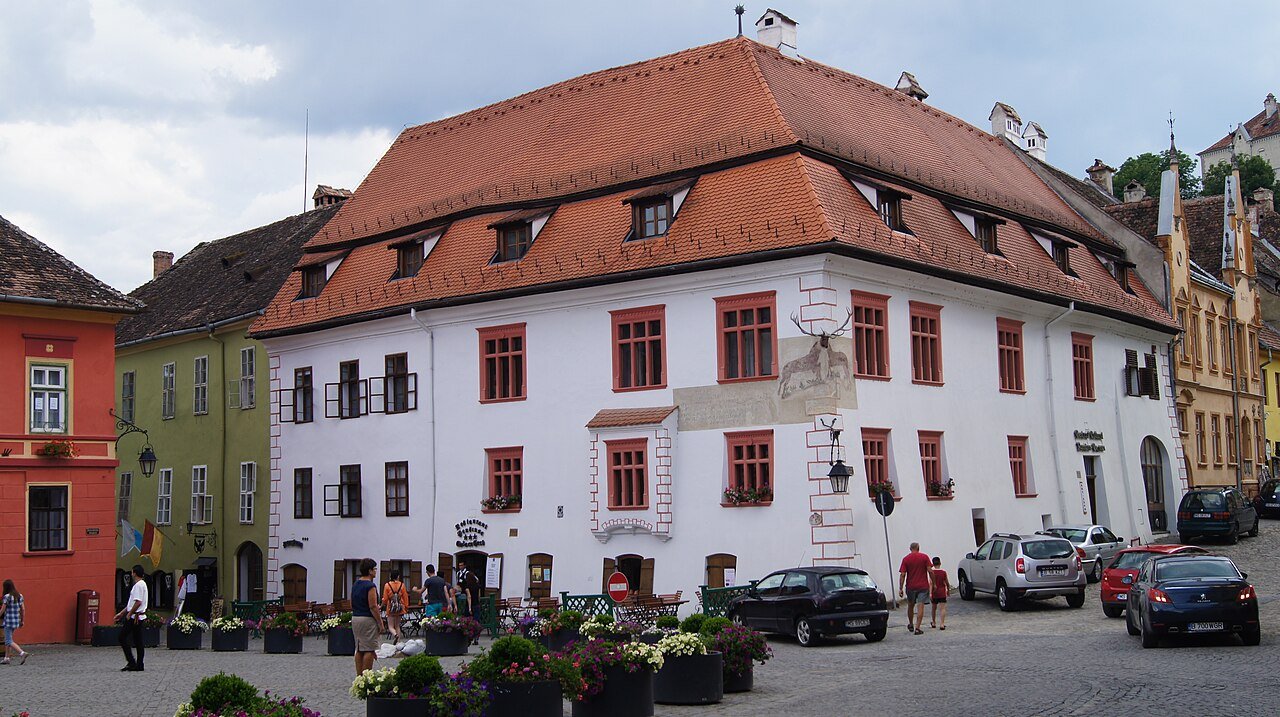
The Historic Centre of Sighișoara, inscribed in 1999, draws the largest crowds. Its 14th-century citadel, intact medieval street plan, and multi-coloured rooftops make it one of the most photographed towns in Eastern Europe. The Painted Monasteries of Moldavia — Voroneț, Sucevița, Moldovița and others — draw pilgrims and art historians in roughly equal numbers, and the Danube Delta attracts ornithologists from across the continent.
Three inscribed sites sit well outside the main tourist circuits and repay the detour. The Dacian Fortresses of the Orăștie Mountains (1999) are a group of six hilltop strongholds built by the Dacian kingdom before the Roman conquest — massive dry-stone walls on ridgelines that most visitors to Romania never see. The Wooden Churches of Maramureș (1999) are eight 17th- and 18th-century structures that fuse Orthodox liturgical needs with Gothic structural instincts, all built without a single nail. The Roșia Montană Mining Cultural Landscape (2021) carries a different kind of weight: a working landscape with Bronze Age origins inscribed simultaneously onto the World Heritage list and the List of World Heritage in Danger, because open-pit mining proposals threatened it at the moment of its inscription.
Natural and shared sites
Romania’s two natural inscriptions occupy opposite ends of the country. The Danube Delta (1991) is one of Europe’s largest wetlands, a constantly shifting mosaic of channels, floating reed islands, and lakes that supports over 300 bird species. The Ancient and Primeval Beech Forests of the Carpathians and Other Regions of Europe (inscribed as a serial transnational site, extended to Romania in 2017) cover old-growth beech stands across 18 European countries and represent some of the least disturbed temperate forest left on the continent.
Two of Romania’s most recent inscriptions have a transnational dimension. The Sculptural Ensemble of Constantin Brâncuși at Târgu Jiu (2024) stands alone as a purely national designation — three monumental sculptures installed in 1938 in a single park, now recognised as a landmark of 20th-century art. The Frontiers of the Roman Empire — Dacia (2024), however, joins the wider series of Roman frontier inscriptions shared across multiple European countries, recognising the specific fortification system Rome built after its conquest of Dacia.
How to find them
Romania’s World Heritage sites sit alongside thousands of other places on CHO’s interactive map, with GPS and sourced editorial history for each. See also our guides to Italy’s and France’s UNESCO sites, and our piece on cultural travel beyond mass tourism.
Frequently Asked Questions
How many UNESCO World Heritage Sites does Romania have?
Romania has 11 UNESCO World Heritage Sites as of 2026, comprising nine cultural and two natural inscriptions. The most recent additions, both inscribed in 2024, are the Sculptural Ensemble of Constantin Brâncuși at Târgu Jiu and the Frontiers of the Roman Empire — Dacia.
What was Romania’s first UNESCO World Heritage Site?
The Danube Delta was Romania’s first World Heritage inscription, added to the list in 1991 at the 15th session of the World Heritage Committee. It was designated as a natural site for its exceptional biodiversity and wetland ecosystems at the mouth of the Danube River.
Which Romanian World Heritage Sites are shared with other countries?
Two of Romania’s inscriptions are transnational. The Ancient and Primeval Beech Forests of the Carpathians and Other Regions of Europe is a serial site shared with 17 other European countries. The Frontiers of the Roman Empire — Dacia (2024) forms part of the broader Roman Frontiers series inscribed across multiple countries.
Is Roșia Montană still on the List of World Heritage in Danger?
Yes. Roșia Montană Mining Cultural Landscape was inscribed in 2021 and placed on the List of World Heritage in Danger at the same session, due to threats from proposed large-scale open-pit mining. It is the only Romanian site currently carrying that designation.
Sources used in this article
- UNESCO — State Party Romania — World Heritage list.
- UNESCO — Romania: World Heritage Sites.
- CHO magazine — What is a World Heritage Site?
- CHO — Interactive map of heritage sites.