
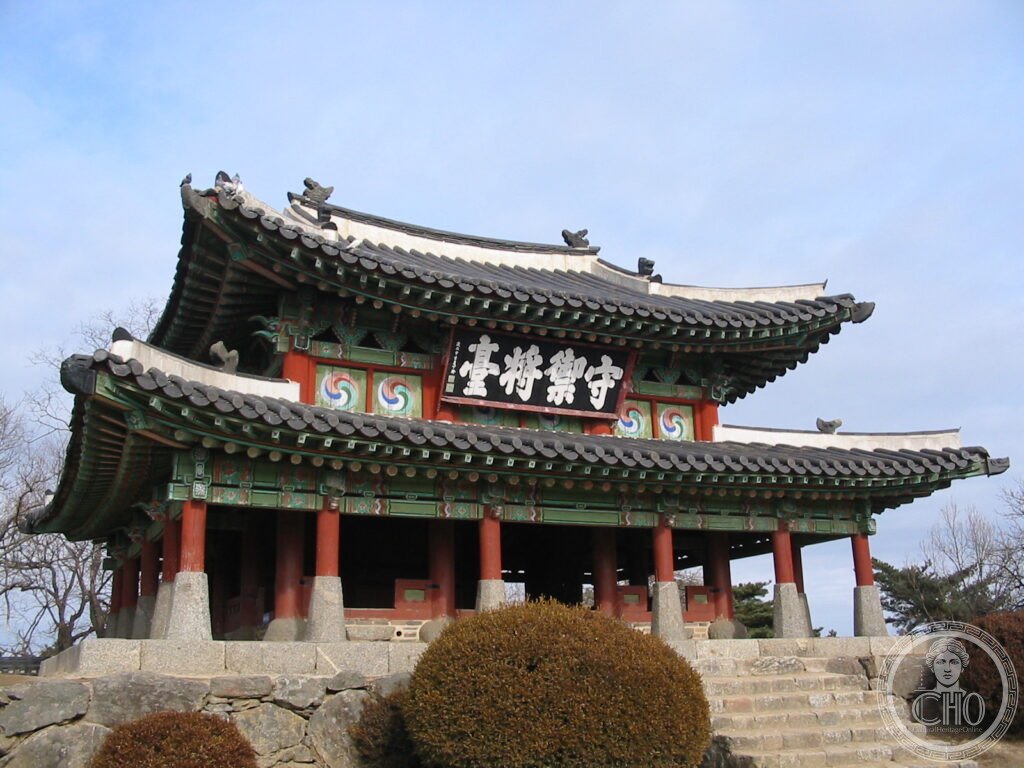
Sui monti a sud di Seul, una lunga cinta di mura corre lungo le creste: è Namhansanseong, la fortezza dove i re della dinastia Joseon potevano rifugiarsi in tempo di guerra, una capitale di riserva con palazzi, templi e magazzini. Un capolavoro di architettura militare nato dallo scambio fra Oriente e Occidente.
At a glance
Namhansanseong, in the mountains south-east of Seoul, was designed as an emergency capital for the Joseon dynasty, a refuge where the king and court could withstand a siege. Built up especially in the early 17th century after invasions, its long walls follow the mountain ridges, enclosing a town with palaces, temples, command posts and granaries. It reflects a fusion of Korean, Chinese and Japanese fortification ideas and the influence of Western artillery. It was inscribed by UNESCO in 2014.
Key facts
- UNESCO: World Heritage since 2014 (Namhansanseong)
- Emergency capital: a mountain refuge for the Joseon kings
- 17th century: greatly strengthened from 1624
- Ridge walls: long fortifications following the mountain crests
- A walled town: with palace, temples, command posts and stores
- Fusion fortress: blending East Asian and Western military ideas
History
Fortifications crowned this mountain from early times, but Namhansanseong took its great form in the 17th century, when the Joseon dynasty, shaken by Japanese and Manchu invasions, rebuilt it as a stronghold to which the king could retreat. In 1636 it was put to the test: King Injo took refuge here during the Qing invasion and endured a 47-day winter siege before surrendering.
The fortress was kept up as a secondary capital, with a temporary palace, shrines, Buddhist temples whose warrior-monks helped build and guard it, and stores to outlast a siege. Its design absorbed Korean, Chinese and Japanese ideas and responded to the new threat of cannon, making it a landmark in the history of fortification.
What you see
Stone walls run for kilometres along the wooded ridges, punctuated by gates, secret posts and command pavilions such as the Sueojangdae, whose curved tiled roofs rise above the trees. Within lies the town with its temporary palace, shrines and temples, set in mountain scenery.
Walking the walls gives long views over the mountains toward Seoul.
Practical information
- Fortress: a provincial park; the walls and gates are freely walkable
- Time needed: half a day, with the wall walk
- Note: a popular hiking destination from Seoul
- Setting: in the mountains of Gyeonggi Province
Getting there
Namhansanseong is about 25 km south-east of central Seoul, South Korea, in Gyeonggi Province. It is reached by metro (Namhansanseong station) and bus, or by road. GPS: 37.479° N, 127.181° E.
Nearby
- Seoul — the South Korean capital, to the north-west
- Gyeonggi mountains — the wooded hills around the fortress
- Songpa — the Seoul district at the foot of the mountain
Sources
- UNESCO World Heritage Centre — “Namhansanseong” (ref. 1439)
- Cultural Heritage Administration of Korea — official body
- Encyclopaedia Britannica — Joseon dynasty
Find it on the map
See this place and what’s around it →📷 Become a Cultural Heritage Online photographer
Share your photos of places: they stay published under your name as the author. The more they're seen, the more you get noticed — and soon a contest will reward the most appreciated photos.
Log in or sign up free to add a photoIs this page about you?
This page is read by travellers and heritage enthusiasts who find it on Google. Tell us how you are connected to this place and we will take it from there.