
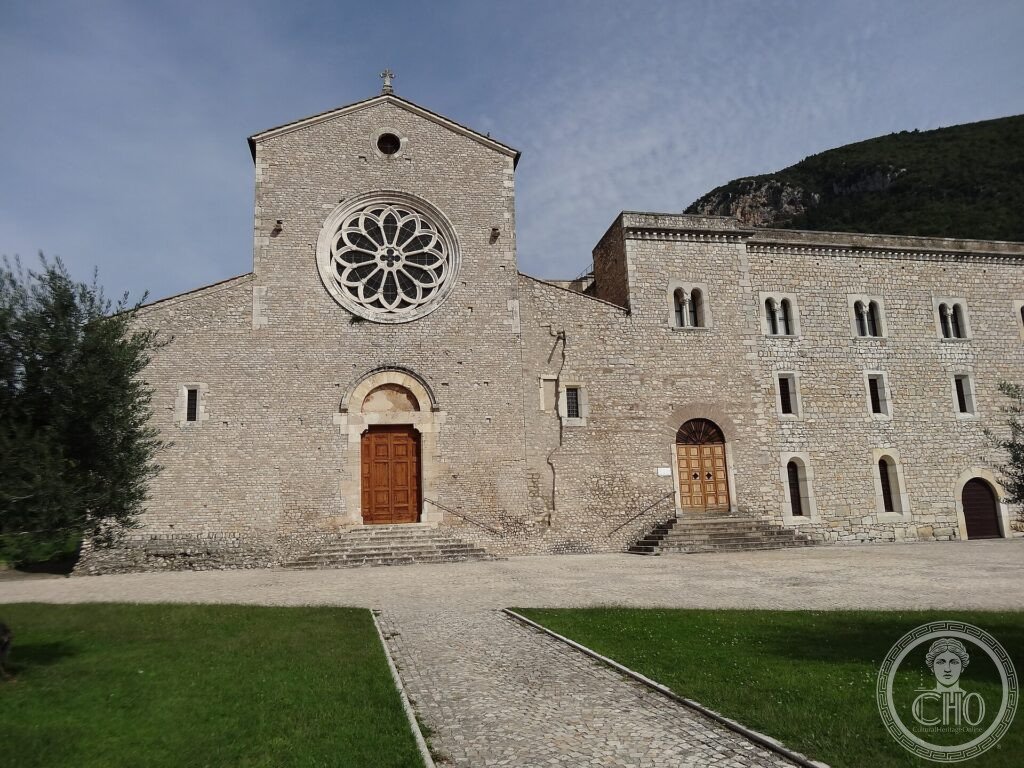
La leggenda dice che i Templari la costruirono nel XII secolo; i documenti dicono che fu cistercense dal XIII. La verità è che nessuna delle due versioni riesce a rendere giustizia alla quiete di questa chiesa gotica nascosta tra gli olivi dei Monti Lepini, a cinque chilometri dal castello dei Caetani a Sermoneta e a cent'anni di luce dalle autostrade del Lazio costiero.
At a glance
Valvisciolo Abbey stands in a valley in the Monti Lepini, 5 km north-west of Sermoneta (Latina), in the rocky limestone hills between the Pontine plain and the Liri valley. The church, cloister, and chapter house form a consistent Cistercian Gothic complex of the early 13th century, built on a plan closely related to Fossanova (the first Cistercian abbey in Italy, 30 km south-east). The abbey is surrounded by ancient olive groves that belong to the monastic estate and produce an extra-virgin olive oil sold in the abbey shop. An active community of Cistercian monks maintains the buildings and conducts the liturgical offices, which are open to visitors (Vespers at 17:30 is particularly recommended in the stone church with its resonant acoustics). The so-called Templar legend — widespread in local tradition — attributes the foundation to Knights Templar in the 12th century; no documentary evidence supports this, and the stylistic dating of the church clearly places it in the early 13th century Cistercian building campaign.
Key facts
- Founded: documented from 1240 as Cistercian; some scholars propose an earlier foundation (possibly Cistercian from c. 1200 or earlier Benedictine); no documentary evidence for Templar connection despite the legend
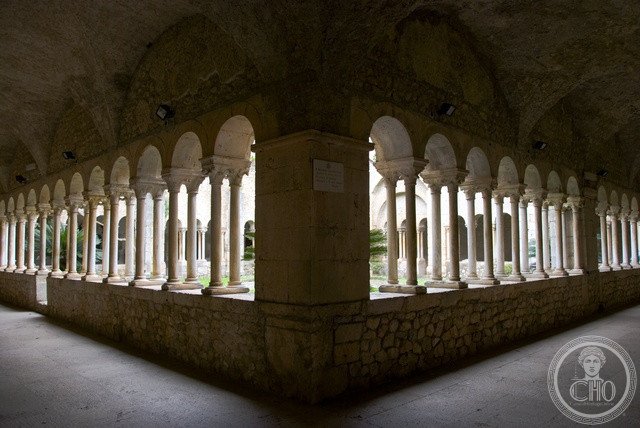
- Architecture: Cistercian Gothic (early 13th c.); church with single nave, ribbed vaults, square east end, no figurative sculpture (Cistercian austerity); cloister with Gothic arches on twin columns; chapter house with ribbed vaulting
- Templar legend: persistent local tradition attributes foundation to the Knights Templar (suppressed 1312); no primary sources support this; probably originated in the octagonal plan of one of the chapels, which resembles the Church of the Holy Sepulchre motif used by the Templars
- Olive oil: the abbey's olive groves (some trees centuries old) produce a DOP Colline Pontine olive oil; sold in the abbey shop
- Today: active Cistercian community; open to visitors; daily Masses; abbey shop (olive oil, honey)
History
The earliest documentary evidence for Valvisciolo is a papal privilege of 1240 confirming its properties to the Cistercian order. The architectural style of the church — early-Gothic ribbed vaulting, the Bernardine plan, the bare stone interior — places the building campaign in the 1200–1240 period, consistent with the wave of Cistercian foundations in Lazio that included Casamari (1203–1217) and followed the model of Fossanova (1135–1208). The abbey was built on a site in the Lepini hills that had probably been cleared and farmed by monks since the early 12th century, which may have given rise to the Templar legend: the prior Cistercian use, forgotten after a few generations, was reinterpreted as evidence for the Templars, whose memory was dramatic and romantic in ways the Cistercians' was not.
The abbey weathered the Napoleonic suppression better than most: it was occupied and briefly secularized but never sold, and the Cistercian community returned and maintained continuity of worship through the 19th century. Restoration works in the 20th century consolidated the medieval fabric without altering its character.
What you see
The approach to Valvisciolo through the Lepini hills is on a narrow road descending from Sermoneta into the valley; the abbey appears in the hollow, surrounded by olive trees. The church facade is plain limestone with a simple portal; the campanile is detached and Romanesque in proportion. The interior — single nave, three bays of ribbed vaulting, square east end with three apses — is very close to the Fossanova model in plan and elevation but smaller and more intimate in scale. The absence of figurative decoration (Cistercian rule) focuses attention on the quality of the stonework and the light from the lancet windows. The cloister, to the south, has pointed Gothic arches on paired columns with flat-leaf capitals. The chapter house, off the east walk, has three bays of ribbed vaulting on two free-standing columns; the monks still meet here for chapter. The olive trees around the church are ancient specimens, their trunks gnarled and several metres in circumference.
Practical information
- Opening hours: Mon–Sat 09:00–12:30 and 14:30–18:00; Sun 10:00–12:30 and 14:30–18:00
- Admission: free
- Abbey shop: olive oil, honey; open same hours
- Time needed: 30–45 minutes
Getting there
By car from Latina (20 km north-west): SS148 Pontina toward Rome to Borgo Montello exit, then local road to Sermoneta, then down to Valvisciolo (signs from Sermoneta). GPS: 41.5422° N, 13.0983° E.
Nearby
- Sermoneta — 5 km north-east; one of the best-preserved medieval hill towns in Lazio; Castello Caetani (Fondazione Caetani); views over the Pontine plain
- Fossanova — 30 km south-east; the first Cistercian abbey in Italy (1135), model for Valvisciolo; Thomas Aquinas died here
- Ninfa — 6 km north; garden of the Caetani Foundation built in the ruins of a medieval town; one of the most celebrated romantic gardens in Europe (open April–November)
Sources
- Wikipedia — “Valvisciolo Abbey” (en.wikipedia.org/wiki/Valvisciolo_Abbey)
- Kinder, T.N., Cistercian Europe, Kalamazoo 2002
- Abbazia di Valvisciolo (official website)
Find it on the map
See this place and what’s around it →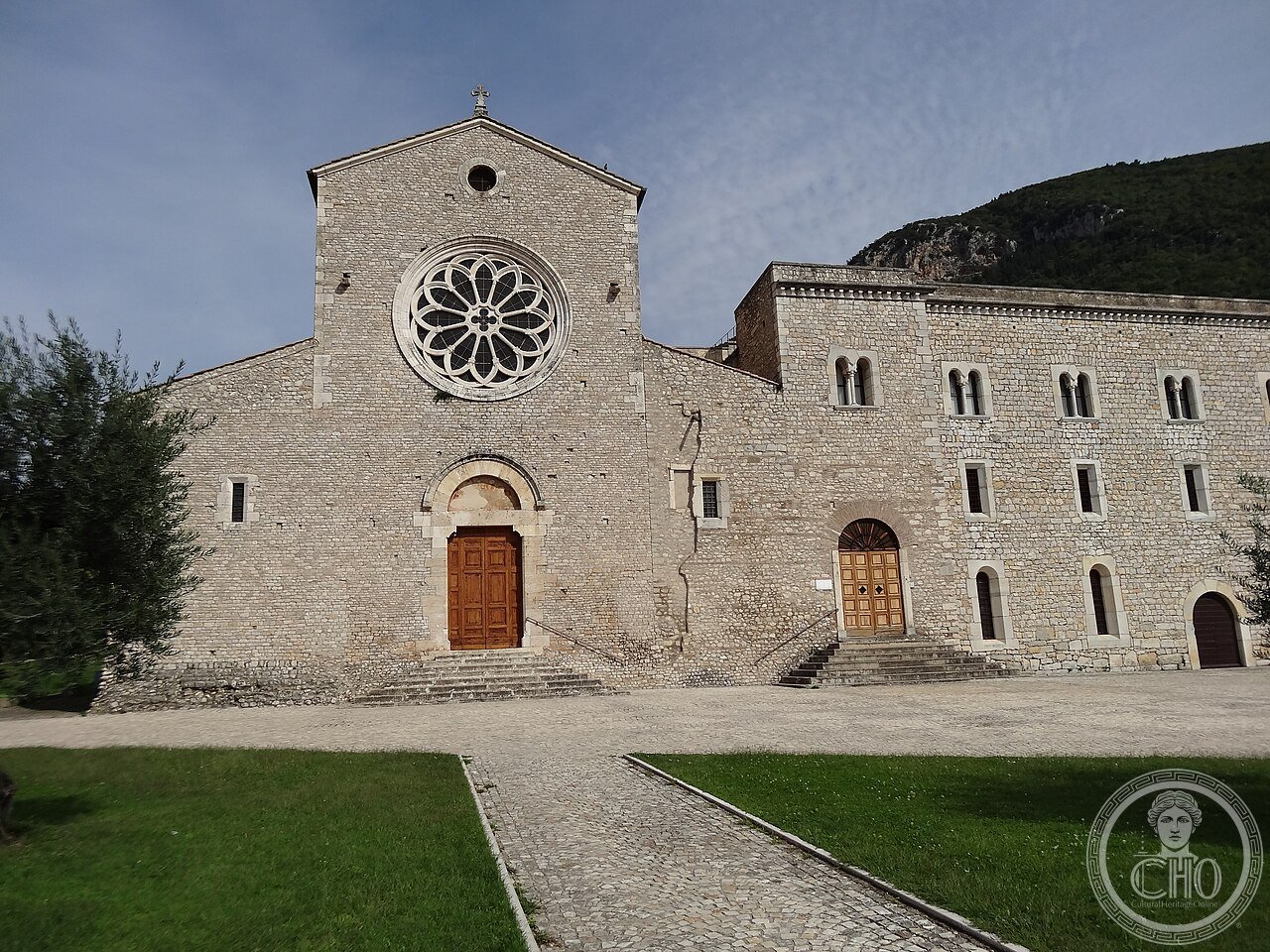
📷 Become a Cultural Heritage Online photographer
Share your photos of places: they stay published under your name as the author. The more they're seen, the more you get noticed — and soon a contest will reward the most appreciated photos.
Log in or sign up free to add a photoIs this page about you?
This page is read by travellers and heritage enthusiasts who find it on Google. Tell us how you are connected to this place and we will take it from there.