
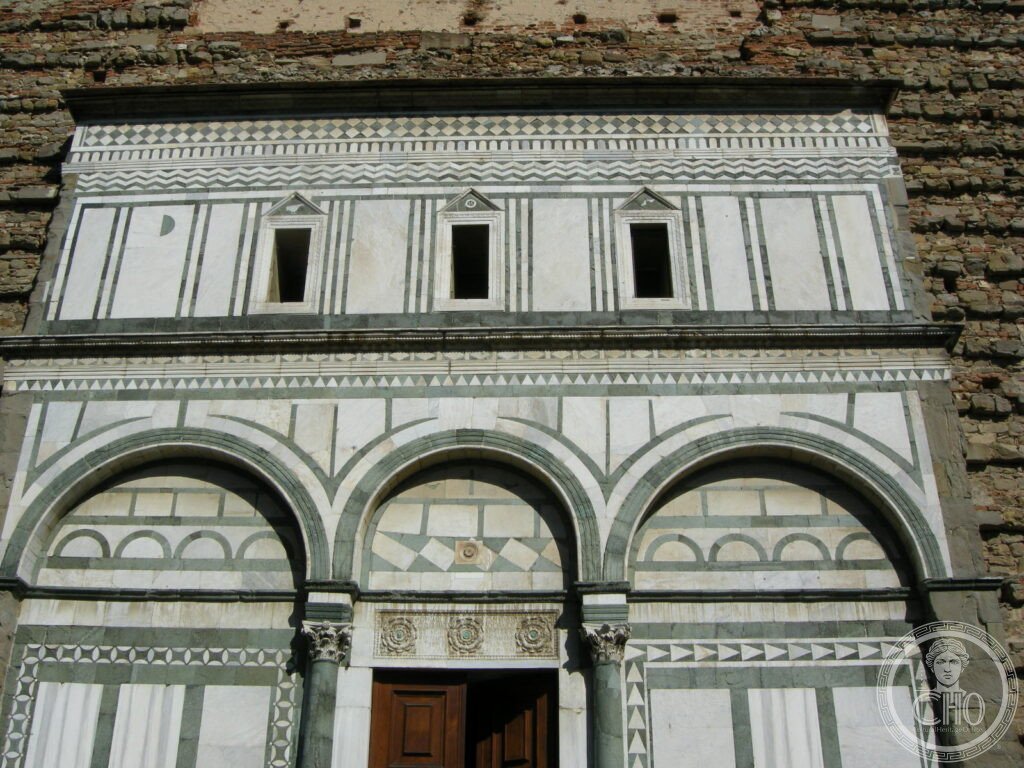
Cosimo de’ Medici had this abbey rebuilt in 1456, but stopped before touching the facade of the old Romanesque church: the lattice of white marble and green serpentine, left unfinished in 1028, has stayed there, set into the new Renaissance front like a fossil in rock — one of the boldest compositional solutions in Italian architecture.
At a glance
The Badia Fiesolana stands in San Domenico di Fiesole, on the hillside between Florence and Fiesole, 7 km from the Duomo. It began as a Benedictine abbey founded in the 11th century, possibly on the site of the early Christian cathedral of Fiesole; the historical record is complicated, but the building campaign of the first church left an unfinished Romanesque facade in white Carrara marble and green Prato serpentine — the same palette as the Baptistery and San Miniato al Monte — with geometric inlay patterns of exceptional sophistication. When Cosimo de' Medici (Cosimo il Vecchio) decided to rebuild the church in 1456, in a project attributed to Brunelleschi's collaborators, the decision was taken to preserve the existing Romanesque facade and incorporate it — unfinished, with its raw stone edge visible at the top — into the new Renaissance exterior. The result is unique: a Romanesque church front embedded in a Renaissance building, its incompleteness made into a compositional statement. The abbey was given to Augustinian Canons Regular (Lateran Congregation) in the 15th century, suppressed, then taken over by the Jesuits. Since 1976 it has housed the European University Institute (EUI), an international postgraduate research institution funded by the EU member states.
Key facts
- Founded: documented from 1028; possibly on site of early Christian cathedral; Benedictine until 1439; then Augustinian Canons Regular (Lateran Congregation); suppressed in Napoleonic period; Jesuit house 19th c.; EUI since 1976
- The embedded facade: the unfinished Romanesque marble facade (c. 1028–11th c.), incorporated into the Renaissance church exterior by Cosimo de' Medici's architect (c. 1456–1464); unique in Italian architecture; geometric white-and-green marble inlay, unfinished at the top
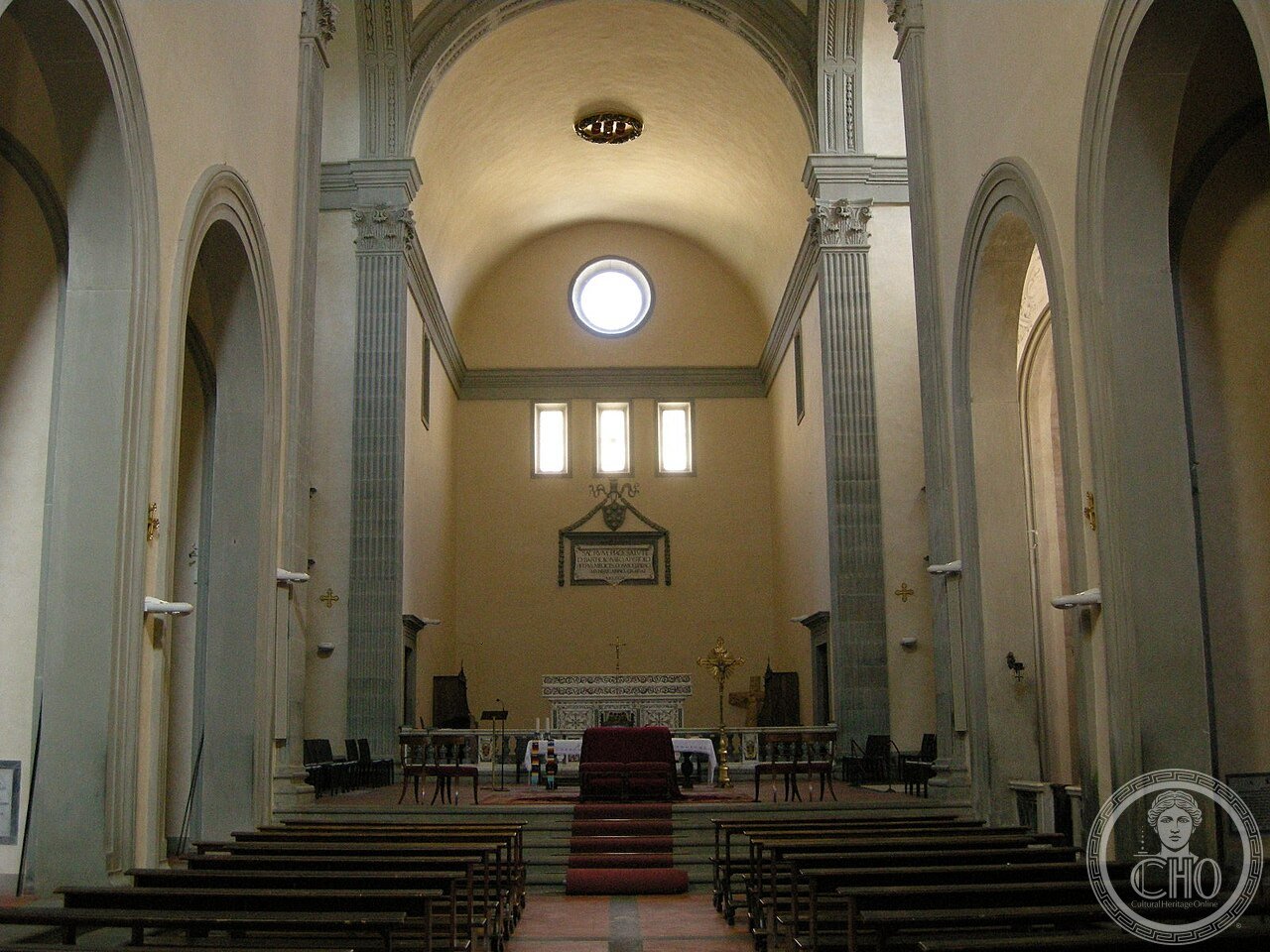
- Renaissance rebuilding: attributed to Brunelleschi's workshop (possibly Michelozzo or Bernardo Rossellino); the Renaissance church interior has a single nave, white plastered walls, pietra serena pilasters — a model of Florentine early-Renaissance simplicity
- EUI: European University Institute, founded 1972, operating from the Badia Fiesolana since 1976; postgraduate research in law, history, economics, political science; open public events and library
- Cosimo de' Medici: rebuilt the abbey as part of his systematic programme of architectural patronage; also patronized San Marco, San Lorenzo, the Palazzo Medici, and other Florentine buildings in the same decade
History
The Benedictine community at San Domenico di Fiesole is documented from the 11th century; the precise date of foundation is disputed, but a building campaign that produced the unfinished Romanesque facade is clearly datable to the early-to-mid 11th century. The geometric marble inlay — white Carrara and green Prato serpentine in a grid of squares, diamonds, and circles — belongs to the Florentine proto-Renaissance tradition that also produced the Baptistery facade (c. 1059) and San Miniato al Monte (1013). The construction stopped, apparently due to lack of funds, before the upper register was completed; the raw stone edge at the top has never been finished.
In 1439 the abbey passed to the Augustinian Canons Regular, who undertook a major rebuilding under the patronage of Cosimo de' Medici (Cosimo il Vecchio, 1389–1464). The key decision — to incorporate the Romanesque facade into the new Renaissance exterior rather than demolish it — was not obligatory: other Cosimo projects (notably San Lorenzo and San Marco) involved wholesale rebuilding. The decision to preserve and embed the earlier facade suggests a deliberate appreciation of the older work, perhaps by Cosimo himself. The result, with the Romanesque marble rectangle standing proud of the later stone around it, is a visual quotation of the medieval in the Renaissance — one of the most suggestive architectural choices of 15th-century Florence.
What you see
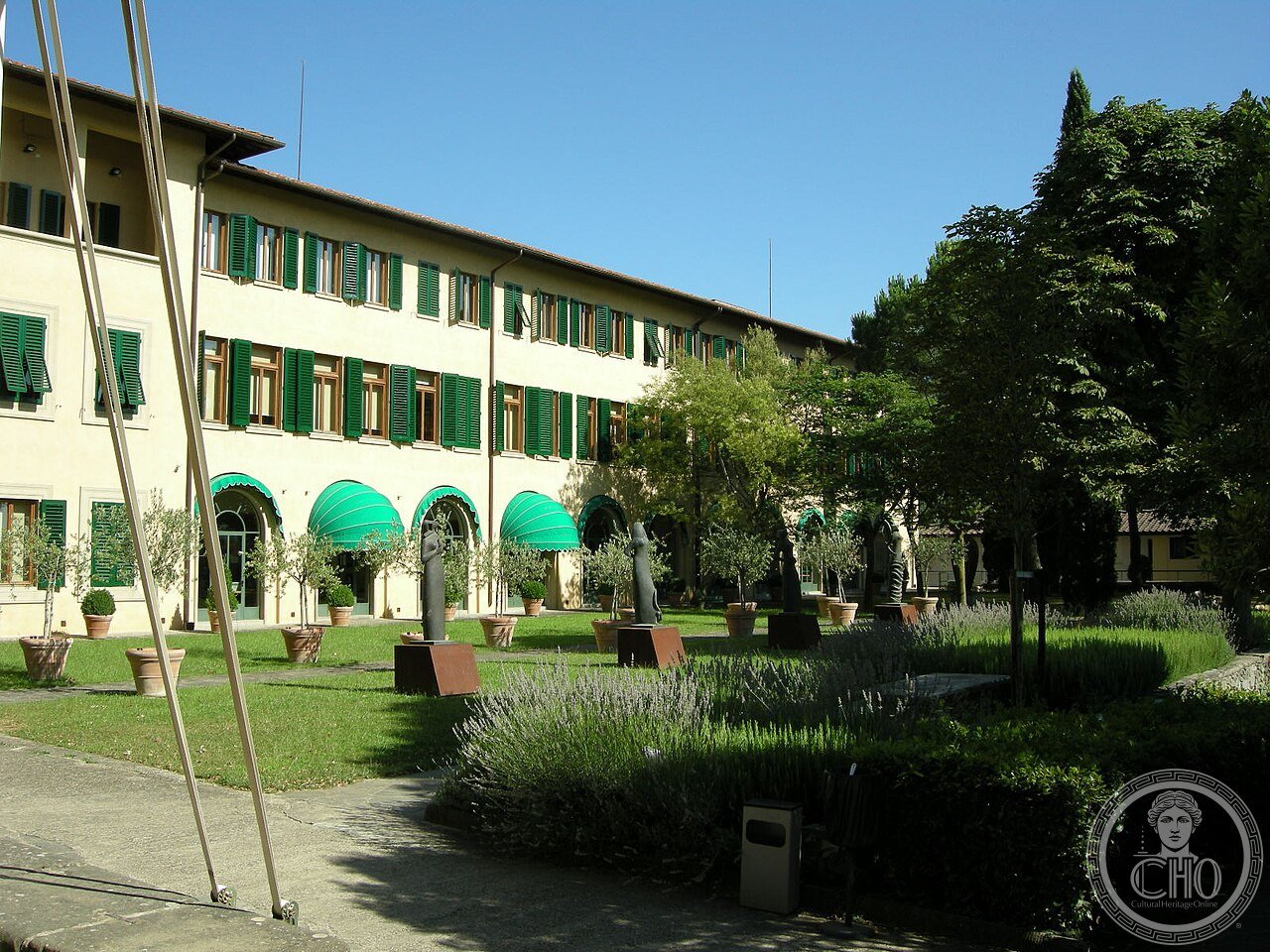
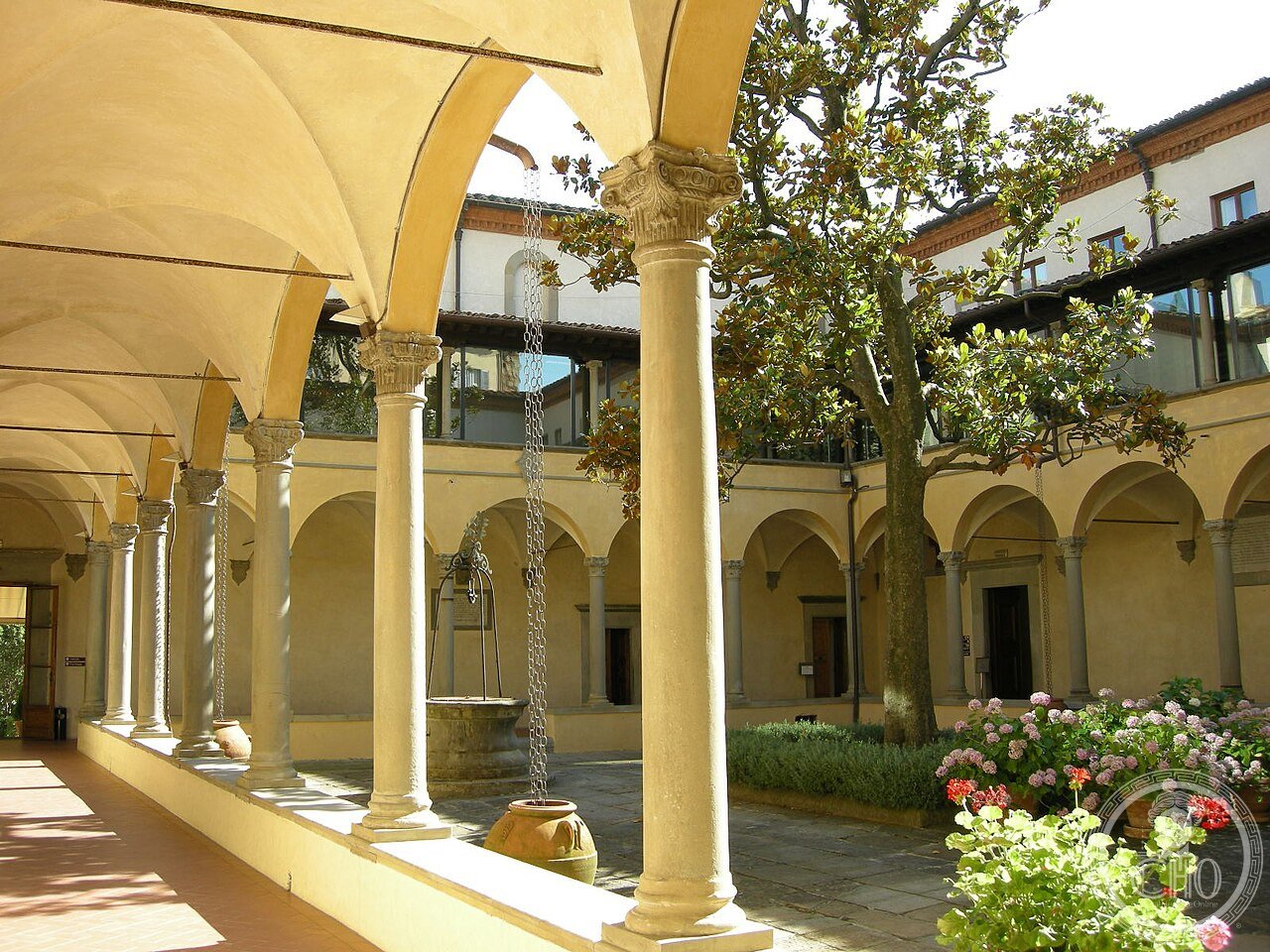
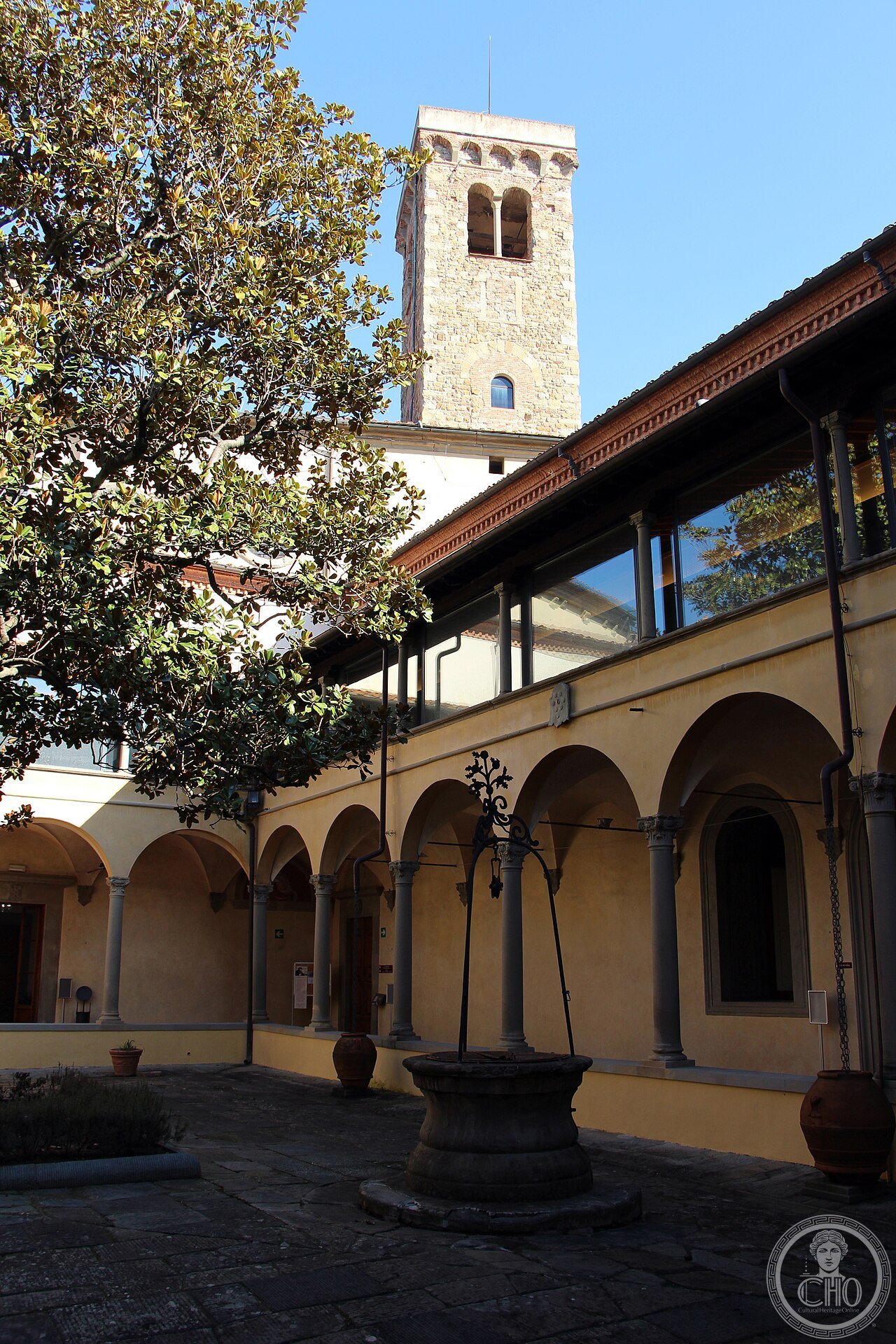
The facade is the main event: on arrival at the church, the Romanesque marble square — its geometric white-and-green pattern a clear reference to the Baptistery — stands at the centre of a simpler late-Renaissance exterior. The unfinished edge at the top, where the marble stops and plain stone begins, is immediately visible. The church interior (visit requires coordination with the EUI, which controls access) is Brunelleschian in spirit: single nave, white plaster, grey pietra serena pilasters, round arches, proportions of measured serenity. The 15th-century pietra serena details are of excellent quality. The former monastic buildings, now the EUI's lecture halls and offices, can be glimpsed from the forecourt.
Practical information
- Access: the Badia is within the EUI campus; access for tourists is to the church facade and forecourt; interior visits require coordination with EUI events or special openings (check eui.eu)
- Opening hours: facade: accessible at any time; church interior: periodic open days and events
- Time needed: 20 minutes (exterior); longer for interior visit on open days
Getting there
By bus from Florence (Piazza San Marco): bus 7 toward Fiesole, alight at San Domenico di Fiesole; the Badia is 5 minutes' walk. By car from Florence (7 km north-east): Via Vecchia Fiesolana. GPS: 43.8027° N, 11.2836° E.
Nearby
- Fiesole — 2 km above; Etruscan and Roman ruins (theatre, baths, temple); Romanesque cathedral; views over Florence
- Villa Medici di Fiesole — 1 km south; Cosimo il Vecchio's first villa (c. 1455), attributed to Michelozzo; gardens open periodically (FAI)
- Florence — 7 km south-west; historic centre; UNESCO World Heritage; Uffizi, Duomo, Santa Croce
Sources
- Wikipedia — “Badia Fiesolana” (en.wikipedia.org/wiki/Badia_Fiesolana)
- Ferretti, E., Badia Fiesolana, Fondazione EUI 2009 (monograph)
- EUI — European University Institute, eui.eu (historical notes on the Badia)
Find it on the map
See this place and what’s around it →
📷 Become a Cultural Heritage Online photographer
Share your photos of places: they stay published under your name as the author. The more they're seen, the more you get noticed — and soon a contest will reward the most appreciated photos.
Log in or sign up free to add a photoIs this page about you?
This page is read by travellers and heritage enthusiasts who find it on Google. Tell us how you are connected to this place and we will take it from there.