
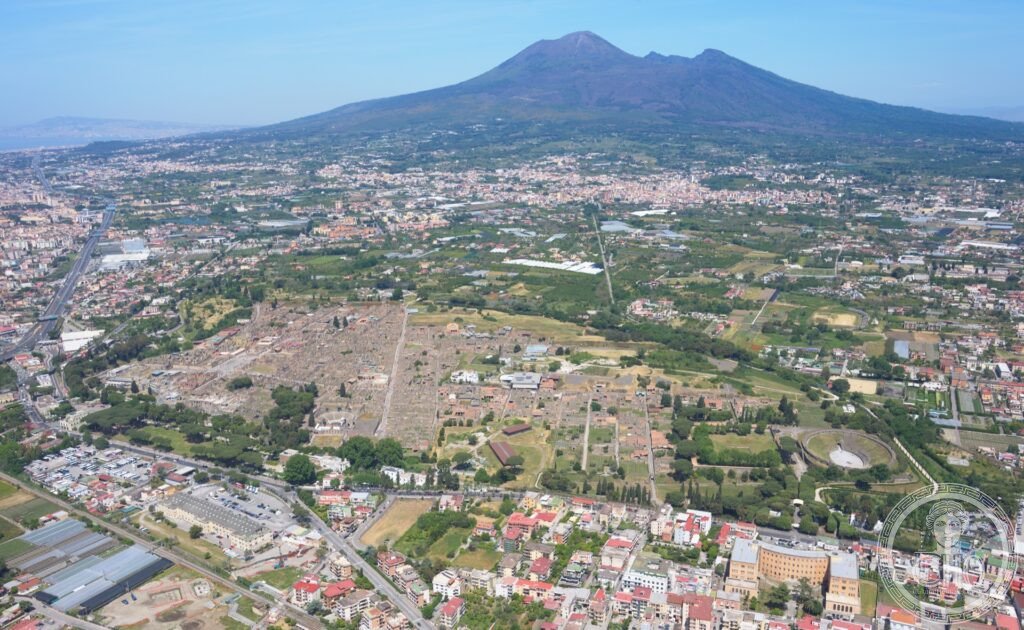
Pompei — la Città Romana Seppellita dal Vesuvio (79 d.C.): i Calchi dei Pompeiani, il Foro, le Ville e i Più Grandi Affreschi del Mondo Romano (UNESCO 1997)
Pompeii — the Roman city of 11,000 inhabitants sealed in 6 metres of volcanic material by the eruption of Vesuvius on 24 August 79 CE and continuously excavated since 1748 — is the most important archaeological site in the Western world: not for its buildings or artworks alone, but because the speed of the eruption preserved a complete cross-section of Roman urban life (the bread in the ovens, the election posters on the walls, the obscene graffiti in the taverns, the body casts of the 1,150 identified victims) that no other site in the world can match.
At a glance
Pompeii (province of Naples, Campania; UNESCO 1997, ref. 829 — jointly inscribed with the Archaeological Areas of Herculaneum and Torre Annunziata under the title “Archaeological Areas of Pompeii, Herculaneum and Torre Annunziata”) was a prosperous Roman commercial city (population estimated at 11,000-20,000) located at the confluence of the Sarno River and the Bay of Naples trade routes; it specialized in garum (fish sauce, the ketchup of the Roman world), textiles, wine, and retail trade. The eruption of Vesuvius on 24 August 79 CE (or 24 October 79 CE according to more recent pomological evidence from the excavations — the traditional dating comes from Pliny the Younger’s letters, but the fruit found in the ash deposits suggests an autumn eruption) buried the city in approximately 4-6 metres of volcanic pumice and ash within 18-20 hours, killing a minimum of 1,150 identified individuals (the current body cast count; the total number of victims remains unknown). The preservation conditions — rapid sealing under anaerobic volcanic deposits — are responsible for the extraordinary survival of organic materials (wooden furniture, food, textiles, human flesh impressions) that are unique to Pompeii globally.
Key facts
- I calchi (body casts): The Pompeii body casts are the most emotionally charged archaeological objects in the world: Giuseppe Fiorelli (director of excavations 1863-1875) discovered in 1863 that the voids left in the solidified ash by decomposed human bodies could be filled with plaster to produce exact three-dimensional casts of the victims in the positions of their death; to date, approximately 1,150 individuals have been cast; the casts (held in the Anfiteatro, the Foro Boario, and the Orto dei Fuggiaschi in the excavation site) show adults, children, slaves, and a pregnant woman in postures of flight, protection, and suffocation; some retain facial features with expressions of terror
- I graffiti (15.000 testi): Pompeii has yielded over 15,000 graffiti — the largest collection of Latin inscriptions in the world from a single site; they include electoral propaganda (campaign slogans painted on walls by supporters of local politicians), announcements for gladiatorial games, love declarations, insults, prices, obscene jokes, and the words “Sodom and Gomorrah” — evidence of early Christian presence; the graffiti are the primary source for understanding non-elite spoken Latin in the 1st century CE
- Il Pompeii Archaeological Park: The site (66 hectares, the largest uncovered archaeological area in Europe) is divided into 9 “regions” (regio I-IX) and visited by approximately 3.5-4 million visitors per year (2019 data); approximately 1/3 of the city remains unexcavated (deliberately, to preserve finds for future technologies); the ongoing excavation programme “Pompeii Grande Progetto” (EU-funded 2012-2021) and the current “Parco Progetto” (ongoing) have discovered multiple new rooms, frescoes, and skeletal remains in the previously unexplored areas of Regio V
- UNESCO: 1997, rif. 829
- GPS: 40.7489, 14.4847 — Google Maps (Anfiteatro di Pompei)
History
Pompeii was originally an Etruscan/Oscan settlement (5th century BCE) at the mouth of the Sarno River; it became an important Samnite city (4th-2nd century BCE) before the Roman Social War (91-87 BCE), when it was conquered and refounded as the Roman colony of Colonia Cornelia Veneria Pompeianorum (89 BCE). At the time of the eruption, Pompeii had been only partially rebuilt after the major earthquake of 62 CE (which caused substantial structural damage throughout the city); some buildings were still under reconstruction in 79 CE. The eruption of 79 CE was the terminal event: following Pliny the Elder’s death attempting the rescue of survivors by boat from Misenum (he died from volcanic gas at Stabiae), Pliny the Younger wrote the first-ever literary description of a volcanic eruption (in two letters to Tacitus, preserved in the Epistulae) that named the type of eruption — Plinian eruption — used in volcanology to this day. The site was occasionally encountered by Renaissance diggers (Cardinal d’Este’s gardeners found inscriptions in the 16th century) but the systematic excavations began under Charles III of Bourbon in 1748, making Pompeii the oldest continuously running archaeological excavation in Europe.
What you see
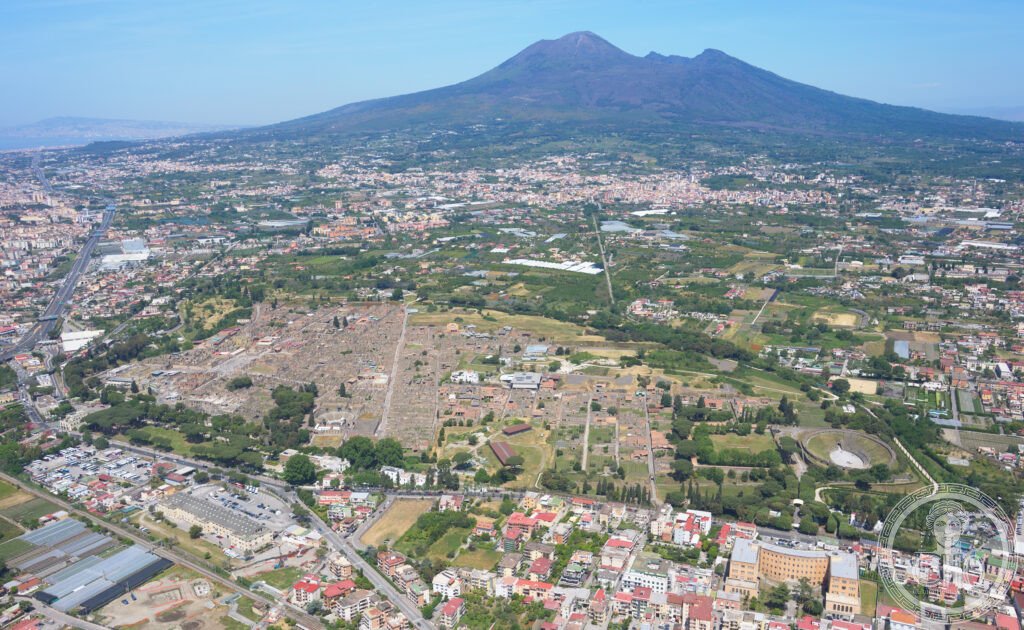
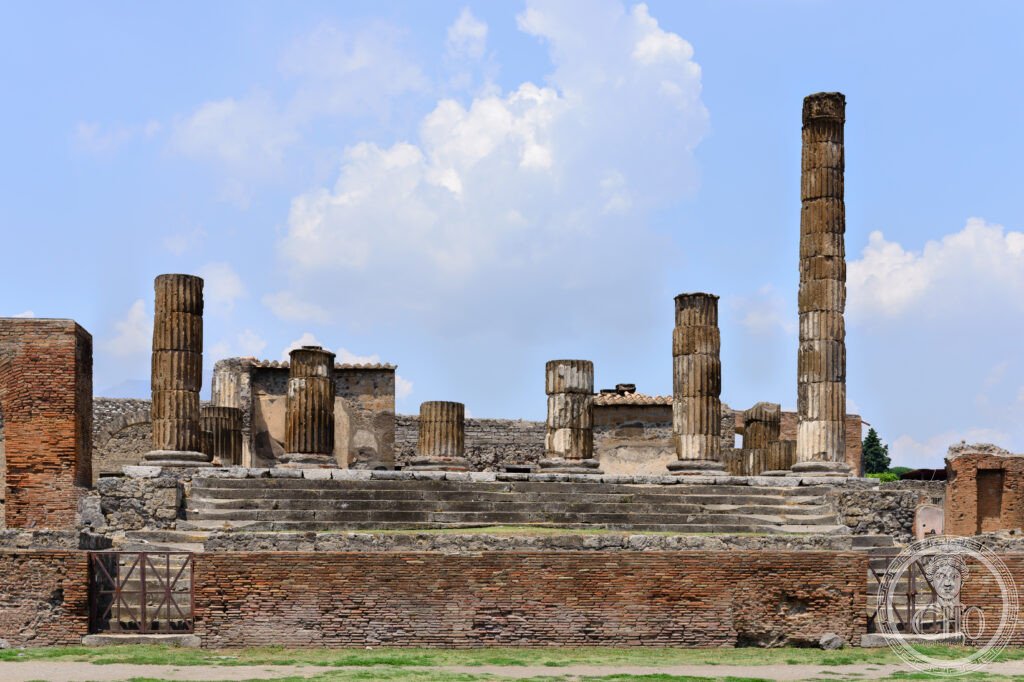
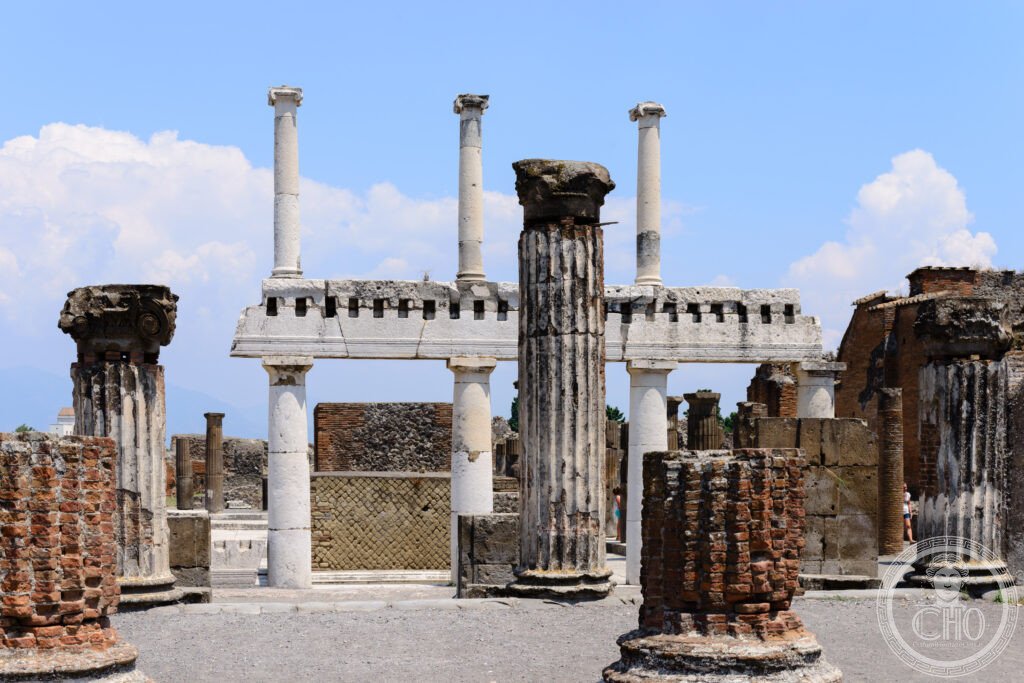
The Pompeii Archaeological Park (allow a full day minimum; serious visitors allow 2 days) is divided by the ancient street grid into 9 regio zones. A compressed 4-hour circuit: Porta Marina entrance → Foro (the civic centre: Temple of Jupiter, Basilica, market halls) → House of the Vettii (Regio VI; the most complete surviving wealthy Roman house, with the full fresco programme including the famous Priapus weighing his phallus against a bag of gold) → House of the Faun (Regio VI; the largest private house in Pompeii, with the famous Alexander Mosaic — the original is in the Naples Museum) → Lupanare (the city brothel, Regio VII; 10 rooms with erotic fresco menus above each door) → Via dell’Abbondanza (the main commercial street, with intact shop fronts, electoral graffiti, and stepping stones) → Orto dei Fuggiaschi (Garden of the Fugitives; the largest group of body casts still in situ — 13 figures in flight) → Anfiteatro (the oldest surviving Roman amphitheater in the world, 70 BCE, capacity 20,000 — larger than the Colosseum proportionally to the city it served). The Museo Archeologico Nazionale di Napoli (30 min by train from Pompeii Scavi station) holds the finest finds: the Alexander Mosaic, the Secret Cabinet (erotic bronzes), and the frescoes from the Villa dei Misteri.
Gallery
Practical information
- Ingresso: Via Villa dei Misteri 2, Pompei; open daily (except January 1 and December 25) 09:00-17:00 (last entry 15:30) November-March, 09:00-19:00 (last entry 17:30) April-October; admission ~€18 (full), ~€9 (reduced 18-25 EU), free under 18 EU. The ticket also includes the Theatre and the Villa dei Misteri (outside the main wall). The combined ticket with the Herculaneum site is available online.
- Prenotazione obbligatoria in alta stagione: Peak season (July-August, Italian national holidays): pre-book online at ticket.pompeiisites.org; the site does NOT admit walk-ins when capacity is reached. The morning opening (09:00) is the least crowded; the 14:00-16:00 window has the highest density.
- Scarpe e acqua: The ancient Roman basalt paving (sampietrini) is uneven and slippery in rain; closed-toe shoes with grip are mandatory. Summer temperature in the unshaded excavation can reach 40°C; carry 2 litres of water minimum. No shade in most of the site; bring sunscreen and a hat.
Getting there
Pompei (NA), Campania. GPS 40.7489, 14.4847 — Anfiteatro / Ingresso principale Via Villa dei Misteri. By train (recommended): Circumvesuviana line from Naples (Stazione Centrale/Porta Nolana) to “Pompei Scavi–Villa dei Misteri” (35-45 min, every 20-30 min; Sorrento line, not the main FS line to the town of Pompei — these are two different stations); the Circumvesuviana station is directly at the main entrance. By car: A3 Napoli–Salerno, exit “Pompei Ovest” or “Torre Annunziata” (~30 km from Naples, 30-45 min in normal traffic; parking lots 500 m from the entrance, ~€5/day). From Sorrento: Circumvesuviana to Pompei Scavi (25 min, same line).
Nearby
- Ercolano (Herculaneum) — 15 km north-west; the second Vesuvian city buried in 79 CE (same UNESCO inscription, ref.829); smaller than Pompeii (4 hectares excavated) but better preserved at building level (the wooden floors, doors, and furniture survived in a different flow type — pyroclastic surge rather than pumice fall); the Villa dei Papiri yielded 1,800 Greek and Latin papyrus scrolls
- Costiera Amalfitana — 40 km south-east; (CHO card: Costiera Amalfitana UNESCO 1997); the 50 km coastal landscape from Positano to Vietri, with dry-stone terraces, lemon groves, and the medieval Republic of Amalfi
- Paestum (Parco Archeologico di Paestum, SA) — 100 km south; the Greek Doric temple complex (Hera I, 550 BCE; Hera II / “Poseidon”, 460 BCE; Athena, 500 BCE) — the best-preserved Greek temples in the world outside Greece, and the only site where all three orders of Doric temple from 550-460 BCE can be compared side by side; part of the UNESCO Cilento inscription (ref.842)
Sources
- UNESCO: whc.unesco.org/en/list/829
- Wikipedia EN: Pompeii
- Parco Archeologico di Pompeii: pompeiisites.org
- Pliny the Younger, Epistulae VI.16 and VI.20 (letters to Tacitus on the eruption of 79 CE)
Find it on the map
See this place and what’s around it →📷 Diventa un fotografo di Cultural Heritage Online
Condividi le tue foto dei luoghi: restano pubblicate con la tua firma come autore. Più vengono viste, più ti fai conoscere — e presto un concorso premierà le foto più apprezzate.
Accedi o registrati gratis per aggiungere una foto