
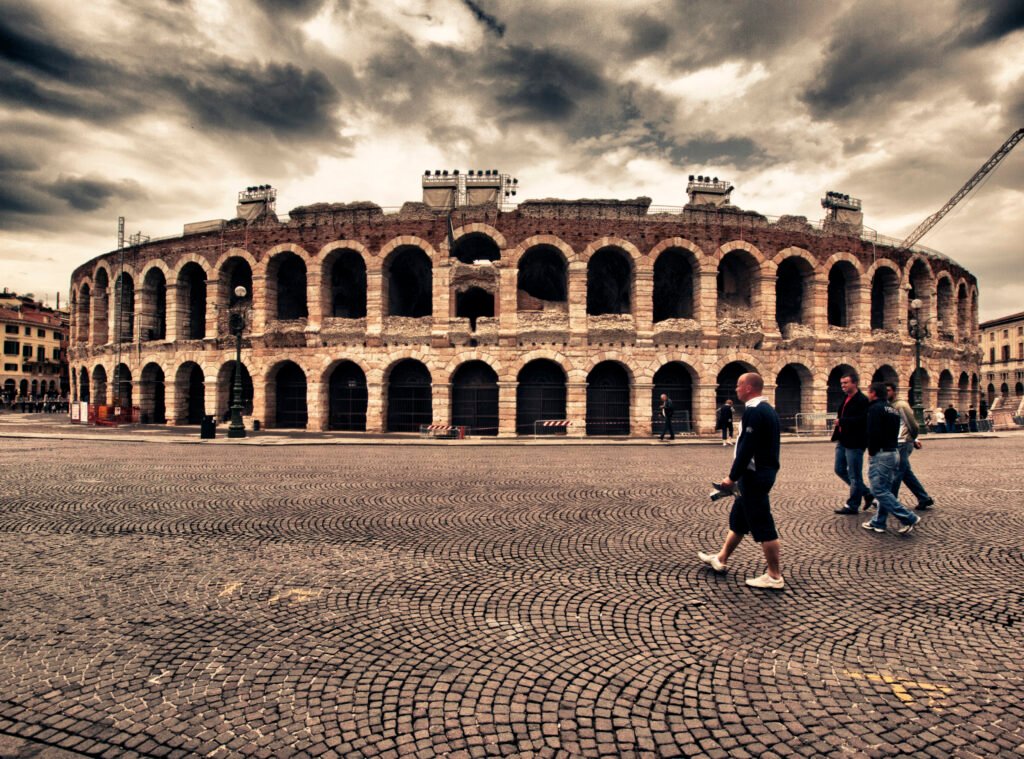
Arena di Verona — Anfiteatro Romano
The third largest Roman amphitheatre in Italy, built in the first century CE to seat approximately 30,000 spectators, which has been in continuous use since the medieval period and which now hosts the Arena di Verona Opera Festival every summer — a 3,000-year-old building functioning as a premier open-air lyric theatre.
At a glance
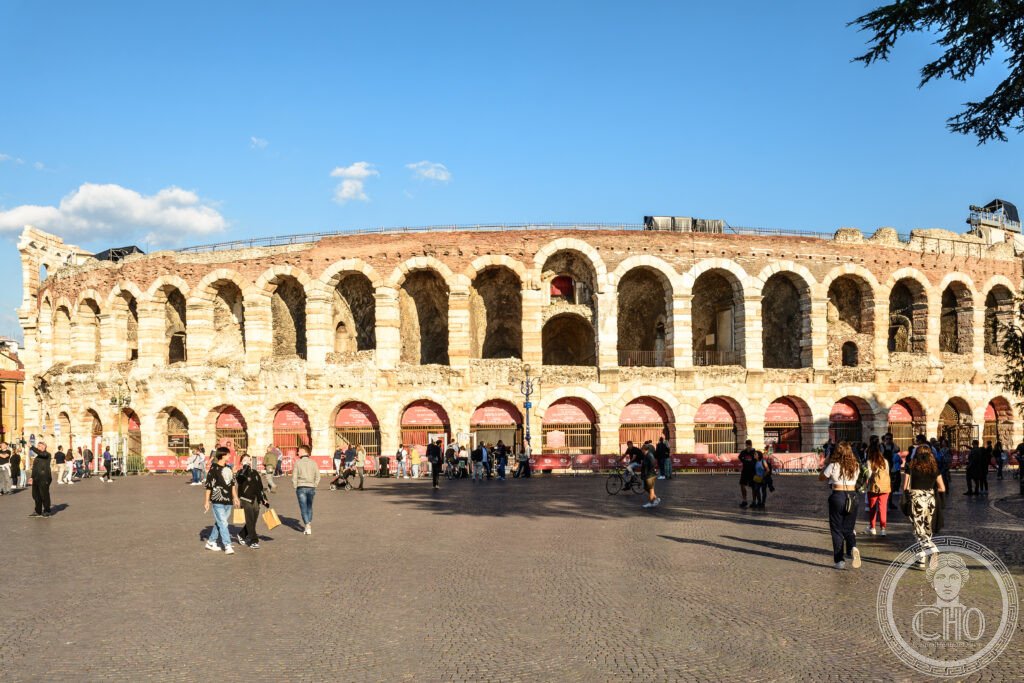
The Arena stands in Piazza Bra, the main square of Verona, a short walk from the city’s Roman theatre, the Scaligeri arche, and the Romanesque church of San Zeno Maggiore. Built in the first century CE (probably between 30 CE and the reign of Domitian, c. 81–96 CE), it is 139 by 110 metres in its external dimensions and could seat approximately 30,000 spectators — ranking it third in the Roman Empire after the Colosseum in Rome and the amphitheatre at Capua. Unlike the Colosseum, which was stripped of its outer ring in the medieval period, the Arena has lost only a small section of its outer wall (the “ala,” two arches of the original ring survive on the north side); the interior cavea, the seating structure, and the arena floor are substantially intact.
The Arena is part of the UNESCO “Verona” inscription (2000, ref. 797) which recognises the city as an exceptional example of urban continuity, preserving buildings from Roman antiquity through the Scaligeri period and Venetian rule.
Key facts
- Construction: I century CE, probably c. 30 CE under Augustus or early Julio-Claudians
- Dimensions: 139 × 110 m (external); cavea 73 × 44 m
- Capacity: c. 30,000 in antiquity; c. 13,000–14,000 in current opera configuration
- First opera performance: 1913 (Aida, to mark the centenary of Verdi’s birth)
- Arena di Verona Festival: Annual opera season, June–September
- UNESCO inscription: 2000, ref. 797 — “Verona”
- GPS: 45.4386, 10.9942 — Google Maps
History
Roman amphitheatres were functional buildings for public spectacle — gladiatorial combat, wild animal hunts (venationes), public executions, and occasional flood shows. Verona’s Arena, built in the flat land just outside the city walls of the Augustan period (the same walls whose gates are still visible on Via Leoncino and Via Diaz), was the largest building in the Roman Po plain. After the decline of gladiatorial culture in late antiquity (formally abolished by Honorius, c. 404 CE), the Arena was used variously as a quarry for stone, as a fortified refuge during the early medieval invasions, and as a site for executions and public events. The structure was maintained sufficiently to survive: the inner cavea never collapsed.
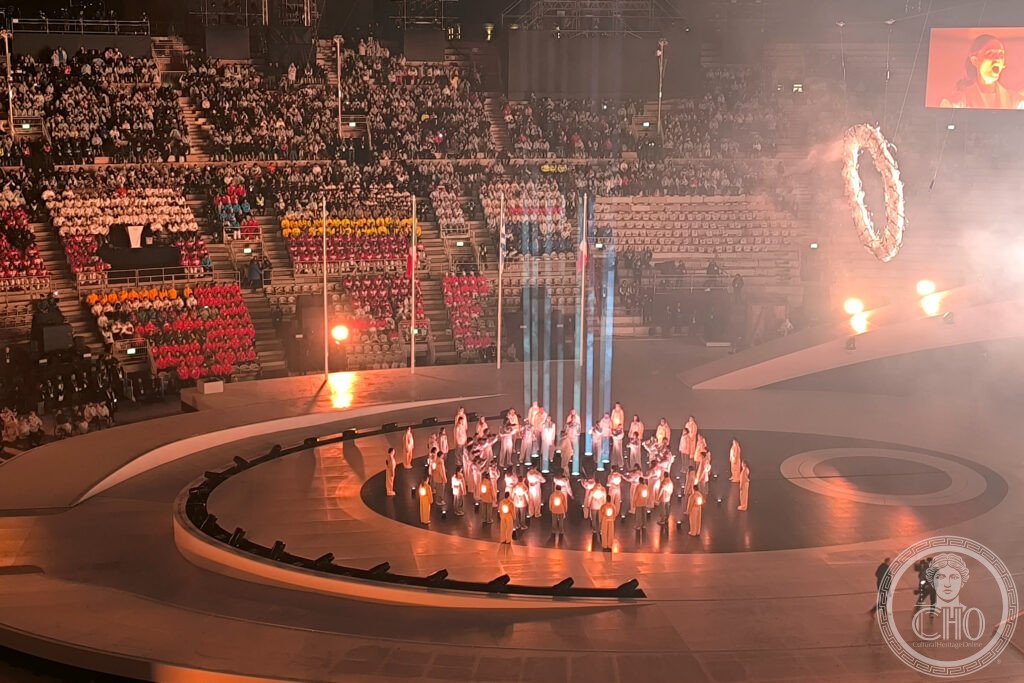
In 1913, the centenary of Giuseppe Verdi’s birth, a group of Veronese citizens organised a performance of Aida in the Arena using the stone steps as seating. The production was a revelation — the space, nearly three times the size of any existing opera house, was acoustically and atmospherically suited to grand opera on an enormous scale. The Arena di Verona Festival became an annual institution and is now the largest-audience opera festival in the world, regularly selling out its 15,000-seat summer programme.
What you see
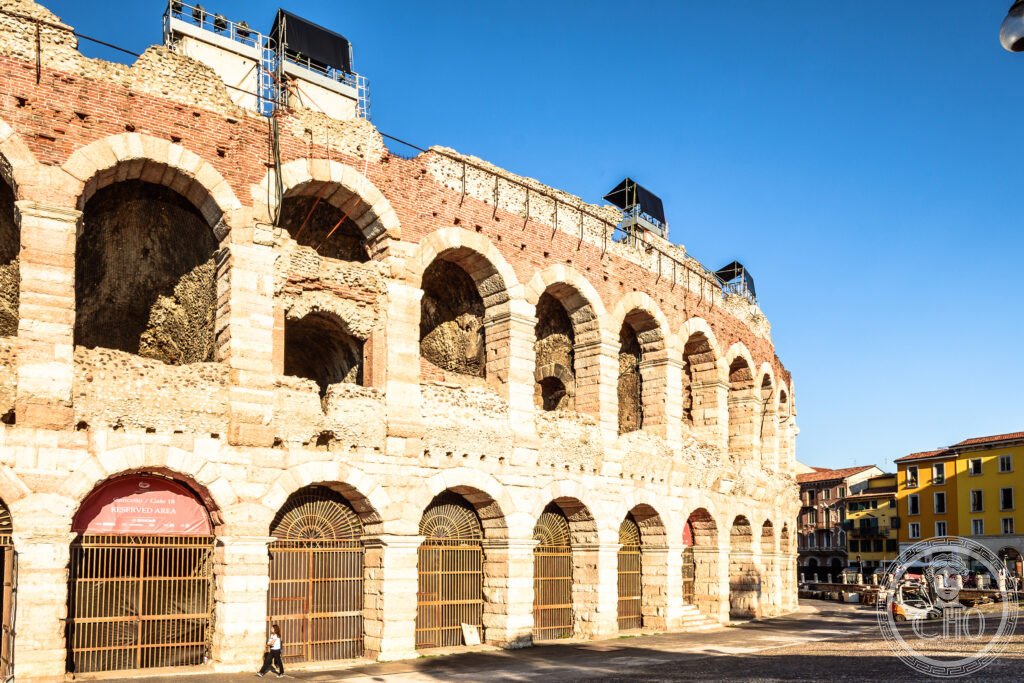
The outer wall of the Arena (the “ala,” two surviving arches on the north side) is all that remains of the Roman exterior elevation — the four-storey arcade in local limestone that once defined the building’s appearance from Piazza Bra. The rest of the exterior perimeter has been reduced to the inner ring, visible from the piazza as a continuous band of Roman stonework. The entrance to the interior is through tunnels (the vomitoria) cut under the cavea; emerging from these into the open oval of the arena floor is the most arresting architectural experience in Verona.
The cavea — the stepped seating area — rises 30 metres in 44 rows of stone seats, all original Roman stonework; the brick repairs of various medieval and modern consolidations are visible at close range but the overall impression is of an unbroken ancient surface. The arena floor is bare stone and sand; in summer, for opera performances, it is covered by the production stage which typically spans the entire space and is visible from every seat. The best photographs of the Arena are taken from the top rows at sunset, looking down into the oval.
Gallery
Practical information
- Visit hours: Daily 9:00–19:00 (last entry 18:30); during opera season (June–September): 9:00–15:30 on performance days.
- Admission: ~€10; reduced for EU 18–25; Verona Card includes admission.
- Opera tickets: Festival season runs June–September; tickets from €35 (stone steps) to €250+ (numbered seats); book at arena.it well in advance — popular productions sell out months ahead.
- At night: All ticket holders carry candles during opera performances; the tradition of 22,000 candle flames at sunset is one of the most photographed events in Italy.
Getting there
The Arena is in Piazza Bra, the main square of central Verona. By train: Verona Porta Nuova station, 10 minutes on foot through Piazza Cittadella and Corso Porta Nuova. By car: Verona is on the A4 (Milan–Venice) and A22 (Brenner) motorways; historic centre restricted; use the parking at Piazza Arsenale or Piazza Cittadella (10 minutes on foot). By air: Verona Villafranca (VRN) airport, 10 km west, with regular bus to the railway station. From Venice: 1h05 by train, frequent connections. From Milan: 1h15 by Frecciarossa, frequent.
Nearby
- Palazzo dei Signori and Arche Scaligere — 5 minutes on foot; the Scaligeri tombs (Cangrande, Mastino II), Gothic funerary monuments in open air
- Basilica di San Zeno Maggiore — 20 minutes on foot; the finest Romanesque church in the Veneto, with Mantegna’s altarpiece (c. 1456)
- Juliet’s House (Casa di Giulietta) — 7 minutes on foot; a medieval courtyard with the famous balcony (note: Shakespeare invented Juliet; the association with this house is an early twentieth-century marketing creation)
Sources
- UNESCO World Heritage Centre: whc.unesco.org/en/list/797
- Wikipedia EN: Arena di Verona
- Puppi, Lionello: L’Arena di Verona, Verona, 1994
- Arena di Verona Opera Festival: arena.it
Find it on the map
See this place and what’s around it →📷 Diventa un fotografo di Cultural Heritage Online
Condividi le tue foto dei luoghi: restano pubblicate con la tua firma come autore. Più vengono viste, più ti fai conoscere — e presto un concorso premierà le foto più apprezzate.
Accedi o registrati gratis per aggiungere una foto