
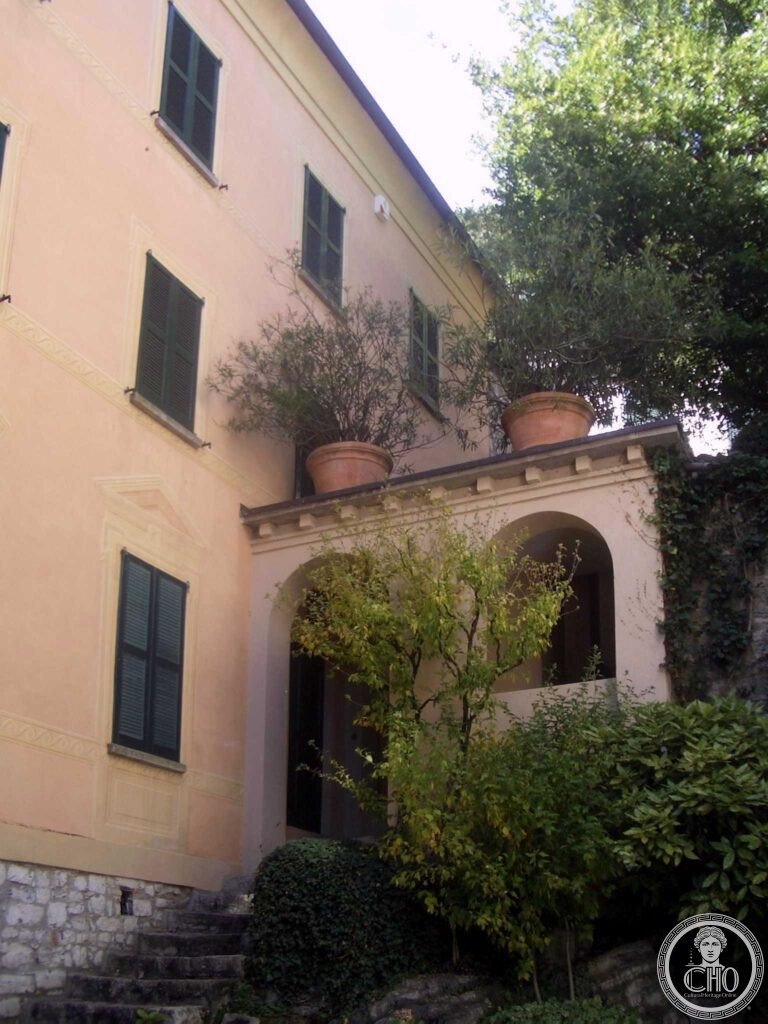
A nineteenth-century villa on Lake Lugano’s Italian shore where Antonio Fogazzaro spent his summers and set his most famous novel, “Piccolo Mondo Antico” (1896) — the villa and its terraced garden preserved by FAI as a literary and domestic monument to the Risorgimento era.
At a glance
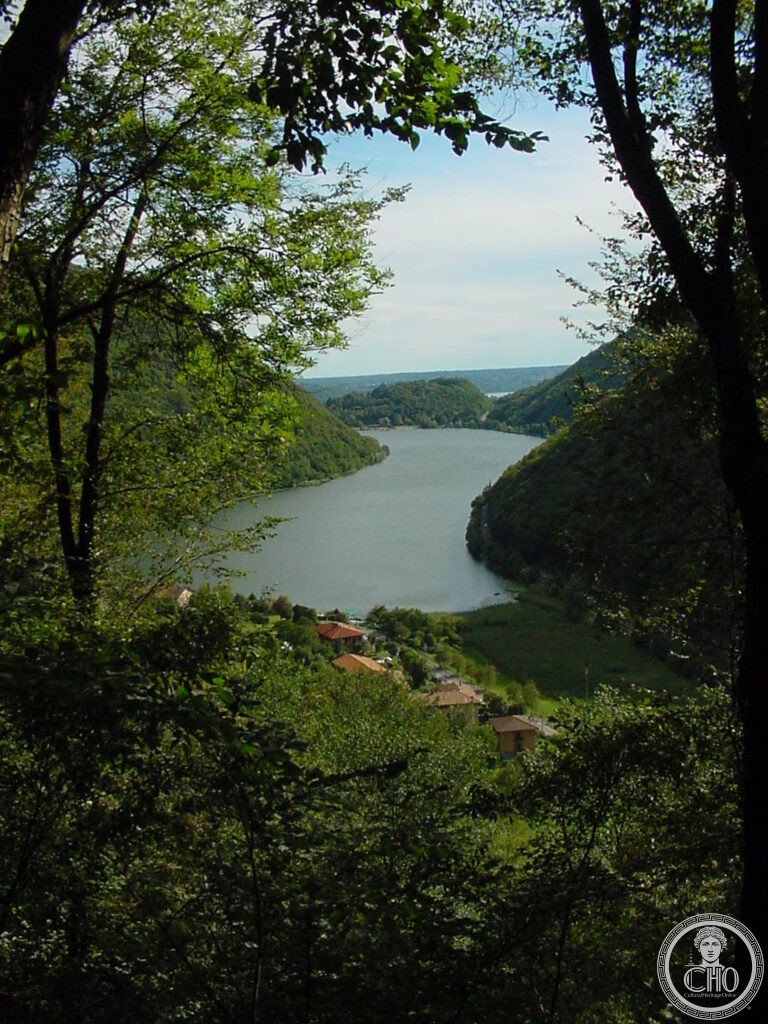
Villa Fogazzaro Roi perches above the Lago di Lugano at Oria, in the comune of Valsolda (Como province), on the Italian side of the lake which here forms the border between Italy and Switzerland. The village of Oria, accessible by boat or by a steep road from the valley floor, has survived almost unchanged since the nineteenth century: a cluster of stone houses on a rock platform above the water, with stone terraces, wooden balconies, and a view across the lake to the Swiss shore. Antonio Fogazzaro (1842–1911), the Vicentine novelist who became one of the most widely read Italian writers of the late nineteenth century, used the villa as his summer residence and placed his masterwork, Piccolo Mondo Antico (1896), in this precise setting.
FAI acquired the villa in 2001 and opened it to the public after restoration. The interior has been left largely as it was in Fogazzaro’s time, with family furniture, a library, and personal objects; the terraced garden descends to the lakefront.
Key facts
- Built: c. 1850, originally for the Roi family; passed to the Fogazzaro by marriage
- Owner: Antonio Fogazzaro (1842–1911), novelist; summered here from 1861
- Key work: Piccolo Mondo Antico (1896) — the novel that made Oria and the Valsolda internationally known; filmed 1941 (dir. Mario Soldati)
- FAI acquisition: 2001; open from 2004
- Location: Oria di Valsolda (CO), Lago di Lugano, Lombardia
- GPS: 45.9960, 9.0297 — Google Maps
History
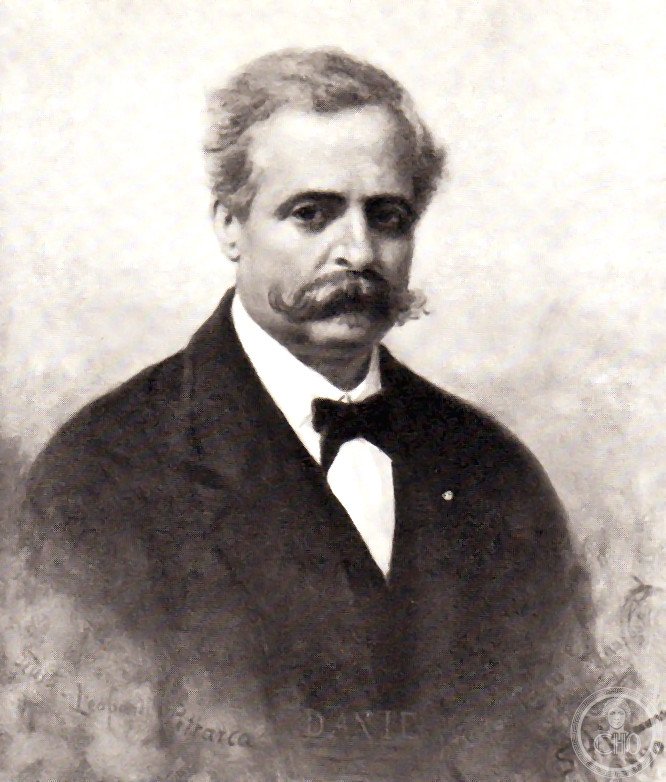
Antonio Fogazzaro came from a wealthy Vicentine family with patriotic sympathies; his father was a friend of Cavour and participated in the Risorgimento. The Valsolda property entered the Fogazzaro family through his maternal grandfather, and Antonio began spending summers there in 1861, when he was nineteen. The lake and village became his private world — a retreat from professional life in Vicenza, a place for writing, for rowing, and for the conversations with family and friends that fed the novels.
Piccolo Mondo Antico, published in 1896, is a historical novel set in the Valsolda during the Risorgimento (1850s–1860s), tracing the lives of Franco Maironi, a patriot, and his wife Luisa, a rationalist who gradually moves toward faith after the death of their daughter in the lake. The novel is at once a historical panorama of the period, a psychological study of religious doubt and conversion, and a precise topographical account of Oria, Valsolda, and the Lago di Lugano. Its success was immediate — twenty editions in Fogazzaro’s lifetime — and it was adapted for the cinema in 1941 by Mario Soldati, with a cast including Alida Valli and Massimo Serato, shot in part on location in Oria.
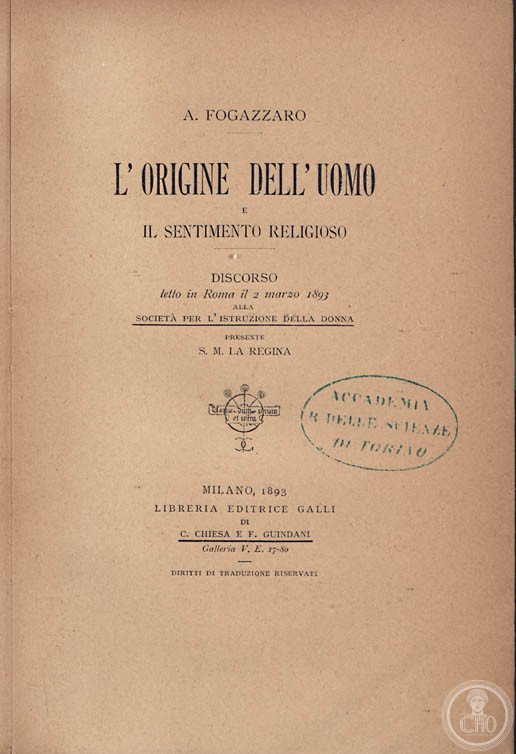
Fogazzaro’s later novels (Piccolo Mondo Moderno, 1901; Il Santo, 1905) engaged with the Catholic Modernist crisis and were placed on the Index of Prohibited Books, complicating his final years. He died in 1911, the year of Italy’s fiftieth anniversary, having spent fifty summers at Oria.
What you see
The villa is a two-storey house in local stone, neither large nor architecturally distinctive — its significance is entirely in the domestic and literary atmosphere that FAI has preserved. The ground-floor rooms have Fogazzaro’s library (with annotated volumes), family portraits, the desk at which he wrote, and the objects one would expect in an affluent Italian household of the 1880s: majolica, biedermeier furniture, photographs of literary friends. The staircase hall has the framed publication notices of the novels.
The garden descends in terraces to the lake in a pattern typical of Lario and Luganese villas: a pergola along the upper terrace, lemon trees in terracotta pots, a kitchen garden, a stone stairway to the boat landing. The view from the garden terrace is across the Lago di Lugano to the Swiss shore, with Monte San Salvatore visible to the north — the same view that appears repeatedly in the descriptive passages of Piccolo Mondo Antico. Below the villa, the village of Oria is still recognisable as Fogazzaro described it.
Gallery
Practical information
- Opening: Saturday and Sunday, 10:00–13:00 and 14:00–18:00 (March–October); also open Friday in summer. Check fondoambiente.it for current schedule.
- Admission: Standard FAI rates; free for FAI members. Access to the garden is included.
- Duration: 1 hour.
- Access by boat: The most atmospheric approach — navigazione sul Lago di Lugano services from Lugano (Switzerland), Porlezza, and Osteno operate in summer. Oria is a scheduled stop.
- Reading first: Reading or re-reading Piccolo Mondo Antico before visiting transforms the experience.
Getting there
Oria is in the comune of Valsolda, on the Italian shore of Lago di Lugano, 10 km east of Porlezza (CO) on the SP340. By car: from Como 45 minutes via SP340 along the lake; from Milan 70 minutes. By boat: navigazione lago di Lugano services from Porlezza (Italian terminus) to Lugano (Swiss terminus) stop at Oria in summer. By train: no direct service; nearest station Lugano CH (then boat) or Como San Giovanni (then car/bus). The winding lakeside road is narrow; in high summer consider the boat approach from Porlezza. From Milan Malpensa airport: 75 km, 65 minutes by car.
Nearby
- Osteno — 3 km east; the Orrido di Osteno canyon (gorge carved by the Telo river through limestone cliffs)
- Porlezza — 10 km east; the main town on the Italian shore of Lago di Lugano, with ferry connections
- Lugano — 18 km north-west (Switzerland); the most important Swiss city on the lake, with excellent contemporary art museum (LAC)
Sources
- FAI – Fondo Ambiente Italiano: fondoambiente.it
- Wikipedia IT: Piccolo Mondo Antico
- Fogazzaro, Antonio: Piccolo Mondo Antico, Milano, Baldini & Castoldi, 1896
Find it on the map
See this place and what’s around it →📷 Become a Cultural Heritage Online photographer
Share your photos of places: they stay published under your name as the author. The more they're seen, the more you get noticed — and soon a contest will reward the most appreciated photos.
Log in or sign up free to add a photoIs this page about you?
This page is read by travellers and heritage enthusiasts who find it on Google. Tell us how you are connected to this place and we will take it from there.