
Centro Storico di Roma — Colosseo, Foro Romano, Pantheon
The largest concentration of ancient monuments on earth: Colosseum, Roman Forum, Palatine Hill, Pantheon, Baths of Caracalla, Castel Sant'Angelo, and Trajan's Column — all inscribed together with Vatican Properties and San Paolo fuori le Mura as UNESCO World Heritage in 1980.
At a glance
Rome's historic centre covers roughly 1,285 hectares bounded by the 3rd-century Aurelian Walls. The UNESCO inscription of 1980 under criteria i, ii, iii, iv, v, vi recognised it as the site that, more than any other, shaped the political and architectural imagination of Western civilisation. The Colosseum (Amphitheatrum Flavium, 72–80 CE) held between 50,000 and 80,000 spectators; the Pantheon (125 CE, rebuilt by Hadrian) has the largest unreinforced concrete dome ever built and is still in continuous use — it is now a Catholic church. The Roman Forum was the political, commercial, and religious centre of the Roman Republic and Empire for over a millennium. Trajan's Column (113 CE) spirals 190 sculpted figures in 124 scenes telling the story of Rome's conquest of Dacia: the world's first narrative frieze in stone.
Key facts
- Colosseo: 72–80 CE, Vespasian and Titus; 188 m long × 156 m wide; 50,000–80,000 capacity
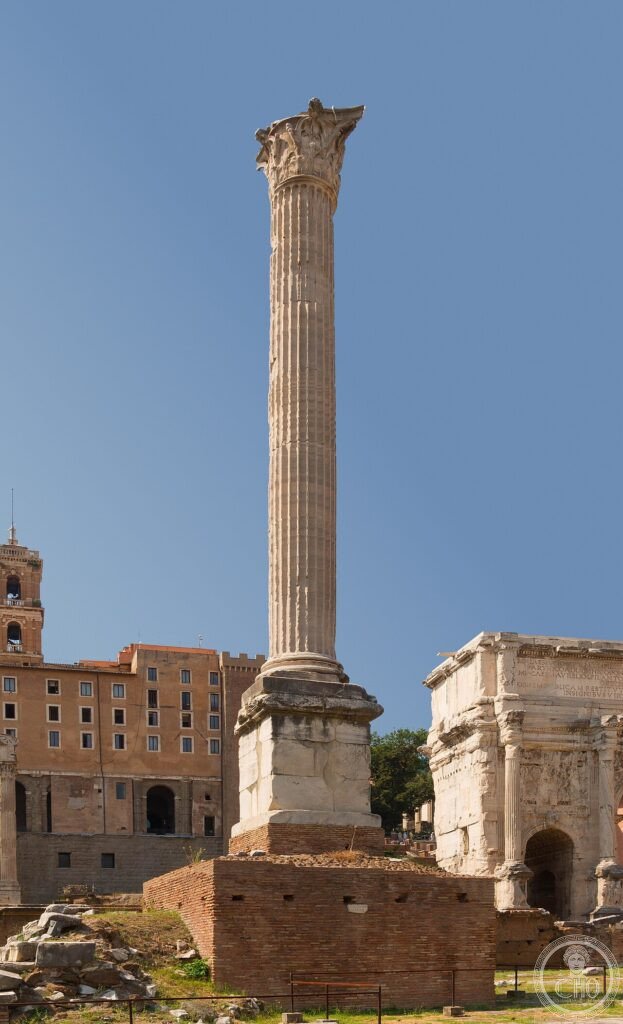
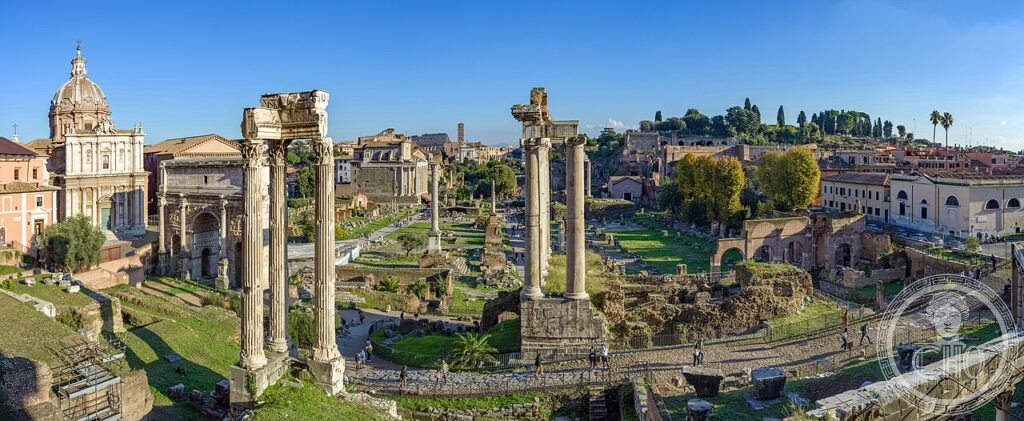
- Foro Romano + Palatino: in continuous use 8th century BCE–6th century CE; centre of Roman Republican and Imperial power
- Pantheon: 125 CE, rebuilt by Hadrian; 43.3 m diameter dome; oculus 8.2 m; concrete and brick construction
- Terme di Caracalla: 212–217 CE, Caracalla; 28 hectares; accommodated 1,600 bathers simultaneously
- Castel Sant'Angelo / Mausoleo di Adriano: 135–139 CE; converted to papal fortress 1277; connected to Vatican by Passetto
- Colonna Traiana: 113 CE; 35 m tall; 190 figures, 2,662 individuals carved in relief
- UNESCO inscription: 1980, criteria i, ii, iii, iv, v, vi (with Vatican Properties and San Paolo)
- Coordinates: 41.8902° N, 12.4922° E — Google Maps
History
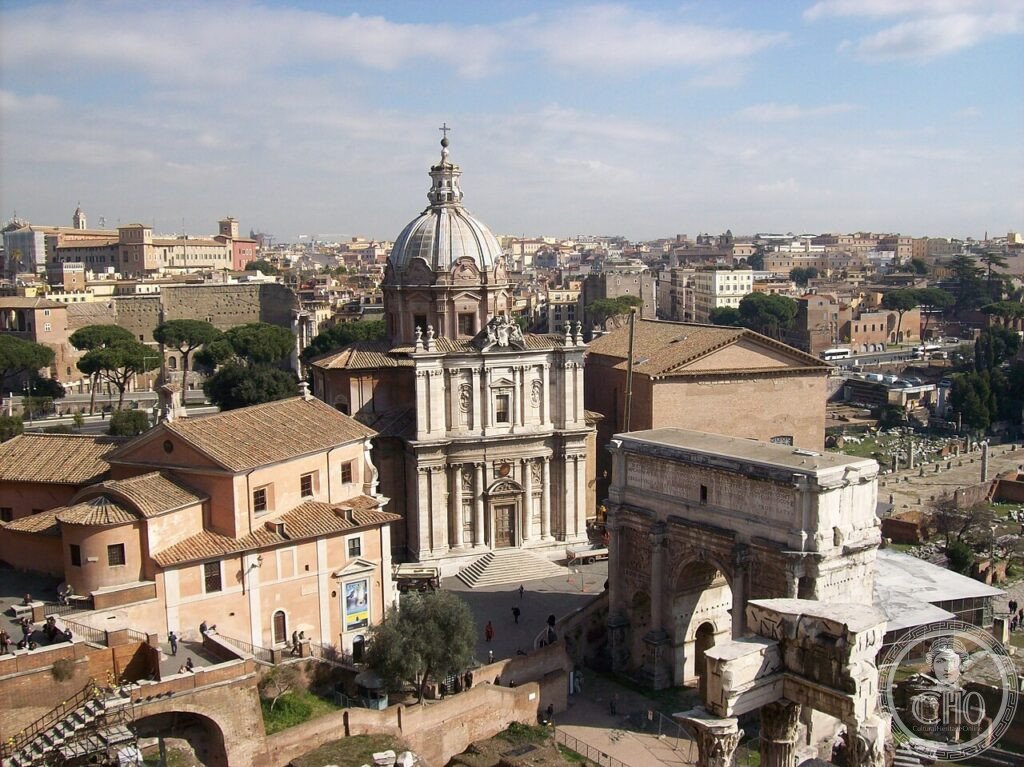
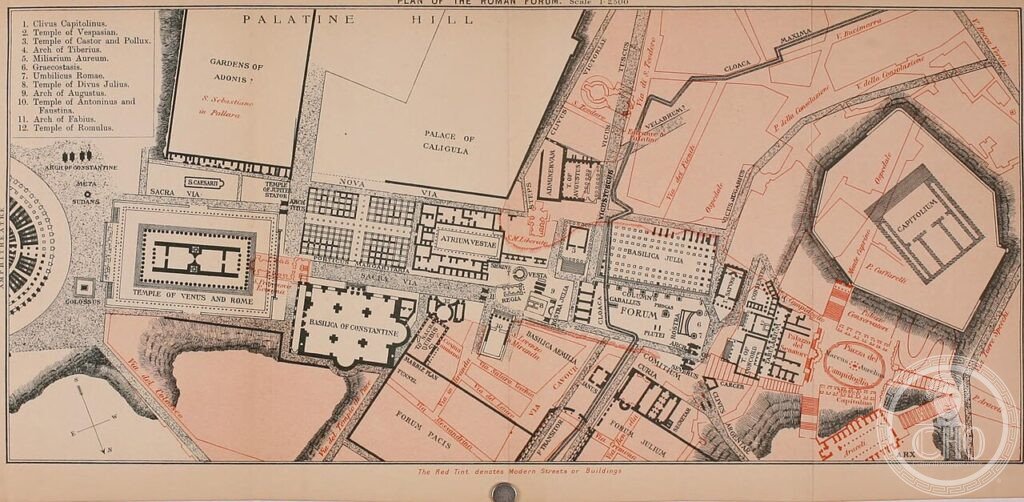
The site of the Roman Forum was originally a marsh between the Palatine, Capitoline, and Esquiline hills. Drainage by the Cloaca Maxima (7th century BCE, tradition assigns it to King Tarquinius Priscus) made the valley habitable; by the 5th century BCE, the Forum was the commercial and civic centre of the growing city. The Temple of Vesta and the adjacent House of the Vestal Virgins, the Basilica Aemilia (179 BCE), the Temple of Saturn (built 498 BCE, rebuilt 42 BCE, current ruins 4th century CE) — layers of construction over nine centuries have left the Forum as a palimpsest in which Republican and Imperial structures overlap and contradict each other at every step.
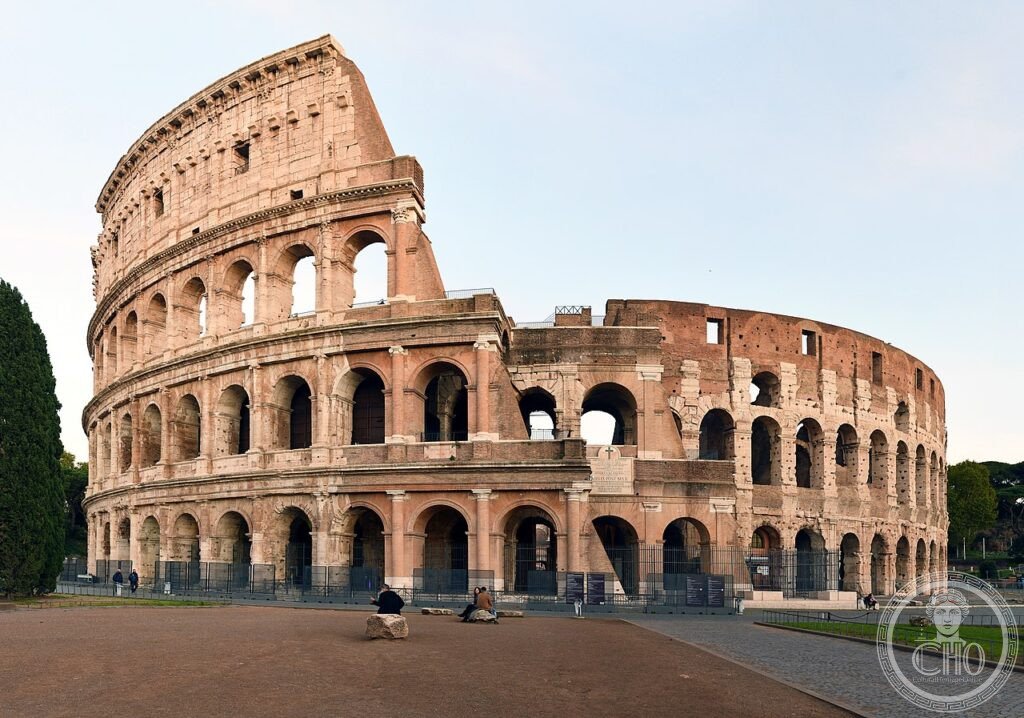
The Colosseum was built on the site of the artificial lake of Nero's Domus Aurea; Vespasian began it in 72 CE as a deliberate return of public land to the Roman people after Nero's expropriation. The building uses four different orders on successive storeys (Tuscan, Ionic, Corinthian, and Composite), a system that became the canonical facade grammar for public buildings across Europe from the Renaissance onward. The Colosseum hosted gladiatorial games, animal hunts (venationes), and public executions until 523 CE; thereafter it served as a quarry whose marble and travertine fed medieval Roman construction for centuries. The surviving structure is approximately two-thirds of the original building.
The Pantheon is the best-preserved ancient building in Rome because it has been in continuous use: Gregory III consecrated it as Santa Maria ad Martyres in 609 CE. Hadrian's reconstruction of the earlier Agrippan building (27 BCE) kept the original dedicatory inscription on the portico (“M. Agrippa L. F. cos. tertium fecit”) despite replacing the entire building: an act of architectural modesty remarkable for an emperor. The 43.3 m concrete dome was cast in a single continuous pour using pumice aggregate that grew progressively lighter toward the oculus, reducing the dome's weight at its thinnest point.
What you see
The Colosseum's exterior presents 80 identical arched bays on each of the three lower storeys, framed by engaged columns in successively more elaborate orders. The effect at ground level is of infinite repetition — a surface so modular it seems to continue beyond what the eye can hold. Inside, the velarium (awning) poles mounted in stone brackets at the attic level hint at the building's original appearance as a shaded amphitheatre; the excavated hypogeum (underground service corridors and animal pens) visible through the missing arena floor explains how gladiators and animals were lifted to the arena level by elevators operated with counterweights.
The Pantheon's interior presents the most controlled single space in ancient architecture: a perfect hemisphere set on a cylinder of the same diameter, so that a sphere of 43.3 m could be inscribed exactly in the room. The only source of natural light is the 8.2 m oculus at the apex of the dome; rainwater that enters through it drains through the slightly convex marble floor. The coffered dome, originally gilded bronze, loses its coffers in five rings toward the oculus, each ring reduced in depth so that the dome appears to recede rather than press downward.
Practical information
- Colosseum + Forum + Palatine: Single ticket (combined), book at coopculture.it; timed entry, queue can be 2 hours without booking
- Pantheon: Entry fee since 2023; book at pantheonroma.com; free for under-18 and religious services
- Castel Sant'Angelo: Open daily except Monday; night openings in summer from the ramparts
- Terme di Caracalla: Open Tuesday–Sunday; summer opera performances (Teatro dell'Opera di Roma)
- Time needed: Colosseum + Forum alone = half day; full historic centre = multiple days
Getting there
Metro line B (Colosseo stop) delivers you directly to the Colosseum entrance. Tram 3 connects the Colosseum to Trastevere, Piramide, and Villa Borghese. The Pantheon is in the historic centre (rione Pigna), 20 minutes' walk from the Colosseum or reachable by bus 40/64/H from Termini. Castel Sant'Angelo is a 25-minute walk from the Pantheon along Via della Conciliazione. Rome Fiumicino (FCO) airport is 30 km west; Leonardo Express train to Termini takes 32 minutes.
Nearby
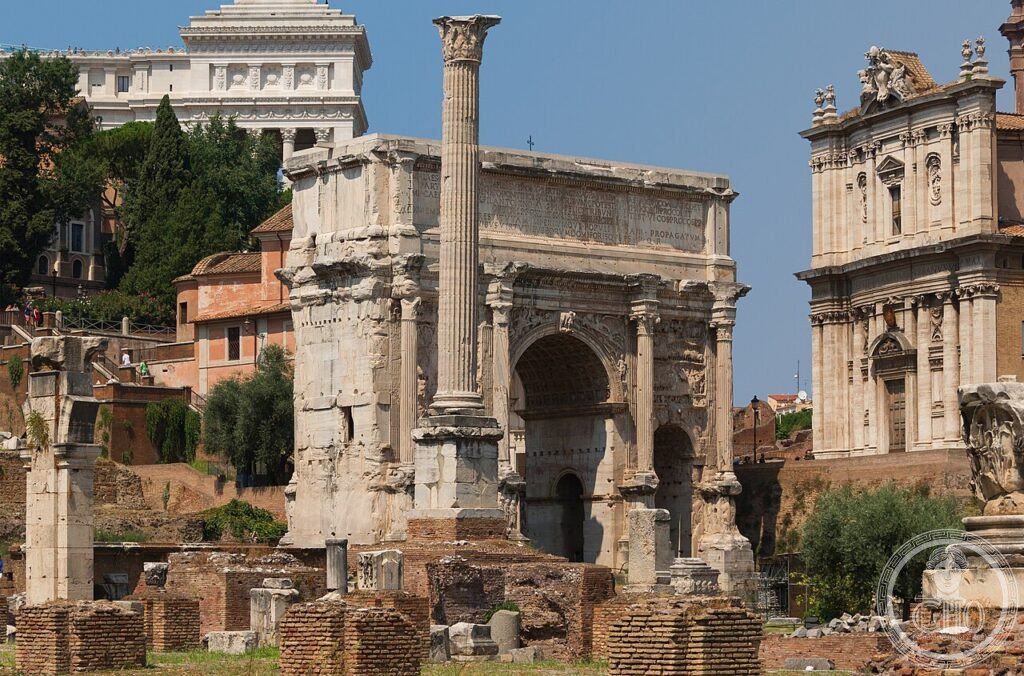
- Arco di Tito: 100 m from the Forum — oldest surviving Roman triumphal arch (82 CE), depicts the sack of Jerusalem
- Fori Imperiali: Via dei Fori Imperiali — successive Imperial forums by Caesar, Augustus, Nerva, Trajan
- Circo Massimo: 800 m south — 600 m hippodrome that held 250,000 spectators; green park today
- Trastevere: 1 km west — medieval quarter with Santa Maria in Trastevere (earliest Marian basilica, 4th century CE)
Gallery
Sources
- UNESCO World Heritage List — Historic Centre of Rome, rif. 91, inscribed 1980
- Colosseum official site — colosseo.it
- Pantheon Roma — pantheonroma.com
- Amanda Claridge, Rome: An Oxford Archaeological Guide, Oxford University Press, 2010
- Wikimedia Commons — CC BY-SA images of Rome historic monuments
Find it on the map
See this place and what’s around it →📷 Diventa un fotografo di Cultural Heritage Online
Condividi le tue foto dei luoghi: restano pubblicate con la tua firma come autore. Più vengono viste, più ti fai conoscere — e presto un concorso premierà le foto più apprezzate.
Accedi o registrati gratis per aggiungere una foto