
Pompei

Pompei foro Vesuvio 79 CE eruzione villa dei misteri anfiteatro Campania UNESCO 1997
Pompei, il Foro con il Vesuvio sullo sfondo, Pompei, Napoli, Campania, Italia. Il Foro di Pompei (il centro civico della città romana: 38 m × 142 m; costruito nel II sec. BCE; ricostruito dopo il terremoto del 62 CE; incompiuto al momento dell’eruzione del 79 CE (le colonne del colonnato settentrionale erano ancora in restauro: visibili le capriate in legno cemento tra colonna e colonna non ancora rimosse)): in secondo piano il Vesuvio (1.281 m; la storia eruttiva del Vesuvio: la “pomiciana” (stratigrafia dell’eruzione del 79 CE: (1) la colonna pliniana (la colonna eruttiva di 30 km di altezza riporta 3.000 t/sec di pomici e cenere nell’atmosfera; la colonna è visibile da 300 km di distanza); (2) la ricaduta piroclastica (i 5 m di pomici accumulati su Pompei nelle prime 18 ore dell’eruzione (79 CE 24 agosto 10:58 UTC secondo la dendrocronologia rivista 2018 CE; la revisione: il documento di Plinio il Giovane del 79 CE era interpretato come “calende di settembre” (Epistulae VI.16) ma le recenti analisi botaniche dei resti di ercolano (datteri che maturano ad agosto-settembre; l’acino d’uva con ancora lo stelo (la vendemmia in Campania inizia il 15 settembre); il carbone di grano di provenienza campana (trebbiatura: luglio-agosto)) confermano il 24 ottobre 79 CE, non agosto); (3) i surges piroclastici (6 ondate di nube ardente che spazzarono la Baia di Napoli tra le 1:00 e le 8:00 del 25 ottobre 79 CE; la velocità stimata delle ondate: 100–300 km/h; la temperatura al suolo durante il surge: 250–400°C; il cause of death di Pompei: il calore del surge (la cottura istantanea dei tessuti molli a 250°C) e non l’asfissia da cenere)). UNESCO World Heritage Site 1997 (riferimento 829: Archaeological Areas of Pompei, Herculaneum and Torre Annunziata). Foto via Wikimedia Commons.
Pompei, Napoli, Campania, Italia · eruzione Vesuvio 79 CE (30 km colonna pliniana; 5 m pomici su Pompei; surge piroclastico 250°C); Villa dei Misteri (I sec. BCE; 29 figure affresco rito dionisiaco); anfiteatro 70 BCE (il più antico anfiteatro romano); Foro; Via dell’Abbondanza; UNESCO WHS 1997 (rif. 829)

Pompei

Pompei (UNESCO 1997, rif. 829) è la conservazione più completa di una città romana dell’antichità — sepolta dal Vesuvio il 24 ottobre 79 CE sotto 5 metri di pomici e conservata intatta per 1.700 anni, restituendo il più dettagliato spaccato della vita quotidiana romana: dagli affreschi della Villa dei Misteri ai calchi dei corpi, dai panifici ai termopoli, dal bordello dipinto all’anfiteatro del 70 BCE.

At a glance

Pompei Campania (the most precisely Pompei zone Pompei Napoli Campania Italy 40.7502 N 14.4872 E UNESCO WHS 1997 reference 829 Archaeological Areas of Pompei, Herculaneum and Torre Annunziata: the site (Pompeii: the Roman city buried by the eruption of Vesuvius on October 24, 79 CE; the city at the moment of burial (79 CE): population approximately 11,000 (the estimate based on the bed capacity of the houses excavated: each insulae block had 15–30 rooms; 66 insulae blocks = 990–1,980 rooms; at 5–7 persons/room = 4,950–13,860 persons; the consensus: 11,000 inhabitants); the total area of the city: 66 hectares (the complete circuit of walls: 3.2 km; 7 gates; the street grid: a modified Hippodamian grid (the Hippodamian grid: the orthogonal street system designed by Hippodamos of Miletus c.450 BCE; at Pompeii the grid is modified by the irregular pre-Roman (Oscan) street alignment of the oldest quarter (the “Regio VI-VII”))); the UNESCO site (the inscribed area includes: (1) Pompeii (the main excavations: 66 hectares total; 44 hectares excavated; 22 hectares still unexcavated (the preservation decision: the Italian government decided in 1973 CE to leave the remaining 22 hectares unexcavated to preserve them for future technology improvements in conservation)); (2) Herculaneum (21 hectares total; 4.5 hectares excavated; 80% still under the modern town of Ercolano); (3) Torre Annunziata (Villa of Poppaea Sabina: 17,000 m² of floor mosaics and paintings; the largest Roman villa excavated in Italy).

Key facts

  • La Villa dei Misteri e il fregio dionisiaco: perché le 29 figure ad affresco del I sec. BCE sono l’insieme più enigmatico dell’arte romana e cosa rappresentano secondo l’interpretazione più recente: the Villa dei Misteri (the Villa of the Mysteries: located 400 m outside Porta Ercolano (the northwest gate of Pompeii); a suburban villa (dating: the original structure: 2nd century BCE; the major expansion: 1st century BCE; the final layout at time of burial: a complex of 90 rooms on 2 levels; the wine production wing (the torcularium): 3 presses identified; the vineyard: 3,600 m² of garden/vineyard around the villa); the Megalographia frieze (the “Dionysiac frieze” in the “Room of the Mysteries” (Cubiculum 5): the painting dimensions: 17 m wide × 3 m tall (the largest continuous Roman frieze painting known); the 29 figures: the interpretation sequence most widely accepted (Brendel, 1953 CE; Pappalardo, 1991 CE; Seaford, 1981 CE): (1-7) the initiation preparation (a woman reading a ritual text (figure 1); a boy reading (figure 2); a priestess with basin (figures 3-7)); (8-13) a silent Dionysus (the “Silenus group”: Silenus playing the lyre; 2 young satyrs looking into a mirror; a terrified woman fleeing the figure of Phobos); (14-20) the presentation to Dionysus (a semi-reclining Dionysus with his divine consort Ariadne; a winged female figure with whip (the “winged daimon”: interpreted as Aidos, the spirit of reverence)); (21-29) the post-initiation scenes (a woman receiving the blows of the whip; the same woman consoled; a woman dressing as a bride; the final figure: a seated matron (the “domina”) who is interpreted as the owner of the villa who has undergone the full Dionysiac initiation)); the mystery (the specific mystery: the paintings were identified as “initiation into the Dionysiac Mysteries” by Wolfgang Helbig in 1868 CE; the ritual they depict (the Dionysiac mysteries) was a real religious practice in 1st century BCE Rome but was officially banned by the Roman Senate in 186 BCE (the Senatus Consultum de Bacchanalibus); that a villa owner commissioned a 17 m frieze depicting an officially banned rite suggests either: (a) the ban was not enforced after 100 BCE; (b) the ritual was practiced in private))
  • GPS (Porta Marina, ingresso principale di Pompei): 40.7502° N, 14.4872° E

History

Dalla fondazione osca VI sec. BCE al UNESCO 1997 (the most precisely Pompei zone history: the founding (Pompeii was founded by the Oscans (the indigenous pre-Roman people of Campania) in the 6th century BCE (the oldest excavated buildings date to 580–560 BCE (the Doric Temple in the Triangular Forum: the oldest building in Pompeii; 3 of the original Doric columns still standing)); the Greek and Samnite phases (Pompeii was briefly under Greek influence (the Cumaean Greek colony of Parthenope (Naples) controlled the Bay of Naples from 750 BCE); then under Samnite control (Samnite Pompeii: 420–80 BCE: the period of maximum cultural growth before Romanization; the Street of Abundance (Via dell’Abbondanza: the main commercial street) was laid out in its current form in the 4th century BCE)); the Roman phase (80 BCE: Sulla besieged Pompeii and established a Roman colony: the “Colonia Cornelia Veneria Pompeianorum” (named after Sulla’s patron deities Cornelius (his own name) and Venus (his divine patroness)); the earthquakes (62 CE earthquake: M6.2 (estimated); major damage; the repair work was still ongoing when Vesuvius erupted in 79 CE (the evidence: the scaffolding around the Temple of Apollo, the Temple of Isis still under reconstruction, the incomplete columns in the Forum North colonnade))); the eruption (October 24, 79 CE: the eruption; the discovery (the rediscovery of Pompeii: 1748 CE; the first systematic excavations: under Karl III of Bourbon (King of Naples 1734–1759 CE) from 1748 CE; the first objects extracted from Pompeii (1748 CE): 5 bronze vessels + 1 fresco panel; the most controversial extraction: the Farnese Bull (actually from the Baths of Caracalla, not Pompeii: a common confusion)); the UNESCO inscription (1997 CE: reference 829).

What you see

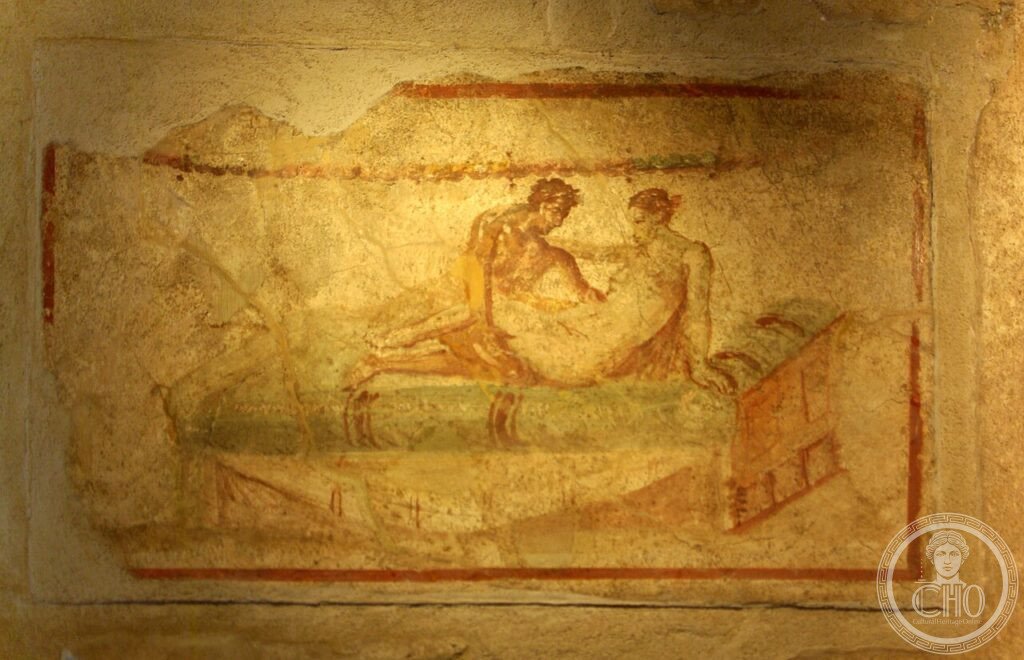
Il Foro, la Villa dei Misteri, i calchi, Via dell’Abbondanza, l’anfiteatro (the most precisely Pompei zone visit (3–5 hours; 1 day to be thorough): the recommended circuit (the “Classic 3-Hour Circuit” recommended by the Parco Archeologico di Pompei): Porta Marina (the main entrance) → the Foro (the Forum: 38 m × 142 m; the Temple of Jupiter (150 BCE); the Basilica (130 BCE; the oldest basilica in existence; the term “basilica” in Roman = a public hall for commercial and legal transactions; the Christian adoption of the term for churches came later); the Macellum (the food market: the circular oculus structure with 12 shops around the perimeter)); the Lupanare (Via del Lupanare; the official brothel: the only confirmed brothel in Pompeii (distinguished from the 35 “possible brothels” by: (1) the built-in stone beds (not movable furniture); (2) the erotic paintings above each doorway (depicting 5 sexual positions; the paintings were advertisement and instructional for clients who did not speak the same language as the workers; the identification of workers: the graffiti on the walls record names (all Greek or Aramaic, not Latin): Zosima, Maria, Myrine, Drauca: foreign women)); Via dell’Abbondanza (the main commercial street: 500 m of stepping stones + sidewalks + thermopolii (fast food counters: the 80 thermopolii in Pompeii make it the city with the most fast-food establishments per capita in the ancient world (80 thermopolii / 11,000 inhabitants = 1 thermopolium per 138 inhabitants; the comparable modern figure: McDonald’s in the USA = 1 location per 13,000 people)); the Amphitheatre (the oldest intact Roman amphitheatre in the world (70 BCE): 135 m × 104 m; seats 20,000; the riot of 59 CE (the riot between Pompeians and Nucerians: the 59 CE brawl that began in the amphitheatre (the cause: an insult exchange between Pompeian and Nucerian fans during a gladiatorial show); result: many dead; Nero banned all gladiatorial shows in Pompeii for 10 years (the ban: 59–69 CE)); the Villa of the Mysteries (outside Porta Ercolano; 400 m; see Key Facts above).

Practical information

  • Come raggiungere Pompei da Napoli e Sorrento e come organizzare la visita al sito principale con Villa dei Misteri ed Ercolano nello stesso giorno: il trasporto (Napoli Garibaldi (stazione) → Pompei Scavi – Villa dei Misteri: Circumvesuviana (35 min; €2.80; ogni 30 min dalle 6:00 alle 22:00); Sorrento → Pompei Scavi: Circumvesuviana (30 min; €2.80); il biglietto: Parco Archeologico di Pompei €16 (€2 ridotto; under 18 gratis); la combinata Pompei + Ercolano: €22 (valida 3 giorni); l’orario: 9:00–19:00 (apr–ott); 9:00–17:00 (nov–mar); l’estate (luglio-agosto): prenotare obbligatoriamente su ticketapps.museoarcheologiconapoli.it (il sito riceve 4 milioni di visitatori/anno = 11.000/giorno media; in luglio-agosto 15.000–20.000/giorno; senza prenotazione attese di 90–120 min alle casse); la guida audio (l’app ufficiale “Pompei Sites” (App Store / Play Store: €5.99; disponibile in 8 lingue; 95 audioguide + mappa offline))

Getting there

Circumvesuviana da Napoli Garibaldi (35 min, €2.80). GPS: 40.7502, 14.4872. Biglietto €16. Prenotare online in estate. Aperto 9:00–19:00 apr–ott.

Nearby

  • Ercolano (UNESCO 1997 rif. 829 — stessa iscrizione) — 20 km (meglio conservata di Pompei: il legno, i tessuti, il cibo carbonizzato sopravvissuti; Via IV Novembre 44; €11; 9:00–17:00; Circumvesuviana fermata Ercolano Scavi)
  • Costiera Amalfitana (UNESCO 1997 rif. 830) — 45 km (Positano-Amalfi-Ravello; bus SITA da Salerno; ferry da Napoli Beverello)

Sources

  • Wikipedia, Pompeii; Villa of the Mysteries; Eruption of Vesuvius in 79 AD, accessed June 2026
  • UNESCO, Archaeological Areas of Pompei, Herculaneum and Torre Annunziata, WHS reference 829, inscribed 1997
  • Pliny the Younger, Epistulae VI.16 and VI.20 (the primary eyewitness account of the 79 CE eruption)

Hero image: Pompei, Foro e Vesuvio, Campania, Italy, Wikimedia Commons. Editorial text © Cultural Heritage Online, 2026.

📷 Diventa un fotografo di Cultural Heritage Online

Condividi le tue foto dei luoghi: restano pubblicate con la tua firma come autore. Più vengono viste, più ti fai conoscere — e presto un concorso premierà le foto più apprezzate.

Accedi o registrati gratis per aggiungere una foto
📋 Copy & share on social
Scroll to Top